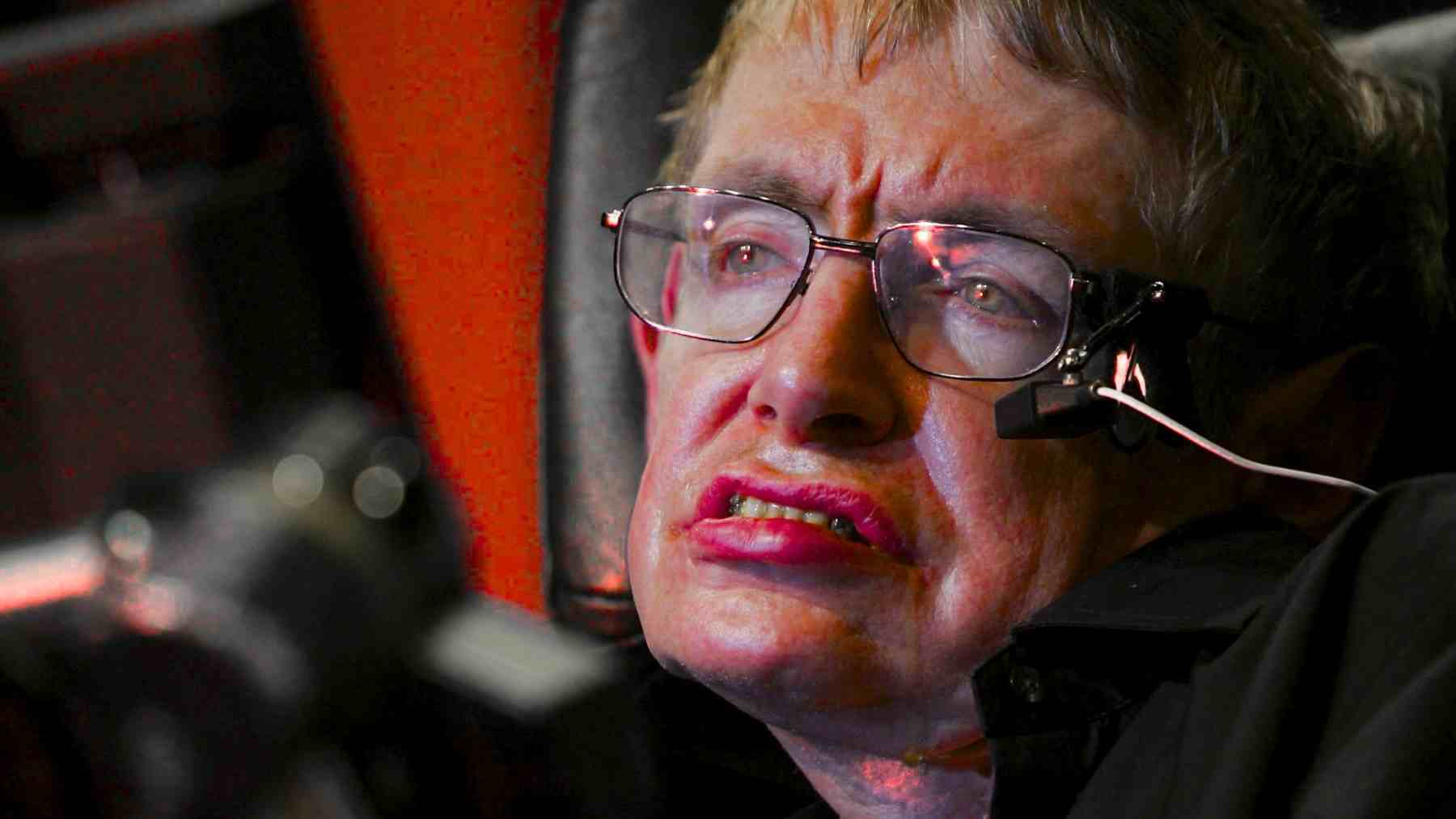
Stephen Hawking is often remembered for black holes, the Big Bang, and that unmistakable computer-generated voice. But his life also carries a deeply human health lesson, especially for anyone who has ever felt underestimated because they are quiet, disabled, introverted, or simply not the loudest person in the room.
A phrase often attributed to him says, “Quiet people have the loudest minds.” That exact wording is difficult to verify through official sources, so it should be treated carefully. Still, the idea fits the public life Hawking actually lived. Diagnosed with amyotrophic lateral sclerosis (ALS) at age 21, he went on to work, teach, write, and communicate for roughly 55 more years, far beyond what most people expect from such a serious disease.
A mind that stayed loud
Stephen William Hawking was born on January 8, 1942, in Oxford, England, and became one of the best-known theoretical physicists of the modern era. He studied at University College Oxford and later moved to Cambridge, where he built much of his academic career.
At Cambridge, he rose to become Lucasian Professor of Mathematics in 1979, a role once held by Isaac Newton. He retired from that chair in 2009, but remained active in research and public science until the end of his life.
ALS changed his body
ALS is a progressive neurological disorder that affects motor neurons, the nerve cells that help control voluntary movement and breathing. As these cells degenerate, muscles weaken, waste away, and eventually stop responding as they should.
For many people, the first signs are easy to dismiss. Muscle twitches, cramps, stiffness, weakness in an arm or leg, slurred speech, and trouble chewing or swallowing can all appear early. Of course, not every twitch after a stressful day is ALS, but persistent or worsening symptoms deserve medical attention.
The disease eventually affects walking, speaking, eating, and breathing. That is the hard truth. The National Institute of Neurological Disorders and Stroke says most people with ALS die from respiratory failure within three to five years after symptoms first appear, though about 1 in 10 survive 10 years or more.
A rare survival story
That is why Hawking’s timeline remains so striking. The CDC notes that most people with ALS live two to five years after symptoms develop, and younger age at onset may be linked with longer survival. Hawking’s 55-year journey was extraordinary, not typical.
It is also important not to turn his story into a simple slogan. Mental strength did not “cure” his ALS, and no patient should be made to feel responsible for how fast a disease progresses. Biology, medical care, support, technology, age, and still-unknown factors all matter.
Science kept him moving
Hawking’s work changed how scientists think about black holes. In 1974, he proposed that black holes could emit radiation, a discovery now known as Hawking radiation. The finding helped connect quantum theory with general relativity, two huge areas of physics that do not easily sit at the same table.
He also made science feel less distant. His book A Brief History of Time became an international bestseller and brought difficult ideas about space, time, and the universe to everyday readers. In practical terms, he took topics that can make people feel lost and gave them a doorway in.
Technology gave him a voice
After a major health crisis in the 1980s, Hawking lost his natural speaking voice and began using communication technology. His voice synthesizer later became one of the most recognizable sounds in science.
That detail matters for wellness, too. Independence is not always about doing everything alone. Sometimes it means having the right tool, the right caregiver, the right accessible space, or the right device at the right moment.
Quiet strength is not magic
Hawking’s life shows that resilience is not always dramatic. Sometimes it looks like answering one more email, showing up for one more lecture, or finding a new way to say what you mean when your body will not cooperate.
At the 2012 Paralympics, Hawking offered a verified version of that message when he said, “However difficult life may seem there is always something you can do and succeed at.” That is not toxic positivity. It is a reminder that meaning can survive even when life becomes brutally unfair.
What readers should remember
For patients and families living with serious illness, Hawking’s story can be inspiring, but it should also be handled with care. No two ALS cases unfold in exactly the same way, and comparing one person’s illness to another’s can do more harm than good.
The better takeaway is more grounded. Stay curious, ask for help early, take symptoms seriously, and do not confuse quietness with weakness. Some people make very little noise in a room, yet their minds are racing with ideas, questions, and plans.
Hawking died on March 14, 2018, in Cambridge, but his example still challenges a common assumption about strength. It is not always loud. Sometimes, it speaks through a machine and still reaches the whole world.
The official biographical statement was published on the University of Cambridge.