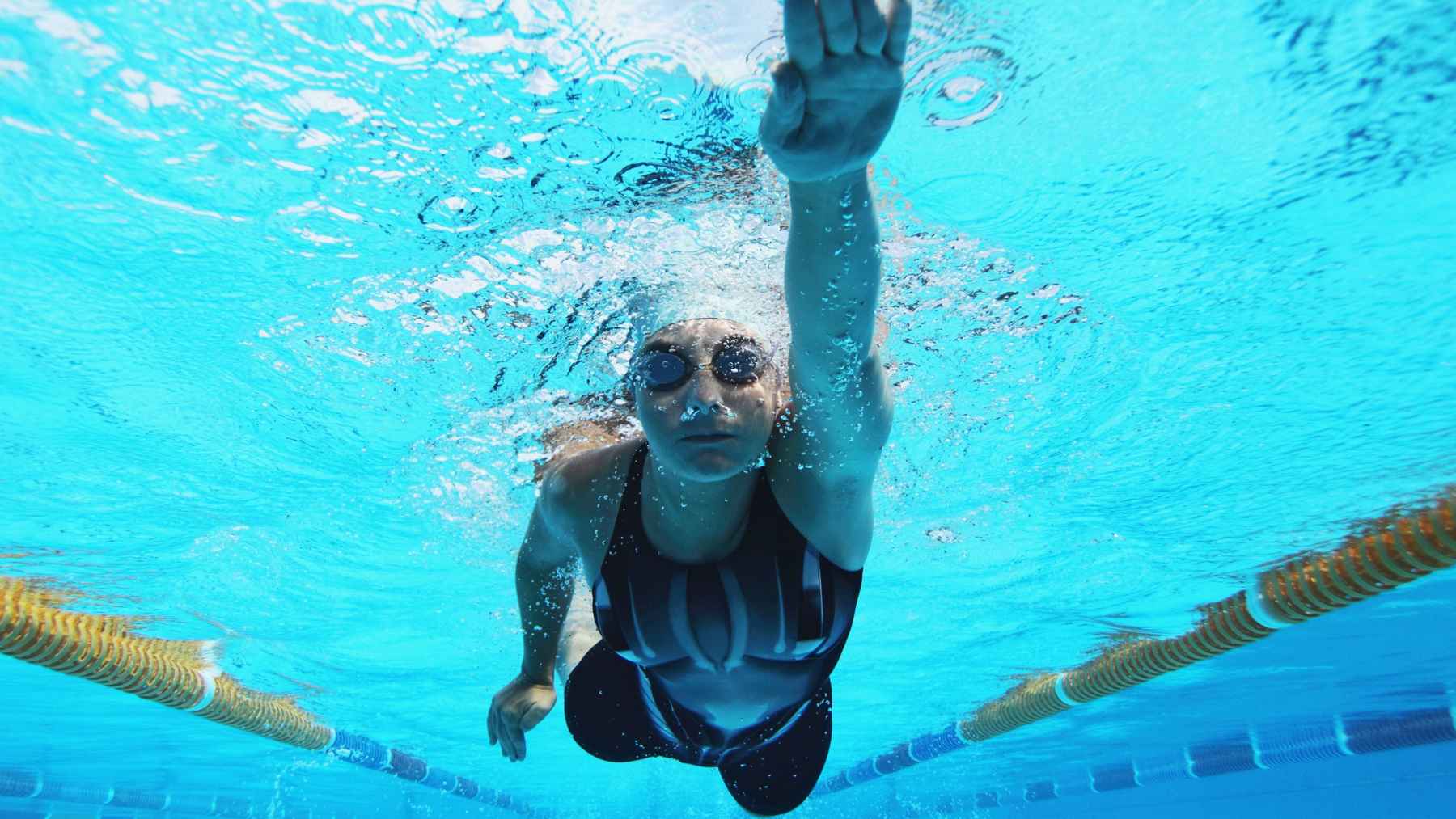
A swimming pool may look like a place to escape that sticky summer heat, but each lap is also a full-body workout. The arms, legs, shoulders, back, and core push against water while the heart and lungs keep oxygen moving. That combination places swimming among the most complete forms of aerobic exercise.
The point is not that swimming is a miracle or the only way to protect the heart. According to Cleveland Clinic, its advantage is combining cardio, muscle resistance, and low impact in one activity. For people who find running painful, the water can make regular exercise feel more realistic.
Why the heart responds
Swimming is aerobic exercise, meaning it uses large muscle groups in a steady rhythm. Heart rate and breathing rise as the body asks for more oxygen, training the heart to deliver blood to working muscles.
That adaptation can help improve blood pressure and cholesterol while lowering cardiovascular risk factors. Exercise physiologist Christopher Travers says, “As cardiovascular exercises go, swimming offers a little less wear and tear on the body than other options.”
The American Heart Association recommends at least 150 minutes of moderate aerobic activity or 75 minutes of vigorous activity each week. Lap swimming is commonly considered vigorous, although pace, stroke, fitness, and rest breaks change the effort.
What the 41% figure means
The attention-grabbing number comes from a 2017 study of 80,306 adults in England and Scotland. Pekka Oja and his team found that swimming was associated with a 41% lower risk of cardiovascular death and a 28% lower risk of death from any cause compared with adults who did not report swimming.
Associated is the important word. The researchers observed people rather than assigning them to swim, so the study cannot prove that swimming alone produced the difference. Other health and lifestyle habits may also have contributed.
Newer evidence points in the same general direction, but with a more cautious estimate. A 2024 review covering 2.6 million adults linked swimming with a 24% lower risk of death from any cause and improvements in body composition and blood fats. Strong evidence, yes, but not a magic shield.
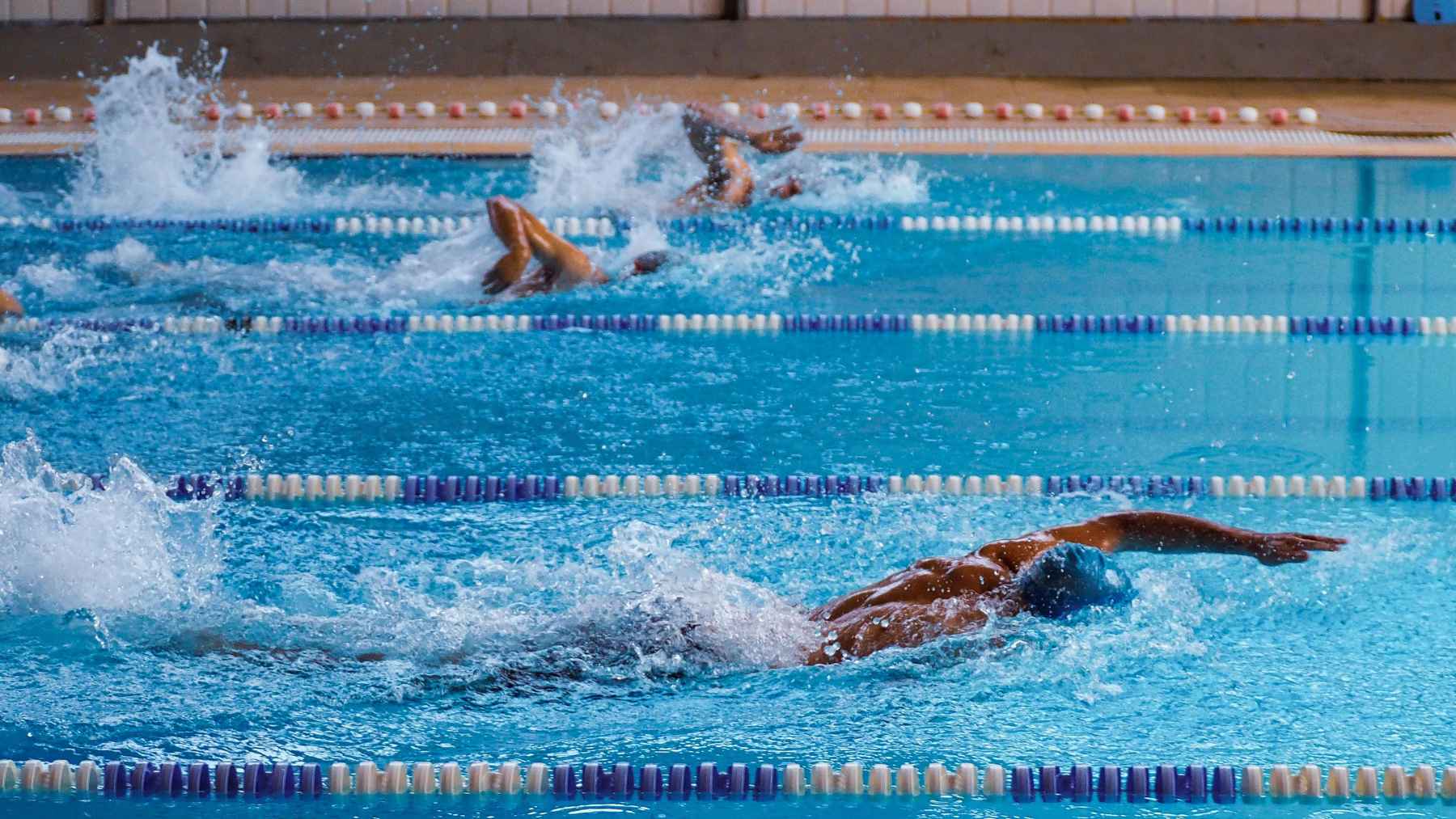
Swimmers complete laps in a pool, illustrating how swimming combines cardiovascular exercise with resistance for a full-body workout.
Why water changes the workout
Water resists every push and pull, so muscles work during nearly every part of a stroke. Swimming recruits the upper body, lower body, and core together. Cardio and resistance training overlap.
Buoyancy supports part of the body’s weight. That reduces pounding on the knees, hips, ankles, and spine, making pool exercise more comfortable for some people with joint pain, excess weight, or limited mobility.
Low impact does not mean low effort. Fast freestyle can leave a beginner breathless, while water walking may suit someone returning to activity. The intensity can change without losing the water’s support.
Circulation, lungs, and muscle
Working muscles demand oxygen and nutrients, so the heart sends more blood around the body. Repeated sessions train the heart, blood vessels, and lungs to handle that demand more efficiently. Even climbing stairs may eventually feel easier.
A randomized study led by Alexei Wong followed 100 sedentary postmenopausal women with stage 2 high blood pressure for 20 weeks. Those assigned to swim three or four days a week lowered both blood-pressure readings by roughly nine points while making their arteries less stiff and improving muscle strength and the body’s ability to use oxygen.
The result is encouraging, but the trial involved a specific group following a structured program. It is not a promise that every swimmer will experience the same change. Medication and medical supervision still matter.
Who should take extra care
Swimming can be used in some cardiac rehabilitation programs, which are medically supervised plans for recovery after a heart problem. But people recovering from a heart attack, heart failure, surgery, or another major event need individual guidance, and surgical wounds must be fully healed before entering a pool.
Stop and seek medical advice if swimming causes chest tightness, unusual shortness of breath, dizziness, confusion, or pain in the chest, shoulder, or jaw. Beginners should learn in a guarded pool rather than open water. A lifeguard is not just for children.
People with asthma or lung disease should ask whether pool chemicals or breathing demands could aggravate symptoms. Long-term exposure to some pool disinfectants has been associated with airway irritation and a greater asthma risk in swimmers.
How to begin
Start with a few easy lengths, water walking, or a beginner class, then add time gradually. Short rests are fine, and anyone unable to speak a short sentence should slow the pace. Good technique matters more than racing the person in the next lane.
For the most part, the best heart exercise is one a person can perform safely and keep doing week after week. Swimming stands out because it trains the cardiovascular system and many muscles while taking pressure off the joints. That is a rare combination.
The main study has been published in the British Journal of Sports Medicine.