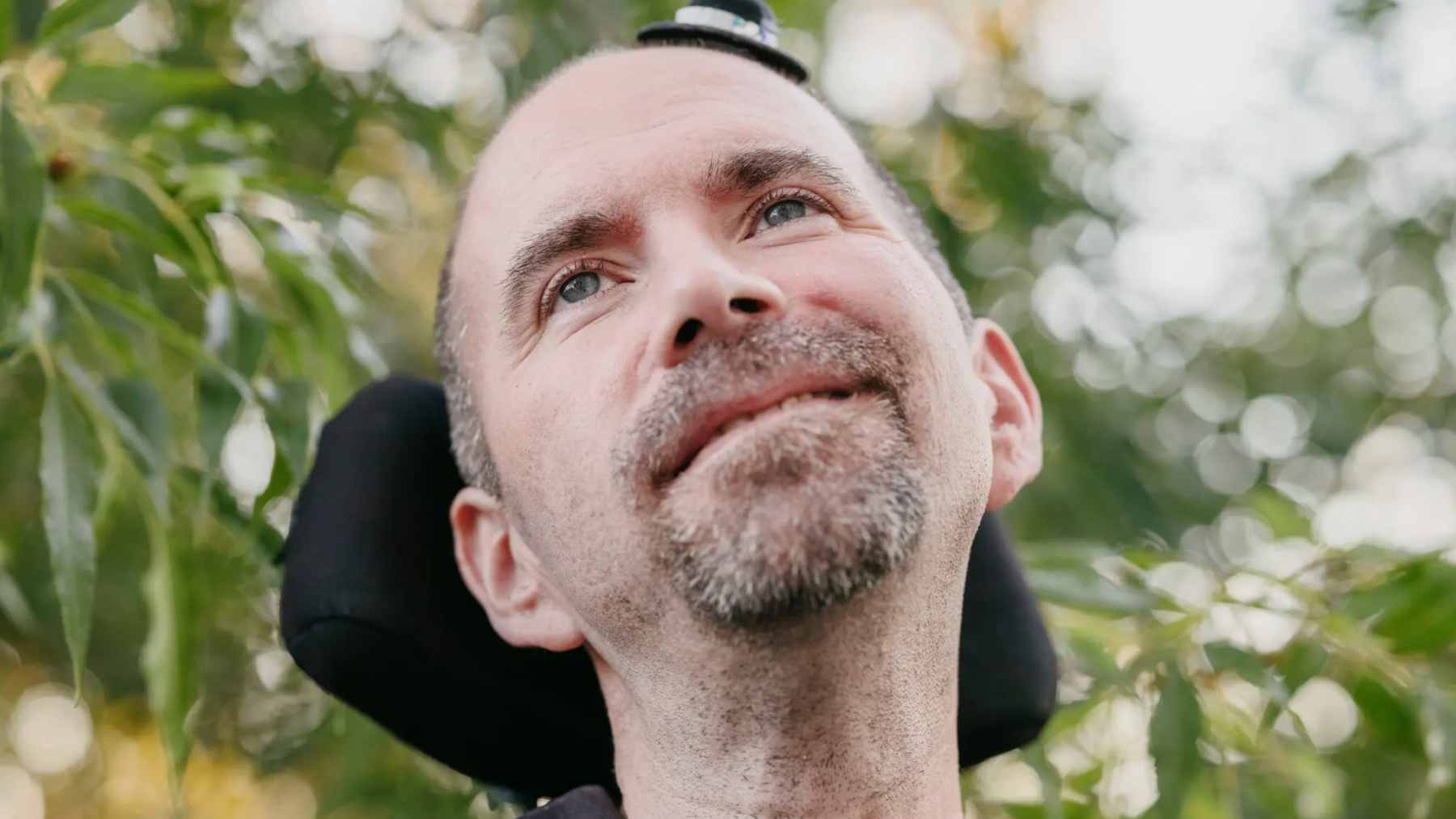
For Casey Harrell, holding a conversation had become a slow, demanding process. ALS had severely weakened his movement and speech, leaving him reliant on an interpreter or letter-by-letter typing with a head-controlled mouse.
A new implanted brain-computer interface now turns his attempted speech into text and lets him control a computer cursor at home.
Over 19 months, he used the system for more than 3,800 hours and communicated 183,060 sentences containing nearly 2 million words. His average speed reached 56 words per minute, and he rated 92% of everyday sentences as at least mostly correct.
The bigger breakthrough is independence, since it worked almost daily without researchers on site.
What ALS takes away
Amyotrophic lateral sclerosis is a progressive disease that damages motor neurons, the nerve cells controlling voluntary muscles. As it advances, walking, talking, chewing, and breathing can become difficult as the brain loses control of those movements.
A person may still know exactly what they want to say, but the muscles needed to say it no longer cooperate.
Before the implant, Harrell communicated at roughly 6 to 7 words per minute with his existing methods. The new system was more than eight times faster on average. In everyday life, that can mean answering a question before the conversation has already moved on.
How the brain implant works
The work was led by Nicholas Card, Sergey Stavisky, and David Brandman at the University of California, Davis. Collaborators came from the University Medical Center Utrecht Brain Center at Utrecht University, Brown University, and Massachusetts General Hospital.
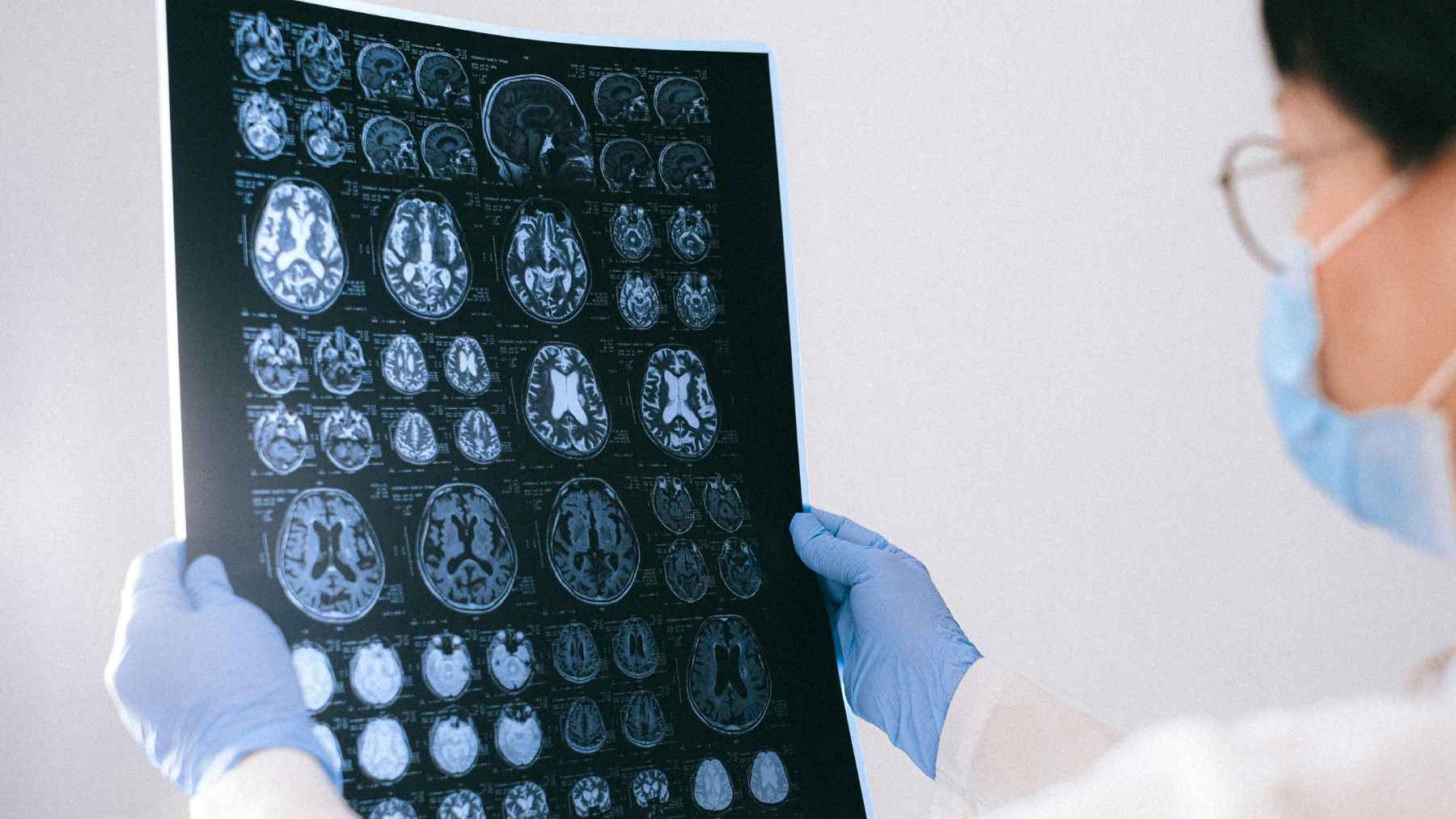
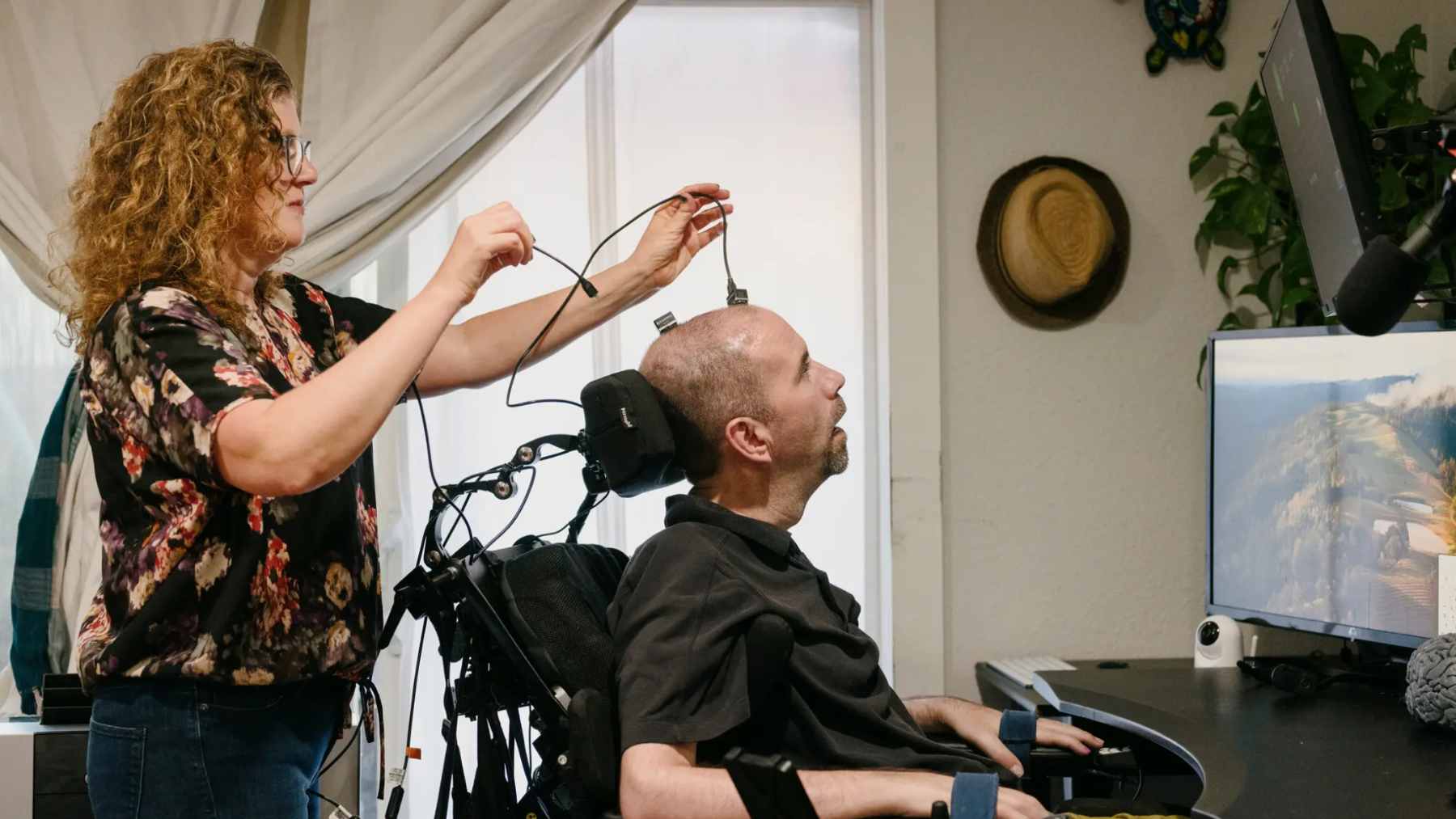
In 2023, surgeons placed four microelectrode arrays, small grids with a total of 256 electrodes, in Harrell’s left speech motor cortex. A brain-computer interface acts like a bridge between brain activity and a machine.
When he tries to speak, software detects signal patterns and converts them into likely sounds and words on a screen.
Speech and computer control together
The implant does more than generate text. Harrell can imagine moving or squeezing his right hand to guide a cursor and click, while eye tracking helps him switch tools and select controls. The text can also be read aloud by a synthetic voice designed to resemble the voice he had before ALS.
That combination gave him access to email, text messages, web browsing, video calls, and work. He continued full-time employment despite severe paralysis. Through the system, he described having “a life that is more full of dynamic action” with family, friends, and colleagues.
From a lab demo to a daily tool
A 2024 study from the same project decoded attempted speech with about 97% accuracy, but researchers still had to operate the equipment. Could someone rely on it day after day? The new work shows that one participant could.
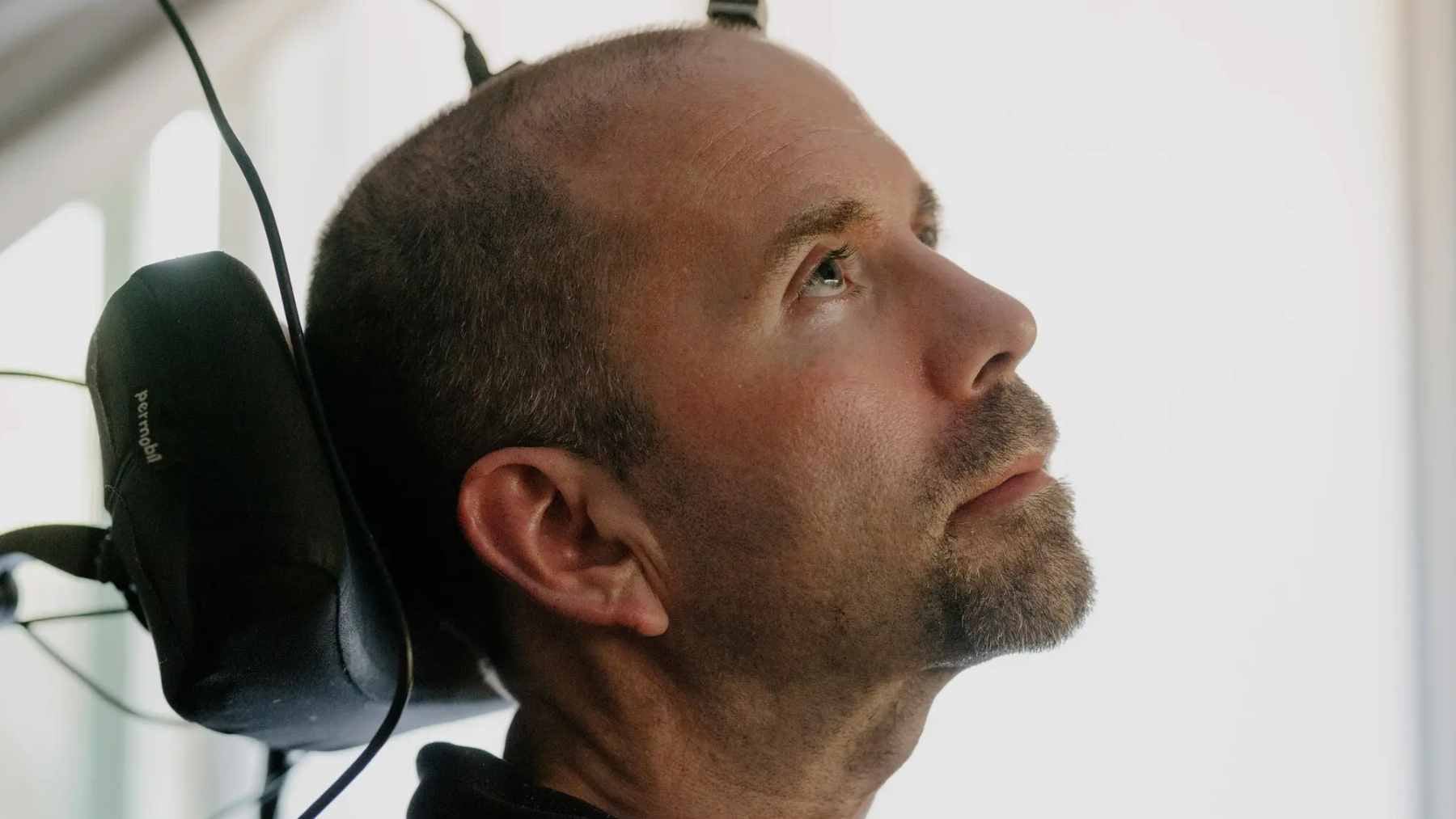
The updated system starts automatically, recalibrates much of its speech software in the background, and uses a simplified menu. Trained caregivers still connect the external hardware, a process taking about 20 minutes, but Harrell could then use it for up to 19 hours without further help.
No researcher had to remain in the room.
Accuracy needs context
In structured tests, the system reached 99.2% word accuracy with a vocabulary of 125,000 words. Everyday conversation was messier. At home, 53.3% of sentences were exactly correct, 12.9% were corrected, and 26.1% were rated mostly correct.
Can the implant read every thought? No, it decodes activity linked to deliberate attempts to speak, move a cursor, or click, and Harrell can correct the output. A privacy setting also lets him stop the system from recording data when he chooses.
Why the home setting matters
Research devices can impress during a short laboratory session and still struggle in daily life. Here, the interface remained useful through changing routines, fatigue, long sentences, and months of neural signal variation. That endurance is central to the result.
In practical terms, the implant gave Harrell more control over when and how he communicated.
A work email, a private message, or a dinner-table conversation may sound routine, but those moments are the real test of assistive technology. This study suggests a brain implant can begin to pass that test at home.
Limits and next steps
The findings come from one participant, so it is unclear whether others will achieve similar results. The system also requires brain surgery, wired connections through the skin, daily caregiver setup, and a bulky computer cart.
It remains an investigational device, not a treatment available for routine clinical use.
Future versions will need to be smaller, easier to start, wireless or fully implanted, and tested in more people. Researchers also want natural home conversation to match the accuracy seen in controlled tests. Promising, yes, but ready for everyday medical use? Not yet.
The official study was published in Nature Medicine.