Scientists may have found two ways to push the nervous system to repair itself in multiple sclerosis, a disease better known for slowly stripping protection from nerve fibers.
In new disease models, two experimental drug molecules helped rebuild myelin, the coating that lets nerve cells send clear signals through the brain and spinal cord.
That matters because MS is not rare. The Atlas of MS estimates that 2.9 million people worldwide were living with the disease in 2023, up from 2.3 million in 2013. Current treatments can reduce immune attacks, but they do not repair the nerve damage that has already happened.
Why myelin matters
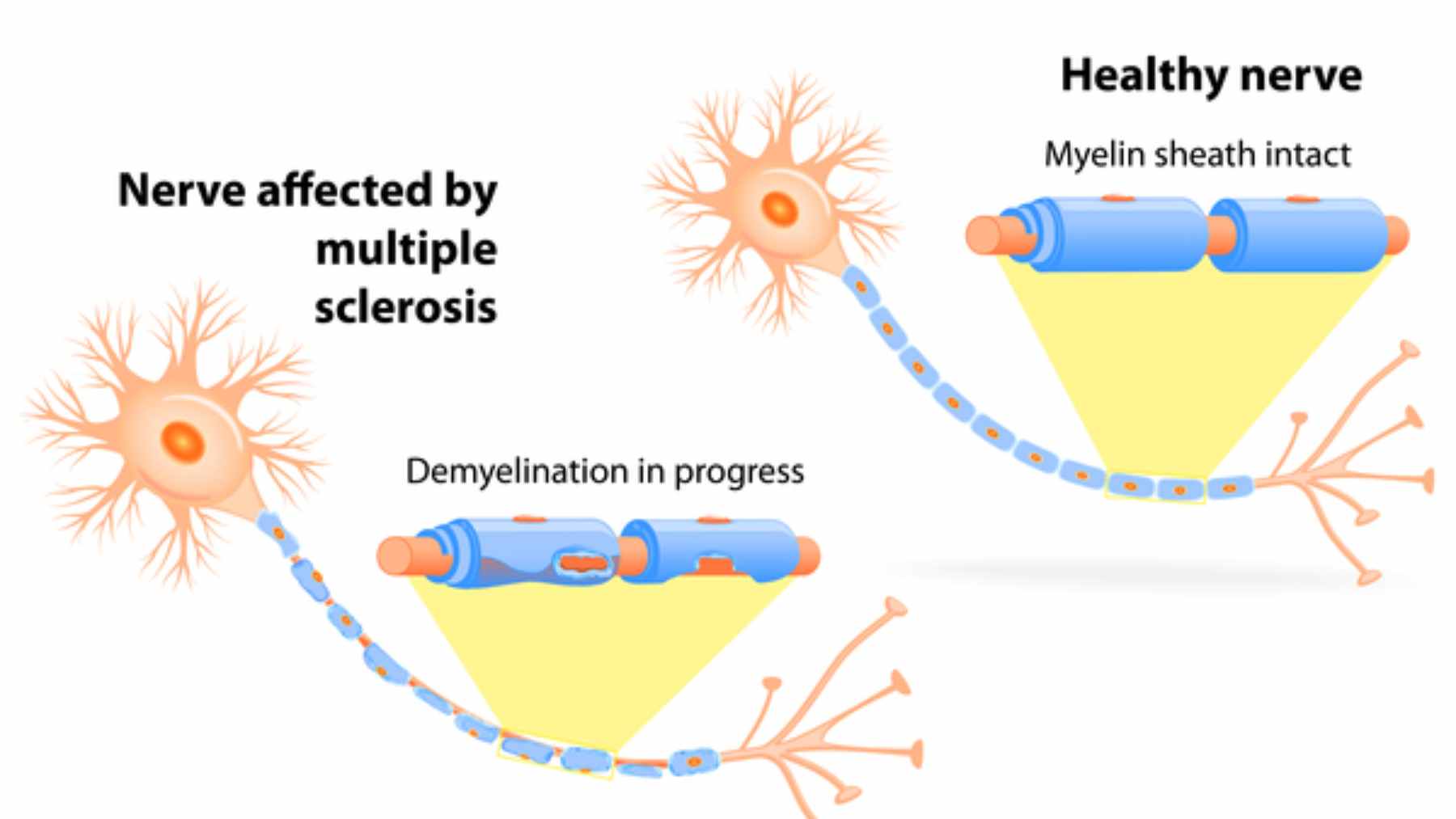
Myelin works a bit like insulation around an electrical wire. When it is healthy, nerve signals move quickly and cleanly. When the immune system attacks it, the message can slow down, break up, or fail to arrive.
That can mean blurred vision, heavy fatigue, numbness, pain, or trouble walking. For many patients, the hard part is not one dramatic moment, but the way symptoms can pile up over years. That slow build is where repair becomes so important.
The repair problem
The body does have a repair process called remyelination. Put simply, it is the rebuilding of the damaged myelin sheath so nerves can regain some protection.
The trouble is that MS lesions can become hostile places for repair. In progressive MS, especially, local tissue changes in the central nervous system can block the cells that normally help rebuild myelin. That is why simply calming the immune system may not be enough.
Two different paths
Tapani Koppinen, working in the research group led by Associate Professor Merja Voutilainen at the University of Helsinki, identified two different drug strategies in his doctoral thesis. Both were aimed at the same goal of helping damaged nervous tissue rebuild its protective coating.
The surprising part? The molecules worked through very different mechanisms, yet both promoted strong remyelination and reduced neuroinflammation in animal and cell models of MS-like disease.
Neuroinflammation means inflammation inside the brain or spinal cord, where even small changes can matter a great deal.
A stuck stress signal
The first approach used a molecule called C-MANF to adjust a stress response inside brain cells. Cells need stress alarms when something goes wrong, but in MS-like damaged tissue, this alarm can stay stuck on high. That can stop repair cells from doing their job.
In the published study, C-MANF helped reduce long-term activation of this stress pathway and supported the recovery of cells involved in making myelin.
The researchers also reported better motor recovery and signs of tissue repair in a mouse model of autoimmune demyelination.
Breaking the scar barrier
The second approach took aim at the area around damaged cells. MS lesions can contain scar-like material that acts less like a healing bandage and more like a roadblock.
Here, the molecule was low-molecular weight protamine, a small positively charged peptide. It targets chondroitin sulfate proteoglycans, which are molecules found in the tissue matrix around MS lesions and are known to interfere with repair cells.
In simpler terms, the drug candidate helped loosen one of the barriers that keeps new myelin from forming.
The study reported more protection for nerve fibers, thicker myelin in treated tissue, and less microglial activity, a sign of lower inflammation in the model. It also found that the molecule crossed the blood-brain barrier in animals, which is a major hurdle for many brain drugs.
Why this is not a treatment yet
This is promising science, but it is still early. The findings come from laboratory animals and cell models, not from people living with MS. Human disease is messier, more variable, and often shaped by years of tissue damage.
That is why clinical trials matter. A treatment that works in a mouse or a dish still has to prove that it is safe, reaches the right tissue, and produces benefits that patients can actually feel in daily life. Better walking, clearer vision, less fatigue, those are the real-world tests.
What comes next
“The goal is to enable the molecules we have developed to reach clinical trials, which could one day produce the first drugs that enhance remyelination in MS,” Koppinen said. He also noted that the findings may help researchers better understand why MS lesions resist repair in the first place.
For now, the message is cautious but important. MS care has made major progress in slowing immune attacks, but the next frontier is repair. If these findings hold up, future treatment may not only put out the fire, but also help rebuild what the fire damaged.
The main study has been published in Molecular Therapy, and the related work on the second strategy has been published in Neuropharmacology.