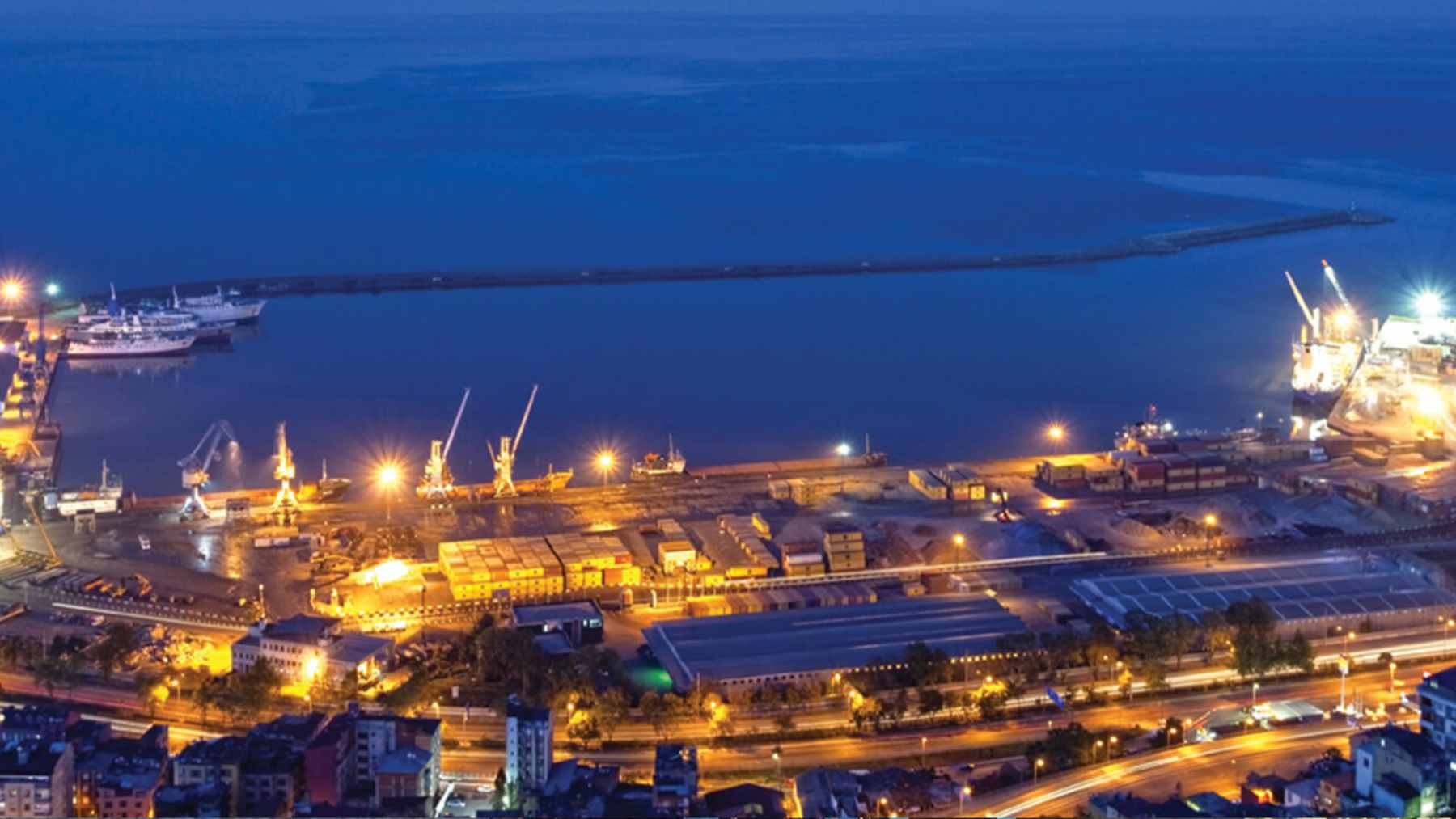
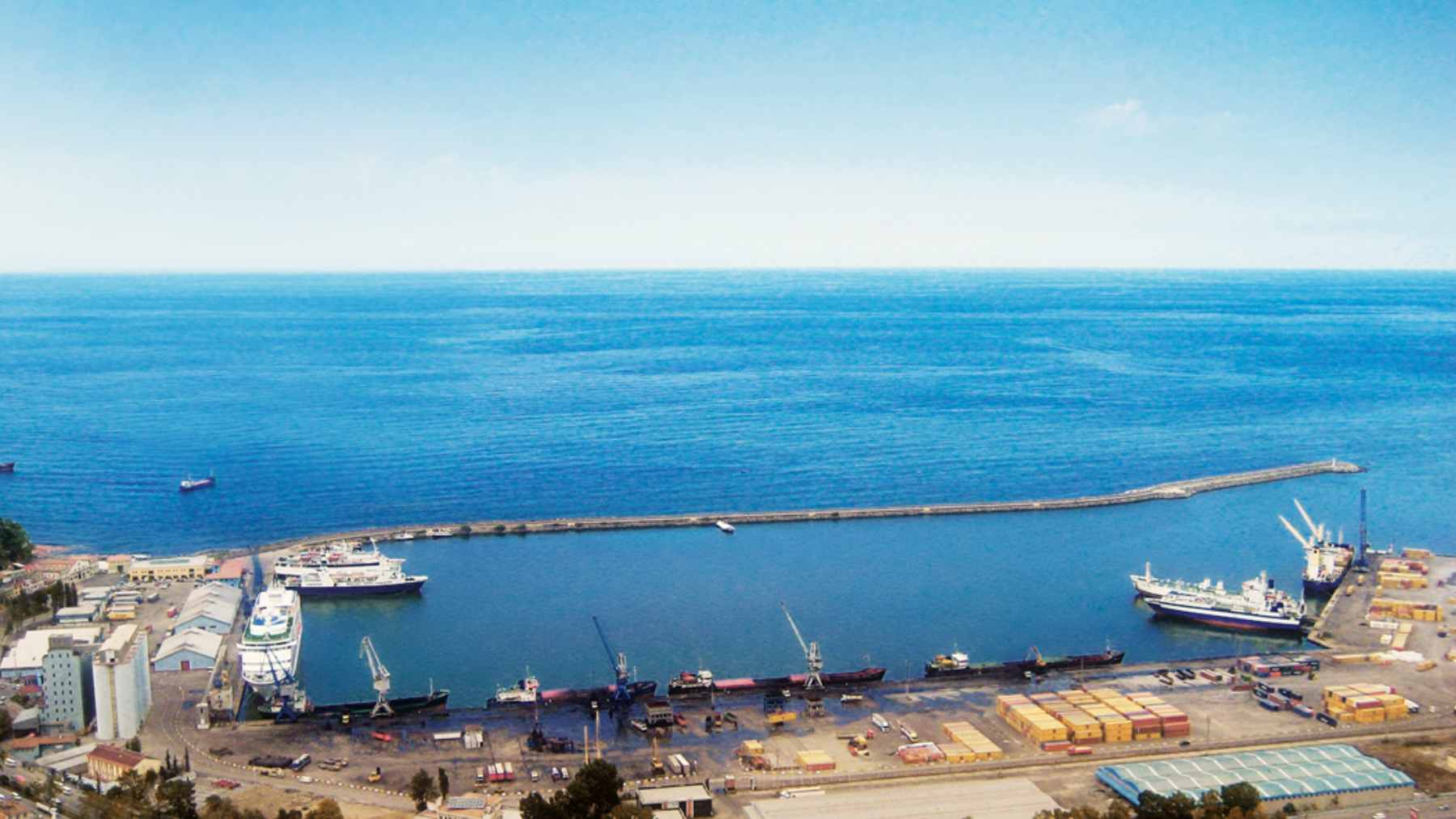
Turkey has started placing roughly 5,000 huge concrete blocks around Faroz Port in Trabzon, a fishing harbor on the country’s Black Sea coast, after earlier waves pushed past the existing breakwater, damaged gear, and sank five fishing boats.
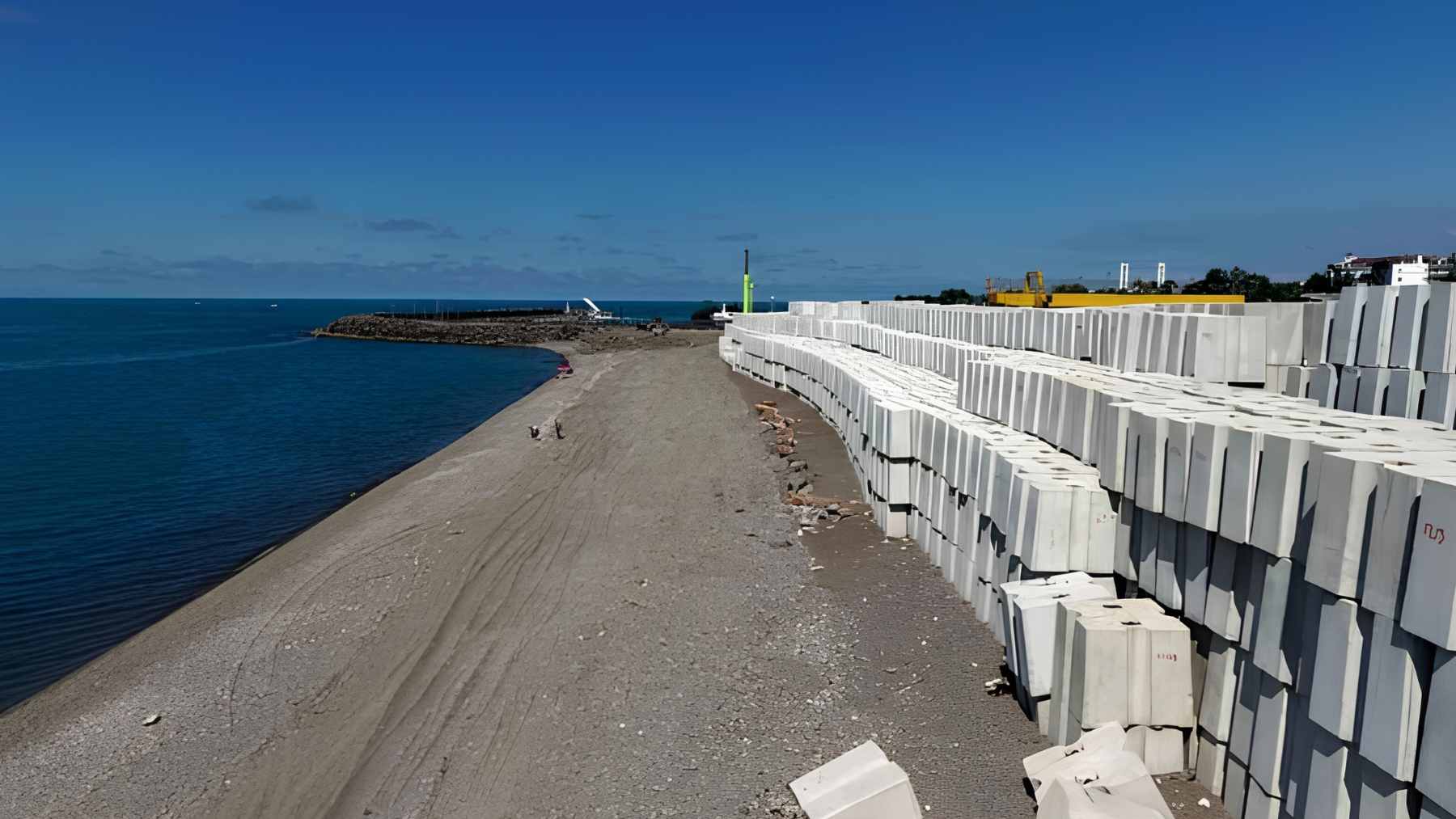
Each block weighs about 46,300 lbs. turning the project into a massive gray shield against a sea that has already shown how quickly it can overwhelm a working port.
The work is not being described as a flashy port expansion. For the most part, Turkish reports present it as a safety project for fishermen, boats, nets, and the daily routine of a harbor where a bad storm can become a business crisis before sunrise.
What is really being built here is time, space, and a better chance that the next surge of water loses power before it reaches the people who work there.
A concrete wall against the waves
The latest stage began with cranes placing the blocks along the sea-facing side of Faroz Port, according to Turkish coverage dated May 31, 2026. The project is linked to Turkey’s Ministry of Transport and Infrastructure, and the work is expected to be completed by the end of 2026.
Seen up close, the scale is hard to ignore. Around 5,000 blocks at 46,300 lbs. each would add up to more than 231 million pounds of concrete, lined up to absorb, deflect, and break down the force of waves before they slam into the inner port.
Why go so heavy? Because light barriers can move, crack, or fail when water keeps hitting them again and again. In this case, the mass of the blocks is part of the technology.
The storm that changed the port
The project follows a damaging event roughly two-and-a-half years before the new placement work began. Waves reportedly crossed the existing breakwaters, entered the port area, damaged small boats, destroyed fishing nets, and left five boats underwater.
For a visitor, a torn net may look like debris. For a fisherman, it can mean lost income, delayed work, and another bill on top of boat repairs. That is why coastal infrastructure is not just concrete and cranes, it is also local economics.
Earlier reports said the ministry acted after those losses and that the project had been described as a roughly $8.6 million investment at recent exchange rates. That figure may shift with currency movements, but it gives a sense of the project’s financial weight.
How the blocks work
Breakwaters are designed to intercept and reduce incoming wave energy before it reaches the shoreline or harbor behind them. They are often built with strong materials such as rock armor, poured concrete, dolos, or tetrapods, and their performance depends on design choices such as size, location, gaps, and construction material.
That matters in Faroz because the problem was not a calm sea slowly wearing away a wall. It was powerful water getting over the existing protection and reaching the boats inside. The new blocks are meant to create a tougher outer layer, one that makes the waves spend energy before they reach the vulnerable part of the port.
Still, there is no magic switch here. A breakwater can reduce risk, but it cannot promise that nature will never find a way through during extreme conditions. The point is to lower the odds of another damaging repeat.
A project built in stages
The Faroz work did not start with cranes on the shoreline. Earlier Turkish reports said the blocks were being cast at a pace of about 15 to 20 units a day, with 4,000 to 5,000 pieces expected for the project before the newer reports settled on roughly 5,000.
That slow rhythm matters. First come casting and curing, then transport, site preparation, and placement in the sea with heavy machinery. One misplaced block may not sound dramatic, but in coastal engineering, alignment and foundation conditions can be just as important as weight.
Local reporting also said the lighthouse section of the port would be adjusted, with the structure extending about 65 ft. farther seaward in a slight curve. That detail suggests the work is not only about adding mass, but also about changing how waves approach the harbor.
Why fishermen are watching closely
Small and mid-sized fishing ports are unusually exposed places. Boats, engines, ropes, nets, and fuel systems all sit close to the water because they have to. That makes even a short burst of overtopping waves a serious threat.
Faroz is not just a line on a map. It is a working point for storage, unloading, repairs, and getting crews organized before heading back out to sea. When that space is damaged, the impact travels quickly through families and small businesses.
That’s why the project has become more than a local construction update. It is a reminder that coastal protection is increasingly tied to livelihoods, insurance costs, public budgets, and the basic question of how much risk communities can afford.
The bigger coastal lesson
The Faroz project fits into a broader pattern seen in many exposed coastal areas. Communities are trying to decide where hard defenses still make sense, where nature-based solutions can help, and where the best option is a mix of both.
Concrete blocks are not a cure-all, and they can change local water movement and sediment patterns if poorly designed. But in a port where boats must remain sheltered and usable, hard engineering often becomes the practical tool on the table.
At the end of the day, Turkey’s 5,000-block project is a very physical answer to a very simple problem. The waves got in once. The next time, Faroz wants a stronger line between the Black Sea and the fishermen who depend on it.
The press report was published on İhlas News Agency (İHA).