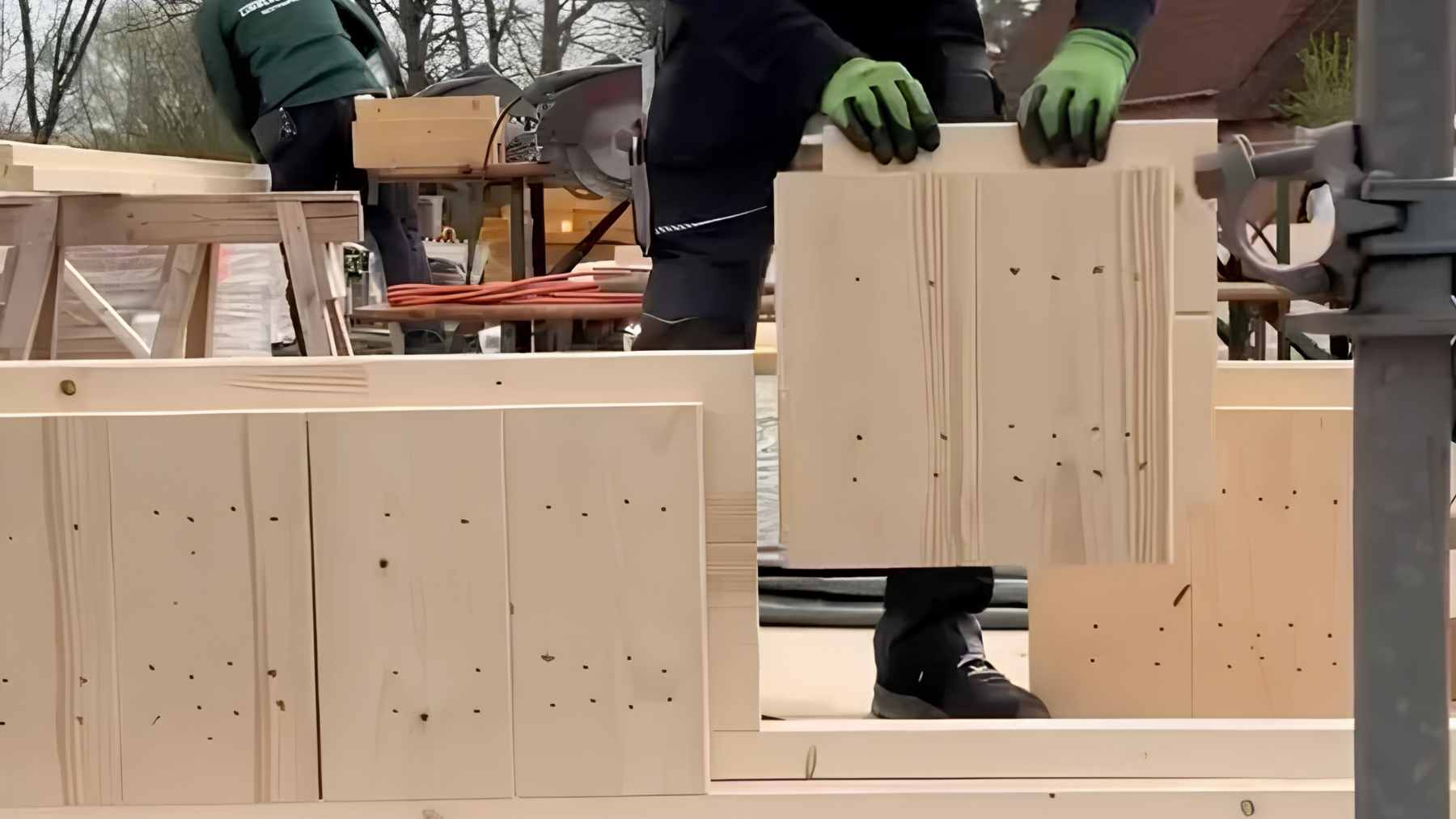
The humble brick has had a very long run. For generations, it has been the symbol of a strong home, a solid wall, and the kind of construction that feels like it will last forever. Now a German company is trying to change that image with something that looks closer to a giant wooden building block than a traditional masonry unit.
NiTO Holzstein GmbH has developed a solid-wood block system that the company says can raise the shell of an average single-family home in about seven days.
That does not mean a finished home in a week, since wiring, plumbing, roofing, windows, insulation details, and interior work still have to follow. But it does point to a bigger shift in construction, one where speed, lower waste, and circular materials are becoming just as important as strength.
A wall system made of wood
NiTO’s system is based on structural timber blocks made from certified C24-grade wood, a strength class used in European construction. A full block measures 15.7” by 15.7” by 5.9” and weighs 22 lbs., while a half block measures 7.9” by 15.7” by 5.9” and weighs about 11 pounds.
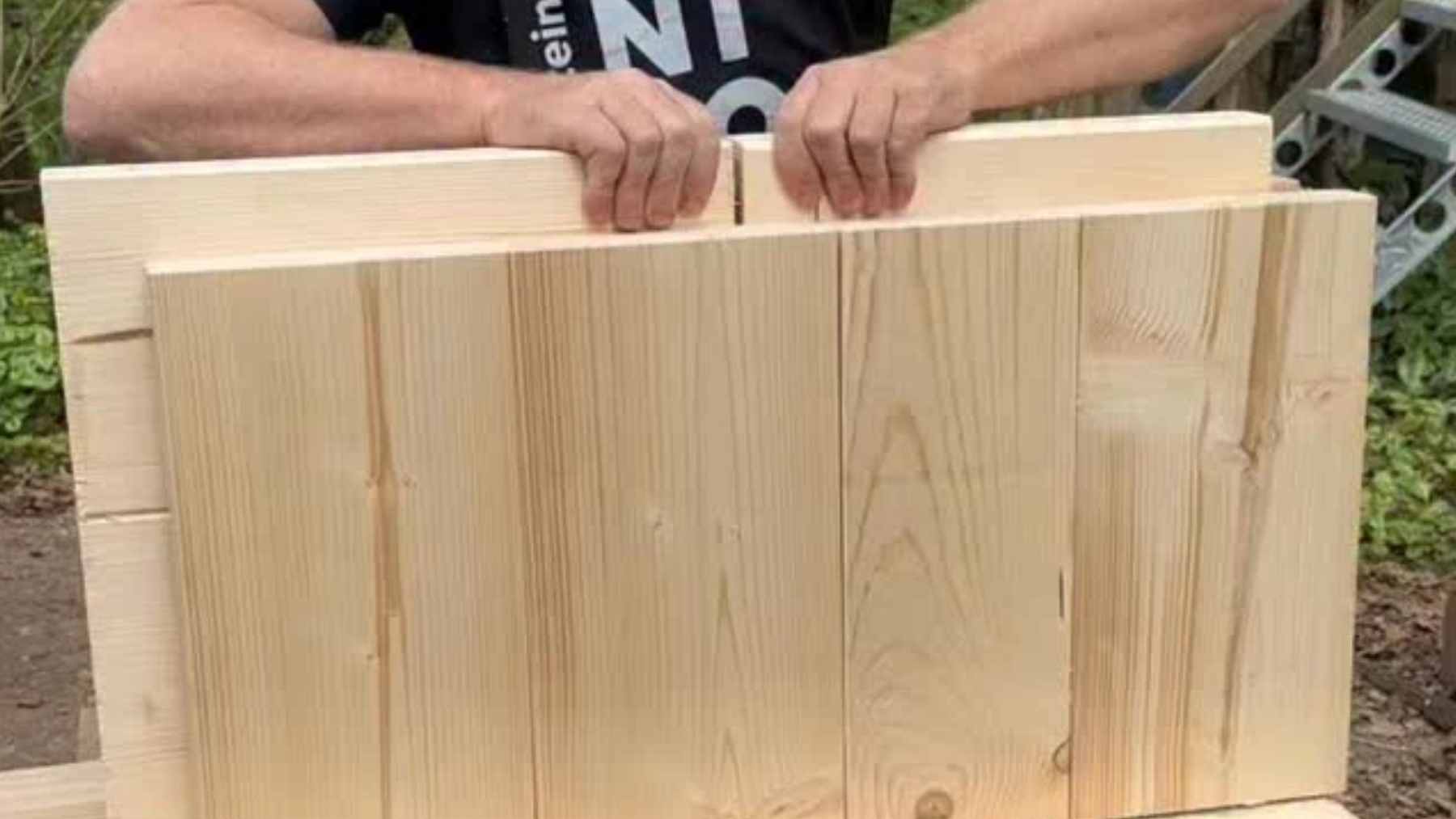
The blocks are not glued together like many engineered wood products. According to the company, each one is made from six plank sections connected with patented wooden nails, then assembled with a tongue-and-groove system.
This design allows walls to be stacked without mortar, adhesives, or extra metal anchors.
Why seven days matters
The eye-catching promise is speed. NiTO says builders can assemble 10.8 ft.² of wall in less than a minute, compared with roughly 30 minutes for the same wall area using conventional methods. That is a huge difference on a jobsite, especially when weather, drying times, and labor shortages can turn a simple schedule into a headache.
Still, the key word is “shell.” This system is about getting the structural walls up quickly, not skipping the rest of the building process. A family moving into a new house still needs all the ordinary systems that make a home livable, from outlets and pipes to heating, cooling, and final inspections.
The climate case behind the blocks
Why should an environmentalist care about the material in a wall? Because buildings are not just places where emissions happen after people move in. The latest UNEP and GlobalABC report says buildings and construction account for around 37% of global CO2 emissions and nearly half of global material extraction.
That is where wood-based systems get attention. UNEP has warned that materials such as cement, steel, and aluminum carry a significant carbon footprint, and it has called for more use of regenerative materials where they make sense. NiTO says its blocks are made from 100% solid wood, contain no additives or adhesives, and are fully recyclable at the end of their life.
Certified, but not unlimited
There is an important regulatory piece here. The German Institute for Building Technology, known as DIBt, lists an approval for NiTO Holzstein walls using NiTO Holzstein blocks, with the approval issued to NiTO Holzstein GmbH and valid until January 9, 2028.
NiTO says that certification allows construction of up to two floors plus an attic. That makes the system relevant for single-family homes, smaller multifamily buildings, garages, vacation homes, workshops, additions, and small commercial projects. It does not turn wooden blocks into a free pass for tall towers or every type of site.
What makes it different
The biggest change is that this is dry construction. Traditional brick and concrete work often depends on wet materials, curing time, and more specialized labor. With NiTO’s approach, the pieces arrive ready to fit together, more like a planned kit than a pile of raw material.
That may sound almost too simple, but simplicity is the point. The company says the blocks can even be used by non-professionals after a short introduction, though real buildings still need design, approvals, and competent supervision. A wall is not a toy, even if the system borrows some of the logic of toy blocks.
A cleaner kind of jobsite
A wood-block system could also change what a construction site feels like. Less mortar can mean less mess, fewer drying delays, and fewer materials that are hard to separate later. Anyone who has lived next to a renovation knows this matters in everyday life, not just in climate reports.
The circular economy angle is especially important. NiTO presents the blocks as recyclable and suitable for return to the material cycle after use.
That does not automatically make every project carbon neutral, because forestry practices, transport, design choices, and end-of-life handling all matter. It does make the wall easier to think of as a reusable material bank rather than permanent rubble, however.
Brick is not gone yet
So, is this really goodbye to bricks? Not everywhere. Concrete, steel, masonry, and other conventional materials will remain essential for foundations, basements, high-rise buildings, flood-prone sites, and many forms of infrastructure.
What NiTO is really showing is a different way to think about low-rise construction. If walls can go up quickly, avoid synthetic binders, store some carbon in wood, and be taken apart more easily years later, homebuilding starts to look less like a one-way road and more like a loop. Small change? Maybe. But in a sector this large, even small shifts can carry real weight.
The official approval listing was published on DIBt.