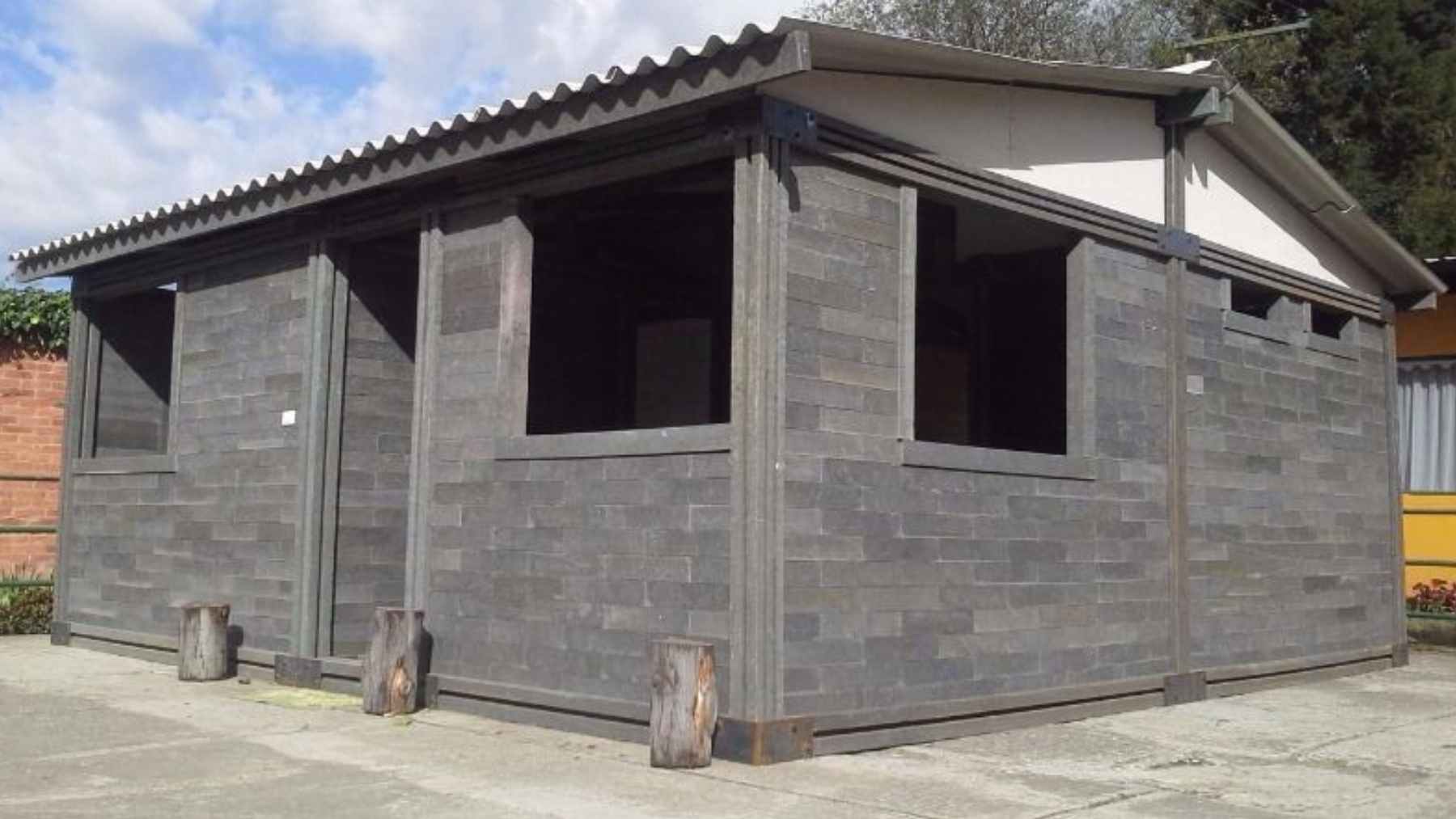
A small home built in five days sounds like a contractor’s sales pitch, but the idea behind recycled-plastic bricks is no longer just a curious prototype. Discarded plastic can be sorted, cleaned, shredded, melted, and pressed into modular blocks that fit together far faster than conventional masonry.
Recent coverage of the system has focused on its promise for quick, lower-cost housing with less waste.
The bigger story is not that plastic bricks will suddenly replace concrete, brick, or steel framing. It is that construction is being squeezed from both sides. Families need housing faster, while cities and companies are looking for ways to keep plastic out of dumps, rivers, and neighborhoods.
UNICEF’s official statement on its work with Conceptos Plásticos describes recycled-plastic bricks as easy to assemble, durable, lower-cost, waterproof, insulated, fire resistant, and designed to withstand heavy wind.
A home that clicks together
The concept is surprisingly simple. Instead of mixing mortar, laying brick by brick, or waiting on long material chains, builders assemble interlocking pieces that work more like a puzzle than a pile of traditional blocks.
That does not mean a full house appears out of thin air. Foundations, utilities, permitting, roofing, and local inspections still matter. But for the walls and structural shell of small buildings, the modular approach can compress a job that normally drags on for weeks into a much shorter schedule.
ArchDaily reported in 2017 that a Conceptos Plásticos house of about 431 ft.², with two bedrooms, a bathroom, kitchen, dining area, and living room, was built in five days with four people. That older example matters because it shows the five-day claim is not just a 2026 buzz phrase, even though today’s costs would vary by country, labor market, and building code.
Plastic waste becomes a building supply
The environmental case starts with a familiar problem. Plastic is useful, cheap, and everywhere, but it often becomes waste after only a short life. That’s where the brick idea gets interesting.
Conceptos Plásticos says its materials come from post-consumer and post-industrial plastic waste that is collected, sorted, cleaned, shredded, melted, and pressed into construction products. The company now says its materials have been used in more than 600 schools and homes, covering more than 430,000 ft.² across Latin America and Africa.
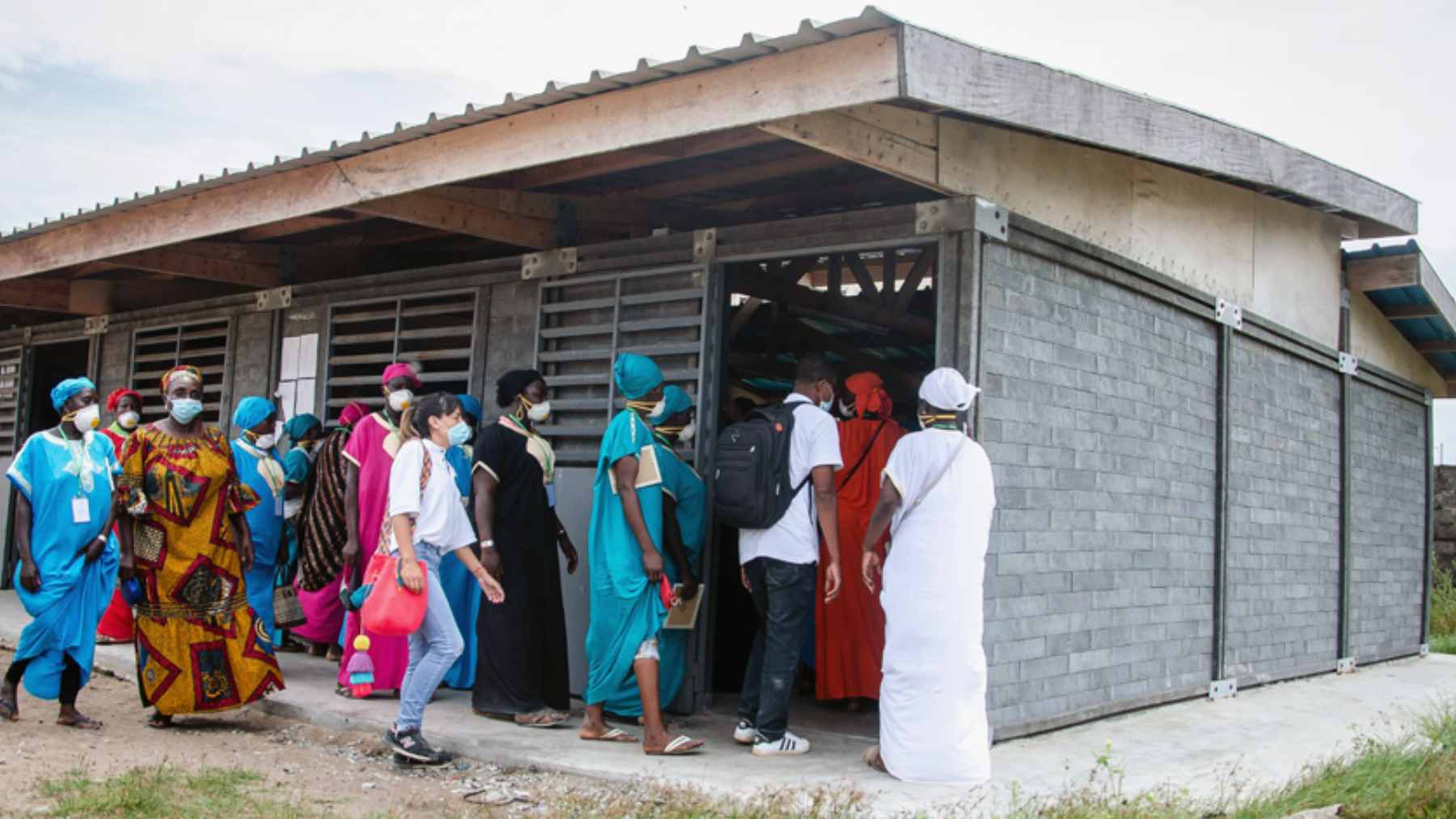
UNICEF’s Côte d’Ivoire project puts that idea into a public-interest setting. Its site says the program has built 262 classrooms, recycled about 1,400 tons of plastic, and helped bring 13,100 children into school. Essentially, waste that might have clogged a gutter or washed into a canal became walls children can sit inside.
Why construction is watching
Construction has a climate problem, not just a cost problem. UNEP’s 2024 and 2025 global buildings report says the sector consumes 32% of global energy and contributes 34% of global carbon dioxide emissions. It also points out that cement and steel are responsible for 18% of global emissions.
So, when a product claims to cut material waste, reduce labor, and reuse plastic, builders notice. A block that arrives ready to assemble can mean fewer wet processes, less debris at the job site, and simpler logistics for emergency housing or small community buildings.
There is a business angle, too. In areas where skilled labor is scarce or materials are expensive to move, lighter modular pieces can make a difference. For a family waiting for a basic home, five days is not just a number on a brochure, it is the difference between having a door to lock this week or still waiting next month.
The limits are real
There is a catch, however. Recycled-plastic bricks are not a magic answer for every home, every climate, or every building code. They still need certified performance for fire safety, structural strength, thermal comfort, sound insulation, and long-term durability.
That is especially important in hot regions, flood-prone areas, and places with strict hurricane or earthquake standards. Conceptos Plásticos says its systems are waterproof, thermally insulating, fire resistant, and resistant to rot, fungi, and bacteria, but buyers still need to check the exact product, the local rules, and the project design.
We should keep one more thing in mind: recycling plastic into a wall is better than letting it drift into nature, but it does not erase the need to reduce plastic production in the first place.
The Organisation for Economic Cooperation and Development (OECD) warns that, without stronger policies, global plastic production and use could rise 70% by 2040, while recycled plastics would make up only 6% of all plastics produced.
Schools show the clearest path
The most convincing use case may not be a glossy private home. It may be schools, shelters, clinics, and community rooms that need to be built quickly and affordably.
UNICEF has said Ivory Coast needed 15,000 classrooms, and its partnership with Conceptos Plásticos was created to turn local plastic waste into low-cost building materials. “This factory will be at the cutting edge of smart, scalable solutions,” UNICEF Executive Director Henrietta Fore said when the project was announced.
That line captures why governments and aid groups are paying attention. The blocks are not just a construction product. They can link waste collection, local income, and public infrastructure in one system, which is rare in an industry that often treats environmental impact as an afterthought.
What homeowners should know
For everyday buyers, the right question is not whether plastic bricks are good or bad. The better question is whether the specific product is certified, appropriate for the climate, and installed by people who understand the system.
Ask about fire rating, load capacity, insulation, ventilation, UV exposure, moisture behavior, and how electrical and plumbing systems are handled. It sounds boring, but that paperwork is what distinguishes a clever idea from a safe home.
At the end of the day, recycled-plastic bricks are best understood as a practical tool, not a miracle material. They can speed up some projects, reduce certain costs, and give hard-to-recycle plastic a second job. However, the future of green construction will still depend on careful design, honest testing, and rules that protect the people who actually live inside these walls.
The press release was published on UNICEF.