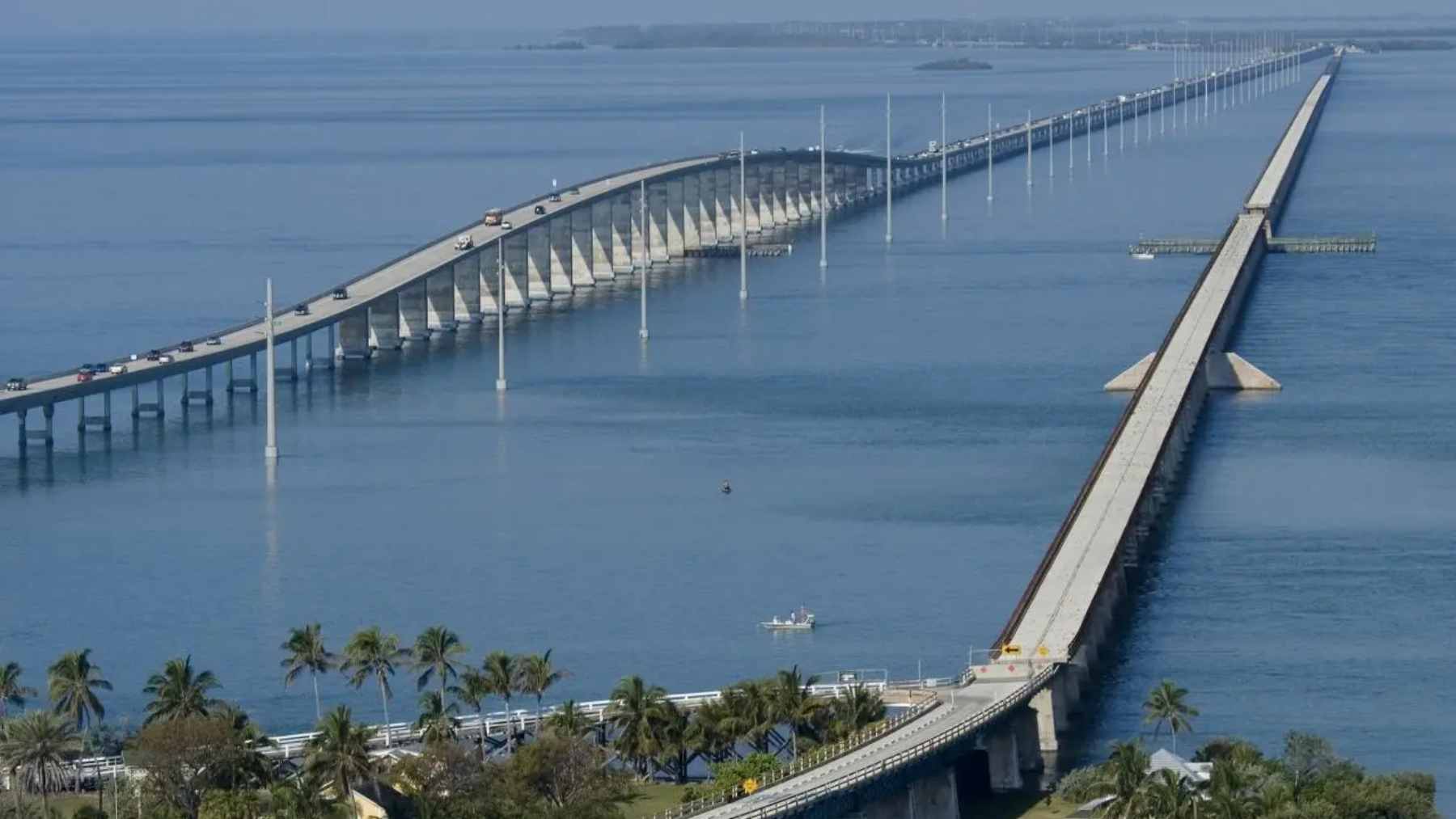
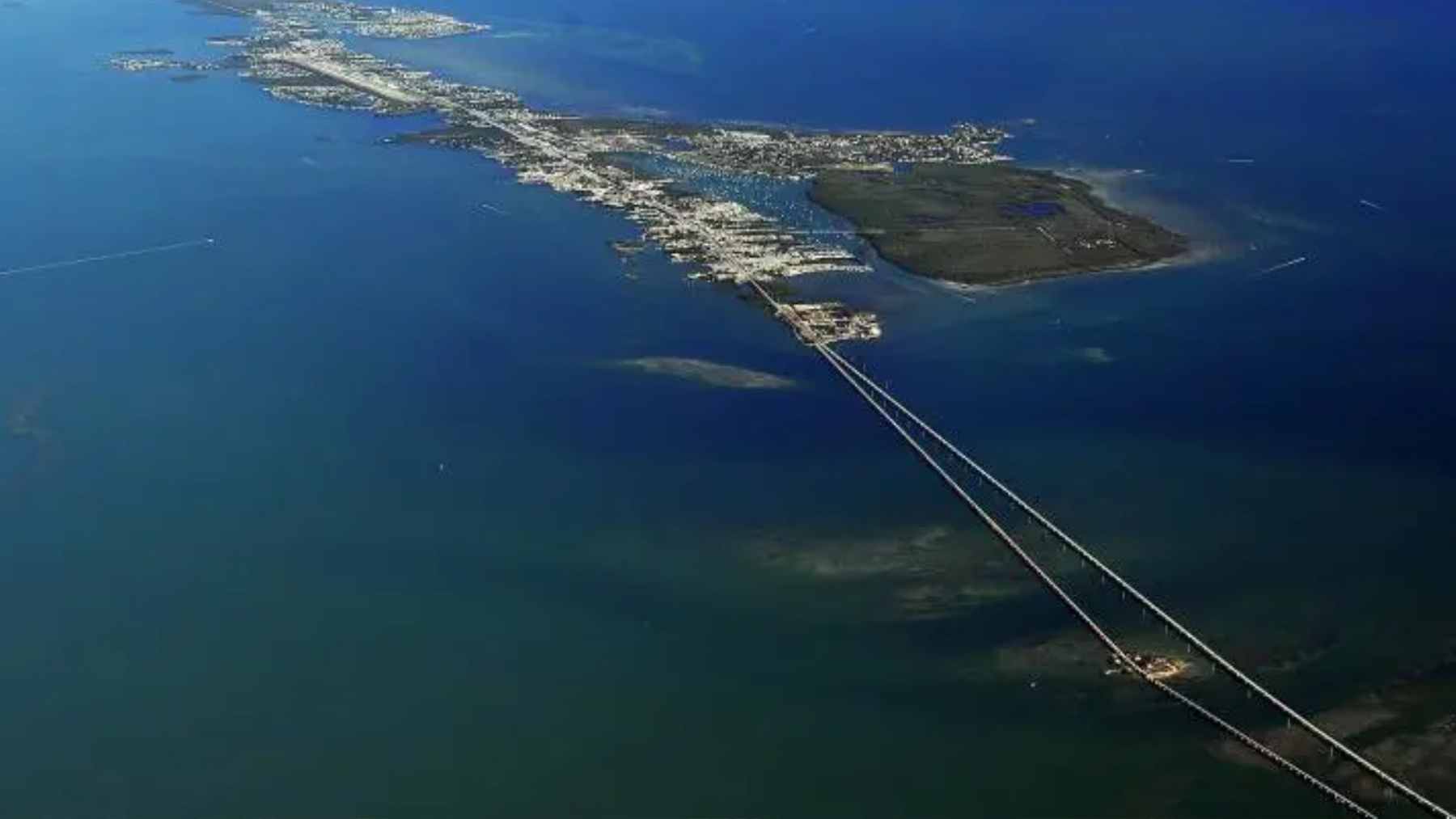
Florida’s Overseas Highway is one of those American roads that feels almost unreal the first time you see it. It stretches 113 miles from Key Largo to Key West, crossing 42 bridges over the Atlantic Ocean, Florida Bay, and the Gulf of Mexico, turning a chain of islands into a driveable line across open water.
The highway is more than a scenic route for road trippers and sunset photos, though. It began as a second life for Henry Flagler’s Florida Keys Over-Sea Railroad, which opened in 1912, was badly damaged by the 1935 hurricane, and helped form the base of the Overseas Highway three years later.
Nearly 90 years on, the story is no longer just about engineering, it is about whether a road built over the sea can keep working as the sea itself keeps changing.
A railroad became a lifeline
The original vision belonged to Henry Flagler, the Standard Oil partner who helped turn Florida’s Atlantic coast into a tourism and rail corridor. His railroad to Key West was once seen by many as too expensive, too risky, and too exposed to storms.
Still, it opened in 1912 after years of construction across water, coral rock, mangroves, and small islands. At the time, it was treated like a marvel because, well, it was one.
Then came the 1935 Labor Day hurricane. The storm destroyed major sections of the rail line, and the damaged corridor later became an opportunity for Florida to connect the Keys by road. The highway that followed gave residents, businesses, tourists, and emergency crews something the islands badly needed: a dependable link to the mainland.
A road through fragile water
The simple way to picture it is that the Overseas Highway is a string of low islands stitched together with concrete, steel, and history.
That setting is beautiful, but it is also delicate. The Florida Keys Overseas Heritage Trail, which parallels U.S. 1 in many places, gives access to ecological resources that include Everglades National Park, Biscayne National Park, Florida Keys National Marine Sanctuary, Key Deer National Wildlife Refuge, and 10 Florida State Parks.
The National Oceanic and Atmospheric Administration (NOAA) says the nearby Florida Keys National Marine Sanctuary includes part of the only coral barrier reef in the continental United States, major seagrass habitat, mangrove-fringed shorelines, and submerged cultural resources.
In other words, this is not just a highway corridor. It is a transportation system running through one of America’s most sensitive coastal environments.
Climate pressure is rising
For most drivers, the Overseas Highway may feel solid and permanent. For local planners, it is a moving target.
Monroe County says the Florida Keys are “ground zero” for climate change and sea-level rise impacts, with many streets already flooding during seasonal king tides. The county also says rising seas have begun to affect roads, infrastructure, homes, businesses, and wildlife habitat.
The numbers explain why officials are paying attention. Sea level measured at the Key West gauge rose about 3.9” from 2000 to 2017, and regional projections used by the county estimate 10” to 17” of rise from 2000 to 2040, 21” to 54” by 2070, and 40” to 136” by 2120. That is a huge planning range, but even the lower end matters when roads sit barely above the water.
The business case is obvious
At the end of the day, this highway is not just for vacation photos. It moves hotel workers, groceries, fuel, construction crews, school buses, ambulances, and delivery trucks.
That is why transportation agencies treat the Overseas Highway as critical infrastructure, not merely a tourist attraction. When one bridge has problems, the issue can ripple through daily life fast because there are not many backup routes in a thin island chain.
There is also a defense angle. During World War II, the highway’s strategic value grew because better road access mattered for military movement in the Keys. Today, that same basic idea remains familiar in a different form, since evacuation, emergency response, and reliable access are part of the highway’s public safety mission.
Old bridges still tell the story
One of the most striking things about the route is what Florida left behind. Some of the historic Flagler railroad bridges still stand near the modern roadway, and 23 are incorporated into the Florida Keys Overseas Heritage Trail as part of a walking, biking, fishing, and sightseeing corridor.
That reuse gives the highway a rare second layer. You can drive the modern U.S. 1 bridge, then look over and see the bones of the railroad that came first.
It is also a reminder that infrastructure ages. Salt air, storms, traffic, and time do not care how famous a bridge is. Concrete cracks, steel corrodes, and repair decisions eventually become unavoidable.
The next test is already here
The Florida Department of Transportation (FDOT) began a rehabilitation project on the Seven Mile Bridge on March 2, 2026. The work is designed to repair and strengthen the bridge, restripe the roadway, extend its service life, maintain access for deliveries, and support resiliency along a seven-mile section between mile markers 40 and 47.
The project cost is listed at $17.7 million, with estimated completion in summer 2029. Separately, FDOT says the broader Seven Mile Bridge study has considered safety, evacuation, emergency response, mobility, environmental impacts, and community connectivity.
So, what should readers keep in mind? The Overseas Highway was born from a bold idea, rescued from a ruined railroad, and turned into one of America’s most memorable drives.
Now it faces a harder question, whether coastal infrastructure can be maintained, adapted, and protected without damaging the ecosystems that make the Keys worth visiting in the first place.
The official statement was published on Florida Department of Transportation.