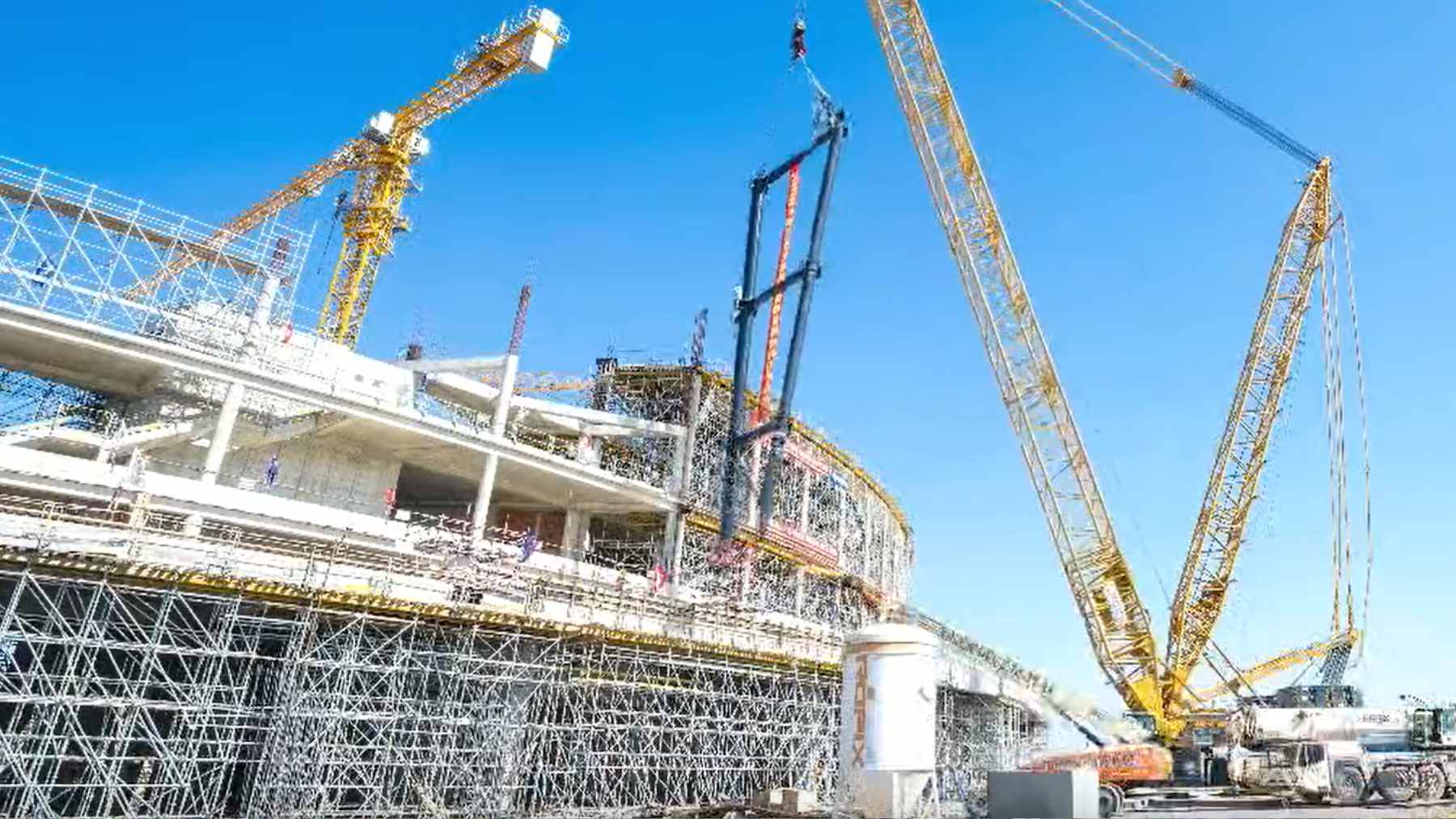
Serbia’s future national football home just crossed a very visible construction milestone. CSCEC says it has completed the first hoisting of the steel structure for the Serbia National Football Stadium in Belgrade, a project being billed as the world’s first “garden football stadium.”
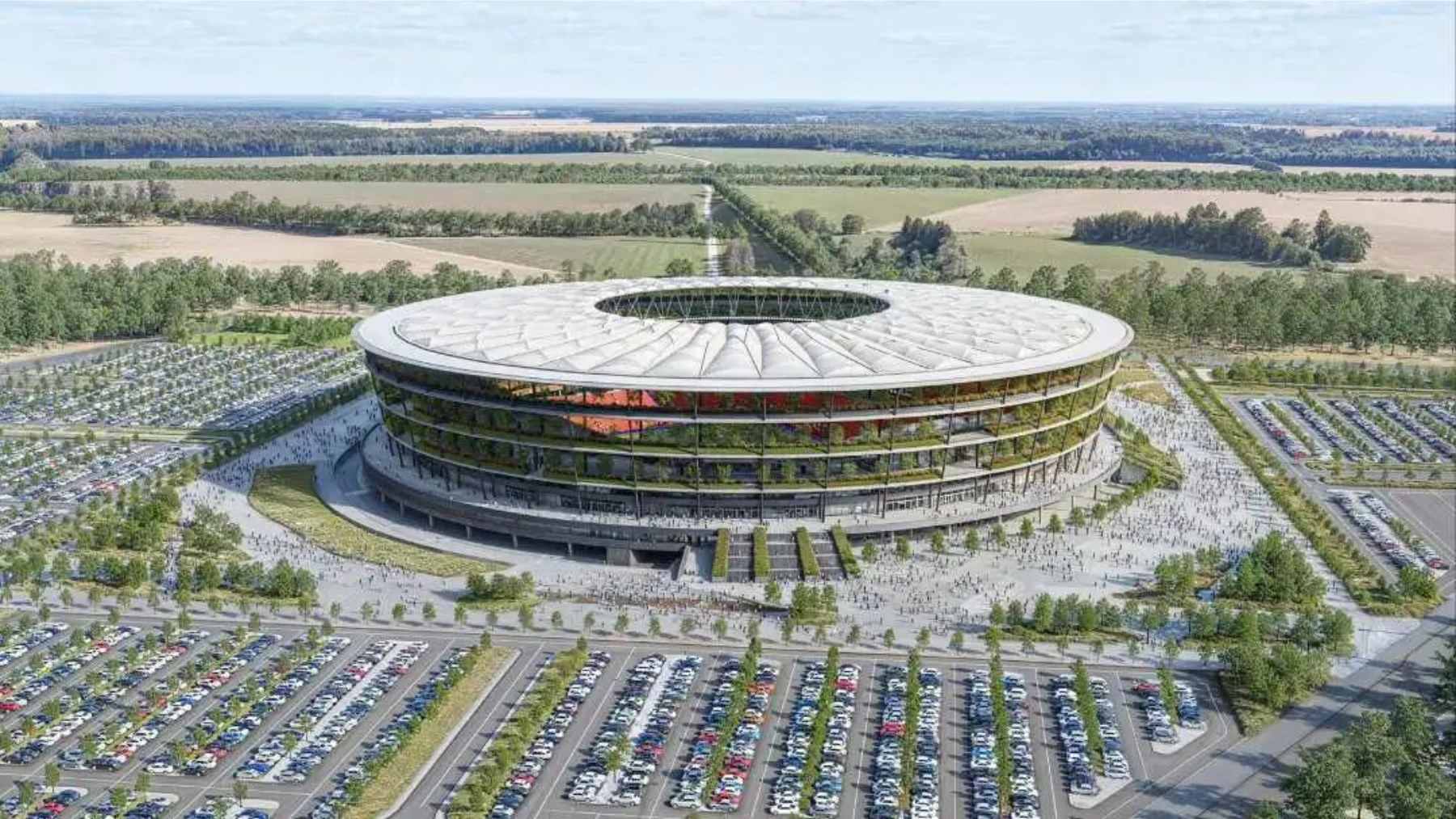
This is not just another arena with a few plants on the outside. The plan is to wrap a 52,000-plus seat stadium in cable-supported green rings, turning the building into a test of engineering, public spending, Chinese construction power, and the kind of “eco” design that still has to prove itself once the gates open.
Steel first, garden later
The new stadium will rise on the outskirts of Belgrade, in the municipality of Surčin, close to Nikola Tesla Airport and the future Expo 2027 area. Fenwick Iribarren Architects lists the Serbian government as the client and says the project is designed for 52,000 spectators.
CSCEC’s latest update puts the total floor area at about 76,000 m² and the steel volume at roughly 13,800 tons. That is the part now moving from renderings into real life, beam by beam.
Why this stadium is different
The headline feature is the façade. Instead of a conventional concrete or glass shell, the stadium is designed with four suspended rings connected by cables, with garden areas built into the structure.
Fenwick Iribarren says the stadium will include three levels of landscaped gardens around the venue, creating accessible hanging garden areas for residents, pedestrians, and tourists. In practical terms, the building is supposed to work beyond matchday, not sit quiet and empty between games.
But there is a catch. Trees, shrubs, soil, irrigation water, steel, and long-term maintenance all add weight and complexity, so the “green” look is only one part of the environmental story.
China’s role in Serbia’s megaproject
The project also shows how deeply Chinese state-backed builders are involved in Serbia’s biggest sports infrastructure plan. CSCEC says it is responsible for the design, fabrication, and installation of the steel structure, while PowerChina reported the 2024 groundbreaking for the stadium.
At that ceremony, Serbian President Aleksandar Vučić called the project “a significant construction endeavor,” according to PowerChina’s report. That phrasing fits the scale, but it also hints at the pressure around the deadline.
The stadium is tied to Serbia’s broader Expo 2027 push. Serbia’s government has said the new National Stadium, new fairground, aquatic center, residential buildings, and other Expo-related projects are part of a wider development plan for Belgrade and Surčin.
The green promise
The stadium’s designers describe the project as rooted in ecology and sustainability, with a green natural facade and year-round public areas. That sounds attractive, especially in a city where large sports venues can often feel like closed islands surrounded by traffic, noise, and exhaust fumes.
The energy system is another key piece. Fenwick Iribarren says the design aims for high energy efficiency, while engineering partners have described a heating and cooling approach based on four-pipe chillers that can reuse residual heat from cooling to help generate hot water.
Still, a garden stadium is not automatically a low-impact stadium. At the end of the day, its real environmental value will depend on water use, plant survival, energy demand, transport links, and whether people can reach it without sitting in long traffic jams.
What Serbia gets
For Serbian football, the stadium could fill a real gap. CSCEC says the venue will be the only stadium in Serbia built to meet both FIFA World Cup and UEFA European Football Championship standards.
That matters because it gives Serbia a modern national-team home and a stronger case for hosting major football events. StadiumDB reports the facility is expected to become the new home of the Serbian national football team and be completed by the end of 2026.
The price is another part of the story. StadiumDB estimates the cost at about 112.4 billion Serbian dinars, or close to $1 billion, which explains why the stadium has drawn scrutiny as well as excitement.
A stadium that still has to deliver
For now, the first steel hoisting is a milestone, not a finish line. The hardest part will be turning an ambitious drawing into a working stadium that can handle crowds, weather, plants, maintenance, and the daily reality of public infrastructure.
If the deadline holds, Serbia could soon have one of the most unusual football venues in Europe. A stadium that looks like a garden sounds simple enough, but making it work is anything but simple.
The official statement was published on CSCEC.