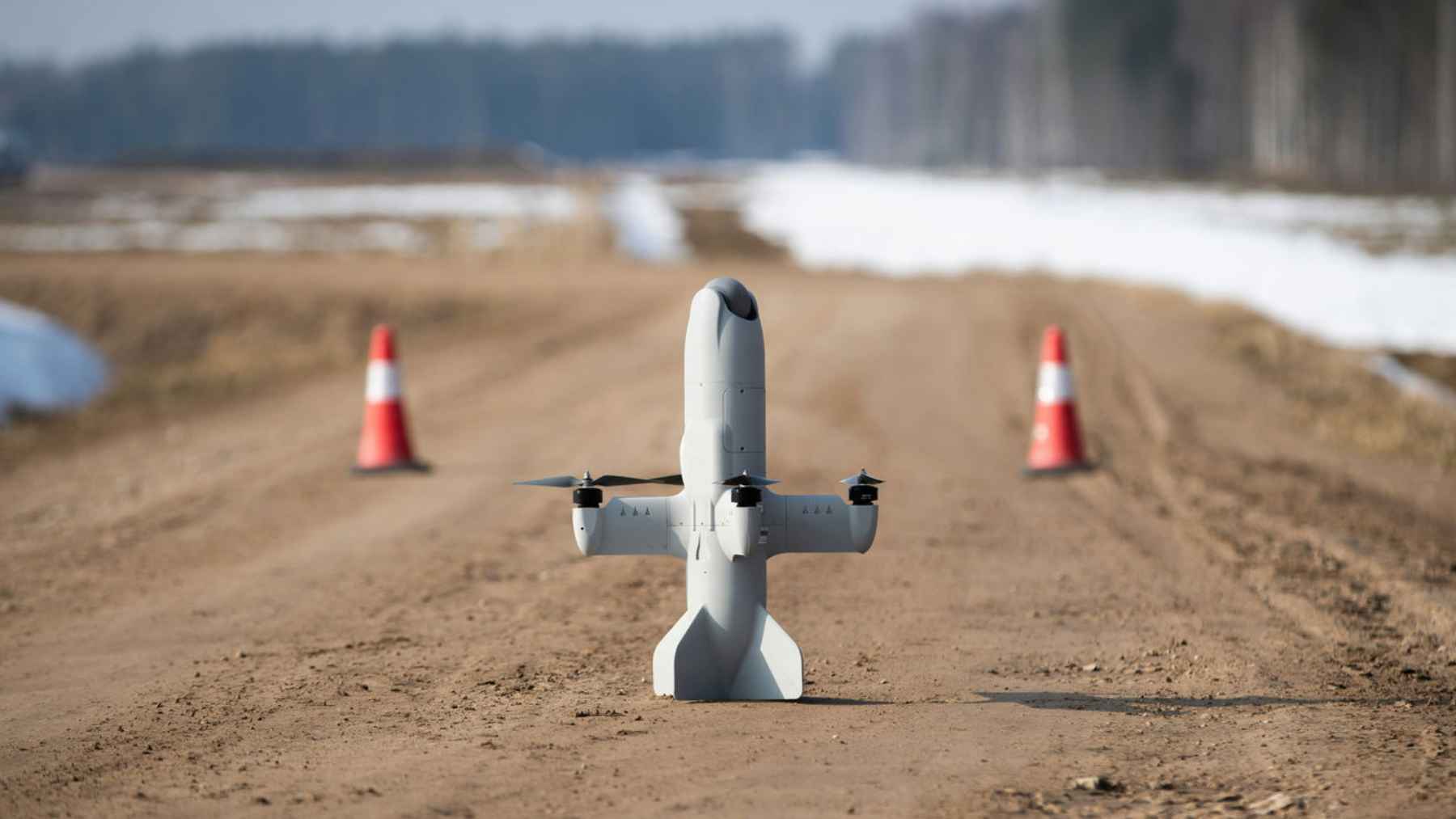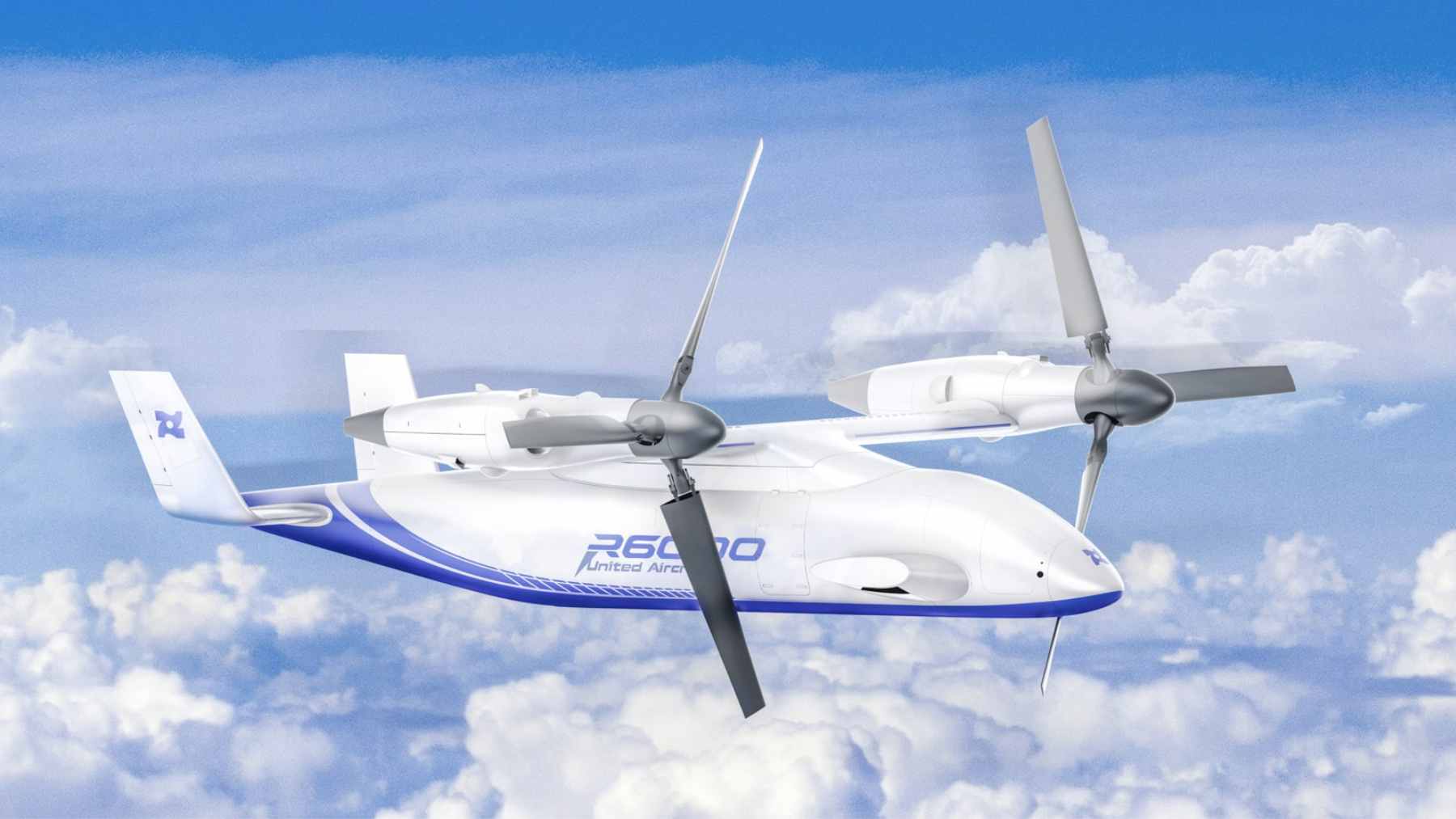
China’s R6000 autonomous tiltrotor has moved into free-flight testing, a milestone that turns the aircraft from a factory-floor concept into something much harder to ignore. New footage appears to show the large uncrewed aircraft hovering, turning in place, and then flying forward with its proprotors tilted, according to reporting by The War Zone.
The bigger story is not just that China is testing another drone, it is that this one is built around a simple but powerful idea: moving people or cargo without needing a runway. For remote islands, storm-hit communities, offshore sites, and military outposts, that could matter a lot.
A drone built for hard places
The Lanying R6000 is a tiltrotor aircraft developed by United Aircraft. In plain English, it is designed to take off and land like a helicopter, then fly forward more like an airplane once it is in the air.
United Aircraft lists a maximum takeoff weight of 13,448 lbs., a maximum payload of 4,409 lbs., a cruising speed of 342 mph, and a maximum range of 2,485 miles. The company also lists a service ceiling of about 25,000 ft. and a mission radius of 932 miles. That is a very different picture from the small quadcopters most people imagine when they hear the word “drone.”
Why free flight matters
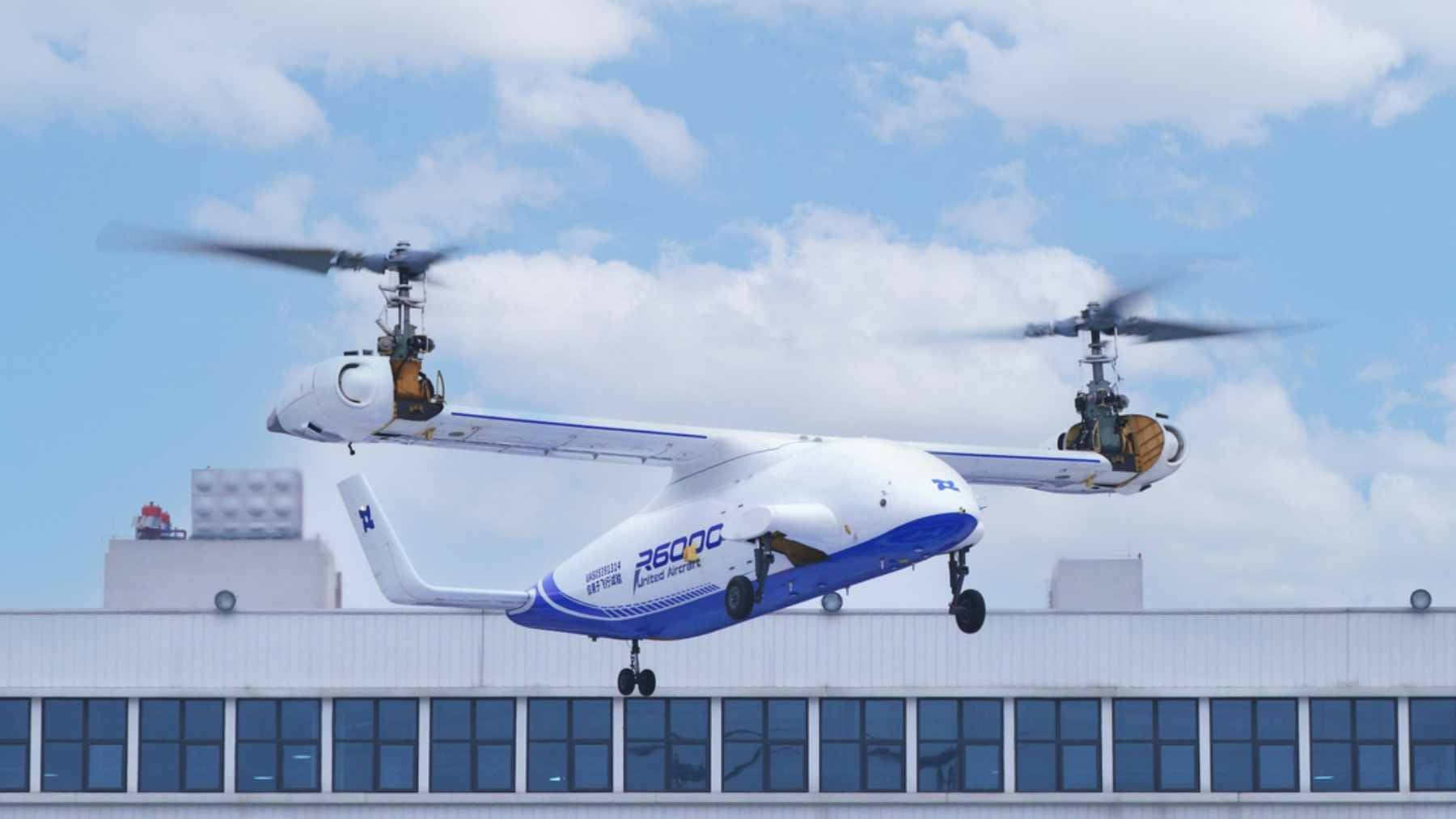
Earlier imagery had shown the R6000 in tethered hover testing, which means it was still physically restrained during basic lift checks. The newer footage suggests the aircraft has now moved beyond that stage, with untethered hover, rotation, and sustained forward flight visible in the test sequence.
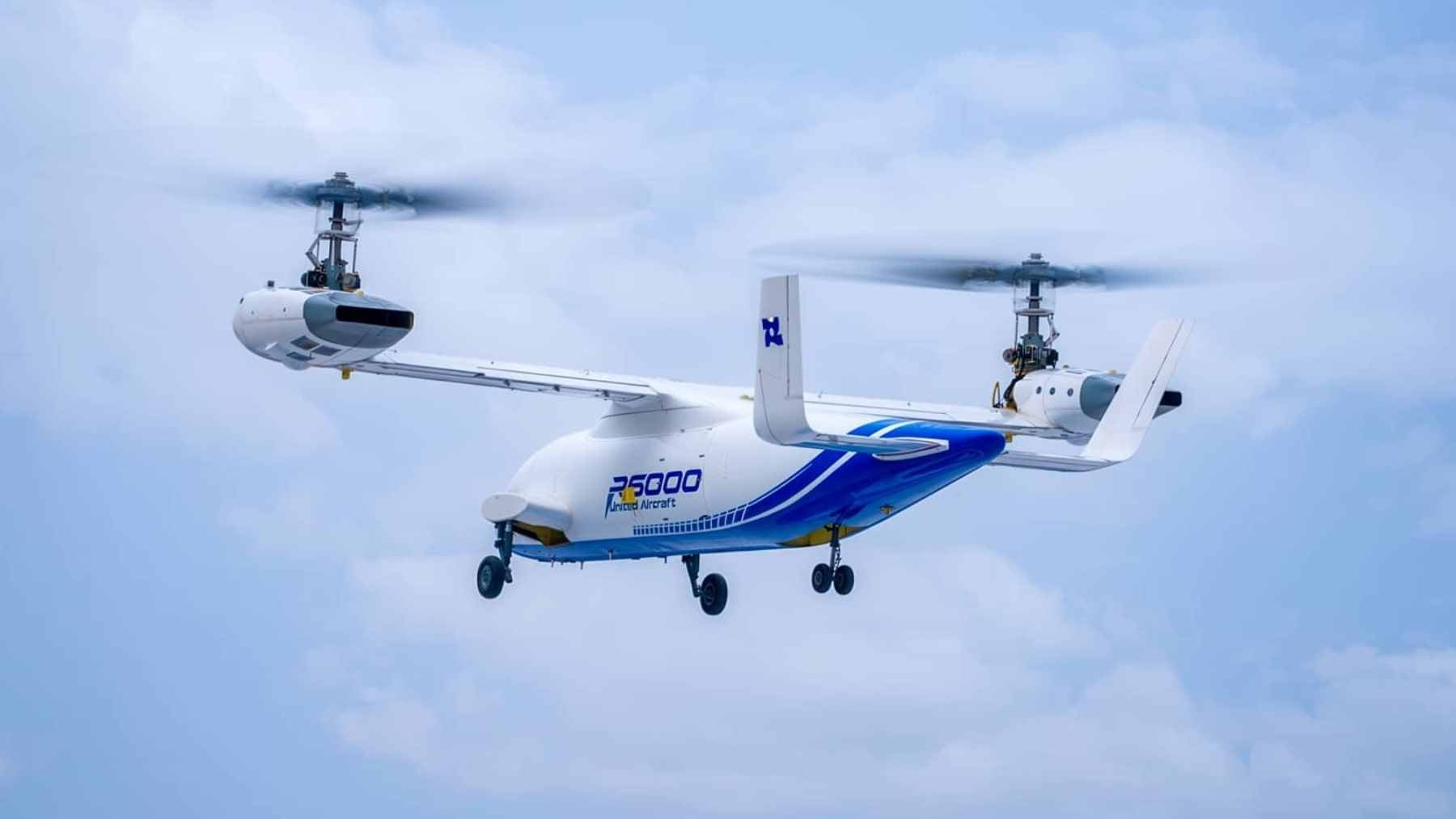
That does not mean the R6000 is ready for commercial service or military deployment yet. For a tiltrotor, free flight is a serious step, though, because the hard part is not only going up or forward, but safely managing the shift between both flight modes.
Civil pitch with an environmental edge
Officially, United Aircraft presents the R6000 as a civil aircraft for passenger travel, logistics, emergency rescue, and all-terrain operations. The company says it can operate with less dependence on infrastructure and without traditional runways, which is why mountains and islands appear so often in its marketing.
There is an environmental angle here, but it should be handled carefully. A runway-independent aircraft could reduce the need for new roads, pads, or airstrips in fragile places, and it could move supplies after floods, fires, or hurricanes when ground routes are blocked.
On the other hand, United Aircraft has not published fuel-burn or emissions data for the R6000, so calling it “green” would be a stretch.
Why militaries are watching
The same features that make the aircraft useful in a disaster also make it interesting to defense planners. The War Zone notes that a platform in this class could help sustain remote People’s Liberation Army island bases in the South China Sea, isolated border installations, and large amphibious ships such as China’s Type 076.
That is the nature of dual-use technology. A cargo bay can carry medical supplies after a storm, but it can also carry sensors, spare parts, ammunition, or communications gear. At the end of the day, the aircraft does not care what is inside the box.
A different tiltrotor choice
The R6000 does not follow the exact design logic of the V-22 Osprey, the best-known American tiltrotor. Reporting from Global Times, citing United Aircraft, says the R6000 uses a tilting rotor shaft arrangement rather than a fully rotating engine nacelle, an approach meant to avoid some high-temperature exhaust issues during takeoff and landing.
Small detail? Not really. Heat, rotor wash, and exhaust can decide whether an aircraft can safely operate from a ship deck, a rough landing zone, or a tight urban pad. For rescue crews or island logistics teams, practical details like that can matter more than the brochure numbers.
What remains unknown
The R6000 still has plenty to prove. United Aircraft has listed headline figures, but the company has not published detailed data tied to the latest free-flight campaign, including test duration, transition profile, autonomy limits, reliability, or how range changes when the aircraft carries a heavy payload.
China Daily reported after the aircraft’s maiden flight that United Aircraft planned to pursue tilt-mode testing, full-process flight tests, and airworthiness certification work before moving into practical use cases such as business travel, logistics, and emergency response. That is the less glamorous part of aerospace, but it is where projects either mature or stall.
The runway question
If the R6000 works as advertised, its most important feature may not be speed or payload. It may be the ability to make runways less central to logistics, whether the mission is reaching a mountain village, moving supplies to an offshore platform, or keeping a remote base alive during a crisis.
That is why this aircraft is worth watching. It sits at the crossroads of tech, business, disaster response, and defense, with real questions still hanging over safety, cost, emissions, and operational reliability.
The official product information was published on United Aircraft.