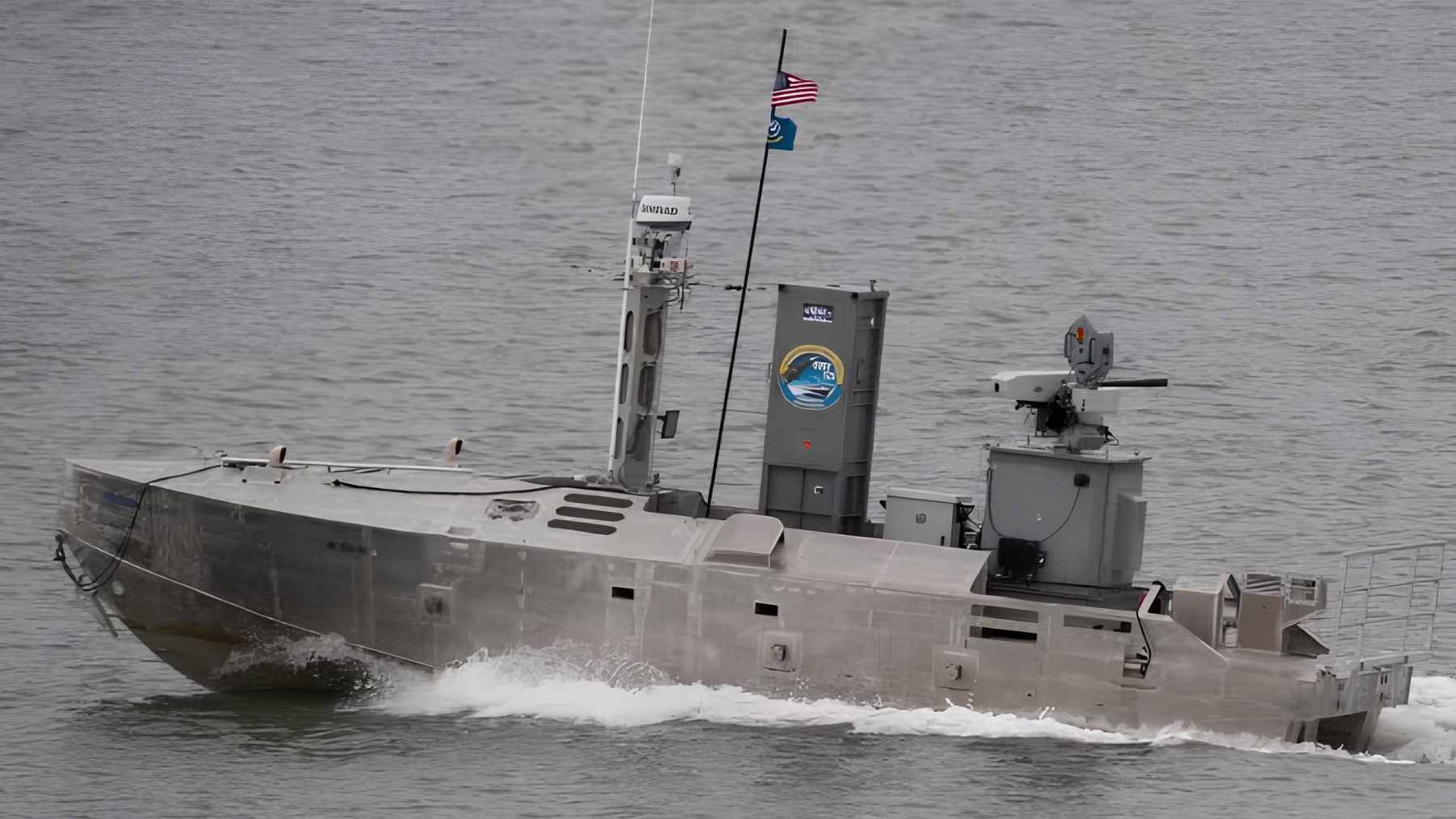
The U.S. Navy is preparing for a very different kind of fleet in the Indo-Pacific. Instead of relying only on big crewed warships, the service is looking toward thousands of unmanned surface vessels, more than 30 medium robot boats, and aircraft launched from both manned and unmanned ships by 2030.
That is a military story, of course. But it is also a technology, business, and environmental story, because putting machines across one of the world’s most important ocean regions raises hard questions about fuel, noise, maintenance, maritime safety, and how much human activity the sea can absorb. The Pacific is not an empty blue map.
A fleet without crews
Capt. Garrett Miller, commander of Surface Development Group One, said the Navy expects more than 30 Medium Unmanned Surface Vessels (MUSVs) in the Indo-Pacific by 2030, along with thousands of smaller unmanned surface vessels. Those figures, he said, are tied to projected regional requirements looking toward 2045.
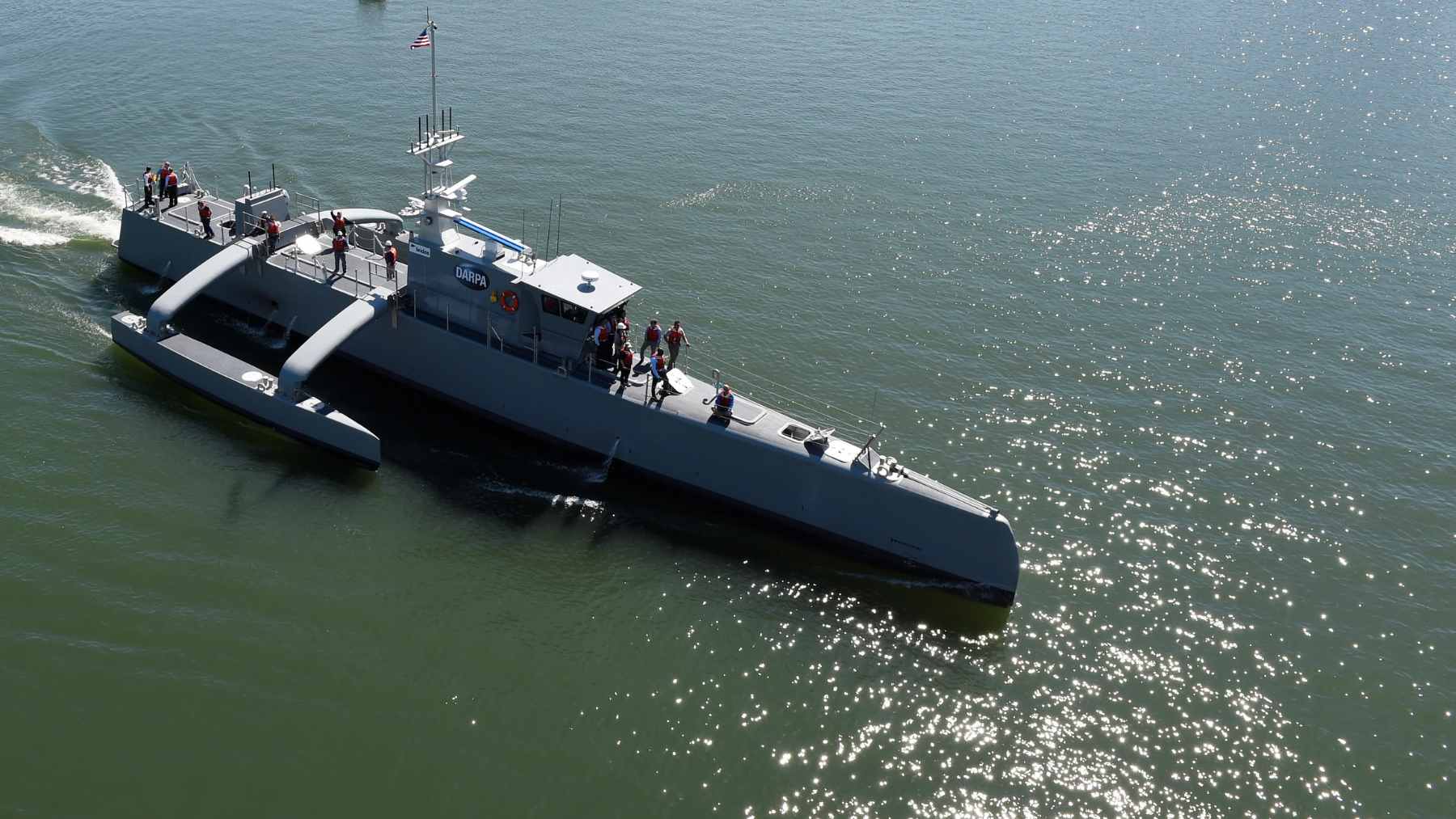
In practical terms, these vessels are floating sensor platforms. The Navy says Sea Hunter and Seahawk, its first autonomous MUSVs, are designed to extend the view of manned ships and support maritime domain awareness and anti-submarine warfare. Each is about 135 ft. long and roughly 157 tons at full load.
Why the Pacific matters
The Indo-Pacific concentrates trade routes, military bases, island chains, and disputed waters involving China, Taiwan, the Philippines, Japan, Australia, and the United States. That geography explains why Washington wants more eyes on the water without placing sailors on every platform.
But distance changes everything. Rear Adm. Douglas Sasse warned that tactics seen in the Black Sea or Red Sea do not translate neatly to the Pacific, where unmanned boats must travel far longer distances with fewer places to hide or recover. As he put it, in the Pacific, “there are no trees to hide behind.”
From experiment to operation
The Navy has already tested this idea at scale. During Integrated Battle Problem 23.2, four unmanned vessels named Mariner, Ranger, Seahawk, and Sea Hunter traveled 46,651 nautical miles while navigating mostly by autonomous systems and visiting ports in Japan and Australia.
That kind of trial matters because robot ships are not just drones with propellers. They must handle corrosion, waves, traffic, communications gaps, refueling, software decisions, and coordination with carrier strike groups. Out on the open ocean, nothing is simple.
The business behind the boats
The Navy’s push also fits into the Pentagon’s Replicator initiative, which was designed to speed up the fielding of autonomous systems across several domains. The first Replicator tranche included uncrewed surface vehicles, uncrewed aerial systems, and counter-drone systems, with the Pentagon emphasizing scalable production and commercial technology.
That opens the door for defense contractors, software companies, sensor makers, shipbuilders, and newer technology firms.
The Pentagon said its maritime PRIME process received more than 100 applications from commercial technology companies, a sign that unmanned ships are becoming a serious industrial market, not just a naval experiment.
The environmental question
More vessels at sea usually means more fuel, more maintenance, more electronics, and more sound in the water. NOAA notes that marine mammals, fish, and invertebrates rely on sound for basic life functions, and that human-made sound can disrupt feeding, breeding, communication, and movement.
The International Maritime Organization has also warned that underwater-radiated noise from ships can have short-term and long-term consequences for marine life, especially marine mammals.
That does not mean every unmanned vessel is automatically an ecological threat, but it does mean the Navy’s robot fleet will need careful routing, noise management, and fuel planning as it grows.
Logistics will decide a lot
One recent test shows where the hard work begins. Military Sealift Command said the oiler USNS Guadalupe delivered nearly 700 gallons of diesel ship fuel to the MUSV Seahawk off Southern California during an astern refueling demonstration, calling it a proof of concept for deployed unmanned operations with a carrier strike group.
That small detail says a lot. A robot boat fleet is only useful if it can stay at sea, talk to commanders, share data, avoid collisions, and come home for repair. At the end of the day, autonomy is not just about removing people from the deck. It is about building a whole new way for ships to work together.
What to watch next
For the most part, the Navy is not saying these unmanned vessels will replace crewed warships soon. The model being tested is a mixed fleet, where robot boats, aerial drones, underwater systems, destroyers, carriers, and shore commands all pass information across a wider network.
That could give commanders more options and reduce risk to sailors. On the other hand, it could also place more machines across sensitive waters where marine life, fishing communities, and commercial shipping already compete for space. The technology may be moving fast, but the ocean keeps its own clock.
The report was published on USNI News.