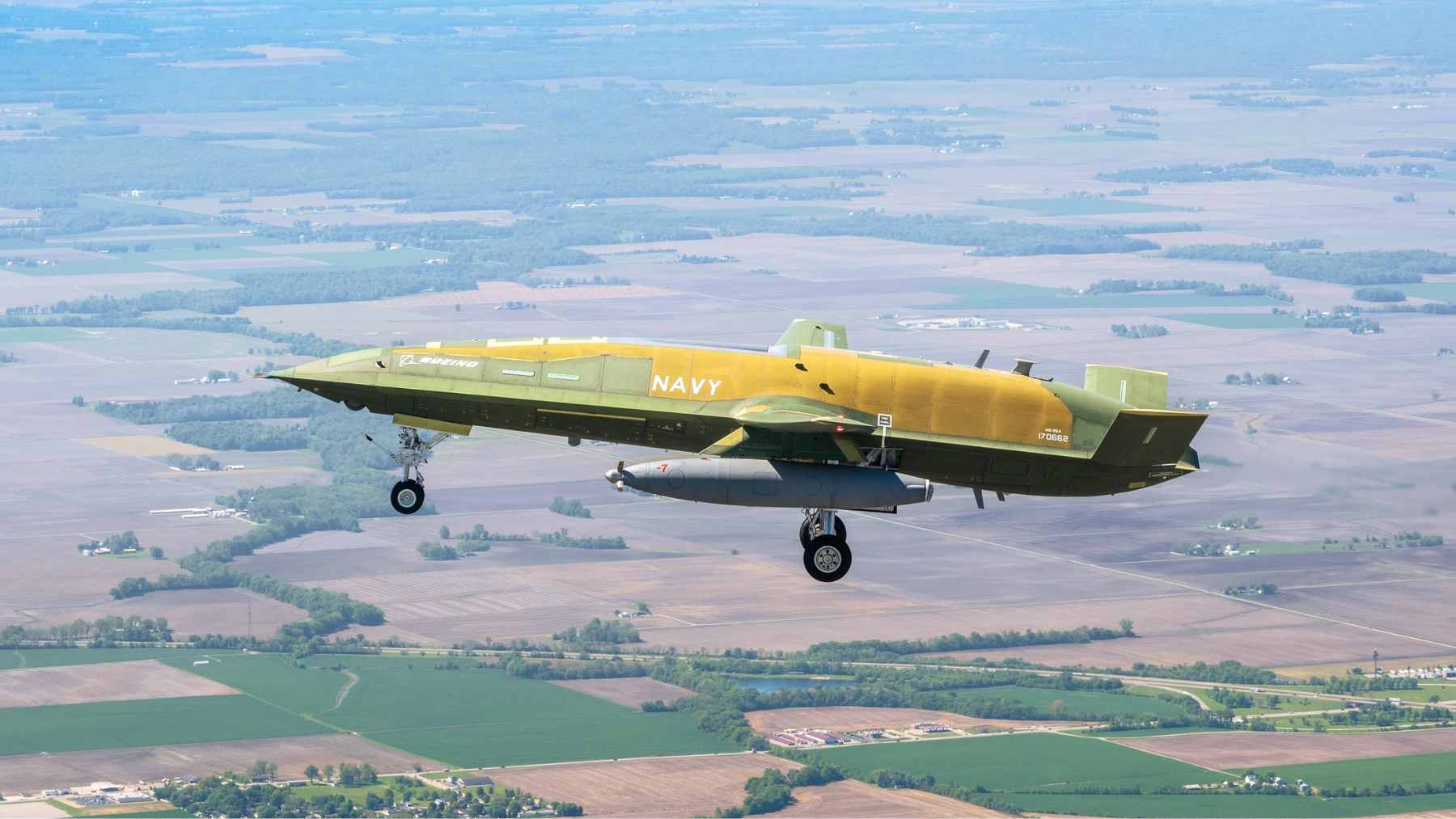
The U.S. Navy has moved its MQ-25A Stingray from promise to flight, completing the first test flight of an operational version of the uncrewed tanker on April 25, 2026, at Boeing’s facility at MidAmerica Airport in Mascoutah, Illinois.
The flight lasted about two hours and tested basic controls, engine performance, and handling, according to Naval Air Systems Command.
This matters because aircraft carriers live and die by range. A fighter that has to turn back early can miss the mission, while a tanker that can safely top it off in the air gives commanders more room to work. The bigger question is simple enough: can a drone take over one of the Navy’s most important fuel jobs without putting another pilot in harm’s way?
A new kind of tanker
The MQ-25A is designed to be the Navy’s first operational carrier-based unmanned aircraft system. Its main job is aerial refueling, which means it can pass fuel to fighters in flight and help extend the reach of the carrier air wing.
During the test, Navy and Boeing air vehicle pilots controlled the aircraft from the MD-5 ground control station. Boeing said the Stingray demonstrated autonomous taxi, takeoff, flight, landing, and response to commands before running a preplanned mission that checked navigation and integration with the control system.
Rear Adm. Tony Rossi called the flight “the first step in integrating unmanned aerial refueling onto the carrier deck.” That line is important. This is not just another drone in the sky, but a possible change in how a carrier deck works.
Freeing up fighter jets
Today, F/A-18 Super Hornets often handle “buddy tanking,” a setup where fighter jets carry fuel for other aircraft instead of focusing on combat roles. The Navy and Boeing say the MQ-25A would let those Super Hornets return to strike fighter duties while the drone takes more of the refueling load.
In practical terms, that’s more aircraft doing the jobs they were built to do. It also means a carrier could push its air wing farther from the ship, a useful edge when long-range missiles and contested airspace make every mile matter.
But nobody should read this as a magic fix. Carrier aviation still depends on fuel, maintenance crews, safe deck choreography, and a lot of planning. One new aircraft can change the math, but it does not erase the hard parts.
The fuel problem is bigger than one drone
At home, energy shows up as the electric bill, gas prices, or during summer heat waves. At sea, it shows up as tanker routes, deck space, and whether aircraft can stay in the fight long enough to matter.
That is where the environmental piece enters the story. The MQ-25A is not green technology in the usual sense. It burns jet fuel and supports longer military flights, but it also highlights a bigger reality recognized inside the defense world. Fuel demand, supply chain resilience, and real-time energy visibility are now part of military planning.
The Department of the Air Force has made the same point in plainer terms, saying fuel could become “the margin of victory” in major power competition. Its operational energy work has included better flight planning, drag reduction, and training tools that save fuel, money, and aircraft wear.
A business and engineering bet
The Stingray is also a business story. Boeing says this aircraft is the first of four Engineering Development Model aircraft covered under the original $805 million engineering and manufacturing development contract.
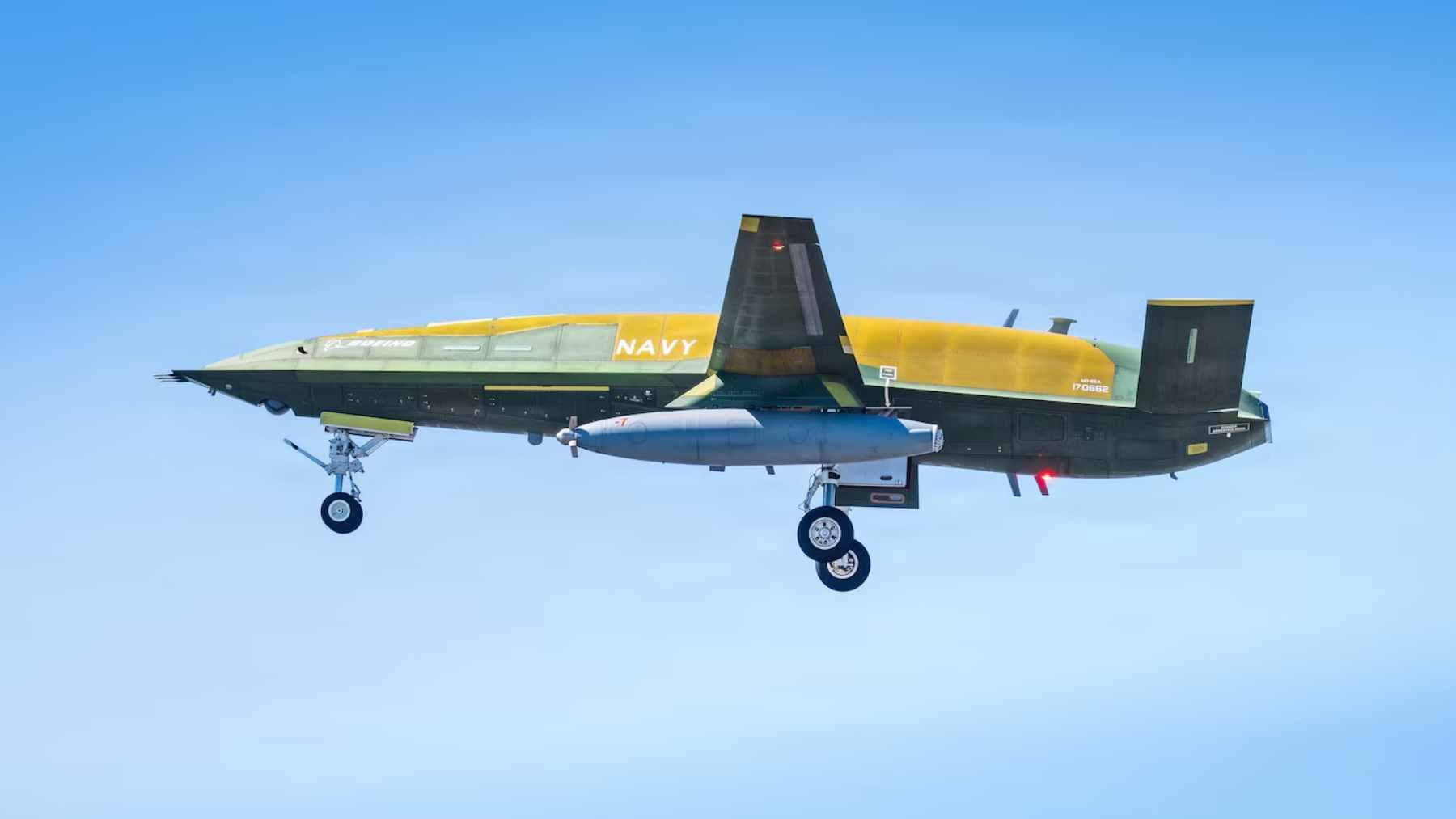
This is no tiny machine. Boeing lists the MQ-25A at 75 feet of wingspan when spread, 31.3 feet when folded for carrier storage, and 51 feet long. It is powered by one Rolls-Royce AE 3007N engine, and Rolls-Royce says the broader program of record covers 76 aircraft plus spare engines.
Those numbers explain why the first flight drew attention beyond naval aviation circles. The project touches defense manufacturing, software, engine supply chains, and carrier operations all at once. That is a lot riding on a two-hour test over Illinois.
Why tanker safety is under scrutiny
Refueling aircraft rarely make headlines when everything goes well. They become visible when something goes wrong.
In March, AP reported that all six crew members aboard a KC-135 refueling aircraft died after a crash in western Iraq while supporting operations against Iran.
Military Times also reported that five KC-135 tankers were damaged on the ground at Prince Sultan Air Base in Saudi Arabia, although President Donald Trump disputed the scale of the damage and said most of the aircraft had little or no damage.
These incidents do not prove the MQ-25A is safer overall. They do show why tanker availability and crew risk matter so much. A pilotless tanker operating from a carrier could reduce exposure for some refueling missions, even as the Navy still has to prove the system can handle the unforgiving pace of life at sea.
What happens next
The test flight starts a wider flight test program, not an overnight deployment. NAVAIR says the integrated test team will continue ground control station integration, expand the flight envelope, and verify performance before the aircraft moves to Naval Air Station Patuxent River later this year.
After that comes the harder part, preparing for carrier qualifications. Anyone who has watched a jet land on a moving ship knows why that matters. There is no room for sloppy software or wishful thinking.
For now, the message is clear. The Navy’s first operational carrier-based unmanned aircraft is airborne, and the fight over range, fuel, risk, and environmental cost just got a new player.
The press release was published on NAVAIR.