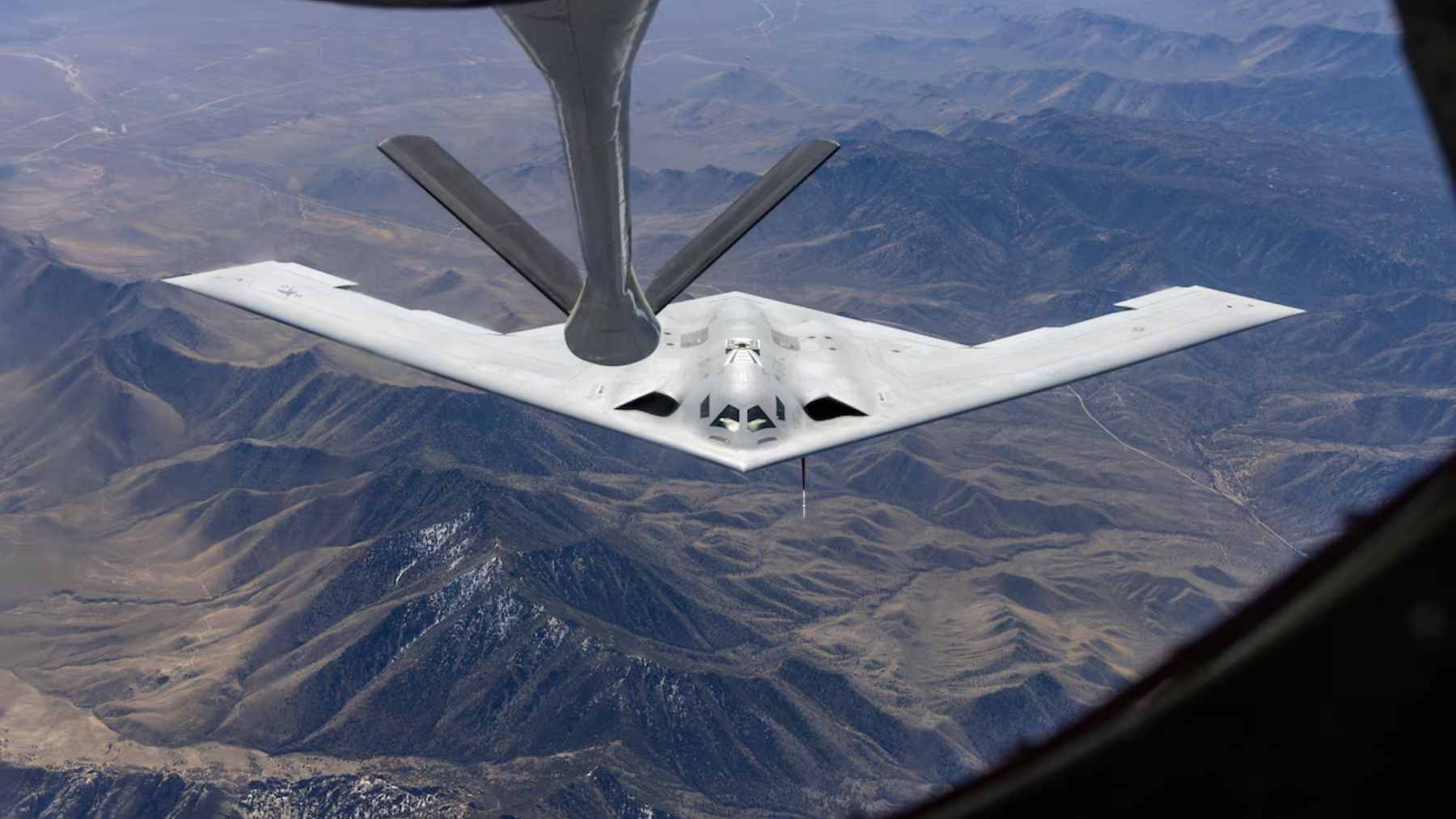
The B-21 Raider just moved another step closer to becoming the backbone of America’s future bomber fleet, and the latest milestone is not just about stealth. New official images and statements show the sixth-generation aircraft refueling in flight from a KC-135 Stratotanker, a key test for any bomber expected to operate across enormous distances.
That matters because the Raider is being sold as more than a hard-to-detect aircraft. Northrop Grumman says it is the most fuel-efficient bomber ever built, consuming only a fraction of the fuel used by older fourth and fifth-generation aircraft.
That means fewer tanker demands, less logistical strain, and a different kind of environmental question inside military aviation.
A stealth bomber with a fuel angle
The B-21 is being developed by Northrop Grumman for the U.S. Air Force as a long-range stealth bomber designed to replace the B-2 Spirit and B-1 Lancer over time. It will operate alongside other aircraft as part of a modernized bomber force, with Ellsworth Air Force Base in South Dakota expected to receive aircraft in 2027.
At first glance, the big story is invisibility. Recent reporting has compared the Raider’s radar signature to something as tiny as a mosquito, though exact radar cross-section figures remain sensitive and are not publicly confirmed in official detail.
The safer takeaway is still striking, this aircraft is built to make detection and targeting much harder.
Why refueling matters
So why is an aerial refueling photo such a big deal? Because a long-range bomber is only as useful as its ability to stay in the air, reach distant targets, and return without tying up too much of the rest of the force.
The Air Force said the KC-135 refueling milestone demonstrates the rapid maturation of the B-21 weapon system. Northrop Grumman’s Tom Jones said teams are moving the aircraft through testing at an “unprecedented pace,” including aerial refueling.
The hidden cost of airpower
Military aviation has a huge logistical tail. Behind every aircraft in the sky are tankers, fuel crews, maintenance teams, spare parts, runways, and planning cells working like an invisible traffic system.
That’s where fuel efficiency becomes more than a line on a spec sheet. For most people, saving fuel means a lower electric bill or fewer stops at the gas station. For the military, it can mean fewer tanker sorties, fewer aircraft exposed in contested airspace, and less pressure on bases and supply chains.
Not exactly a green machine
Still, it would be wrong to call a nuclear-capable stealth bomber an environmental breakthrough. This is a combat aircraft designed for deterrence, and if ordered, long-range strike missions in some of the world’s most dangerous airspace.
Within that reality, efficiency still matters. If the Raider can do more with less fuel, that could reduce some of the fuel burden tied to tanker operations and long-distance deployments. At the end of the day, defense technology is also infrastructure, and infrastructure always leaves a footprint.
A smaller aircraft with bigger ambitions
The B-21 looks similar to the B-2 Spirit, with its smooth flying-wing shape, but it is expected to be smaller and lighter. The details that stand out in recent imagery include deeply blended air inlets, a carefully shaped rear section, and a low-observable design meant to reduce radar and infrared signatures.
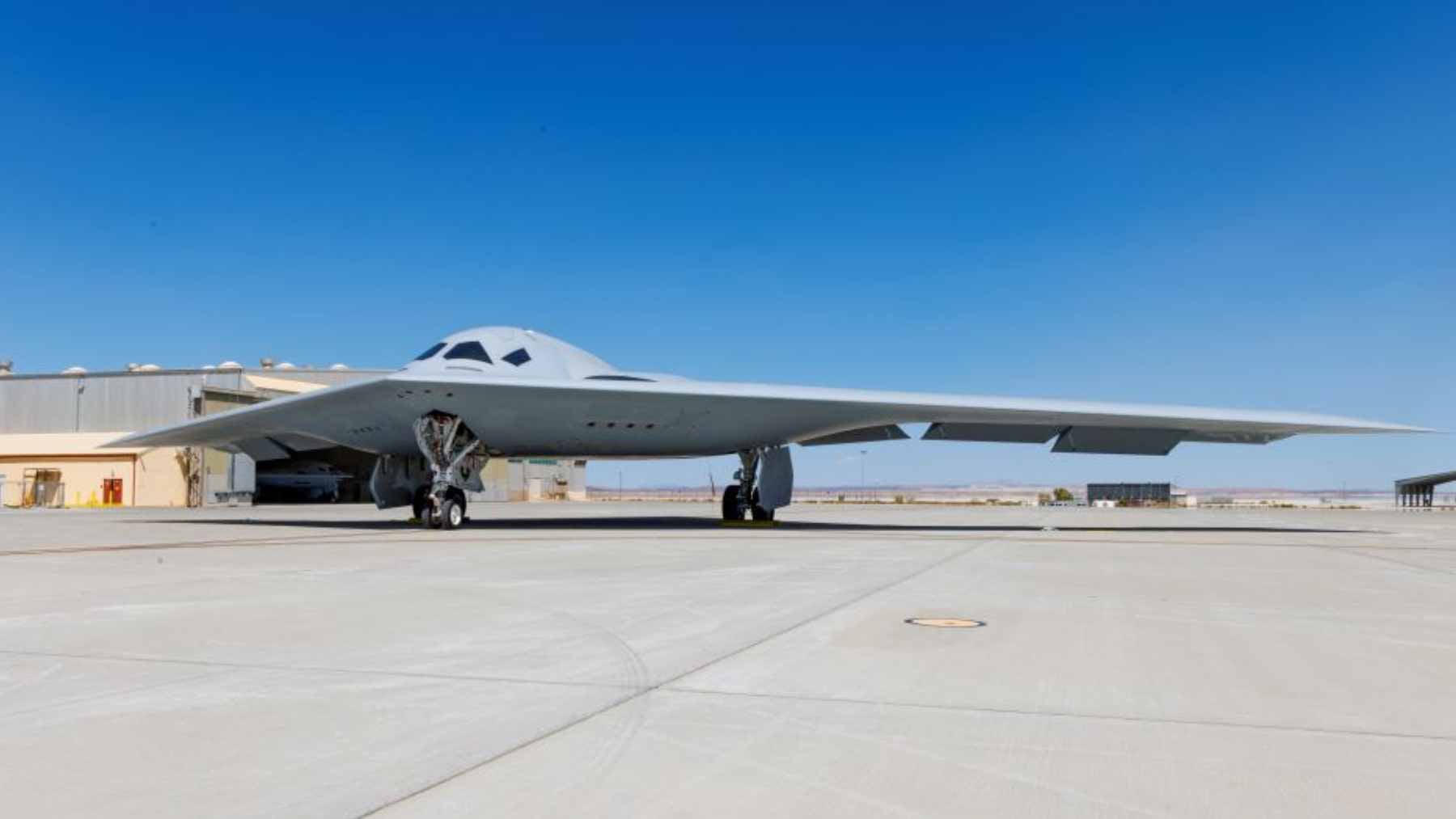
The aircraft also uses an open systems architecture, meaning the Air Force wants to upgrade it more easily as threats change. That matters because a bomber entering service in the late 2020s will likely face very different sensors, missiles, and electronic warfare systems over its lifetime.
Testing is speeding up
The program took another important step on September 11, 2025, when a second B-21 test aircraft flew from Palmdale, California, to Edwards Air Force Base. Officials said the added jet expands testing beyond early flight checks and into mission systems and weapons integration.
That may sound routine, but it is a major part of turning an advanced prototype into an operational aircraft. More test aircraft mean more data, more maintenance experience, and more chances to find problems before the bomber reaches front-line units.
What readers should keep in mind
The Raider story sits at the crossing point of technology, defense spending, and environmental pressure. It is a stealth bomber first, but the fuel-efficiency claim points to a broader trend in military design, where range, survivability, and logistics are increasingly tied together.
There is also a business angle here. Northrop Grumman says it has invested more than $5 billion in digital technologies and manufacturing infrastructure for the B-21 program, while the Department of the Air Force has moved to expand production capacity. That means the aircraft is not just a military project, it is also a major industrial bet.
The official statement was published on U.S. Air Force.