A touchscreen usually needs a steady finger to work. Clara Pereira, who was born with severe cerebral palsy and does not speak, could never reliably give it one. Her involuntary movements made most communication tools nearly impossible for her to use.
Her father, Carlos Pereira, could not find a system that adapted to her body. He felt he had no choice, so he learned programming at night and built Livox, which has since grown into a Brazilian alternative communication platform used by tens of thousands of people.
The idea behind it is simple: technology should adapt to the person using it, not the other way around.
No tool fit Clara’s movements
Before he ever wrote a line of code, Pereira looked for something ready-made. The options he found ranged from basic cardboard boards to imported devices that cost thousands of dollars. Most of them also required a precise tap, something Clara’s involuntary movements made really hard to pull off.
At the time, he was running a rehabilitation clinic, helping care for Clara, and teaching himself to code after everyone else had gone to bed. He and his wife, Aline Pereira, founded Livox in 2013. What started as something built for their own daughter ended up being something a lot of families needed too.
How alternative communication works
Augmentative and alternative communication, usually shortened to AAC, is basically the umbrella term for any way people communicate when speech is difficult or not possible.
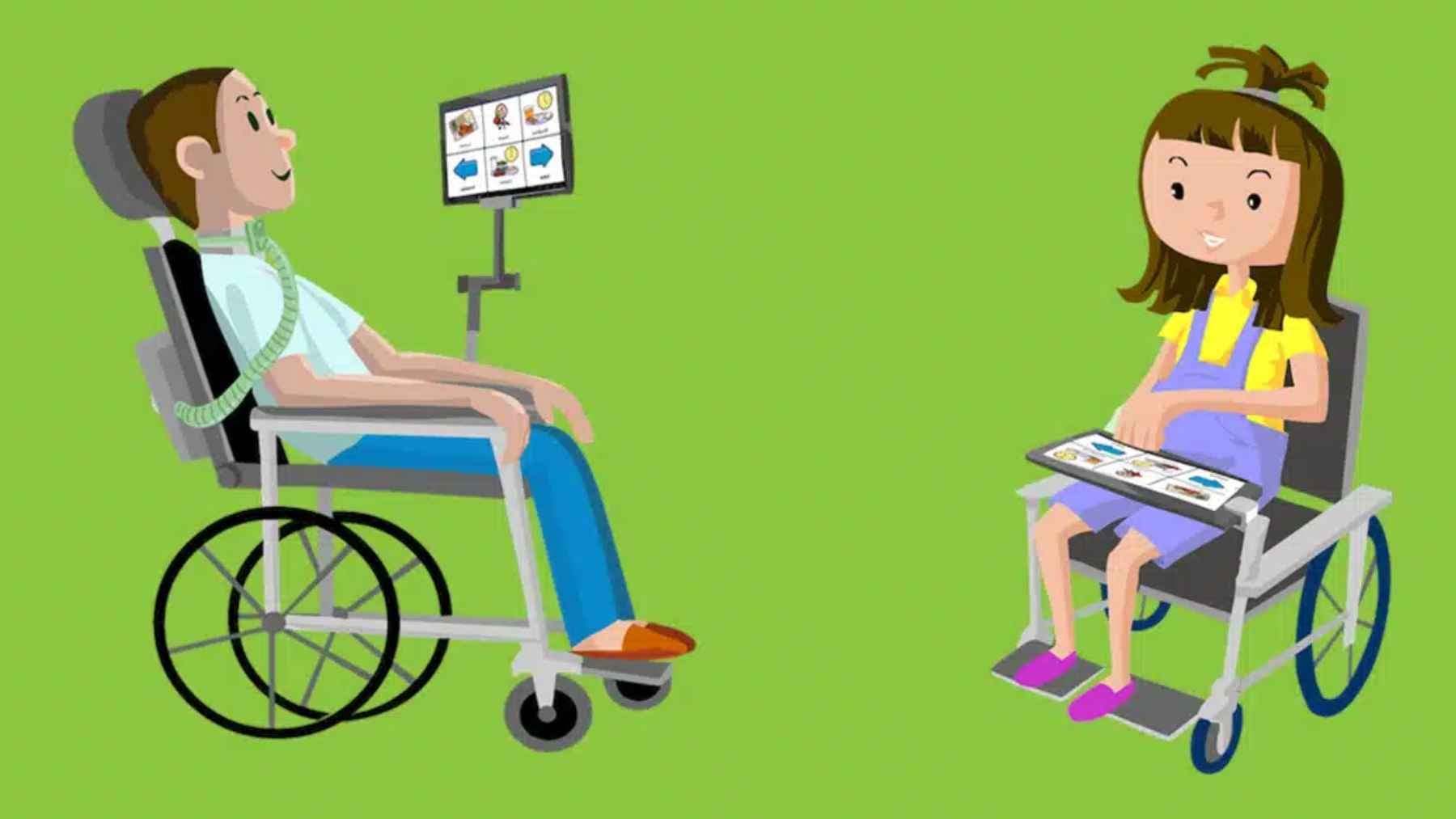
According to the American Speech-Language-Hearing Association, that can mean gestures, picture boards, or speech-generating apps. Livox uses customizable cards with images, words, sounds, and commands so a user can build a sentence, answer a question, or state a need.
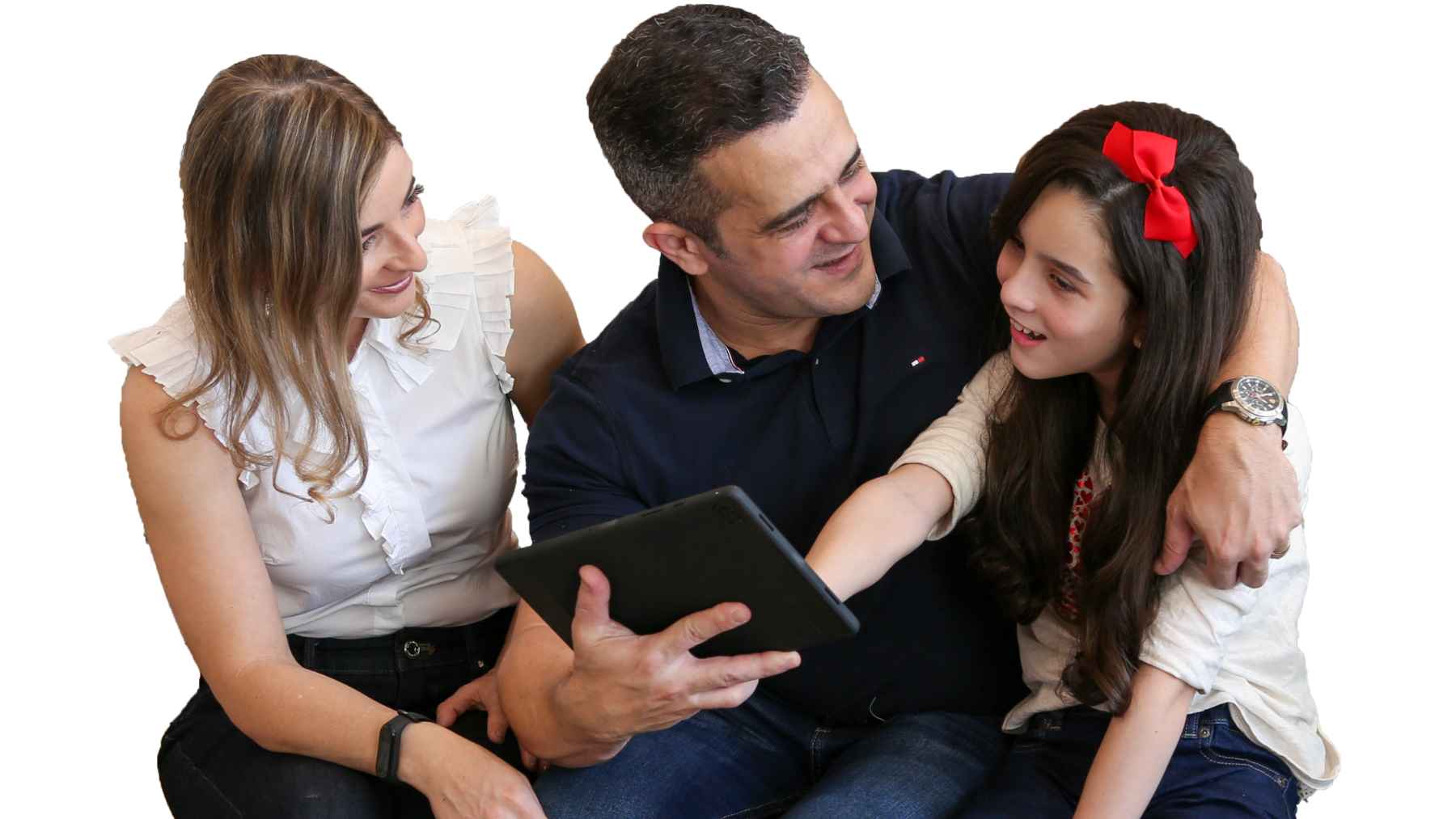
The crucial feature is adaptive touch. Livox pays attention to how a person actually interacts with the screen, their movement patterns, hesitations, missed attempts, and adjusts the layout and how it responds based on that.
That means it can learn to ignore an accidental tap caused by a tremor instead of treating every touch as a command.
Eyes can become a fingertip
For people who cannot control their hands, Livox can use the tablet’s front camera to follow eye movements and blinks. A look can do what a touch used to do, and it doesn´t need any special hardware to work. In practice, a glance is enough to choose a word, picture, or an answer.
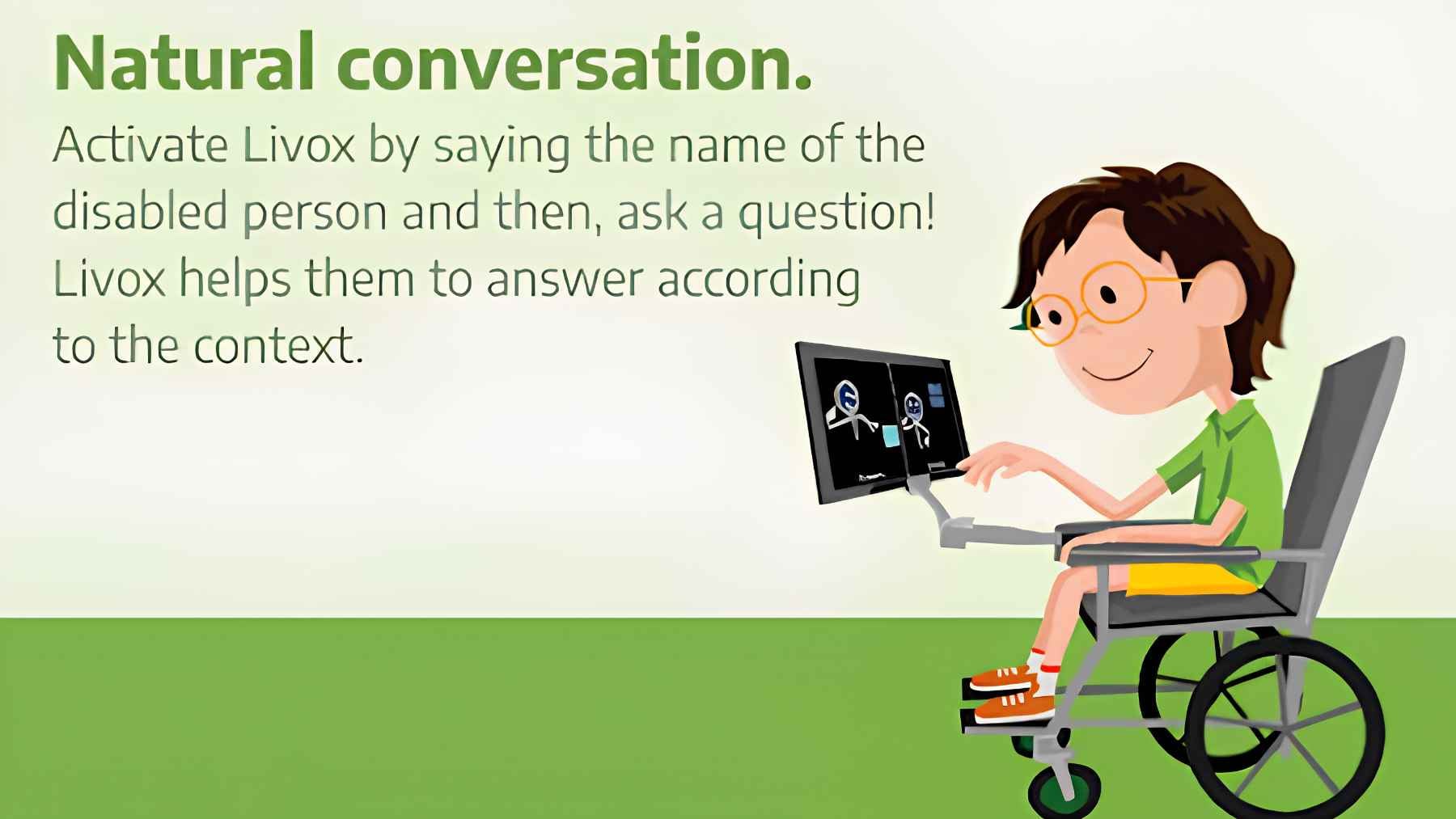
The platform also uses AI to predict likely answers from the conversation, a method known as natural language processing. So if someone asks about food, the screen can bring up choices connected to hunger, yes, no, or a meal. Fewer screens to search can mean a faster, less tiring exchange.
Clara could show who she was
Before Livox, her family had to guess a lot, reading her expressions, gestures, reactions and hoping they got it right.
The system gave Clara a more direct way to share her preferences, feelings, jokes, and opinions. “Livox gave me the power to show the world that I can read, write, and have my own identity,” she said.
Her story draws an important line between not speaking and not understanding. Not being able to speak out loud doesn’t say anything about what someone knows, even though the abilities and support needs look different for everyone.
That is part of why accessible communication can end up changing more than what someone says. It can change how people see them.
From family conversations to classrooms
Livox has grown beyond cerebral palsy to other users. It is now used by people with autism, Down syndrome, multiple sclerosis, stroke-related limitations, and other neurological or developmental conditions.
The software can alter card size, contrast, colors, and menu layout depending on someone’s motor, cognitive, or visual needs. Teachers and therapists can also review progress in areas such as communication, learning, and behavior.
Its content portal turns the same interface into a learning tool, with boards and activities built by families, educators, professionals, and users. Some lessons even line up with Common Core standards used in U.S. schools. So this isn’t just a voice at the dinner table. It is also a workbook in the classroom.
Growth comes with uneven numbers
The latest numbers do not match perfectly. Forbes España reported more than 65,000 users in 11 countries in June 2026, while the current MIT Solve profile lists 75,000 users.
A separate official finalist profile says Livox is active in 24 countries and translated into 25 languages, and none of those sources really explains why the numbers differ.
The safest way to read this is that Livox has reached tens of thousands of people around the world, and different organizations are probably just counting dates, markets or users in different ways.
That lack of tidy reporting does not erase what Levix has accomplished, but it is worth being upfront about it when you are talking about impact at this scale. Numbers should open the story, not settle it.
A finalist, not the winner
In May 2026, Livox made it to the final round of a social innovation competition in Madrid. The top prize ended up going to the Spanish health platform Aitheroscope, while Livox and two other finalists each received about $11,600 and entry into a support network.
That conversion uses the European Central Bank’s May 21 reference rate.
“We are not just giving people a voice; we are giving them a way to participate,” Pereira said. For Clara, who was 18 at the time of the event, that idea isn’t abstract. She joins her father at conferences and uses assisted communication to show what she knows.
The official press release on Livox’s 2026 finalist recognition was published by Fundación Mapfre.