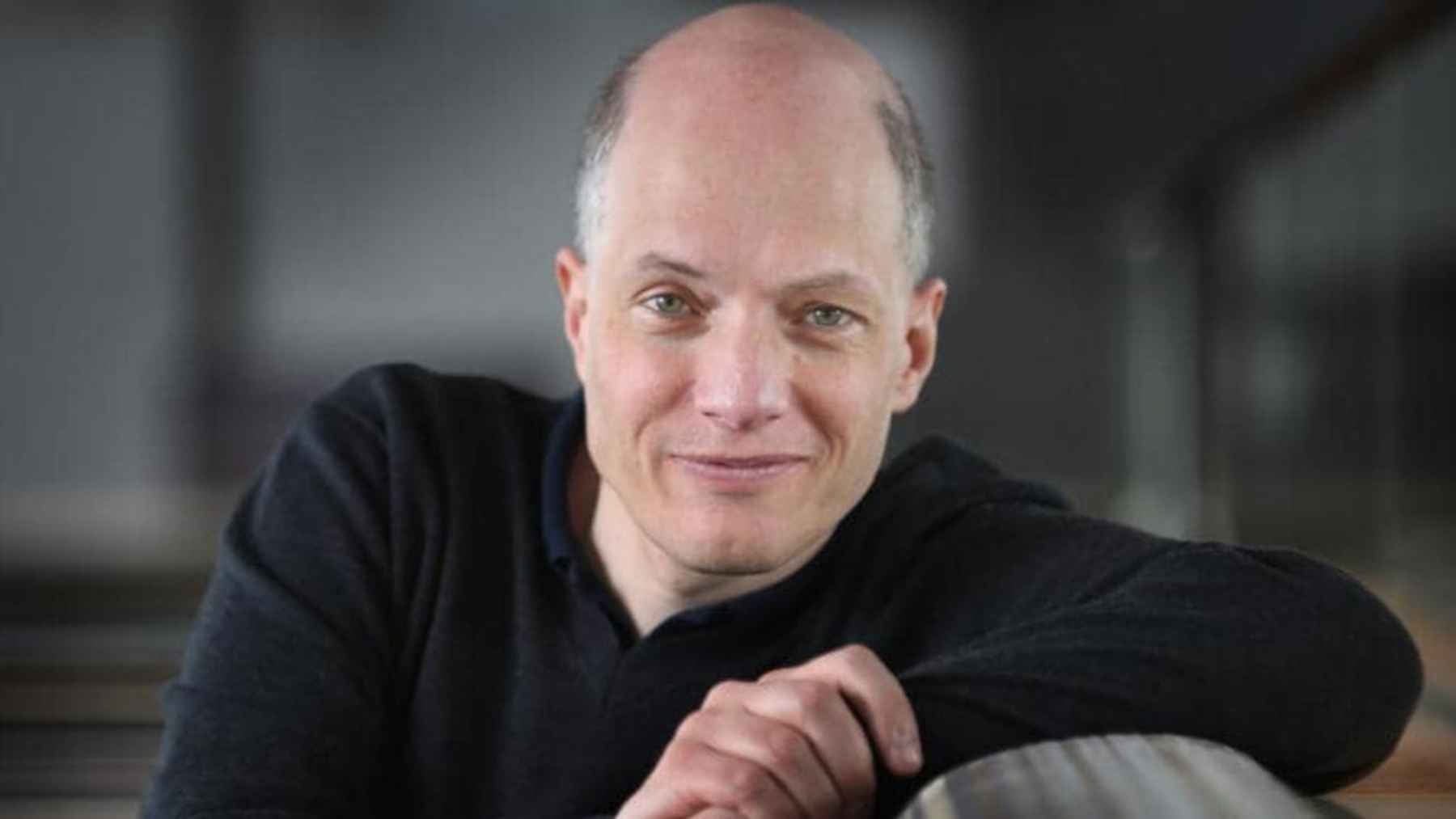
Arthur Brooks has a direct message for anyone who treats happiness like a finish line. The people who seem most alive, he argues, are not always the ones chasing the next achievement. They are often the ones who still want to learn something new.
In a recent reflection shared online, Brooks put the idea in simple terms. “The happiest people are the ones who never stop learning.” The key, he added, is that they do it from curiosity, not pressure, not résumé building, and not fear of falling behind.
Curiosity keeps the mind awake
What is curiosity, really? It is the pull that makes a person ask one more question, open a book for no practical reason, or try a hobby that looks a little awkward at first. In Brooks’ view, that small spark can change the emotional tone of ordinary life.
Brooks, a Harvard University professor who teaches on leadership and happiness, has built much of his public work around the science of well-being. His official profile also describes him as a podcast host and author of several books on happiness and purpose.
Learning without pressure
Brooks is not talking about cramming for a test or stacking certificates like trophies. His point is much more down-to-earth. Read about space, learn a few words in another language, plant tomatoes, or follow a question that popped into your head during breakfast.
In his post on learning and happiness, Brooks wrote that curious people learn “not out of obligation, but out of curiosity.” He also linked that curiosity to interest, joy, satisfaction, and happiness, which helps explain why the habit feels energizing instead of exhausting.
What research says
The idea also lines up with research on lifelong learning. A 2024 PLOS One study of 300 adults aged 65 and older in Singapore found that positive attitudes toward lifelong learning were associated with quality of life, while participation in class activities was linked with all three measures of well-being used by the researchers.
The authors were careful to say the study showed a connection, not proof of cause and effect.
Another study, highlighted by UCLA in 2025, looked at more than 1,200 adults between ages 20 and 84. Researchers found that a specific form of curiosity, the momentary desire to learn something new, rose after middle age and continued upward into old age.
Not all curiosity is the same
The details matter here. A 2023 study in Personality and Individual Differences found that “interest-curiosity” was linked with benefits such as higher happiness, open-mindedness, problem-solving confidence, and empathic listening among 393 adults in the United Kingdom.
Another type, driven more by a tense need to close an information gap, showed fewer benefits.
In practical terms, that means curiosity works best when it feels like a door opening, not another demand on your schedule. There is a big difference between wondering how birds navigate across continents and doom-scrolling because you cannot stop. One expands the day. The other often shrinks it.
A small habit with a large effect
Brooks’ message lands at a time when many people hear “self-improvement” and immediately think of productivity, more output, more skills, and more ways to prove value at work. But what if one of the better routes to happiness is quieter than that?
Try asking one real question a day. Why does bread rise in the oven, or how does your phone know where you are? These are small things, but small things are often what make a normal Tuesday feel less flat.
Brooks’ bigger lesson
At the end of the day, Brooks is pushing back against the idea that happiness comes only after the next milestone. His message is more human than that. Keep learning because the world is still interesting, and because your mind needs room to stretch.
That does not mean curiosity is a cure for grief, depression, loneliness, or stress. Experts would warn against making the claim that simple habits can fix serious problems on their own. Still, for the most part, Brooks is pointing to something accessible, a way of staying open to life.
The main work has been published in Office Hours with Arthur Brooks.