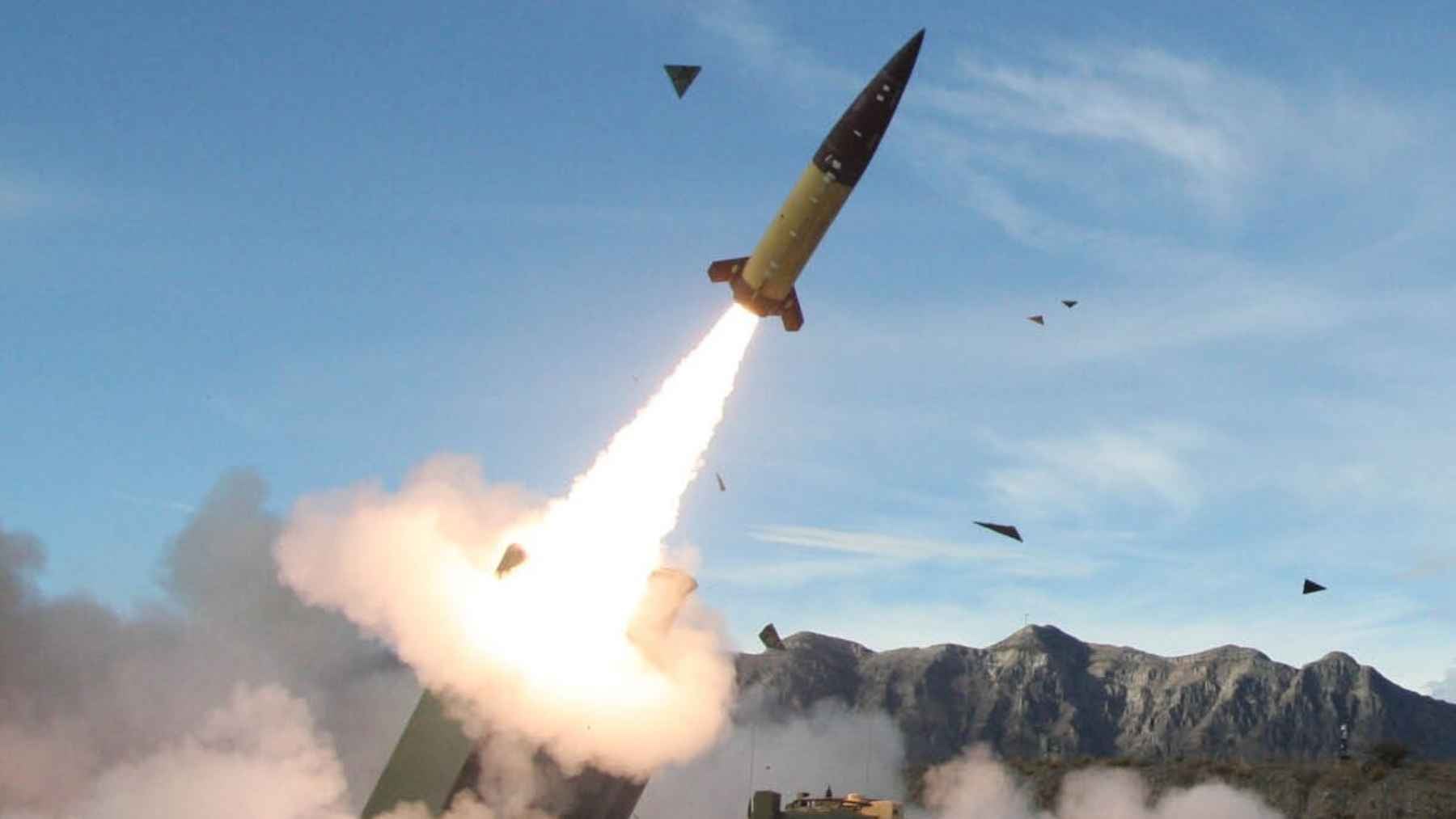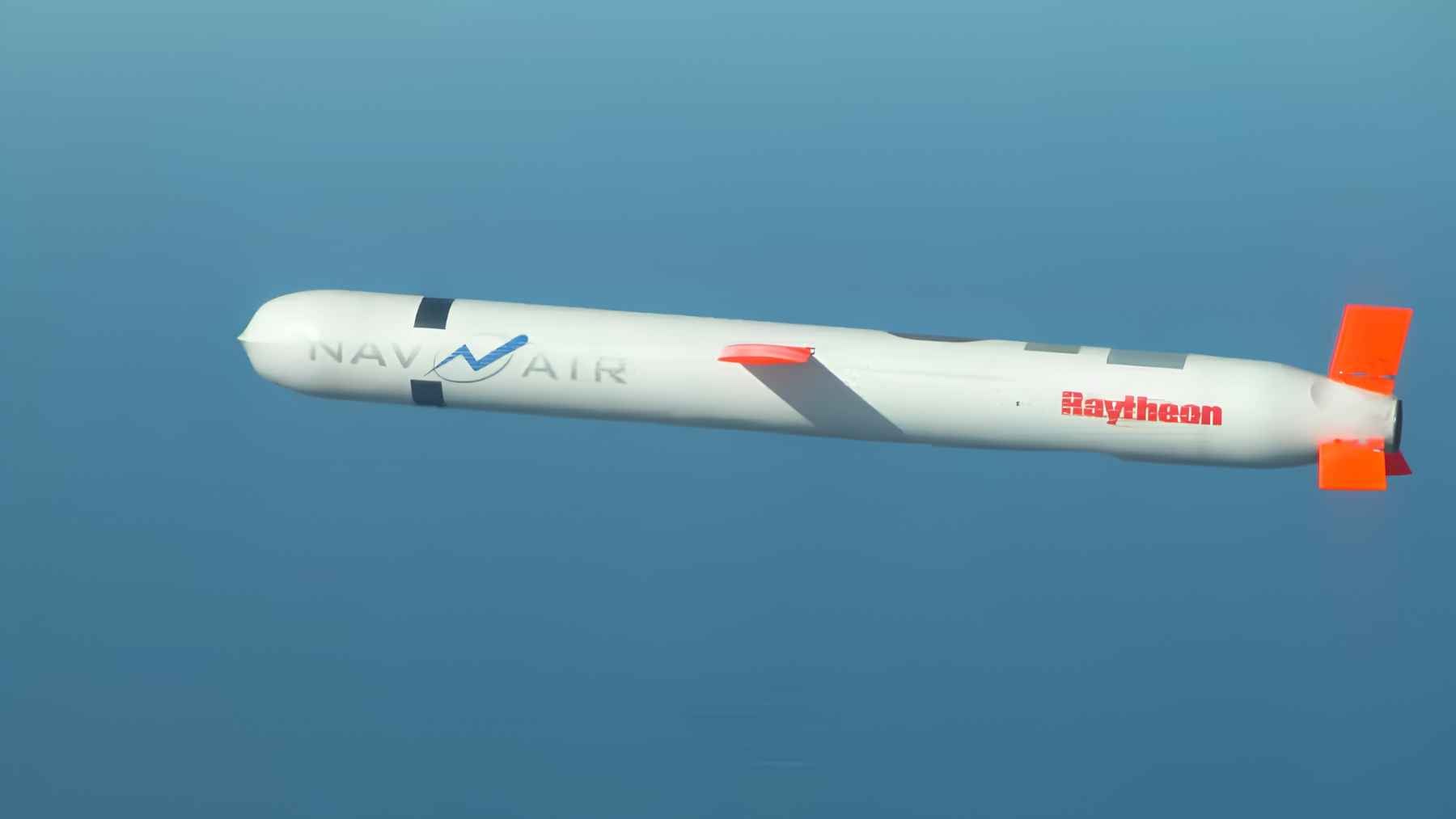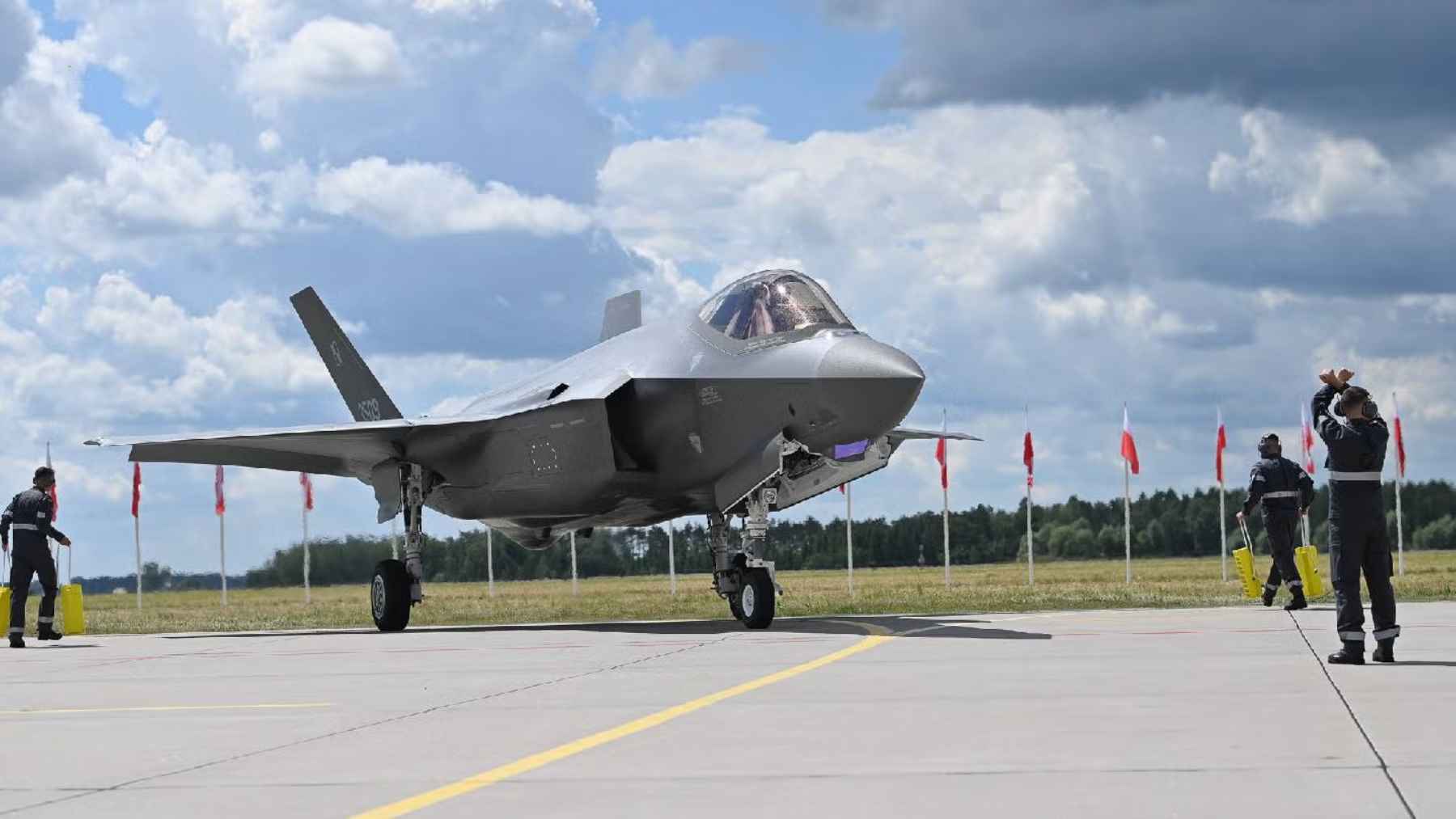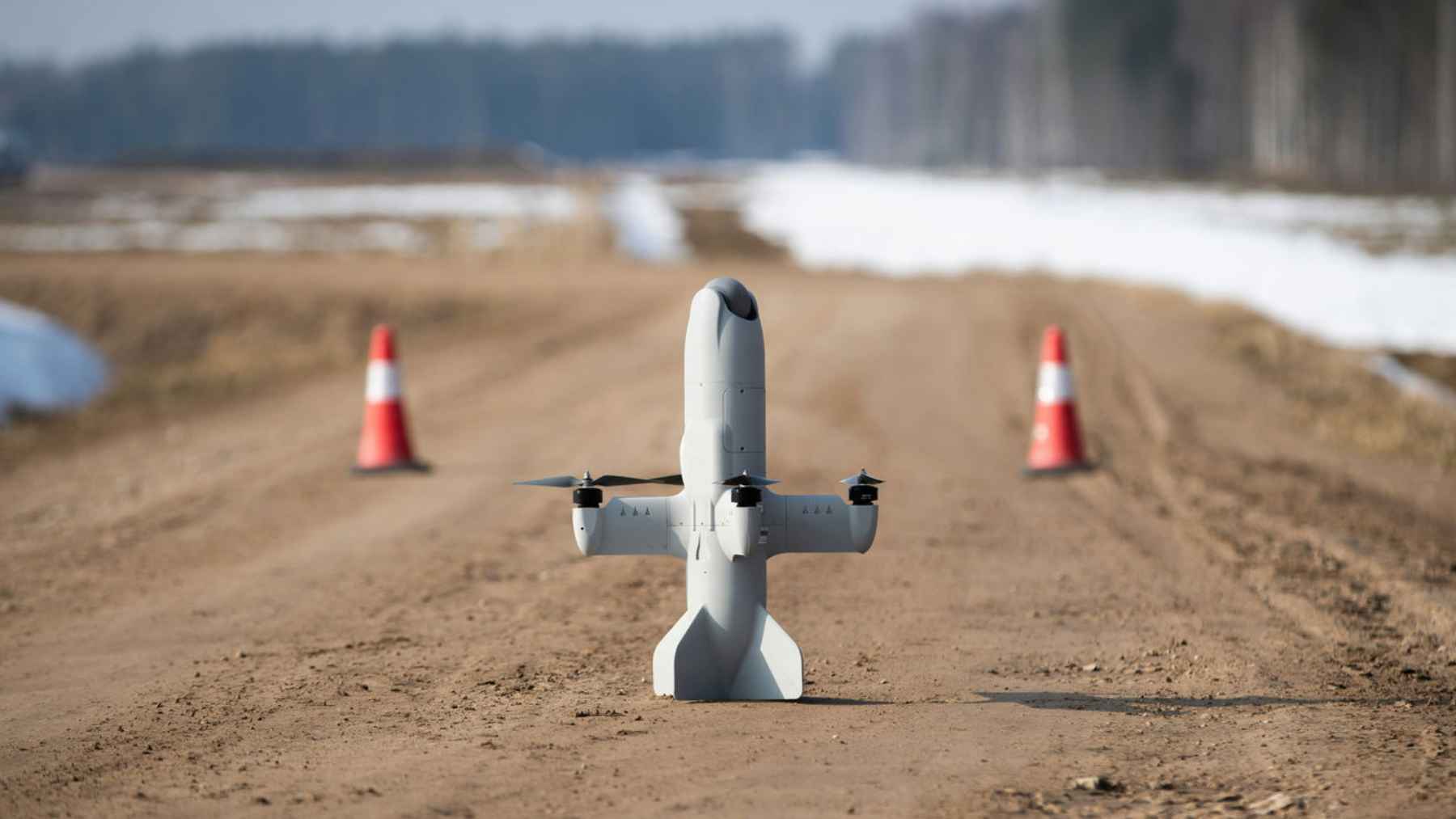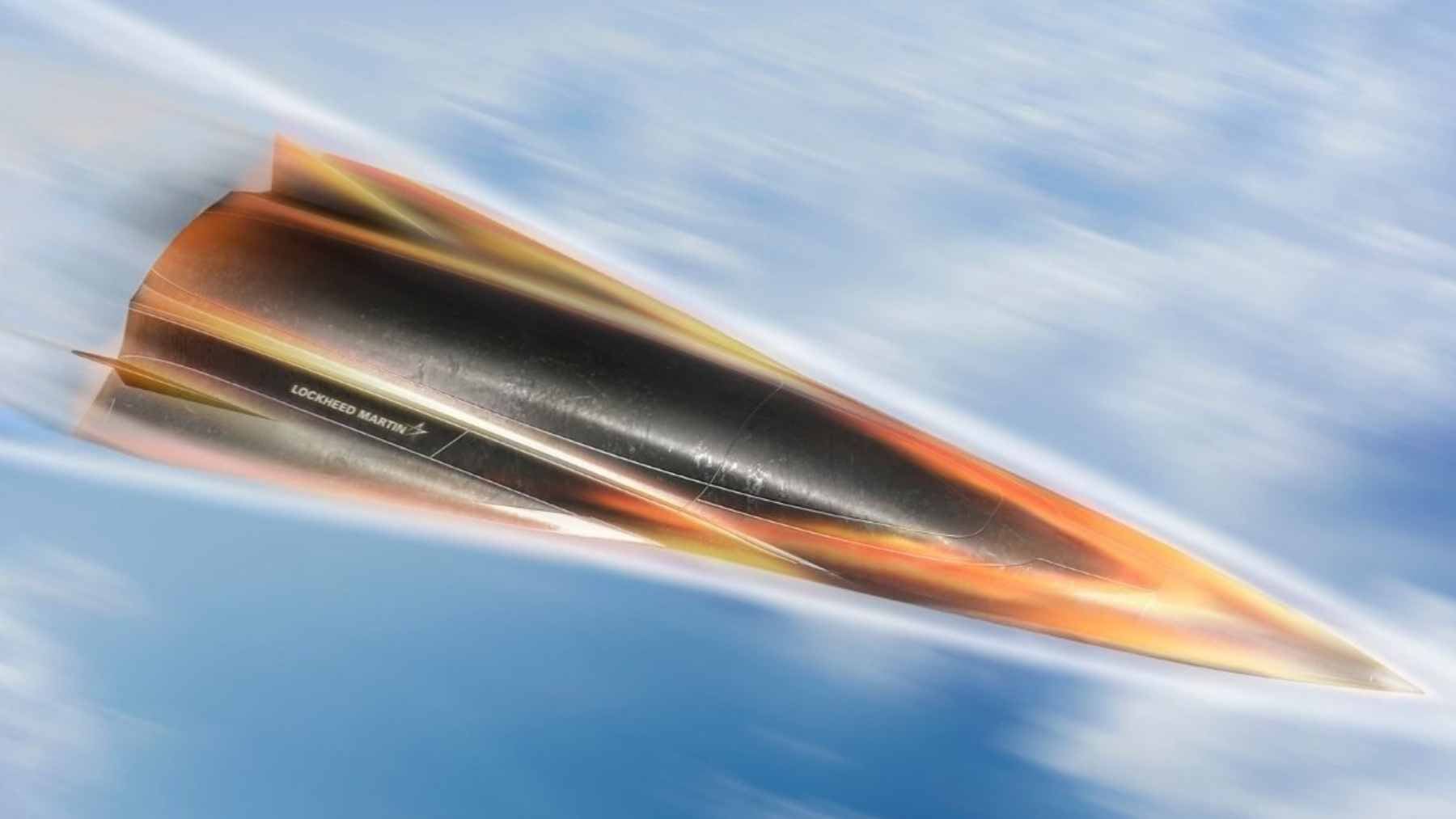
Lockheed Martin has unveiled a new hypersonic glide body called NXGB, and the most important detail may not be how fast it flies. The company is presenting the weapon as an “affordable, rapidly producible” long-range strike option, a phrase that says a lot about where modern defense technology is heading.
For years, hypersonic weapons have sounded like the future because of speed, maneuverability, and the promise of reaching heavily defended targets in minutes. Now, the race is shifting toward something more practical, and in some ways, more unsettling. Can the Pentagon and its suppliers build these systems not as rare trophies, but as repeatable factory products?
A weapon built for the factory
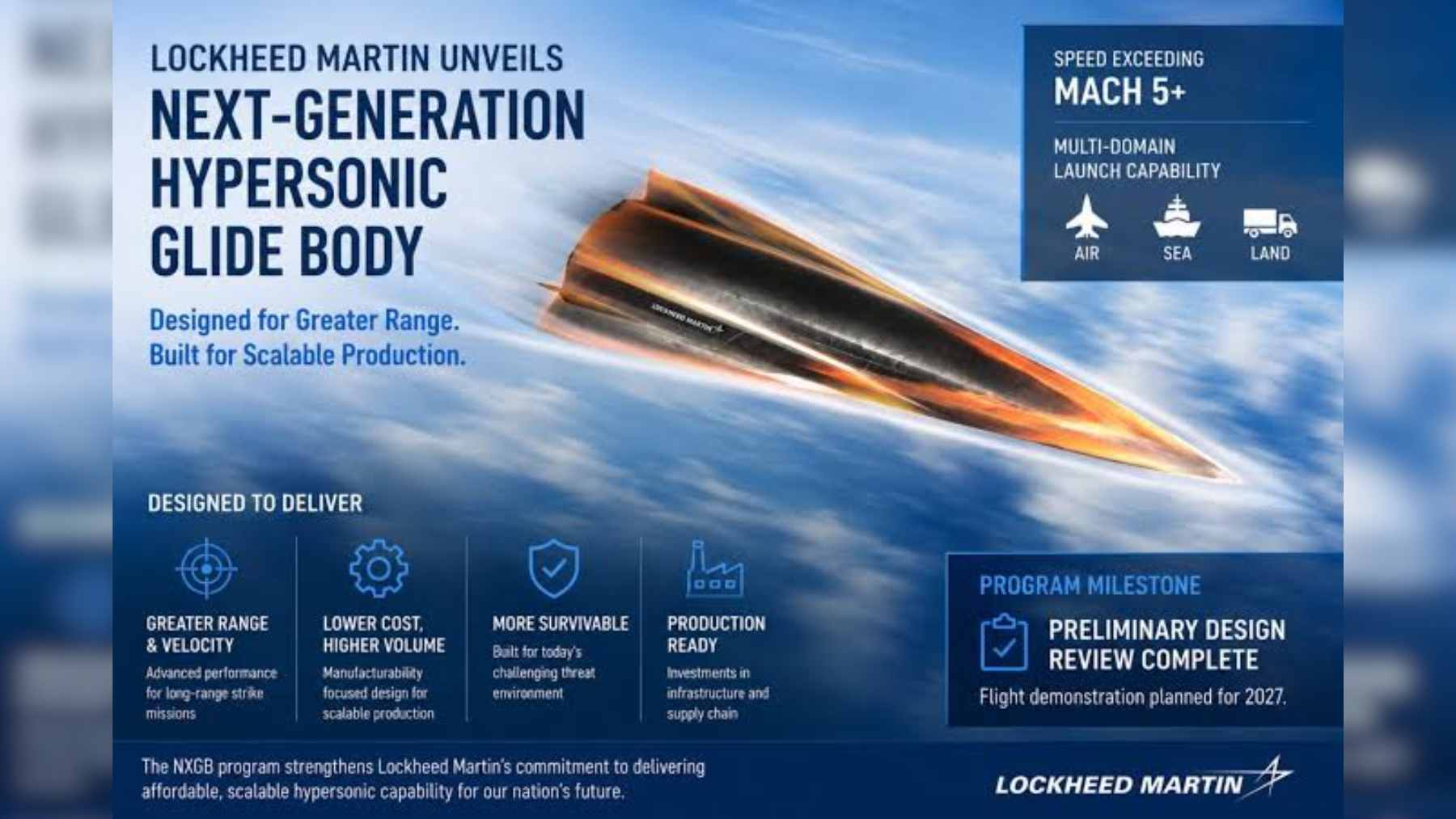
NXGB stands for Next Generation Glide Body. According to Lockheed Martin, the system is designed to combine advanced hypersonic performance, survivability, and scalability while reducing costs through what the company calls a “manufacturing-first approach.”
That wording matters. In practical terms, Lockheed is not only trying to make a glide body that can survive extreme flight conditions, but also one that can move through production lines faster and more affordably than earlier designs.
The company says NXGB can be launched from multiple platforms across different warfighting domains. That would give U.S. forces more flexibility for long-range precision strikes in contested environments, while keeping launch crews farther away from danger.
Why hypersonic weapons are hard
Hypersonic weapons are usually defined as systems that fly at least five times the speed of sound and spend much of their flight inside Earth’s atmosphere. That combination makes them fast, maneuverable, and difficult to intercept, but it also creates major engineering problems.
The Congressional Budget Office has warned that these weapons face extreme heat, material, electronics, and testing challenges. At sustained high speeds, some components may face temperatures as high as 3,000°F, which is not exactly friendly territory for guidance systems.
That is why the manufacturing story is so important. A weapon can be impressive on a test range, but if it is too expensive or too slow to build, it becomes a limited tool rather than a real stockpile.

The cost problem
Lockheed’s new pitch comes after years of concern over the cost and production limits of earlier U.S. hypersonic systems. Aviation Week reported that existing Long-Range Hypersonic Weapon and Conventional Prompt Strike designs were constrained by high unit costs and limited annual output, which is exactly the problem NXGB is meant to address.
Johnathon Caldwell, Lockheed Martin vice president and general manager of Strategic and Missile Defense Systems, framed the program as a shift in deterrence. “NXGB demonstrates our commitment to delivering next-generation deterrence that is not only effective, but affordable and producible at scale,” he said.
It is a simple idea with big consequences. If hypersonic weapons become cheaper to build, military planners could move from a small number of exquisite missiles to larger inventories that are easier to replace.
A wider missile buildup
NXGB is not appearing in a vacuum. On the same date, the U.S. government awarded Lockheed Martin a seven-year contract action worth up to $35 billion to quadruple production of Terminal High-Altitude Area Defense interceptors, better known as THAAD.
The official contract notice indicates the work will be carried out in Dallas, Texas; Sunnyvale, California; Troy, Alabama; and Camden, Arkansas. The performance period runs from March 2026 through June 2032.
Put another way, Washington is not just buying new concepts. It is trying to build a larger missile manufacturing base, one that can produce advanced interceptors and strike weapons at a pace closer to wartime demand.
The environmental question
Here is where the ecology angle enters the story. The environmental issue is not that NXGB itself has been described as “green,” because it has not. The question is what happens when defense manufacturing scales up across new facilities, supply chains, raw materials, energy use, and transport.
Lockheed says it has invested in purpose-built manufacturing infrastructure, advanced production capabilities, and supply chain partnerships to support NXGB production. That could speed delivery, but it also makes the industrial footprint part of the story.
Defense programs are often discussed in terms of deterrence, budgets, and technology. Still, factories need power, materials, logistics, water, and land. At the end of the day, mass production always has an environmental side, even when the product is built for national security.
Competition is growing
Lockheed also faces a changing market. Reuters reported in May that the Pentagon was pursuing agreements tied to low-cost munitions and that defense startup Castelion could receive a contract for at least 500 Blackbeard hypersonic missiles per year if testing and validation are achieved.
That shows how much the Pentagon wants “affordable mass,” not just a handful of high-end weapons. It also shows why traditional defense giants are under pressure from newer companies promising faster production and lower costs.
On the other hand, the old defense primes still have deep engineering experience, manufacturing sites, and government relationships. Lockheed is clearly leaning on that advantage by presenting NXGB as a lower-risk system built from decades of missile work and lessons learned from fielded programs.
What happens next
Lockheed says the NXGB program has completed its Preliminary Design Review. That step confirms, by the company’s own account, that the design meets criteria for performance, producibility, and affordability.
The next big milestone is a flight demonstration planned for 2027. That test will matter because hypersonic systems do not prove themselves on slides, factory promises, or polished renderings. They prove themselves in flight.
For now, NXGB points to a new phase in the hypersonic race. The headline is still speed, but the deeper story is scale, cost, supply chains, and the environmental footprint of turning futuristic weapons into mass-produced hardware.
The official statement was published on Lockheed Martin.