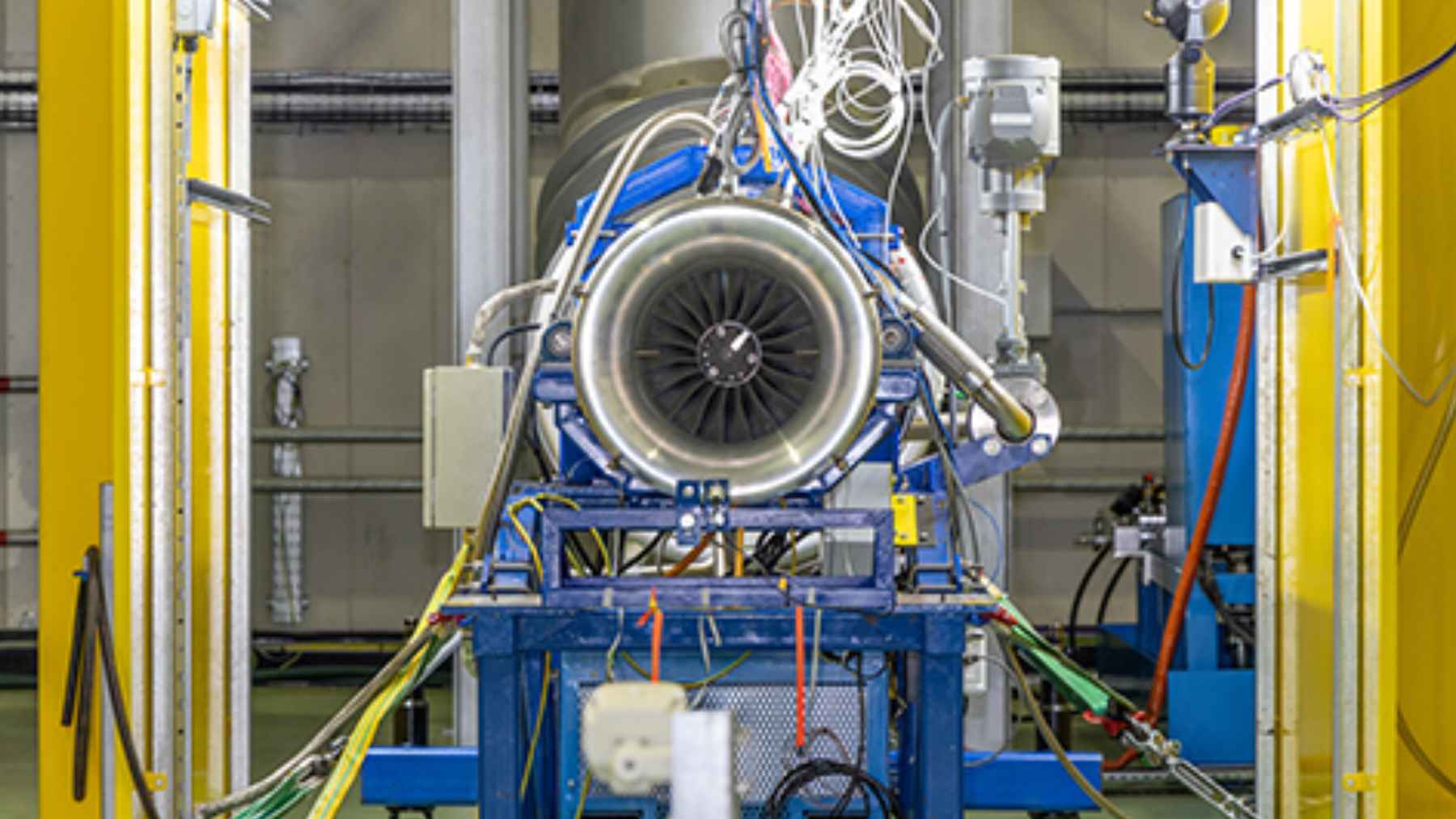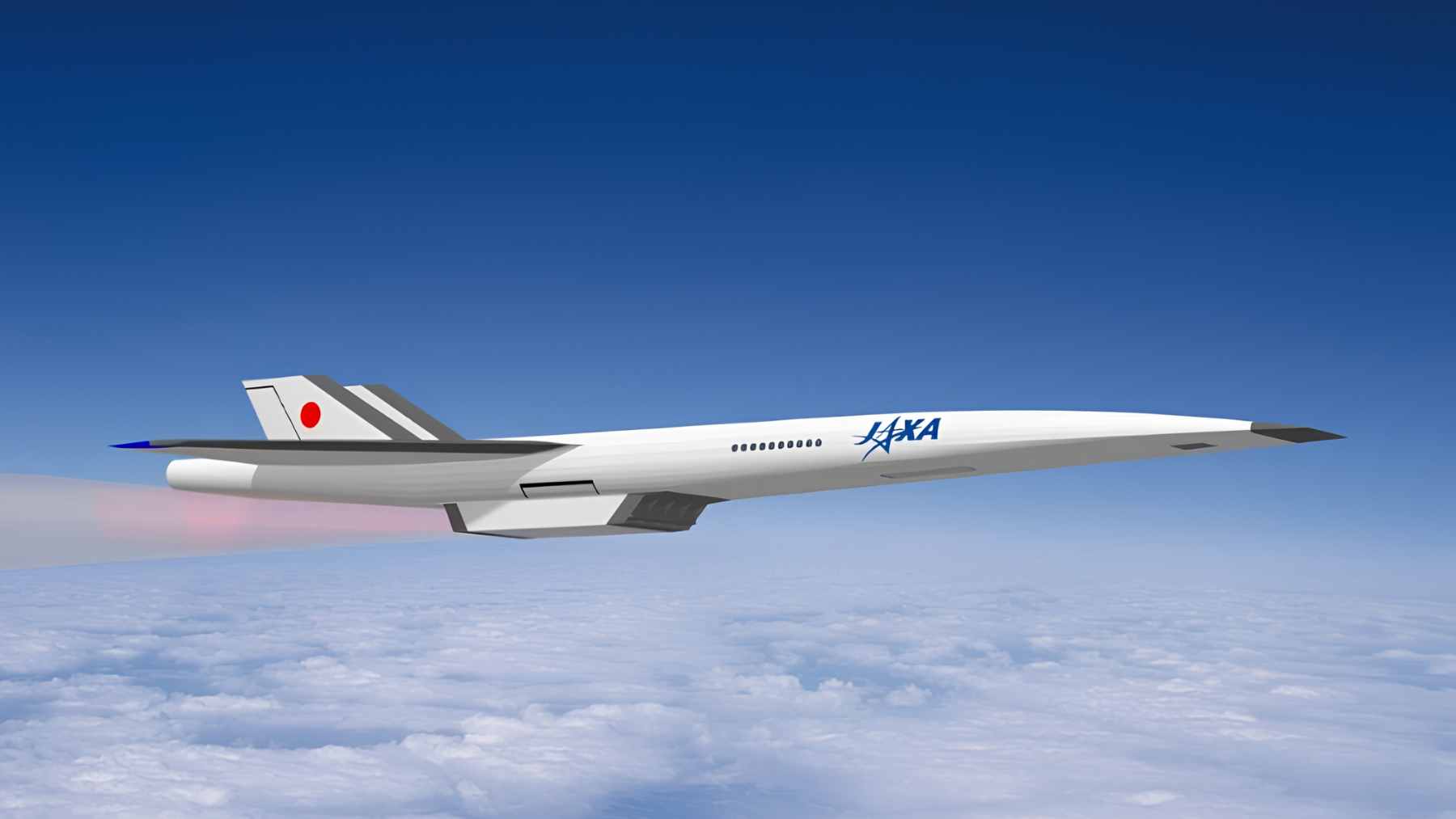
Japan has taken a serious step toward a future that still sounds almost unreal. A team led by Waseda University, working with JAXA, the University of Tokyo, and Keio University, has completed Japan’s first Mach 5 combustion experiment using a hypersonic experimental aircraft at JAXA’s Kakuda Space Center in Miyagi Prefecture.
That does not mean passengers are about to board a plane from Tokyo to California and arrive two hours later–not yet. What Japan has done is prove, on the ground, that a hydrogen-fueled ramjet system can operate under simulated Mach 5 conditions, a milestone that also raises a bigger question for aviation, energy, and the environment.
A tiny aircraft with a huge promise
The experimental vehicle was only about 6.6 ft. long, closer to a lab demonstrator than a future airliner. Still, the conditions around it were anything but small, with the test simulating flight at five times the speed of sound, about 3,355 mph.
At those speeds, air does not simply pass over a vehicle. It compresses, heats up, and turns into one of the main engineering problems. Waseda University said the air around the aircraft can reach about 1,832°F during Mach 5 flight, hot enough to make thermal protection just as important as thrust.
The test checked three things at once: the engine had to burn properly, the heat-resistant structure had to protect the aircraft and electronics, and the control surfaces had to move under brutal hypersonic conditions. That is where this small machine starts to look much bigger.
Why ramjets matter
A ramjet is not like the jet engine most travelers know from commercial flights. NASA explains that ramjets do not use a compressor, instead relying on the aircraft’s forward speed to ram air into the combustor before fuel is burned.
There is a catch, of course. A ramjet cannot produce thrust from a standstill, so another system must first accelerate the vehicle. In practical terms, any future Mach 5 aircraft will need a carefully staged propulsion plan before it can settle into hypersonic cruise.
This is also why governments and aerospace companies watch this field so closely. The same physics can matter for passenger travel, spaceplanes, and defense technology. Hypersonic flight is not just about getting to vacation faster.
Hydrogen makes it greener, but not simple
The fuel choice is one of the most important parts of the story. JAXA says it is developing hydrogen fuel technologies for aircraft and future space transportation in a carbon-neutral society, and notes that hydrogen aircraft would not emit carbon dioxide during operation.
That sounds like a clean breakthrough, and it could be one to a large extent, but hydrogen is not magic. The climate value depends heavily on how the hydrogen is produced, transported, stored, and used.
There is another wrinkle. Waseda’s release said the team measured exhaust temperature fields to study the environmental impact of a hydrogen-fueled ramjet engine. That detail matters because hypersonic aircraft would fly high in the atmosphere, where water vapor and other effects need careful study before anyone calls the technology fully green.
The Pacific dream is still distant
JAXA has long studied Mach 5 passenger aircraft that could cross the Pacific Ocean in about two hours. Its aviation research database describes that target and points out that Mach 5 aircraft face much hotter environments than supersonic aircraft near Mach 2.
For comparison, Concorde remains the public reference point for ultra-fast passenger travel. The Smithsonian’s National Air and Space Museum says Concorde flew at Mach 2.04 and reached a top speed of about 1,330 mph, while its operation ended in 2003 after cost, noise, and demand problems piled up.
Japan’s concept would go much faster. It also would likely fly far higher than today’s airliners, with scenarios around 82,000 ft., more than double the altitude of most commercial jets. That sounds thrilling, but it also means regulators, airlines, airports, insurers, and passengers would all need convincing.
The ground test is not a flight
This is the part that can get lost in viral headlines. The Japanese prototype did not take off, cross the sky, or carry anyone. It was tested inside JAXA’s ramjet engine test facility, a wind tunnel built for combustion tests using supersonic and hypersonic air-breathing engine models.
That distinction is not a criticism, it is how aerospace progress works. Before a vehicle can fly safely, engineers need to know whether the engine, heat shield, structure, sensors, and control systems can survive in a controlled test environment.
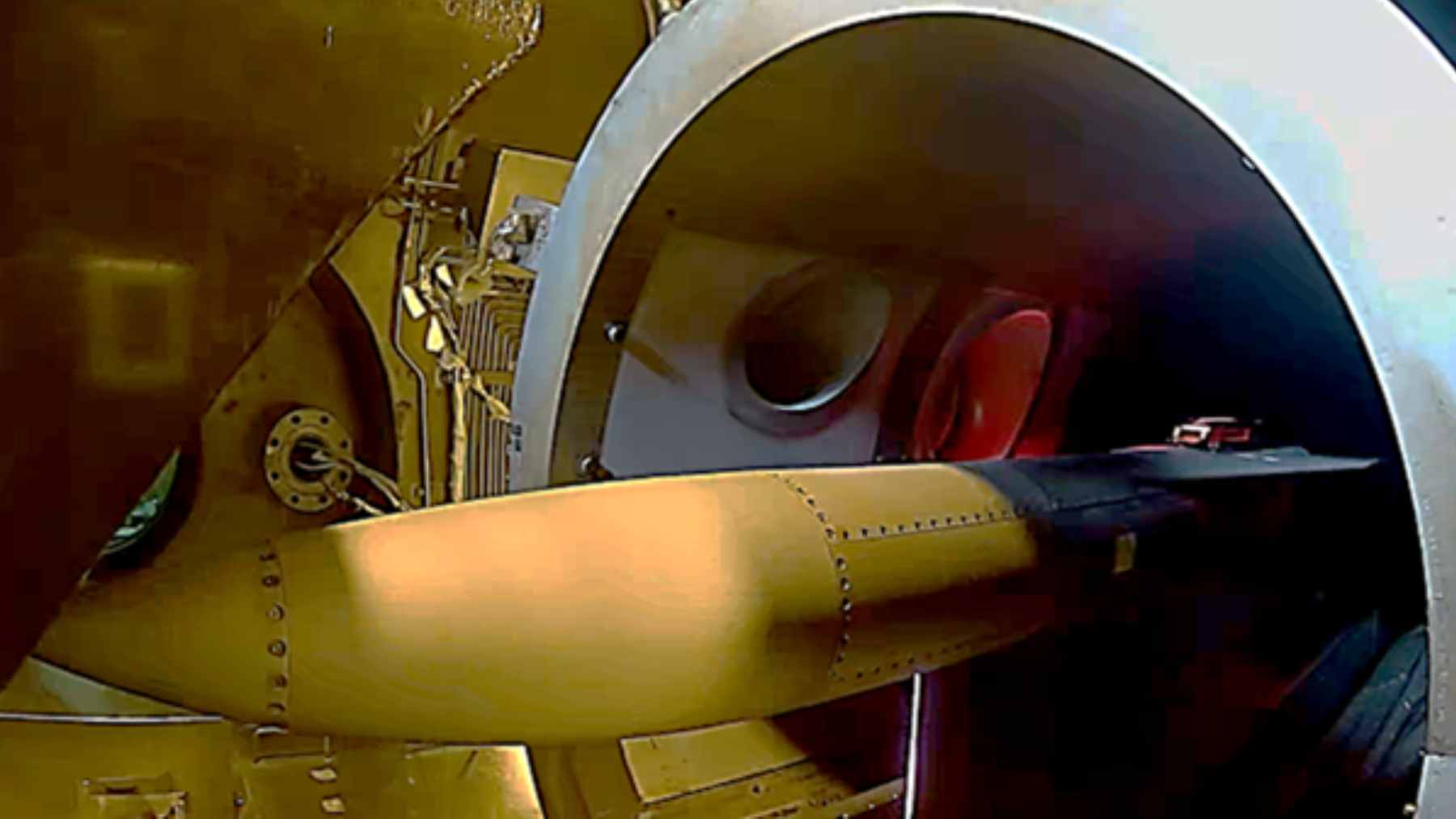
The next step is more dramatic. Waseda University said the team is considering a Mach 5 flight experiment by mounting the experimental aircraft on a sounding rocket or similar vehicle. That would move the project closer to real flight, but still far from a ticket counter.
What happens next
The future of this technology will depend on more than speed. It will come down to cost, safety, noise, fuel supply, environmental review, and whether travelers will pay enough to make the business case work.
Concorde already showed that being technically brilliant is not the same as being commercially durable. Japan’s hydrogen ramjet work is different in design and ambition, but it will still have to answer some familiar questions: how loud will it be? How expensive? How clean is it in the real world?
For now, the best way to read this test is with excitement and caution at the same time. Japan has not built a Mach 5 passenger plane, but it has moved one of the hardest pieces of that dream out of theory and into hard data.
The press release was published on Waseda University.