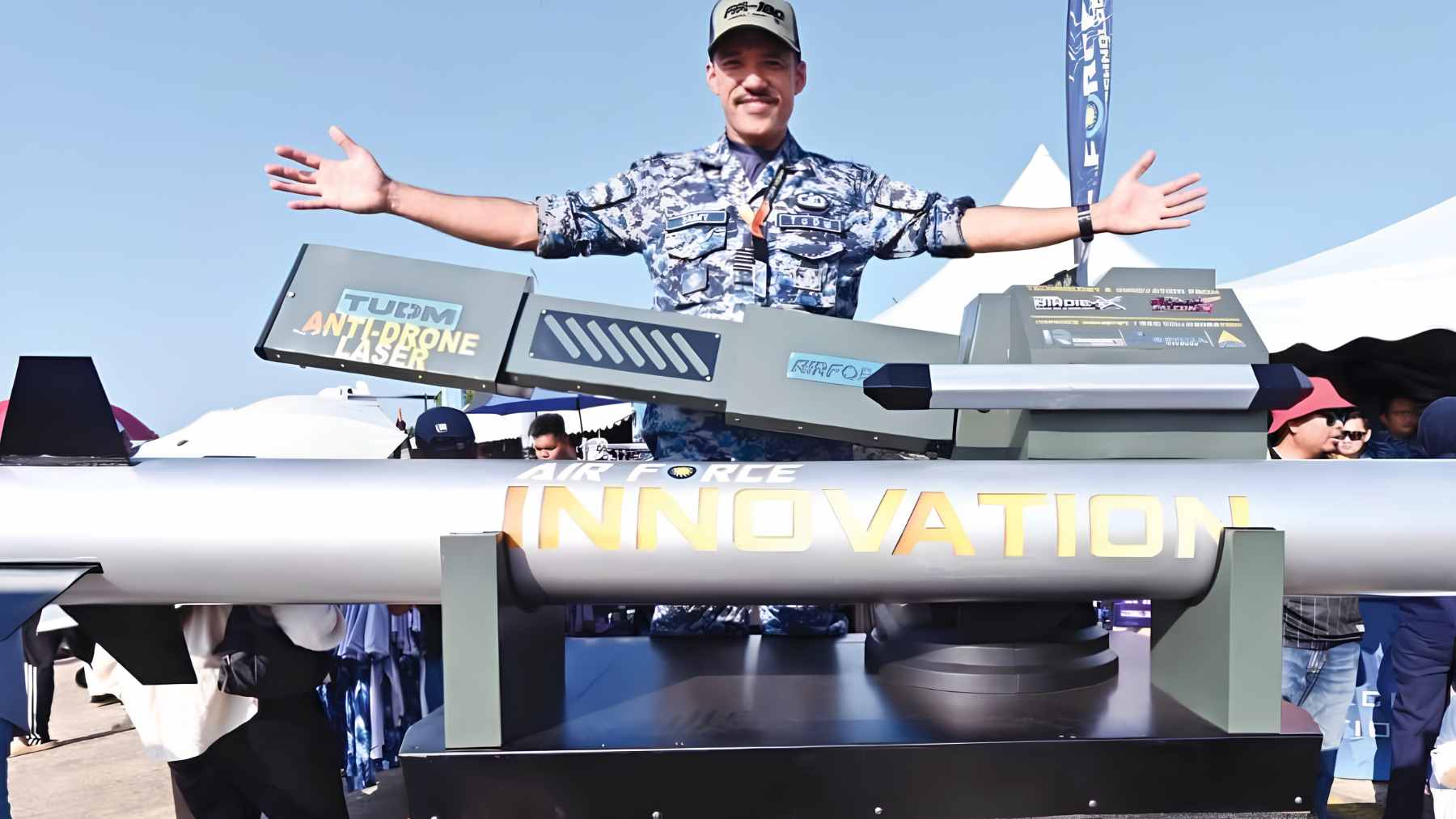
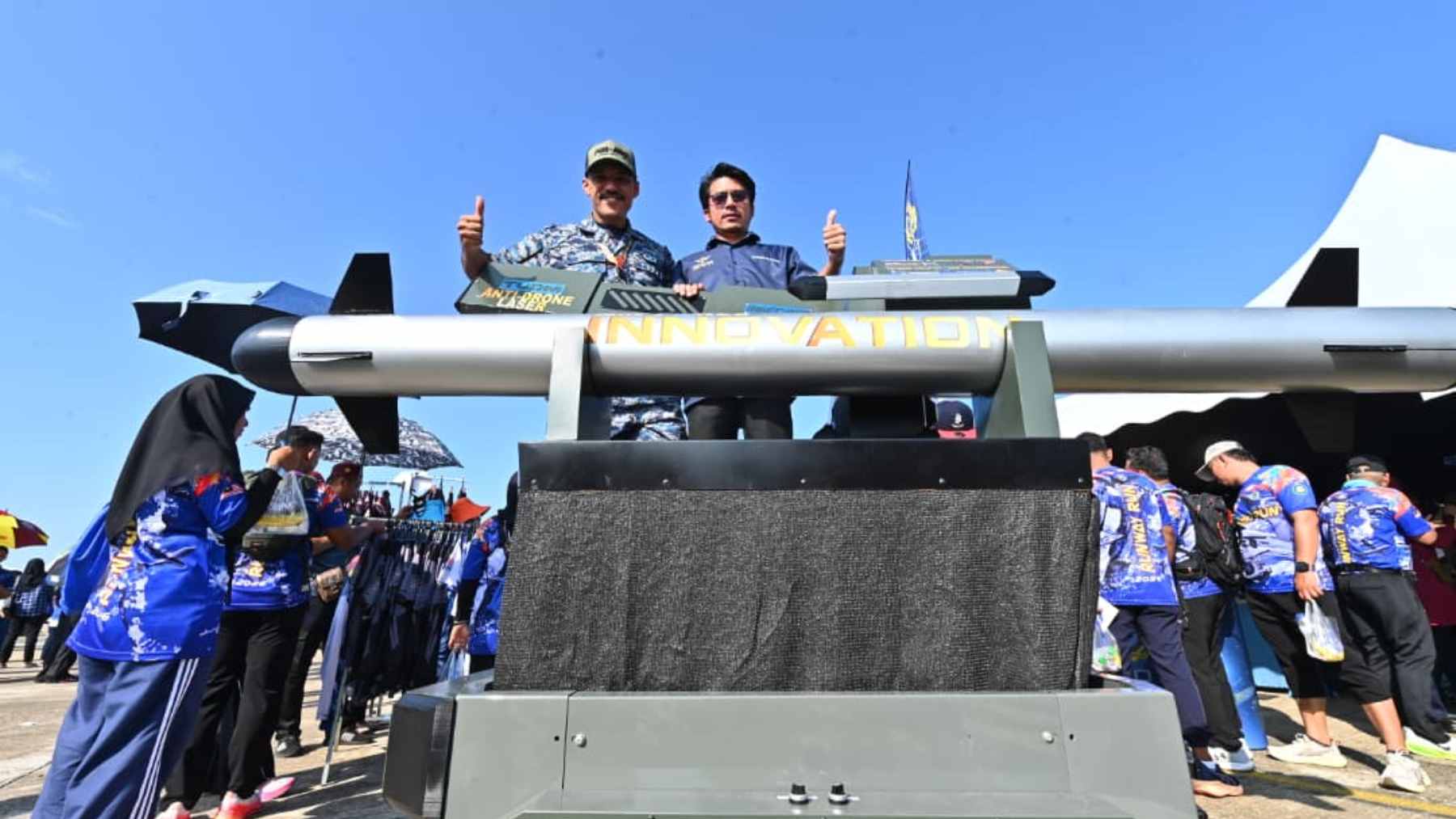
Malaysia has taken its first major step into laser air defense. The Royal Malaysian Air Force says Birdie-X is the country’s first domestically developed anti-drone laser, created with the Science and Technology Research Institute for Defence (STRIDE) and Benua Defence to counter small unmanned aircraft threatening strategic sites.
It is a notable technology milestone, but it is not yet a proven replacement for missiles. Birdie-X could lower the cost and physical waste of each interception, although public reporting has not disclosed its laser power, range, energy demand, cooling needs, deployment schedule, or performance in difficult weather.
What Birdie-X is meant to stop
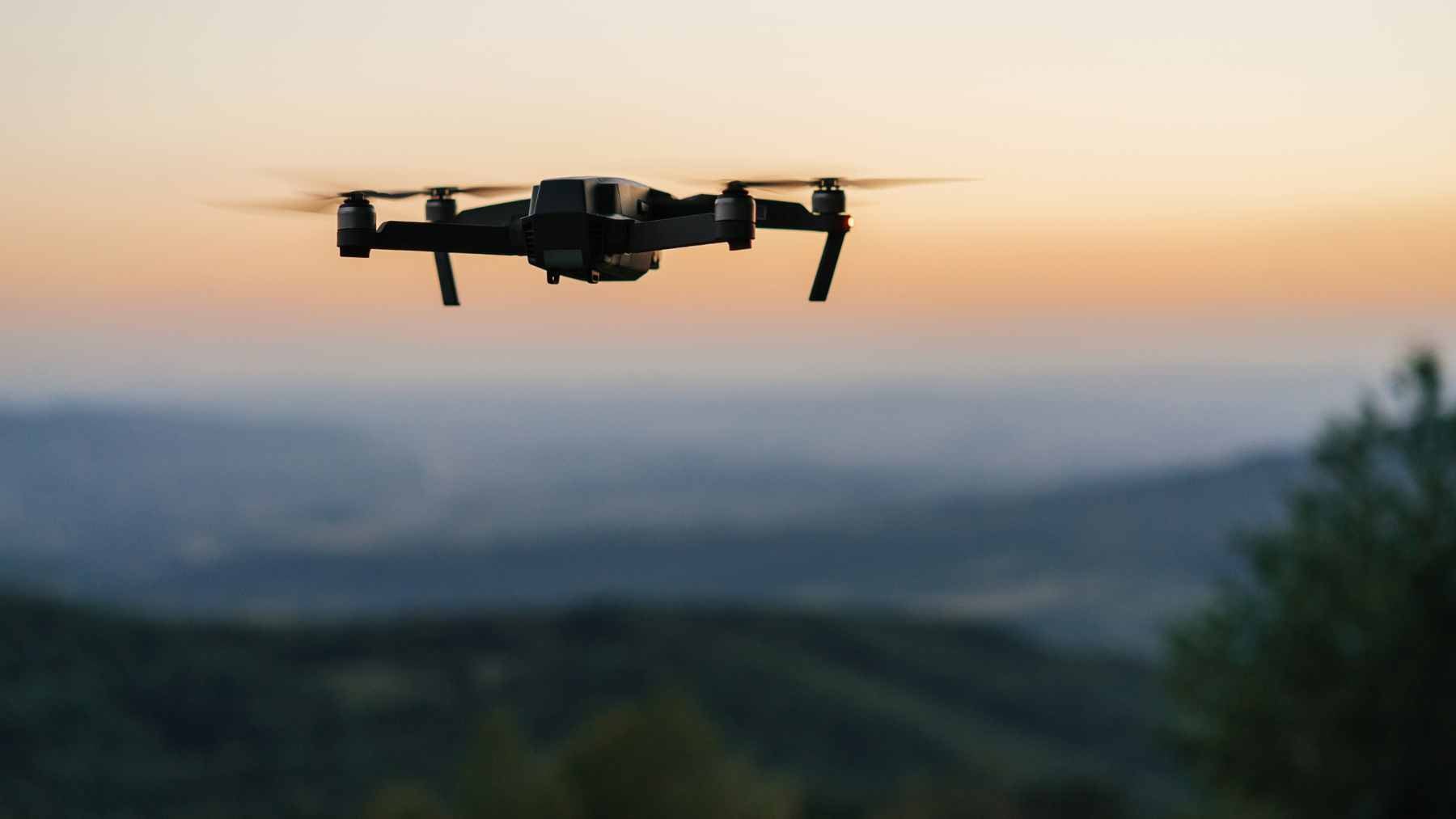
So, what has Malaysia actually built? Birdie-X is a directed-energy system intended to complement existing air defenses, especially against small, low-profile drones that can be difficult for traditional radar to detect.
Lieutenant Colonel Hairul Zaimy Ibrahim, the system’s creator and head of the RMAF Innovation Secretariat, said the project grew from the expanding use of drones for surveillance and physical attacks. Development moved through operational studies, concept work, system design, prototyping, and technical testing.
Earlier proof-of-concept work showed that Malaysia’s armed forces could develop this type of weapon without relying entirely on foreign technology. “Birdie-X is not just a weapons system,” Hairul Zaimy said, describing it as a step toward national defense technology sovereignty.
Why lasers change the cost equation
Laser weapons move energy at the speed of light and do not need a bullet or missile for every shot. The U.S. Government Accountability Office says directed-energy weapons can be cheaper per engagement and can continue firing as long as sufficient power is available.
That sounds close to an unlimited magazine, but the reality falls short. Generators, batteries, cooling equipment, sensors, and the time needed to hold a beam on one target all place practical limits on the system.
The Birdie-X team says the laser should cut long-term operating costs. Based on broad local reporting and Bank Negara Malaysia’s June 25 exchange rate, the comparison suggests roughly $25 to $240 for a laser engagement, while the reported missile option starts near $240,000. These are illustrative conversions, not an audited Birdie-X price list.
A smaller footprint is not zero impact
The environmental appeal is easy to understand. A laser does not launch a disposable interceptor, so it could reduce the propellant, packaging, transport, storage, and spent weapon hardware associated with defending a site from repeated drone attacks. This is a reasonable inference from how directed-energy systems operate, rather than a measured Birdie-X result.
No lifecycle assessment has been released for Birdie-X. There is also no public figure for the electricity used in one engagement or the energy required by its cooling system.
There is another detail that is easy to overlook. A disabled drone still falls somewhere, bringing its battery, electronics, and airframe with it, so a precise beam does not automatically produce a clean recovery site. Less ammunition waste is not the same thing as no environmental impact.
The weather will prove the real enemy
Laser performance depends heavily on the path between the weapon and its target. The GAO warns that fog and storms can reduce beam range and quality, while cooling requirements can also limit effectiveness.
That matters in Malaysia. The Malaysian Meteorological Department describes the country’s climate as one of high humidity and abundant rainfall, with completely clear days considered rare even during severe drought.
Birdie-X will therefore need convincing trials in rain, humid air, and changing visibility, not only controlled demonstrations. Public reports have not disclosed its range, beam strength, time needed to disable a drone, or the number of targets it can engage before cooling becomes necessary. The tropical atmosphere may be the toughest part of the test.
Safety goes beyond the laser beam
The RMAF says Birdie-X was designed with several layers of safety controls, including strict target-verification procedures. STRIDE is also conducting technical evaluations so the system can meet international safety standards before any real operational use.
That work matters because accuracy is only one part of a safe interception. A drone struck above a runway, fuel storage area, neighborhood, or forest creates different risks once it begins to fall, so detection, engagement authority, and debris recovery must work as one system.
The GAO also notes that uncertainty remains around the long-term health effects of directed-energy exposure. Birdie-X’s safety case will need to cover operators, nearby personnel, civilian aircraft, surrounding infrastructure, and the area beneath the target.
A business opportunity with conditions
Malaysia sees Birdie-X as more than a military project. Hairul Zaimy said it could eventually be commercialized and exported, while supporting local technical expertise, technology transfer, and higher-value economic activity.
Still, the project appears to remain in the prototype and testing stage. No production quantity, unit price, operational acceptance date, export customer, or independently verified performance result has been announced.
There is also a bigger question about what “domestic” means in practice. Long-term technology sovereignty depends on who controls the software, optics, laser source, sensors, spare parts, and power-management hardware, not only who assembles the finished system. Those supply-chain details have not been made public.
What comes next
The next useful announcement would include hard test data. Range, target size, engagement time, energy use, weather performance, shot-to-shot recovery, safety certification, and debris-management procedures would show whether Birdie-X can move from an impressive prototype to a dependable air-defense layer.
For now, Malaysia has produced a credible local milestone with a promising cost and waste advantage. But the strongest claims still need field evidence, especially in the country’s toughest weather.
The official statement was published on the Royal Malaysian Air Force’s Facebook page.