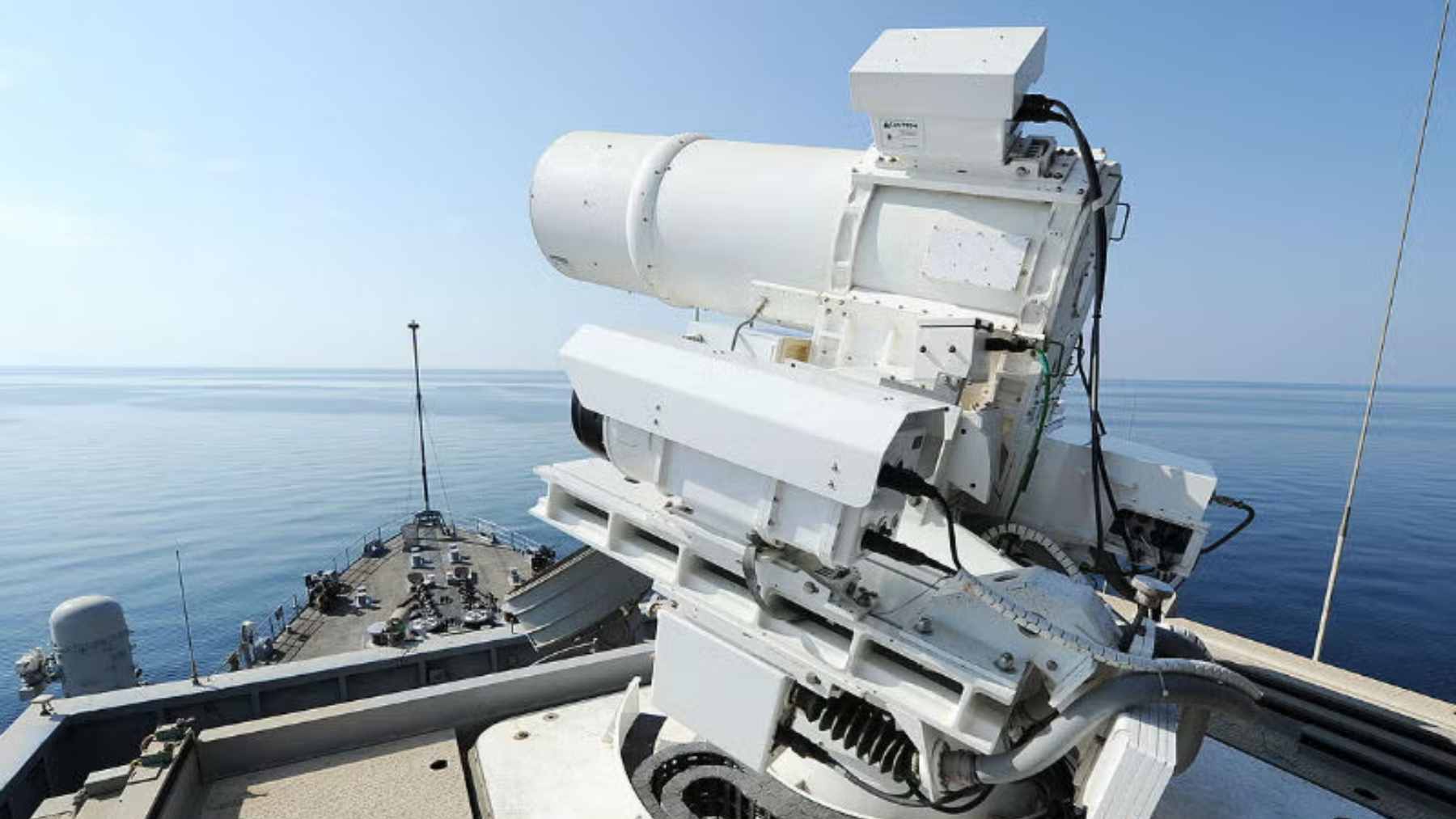
Congress is pushing the U.S. Navy to move one of its most visible laser weapons out of the “one ship, one installation” model and into something far more flexible.
An early Fiscal Year 2027 defense policy draft from the House Armed Services Committee would authorize $5 million for a containerized version of HELIOS and $2.5 million for a separate “Containerized Maritime High Energy Laser Weapon System,” even while trimming $5 million from the same directed-energy budget line for “unjustified growth.”
That may sound like a small line item inside a huge defense bill, but the idea behind it is anything but small. If HELIOS can be packed into a deployable container, the Navy could move laser defense across more ships and shore sites as drone threats grow, instead of waiting for each warship to undergo deep, expensive integration work.
A laser in a box
HELIOS stands for High Energy Laser with Integrated Optical-dazzler and Surveillance. Lockheed Martin says the system delivered to the Navy is in the 60-plus kilowatt class and was designed as the first tactical laser weapon system integrated into existing ships.
The current push is about taking that capability and making it more portable. That means turning a shipboard laser from a permanent fixture into a modular defense package that could be loaded where the need is highest.
The Navy’s broader thinking is already moving this way. In congressional testimony, Chief of Naval Operations Adm. Daryl Caudle said the service is advancing a “Containerized Capability Campaign” that would place missiles, unmanned systems, sensors, electronic warfare, and directed energy into standardized containers deployable across platforms and shore sites.
Why drones changed the math
What is driving the rush? Drones. They are cheap, numerous, and increasingly able to force expensive ships into costly defensive choices.
For the most part, naval crews today still lean on kinetic interceptors for close-in defense. Caudle warned that every vertical launch cell used for a defensive missile is one less space for long-range strike weapons, and that directed energy could increase kill rate at lower cost per engagement than traditional projectiles or missile interceptors.
That is why lasers keep getting described as an answer to the magazine problem. As long as a ship can provide enough power and cooling, a laser can keep firing without the same storage, resupply, and manufacturing burden tied to physical missiles. It is not magic, but it is a different way of doing the math.
The sea is the hard part
There is a catch, however. A laser that works on land does not automatically become a sailor’s tool once it is placed on a flight deck. The ocean has a way of humbling hardware.
Salt, fog, humidity, vibration, ship motion, and long deployments all take a toll. AeroVironment said its palletized LOCUST laser variant for the USS George H.W. Bush test needed hardened electronics, stabilization hardware, sealing, and environmental protection to cope with carrier life.
Weather can also affect the beam itself. Smoke, moisture, dust, and atmospheric distortion can weaken or scatter laser energy before it reaches a target, and a single laser generally has to focus on one target at a time.
That is why these systems are best understood as one layer of defense, not a clean replacement for missiles, guns, electronic warfare, or decoys.
LOCUST showed the model
The Navy has already seen what a modular laser can look like at sea. Official Defense Visual Information Distribution Service imagery says a containerized LOCUST Laser Weapon System was placed on the flight deck of the USS George H.W. Bush for an October 2025 live-fire test.
During that event, the system detected, tracked, engaged, and neutralized multiple unmanned aerial vehicles, according to the Navy photo caption. AeroVironment later said the Palletized High Energy Laser system showed “true platform flexibility” and could run from ship power or recharge its battery bank.
That demonstration was not HELIOS, and it should not be treated as proof that every laser can be rolled onto every ship tomorrow. Still, it gave the Navy a useful example. A laser was brought aboard, used against drones, and removed after the test window, which is close to the operational rhythm containerized weapons are supposed to support.
What Congress is really buying
The $5 million proposed for containerized HELIOS is not enough to transform the fleet by itself. In defense budget terms, it is seed money, a way for lawmakers to nudge the Navy toward a specific near-term version of technology it has been discussing for years.
The bigger budget picture points in the same direction. The Department of War budget overview says the Joint Laser Weapons System project was started to leverage 300-kilowatt class laser beam source technology and demonstrate an operationally relevant capability in a platform-neutral package.
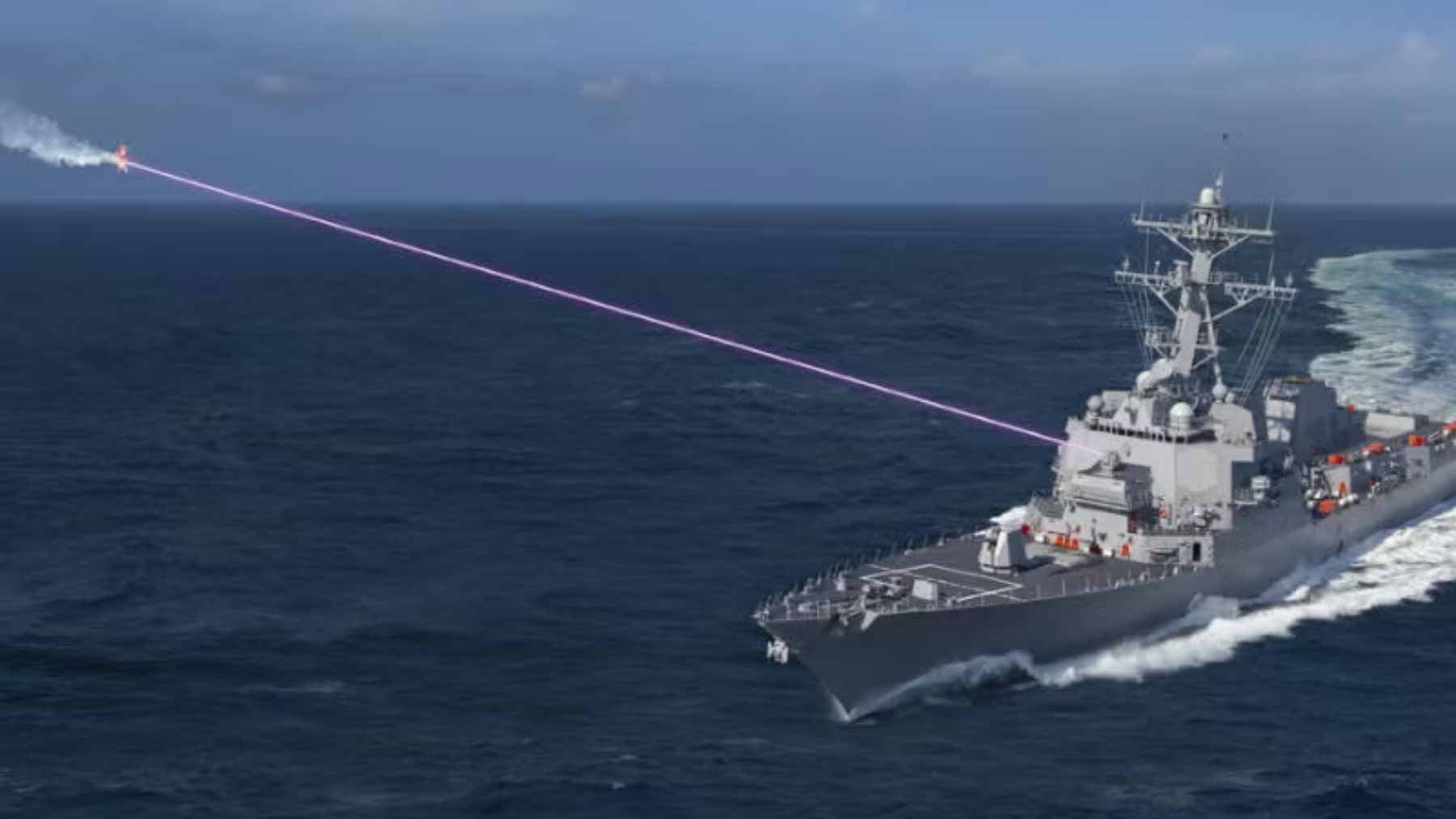
So the Navy appears to be pursuing two tracks at once. One is a nearer-term containerized laser for drones and small threats. The other is a higher-power future system that could take on more demanding missile-defense missions, assuming engineers can solve power, cooling, beam control, and ship integration at scale.
A bridge to the future fleet
For sailors, the appeal is simple. A containerized HELIOS could give commanders more options when a ship needs extra close-in defense, especially around ports, chokepoints, or deployments where drones are expected. Not every vessel needs the same gear every day.
For industry, it is also a business signal. Lockheed Martin, AeroVironment, and other directed-energy firms are watching Congress and the Navy move from demonstration language to deployable hardware, even if the pace remains uneven.
At the end of the day, this is not about laser sci-fi. It is about buying time, saving interceptor capacity, and giving ships another tool when small drones start crowding the sky.
The official draft was published on House Armed Services Committee.