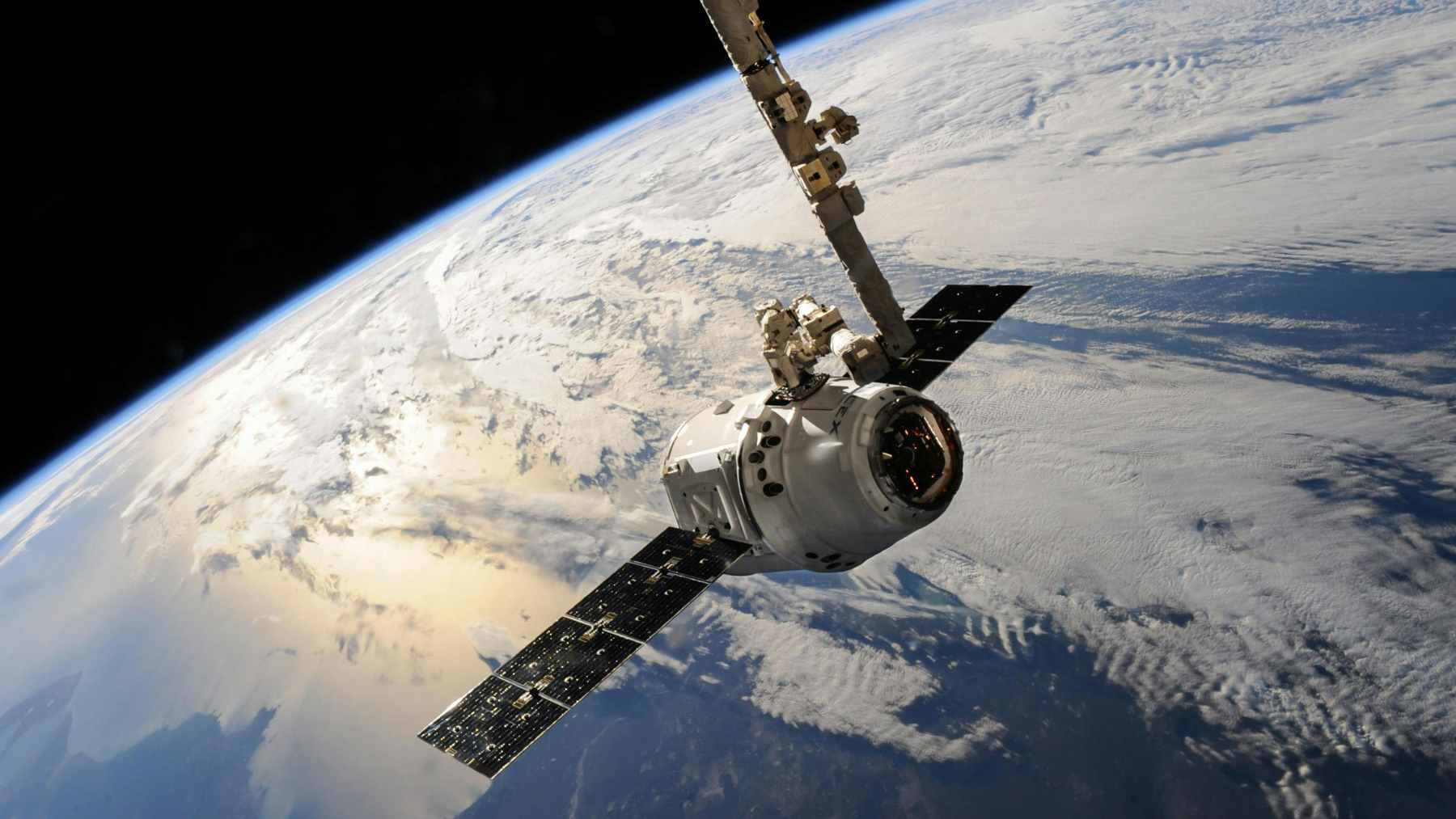
The night sky is starting to look less like a quiet natural resource and more like crowded infrastructure. A new European Southern Observatory study warns that current plans to launch more than 1.7 million satellites, including extremely bright mirror-like spacecraft, could have “devastating consequences for astronomy” unless regulators set firm limits.
At the center of the warning is a simple number. According to ESO astronomer Olivier Hainaut, Earth should have no more than 100,000 faint satellites in orbit if modern telescopes are going to keep doing their job.
That is far below what some companies are now proposing, and it raises a bigger question for the space economy. How much sky should private industry be allowed to occupy?
A crowded orbit
Since 2019, the number of satellites orbiting Earth has climbed to more than 14,000, led largely by SpaceX’s Starlink telecommunications network. These satellites bring real benefits, especially high-speed internet for remote places where a cable connection may never arrive.
But the next wave is on a very different scale. ESO says SpaceX has proposed sending one million more satellites into orbit for space-based data centers, while E-Space’s Cinnamon and China’s CTC-1 and CTC-2 constellations could add hundreds of thousands more.
In practical terms, that means the night sky could become filled with moving points of reflected sunlight.
The study found that, during much of the night, hundreds of satellites could be visible at once. At some moments, that number could rise to several thousand, roughly comparable to the number of stars a person can see with the naked eye under good dark-sky conditions.
The mirror satellite problem
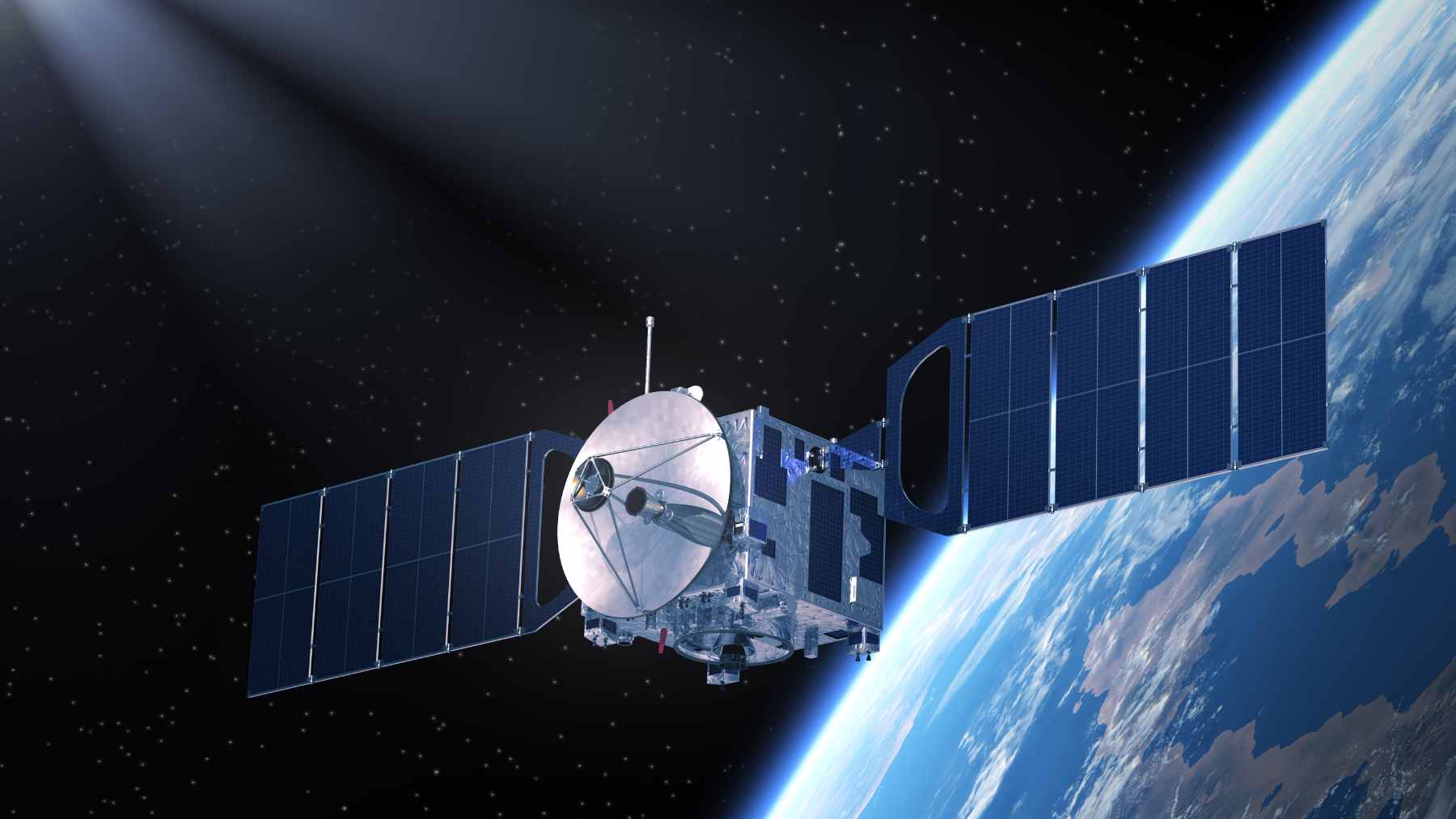
One proposal stands out because it is not just about communications. Reflect Orbital, a U.S. startup, wants to launch large mirror-like satellites designed to reflect sunlight down to Earth at night. The beams would cover at least about 3.1 miles on the ground.
The company plans to begin with a prototype satellite and could grow the system to 50,000 satellites by 2035, according to ESO. That is where astronomers get especially worried. Hainaut’s calculations suggest a full Reflect Orbital constellation would place hundreds of very bright objects across the night sky.
Seen from inside one reflected beam, the satellite delivering the sunlight could appear four times brighter than the full Moon. Even when no beam points directly at an observer, ESO says each satellite could be as bright as Venus, the “morning star.” Imagine looking up from a light-polluted city and seeing only artificial lights overhead. That is the fear.
Why telescopes are vulnerable
For astronomers, a satellite is not just a moving dot. When it crosses a telescope’s view, it can leave a bright streak across the image, wiping out whatever faint galaxy, asteroid, or exoplanet signal was behind it. Hainaut put it bluntly, saying satellites are much brighter than distant galaxies.
The study simulated the positions, motion, and brightness of current and planned constellations. For SpaceX’s proposed megaconstellation, ESO says images taken during two-hour nighttime observations with the Very Large Telescope in Chile could show dozens of satellite trails, with field-of-view losses of up to 28 percent.
Some instruments would be hit even harder. A camera like the one at the Vera C. Rubin Observatory in Chile could have most of its images rendered unusable for several hours each night if satellites are just a little too bright.
That observatory is built to study dark matter, dark energy, asteroids, supernovas, and the Milky Way. It needs darkness the way a microphone needs quiet.
Brighter skies mean less science
The problem is not only streaks across images. Satellite light can also brighten the entire sky. ESO explains that faint satellites can create diffuse light, while brighter ones scatter light through the atmosphere in many directions.
That matters because many astronomical observations depend on detecting extremely dim objects. If the sky background gets brighter, telescopes need longer exposure times to capture the same signal, and some observations may become too expensive or technically impossible.
The Reflect Orbital scenario is especially striking. With 50,000 such satellites in orbit, ESO says the overall night sky could become three to four times brighter. For professional astronomy, that would not be a small inconvenience. It would change what can be studied from the ground.
The environmental angle
This is also an environmental story, not just a space story. Dark skies are part of the natural world, and artificial light at night can affect animals, ecosystems, and biological rhythms. Anyone who has watched insects swarm around a porch light has seen a small version of that problem.
ESO also points to air-quality concerns tied to the many launches needed to build and maintain giant constellations. There is another layer, too. Satellites eventually reenter the atmosphere and burn up, adding pollution high above the ground.
Hainaut described low Earth orbit as a “celestial seashore,” a place that supports modern life but still needs protection. That image fits. The sky is useful for internet connections, navigation, weather forecasting, and science, but it can also be overused.
Regulators now face a choice
SpaceX and Reflect Orbital have filed requests with the U.S. Federal Communications Commission. ESO says the FCC received more than 1,800 comments regarding Reflect Orbital and nearly 1,500 comments on SpaceX’s application.
ESO, the Royal Astronomical Society, and the International Astronomical Union used the new study as the basis for their response to the FCC. Betty Kioko, the ESO official coordinating that response, called the issue an “existential threat” for optical astronomy.
The 100,000-satellite limit is not presented as a magic line. Hainaut said he would prefer 50,000, but his analysis suggests 100,000 faint satellites could keep losses near the level of other technical problems, such as equipment failures. The catch is important. The satellites must remain too dim to be seen with the naked eye from a dark site.
What happens next
The business case for satellites is not going away. Global connectivity, defense communications, disaster response, and data services all depend more and more on orbital infrastructure. The challenge is making sure that growth does not quietly erase the darkness needed for science and for life on Earth.
At the end of the day, this debate is about balance. The same orbit that can connect a rural home to the internet can also block a telescope from spotting a dangerous asteroid. The sky can serve modern technology, but it cannot be treated like an endless parking lot.
The official statement was published on ESO.