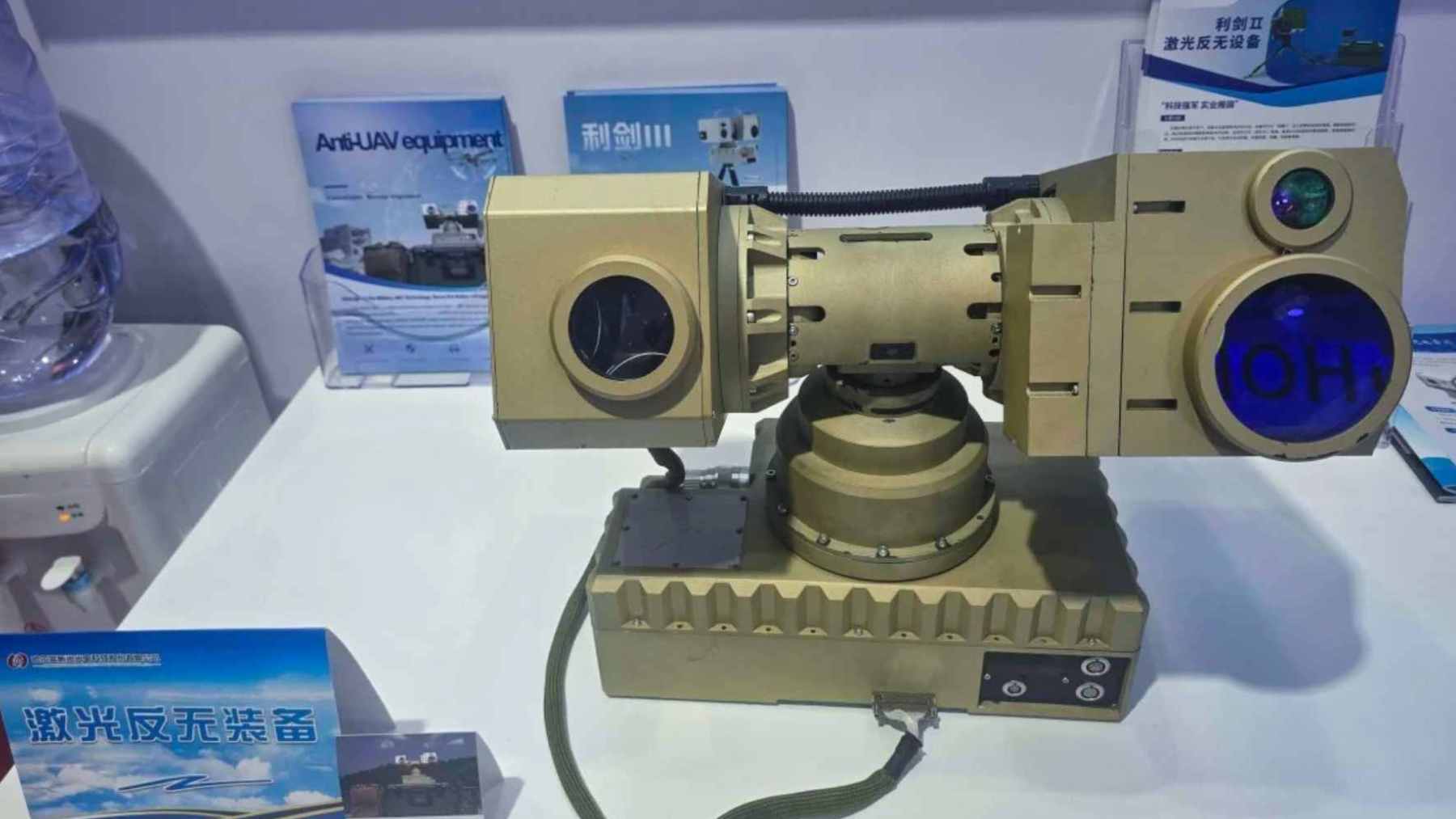
China has shown a portable anti-drone laser that can be carried by one or two soldiers, bringing a technology once tied to trucks and fixed bases down to backpack scale. The lighter “Lijian III” reportedly weighs 55 pounds, reaches targets about 1,640 feet away, and can burn through a small drone in roughly four seconds, according to its manufacturer.
That sounds like science fiction, but the more important story is practical. If the claims hold up, the system could replace some bullets and missiles with electricity, cutting the cost and material waste of short-range interceptions. Still, no independent test data has been released, and a laser does not turn warfare into a clean activity.
A laser that fits in a backpack
Harbin Xinguang Optic-Electronics Technology displayed the “Lijian II” and “Lijian III” at the 2026 Defense Information Equipment and Technology Exhibition in Beijing, held from June 16 through June 18.
Each portable system breaks into three main parts, including a laser emitter, an air cooler, and a handheld control terminal. The Lijian II weighs 66 pounds, while the Lijian III weighs 55 pounds.
The emitter alone reportedly weighs about 33 pounds, and the system can aim beyond a 90-degree elevation angle to engage drones overhead. Its stated power is around 2 kilowatts, with a claimed range of 1,640 feet, a four-second burn time, and less than five seconds of cooling before another shot.
A company promoter said the portable models were “easier to operate and can be quickly deployed and recovered.”
If the stated 2-kilowatt figure refers to beam output, a four-second engagement would deliver about 8 kilojoules, equal to roughly 0.0022 kilowatt-hours, of optical energy. Public reports do not clearly distinguish beam output from total system draw, and losses plus cooling would make the required electrical input higher.
Each portable unit is priced at about $295,000, while the fixed “Lijian-10G” reportedly uses around 10 kilowatts and reaches roughly 3,900 feet with a larger liquid-cooling system.
Why drones changed the math
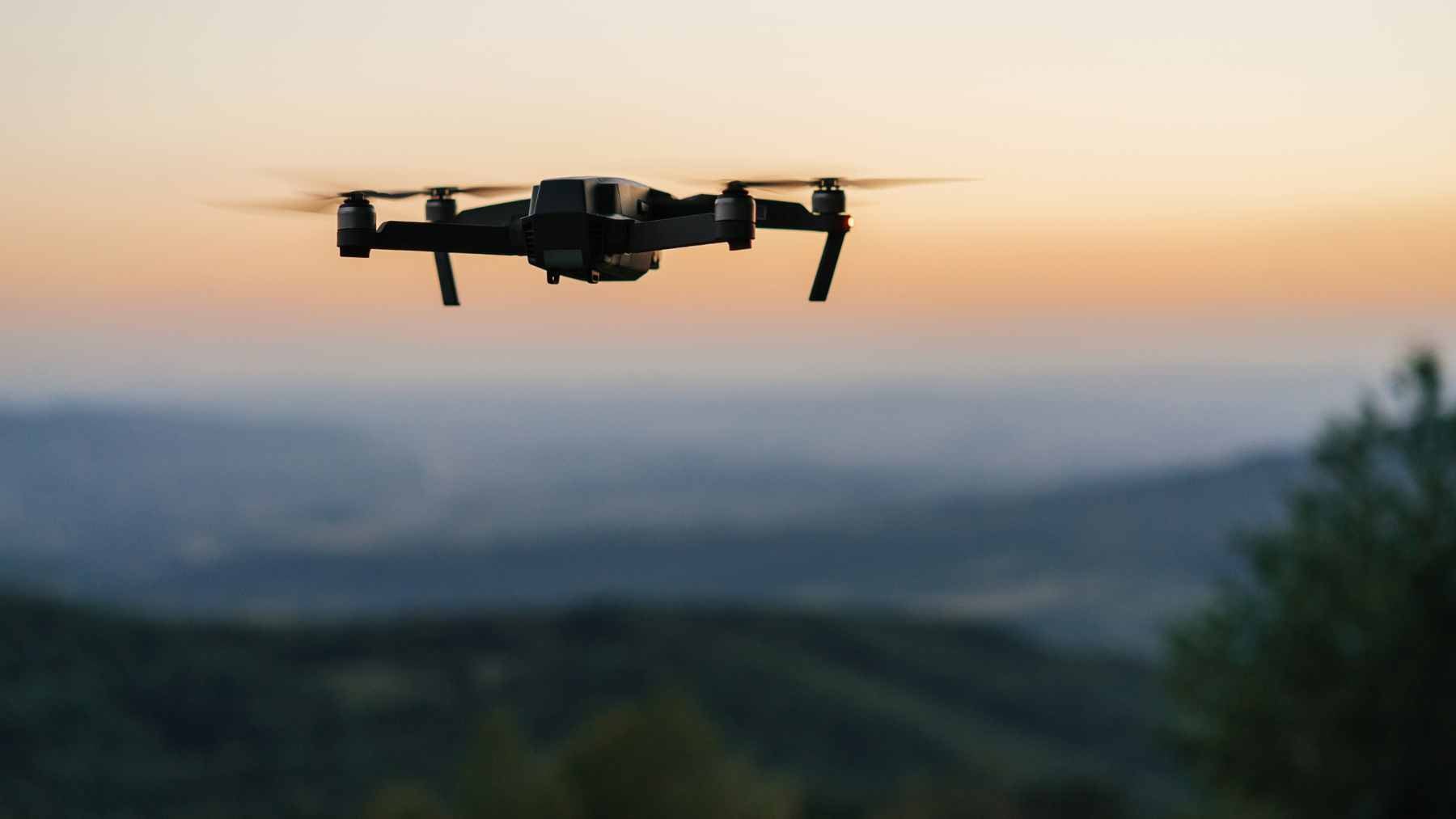
Small drones have become cheap eyes in the sky and, increasingly, low-cost attack weapons. Using an expensive interceptor against an inexpensive quadcopter creates an ugly economic asymmetry, especially when several drones arrive together. That is where reusable energy weapons start to look attractive.
The U.S. Government Accountability Office says directed-energy weapons may offer lower costs per use because they fire energy rather than bullets or missiles. They can also keep engaging targets for as long as power, cooling, and equipment reliability allow. In practical terms, the magazine is the power supply.
The Lijian systems reportedly use artificial intelligence to help identify targets and can receive guidance from external sensors such as radar. Harbin Xinguang also said units have already been placed at selected Chinese facilities, including military airfields, although those deployment claims have not been independently confirmed.
A lower-waste defense, not a green weapon
A laser shot does not need a cartridge case, rocket motor, propellant charge, or fresh explosive warhead. That could reduce the flow of consumable ammunition into a defended site and cut one source of battlefield residue. It may be a limited environmental advantage, but it remains an inference rather than a published life-cycle assessment of the Lijian system.
The trade-off sits in the equipment behind the beam. Batteries, generators, precision optics, electronics, and cooling hardware all carry manufacturing and energy costs, while the public exhibition reporting reviewed for this article does not provide the system’s efficiency, battery chemistry, full power demand, or carbon footprint.
A low-energy beam on paper is not the same thing as a low-impact weapon over its entire working life.
The target does not simply disappear, since a disabled drone can fall with a damaged battery, motors, circuit boards, and any payload it was carrying.
The United Nations Environment Programme has warned that modern munitions can release heavy metals and toxic chemicals, while conflict debris can create long-term risks for soil, water, and public health. A laser may reduce some explosive remnants, but it cannot erase the environmental damage of war.
Weather and power still matter
Laser weapons need a clear line of sight and enough time to hold a concentrated beam on a vulnerable point. The GAO notes that fog and storms can make certain directed-energy weapons less effective, and that their range is generally shorter than that of conventional weapons.
Weather is not a footnote here because it can decide how much energy reaches the target.
That caveat matters for a system whose advertised reach is 1,640 feet. Haze, rain, dust, smoke, target movement, and heat management could all affect the four-second claim, yet the publicly available figures come from exhibition materials and company representatives rather than independent field testing.
The real test will be performance outside a controlled demonstration.
Backpackable also does not mean light. A 55-pound system is roughly the weight of a large checked suitcase before a soldier adds normal protective gear and other equipment. Splitting the laser into modules may help, but mobility claims still need to be judged on hills, in buildings, and under fire.
The business case is the real test
An upfront price near $295,000 is substantial, but the useful comparison is not purchase price alone. Buyers would need to weigh reliability, training, replacement parts, power generation, sensor integration, and the number of successful interceptions over the system’s service life. A cheap shot is only cheap when it works.
Harbin Xinguang is also selling more than a beam. It is presenting the Lijian family as a networked end-point defense tool that can plug into radar and AI-assisted detection, potentially giving small units and fixed sites a reusable shield against low-flying drones. That is a much bigger proposition than a futuristic rifle in a backpack.
China’s portable laser could mark a meaningful step in counter-drone technology if the advertised specifications survive independent testing, but the strongest claim is not that science fiction has arrived.
It is that short-range air defense may be shifting from disposable ammunition toward reusable, electricity-powered systems, which could trim costs and some forms of waste while evidence catches up with the marketing.
The official exhibition notice was published on Beijing Defense Expo.