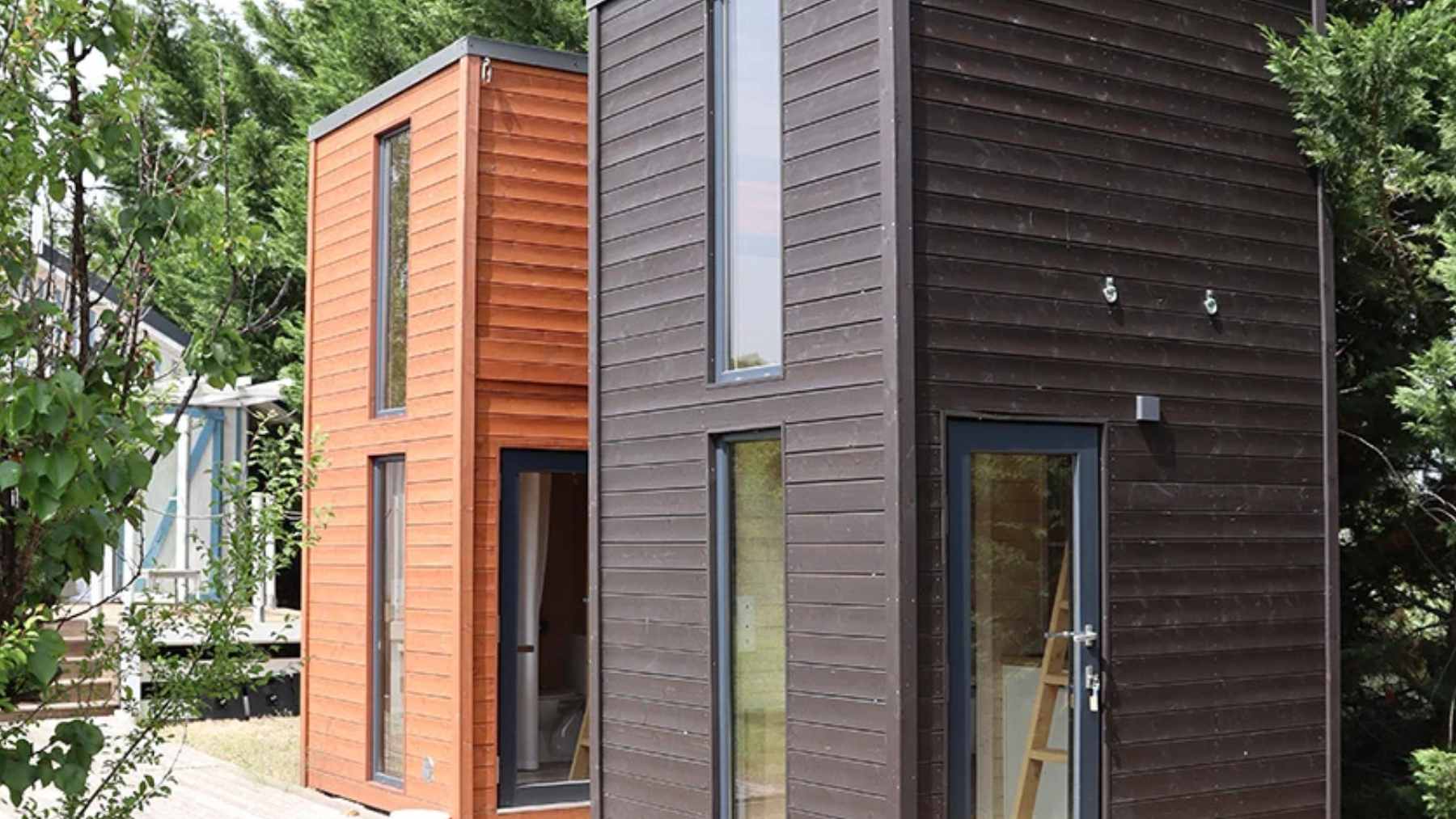
Tiny houses usually spread out like small cabins, often with wheels underneath and a cozy porch out front. La Ruche does something different. Instead of stretching its limited space across a normal floor plan, it stacks the essentials upward, almost like a miniature skyscraper for two people.
Designed by French builder Quadrapol, the compact home is being pitched as a ready-to-live-in garden studio with a small ecological footprint, a wood-based structure, and enough room for sleeping, cooking, eating, showering, and storing the basics. It is tiny–really tiny, but that is exactly the point.
A tiny house that goes up
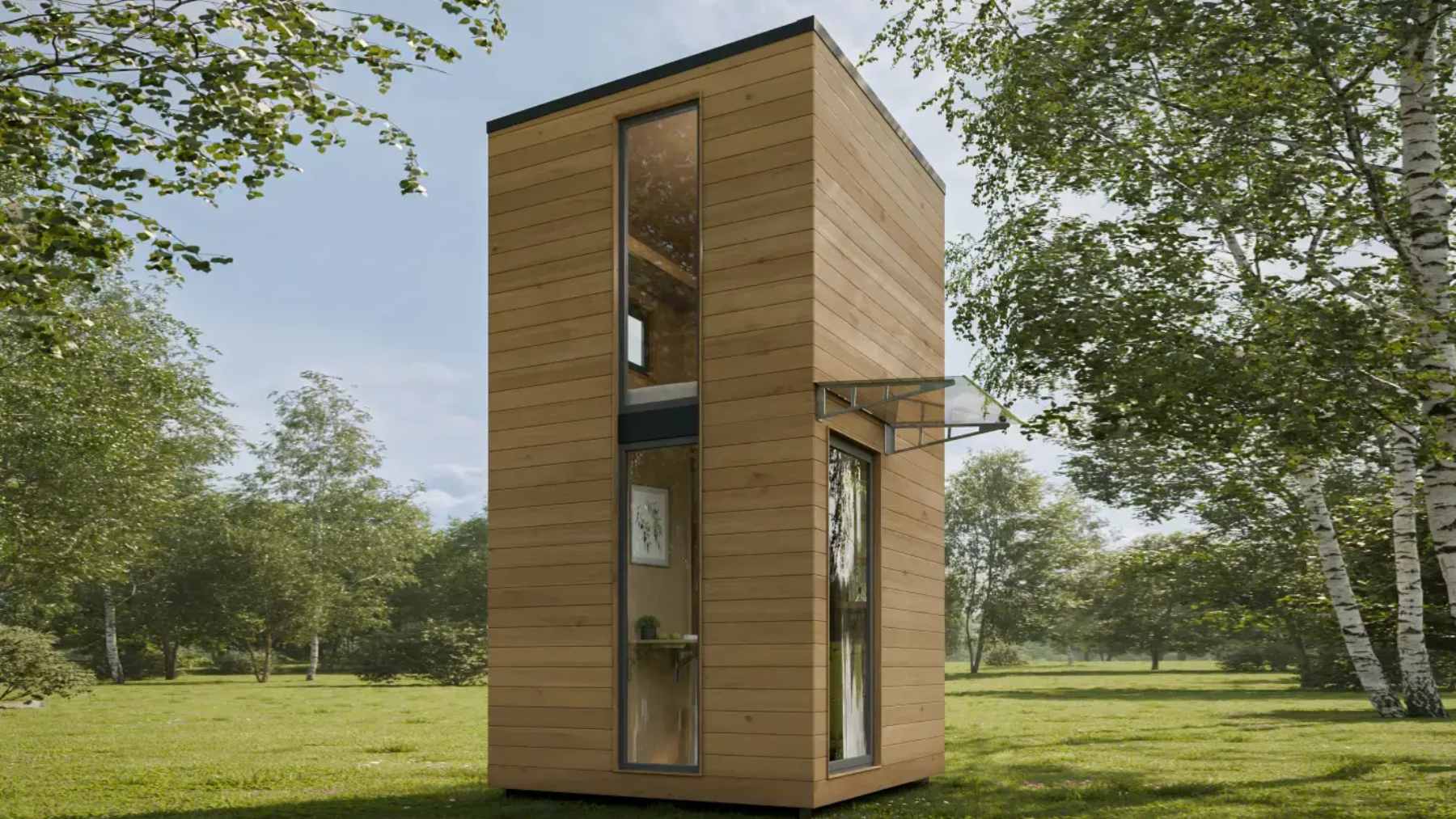
La Ruche measures 7.1 ft. long, 7.6 ft. wide, and 13.6 ft. tall, making it unusually vertical even by tiny-house standards. Its total interior space is listed at about 107 ft.², spread across two levels.
That shape is key. It means the home uses a very small ground footprint while still separating daytime use from sleeping space. For anyone trying to fit a guest unit into a garden, a small vacation plot, or a tight backyard, that could be the appeal.
The model is not a towable tiny house. It must be transported by truck and installed on site, so it is better understood as a compact garden studio than a rolling home for cross-country travel.
What fits inside
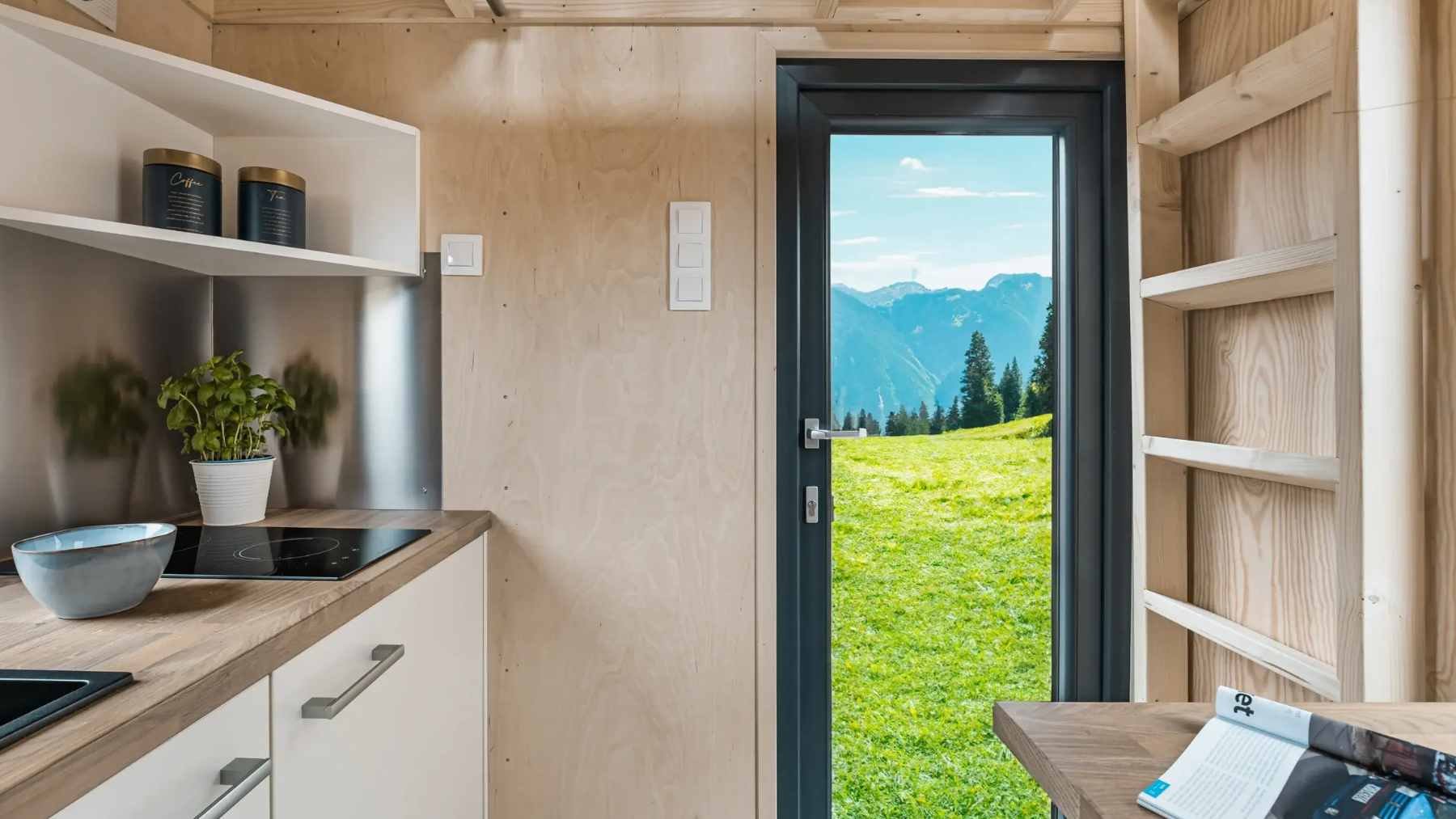
The glass door opens directly into the kitchen, where Quadrapol has squeezed in a sink, a two-burner induction cooktop, a built-in fridge, cabinets, and work surfaces. Nearby, a wall-mounted drop-down table seats two people. It is the kind of setup where every inch has a job.
A curtain separates the kitchen from the bathroom, which includes a shower and toilet. That is efficient, but it also shows the trade-off. When a whole living unit is this small, privacy and comfort depend heavily on how each person uses the space.
The bedroom sits upstairs and is reached by a wooden ladder that can be stored against the wall when not in use. There is room for a double bed, along with a storage unit and a netted shelf, giving the upper level a snug, cabin-like feel.
The green pitch
Quadrapol describes La Ruche as an ecological housing option, pointing to biosourced wood, four-season insulation, and a sustainable design approach. The official listing also says the home uses treated pine siding with FSC and PEFC certification, plus rock wool insulation and double glazing.
That does not automatically make any tiny house a perfect environmental solution. A small home generally uses fewer materials than a larger one, but the real impact depends on how it is used, how it is powered, and whether it replaces a larger building or simply adds another vacation rental.
Still, the basic idea is easy to understand. Less floor space usually means less to heat, less to furnish, and less to maintain. For the most part, La Ruche is trying to turn that “less” into a feature rather than a sacrifice.
Price and permits
The official page lists La Ruche at €27,333 before taxes ($31,100 at recent exchange rates) for June 30, 2026. The same listing also gives a detailed price of €31,200 including VAT and transport, or about $35,500.
That puts it in a different category from many full-size backyard accessory dwelling units, which can cost far more once foundations, utility hookups, permits, and labor are included. But buyers should be careful here–the sticker price is only one part of the story.
Quadrapol says La Ruche can be installed without administrative authorization, but that claim should not be treated as universal. Local zoning laws, utility rules, property setbacks, and short-term rental regulations can change everything, especially for U.S. buyers.
Not for everyone
Could two people really live in 107 square feet? Maybe for a weekend or for a simple vacation rental. For everyday life, the answer depends on patience, habits, and how much privacy someone needs.
The design feels better suited to a guest house, a student space, a backyard office with sleeping capacity, or a compact eco-retreat than a full-time family home. There is no room here for clutter, no spare hallway, no forgotten closet packed with winter coats.
That is also what makes it interesting. La Ruche forces a bigger question about how much space people actually need, especially at a time when housing costs, land use, and energy bills are pushing designers to rethink the traditional home.
A small sign of a larger shift
The tiny-house movement has often been sold as a lifestyle dream, all sunsets, coffee mugs, and cozy wooden interiors. La Ruche is more practical than romantic. It asks whether vertical design can make micro-housing easier to place where land is limited.
For cities and suburbs, that idea could matter. A unit this small will not solve the housing crisis, and it should not be marketed as a magic answer. But as a guest unit, rental pod, or low-footprint garden studio, it shows how builders are experimenting with space in ways that feel more like product design than conventional construction.
At the end of the day, La Ruche is a tiny house with a very specific promise. It does not offer more space. It tries to make less space work harder.
The official product page was published on Quadrapol.