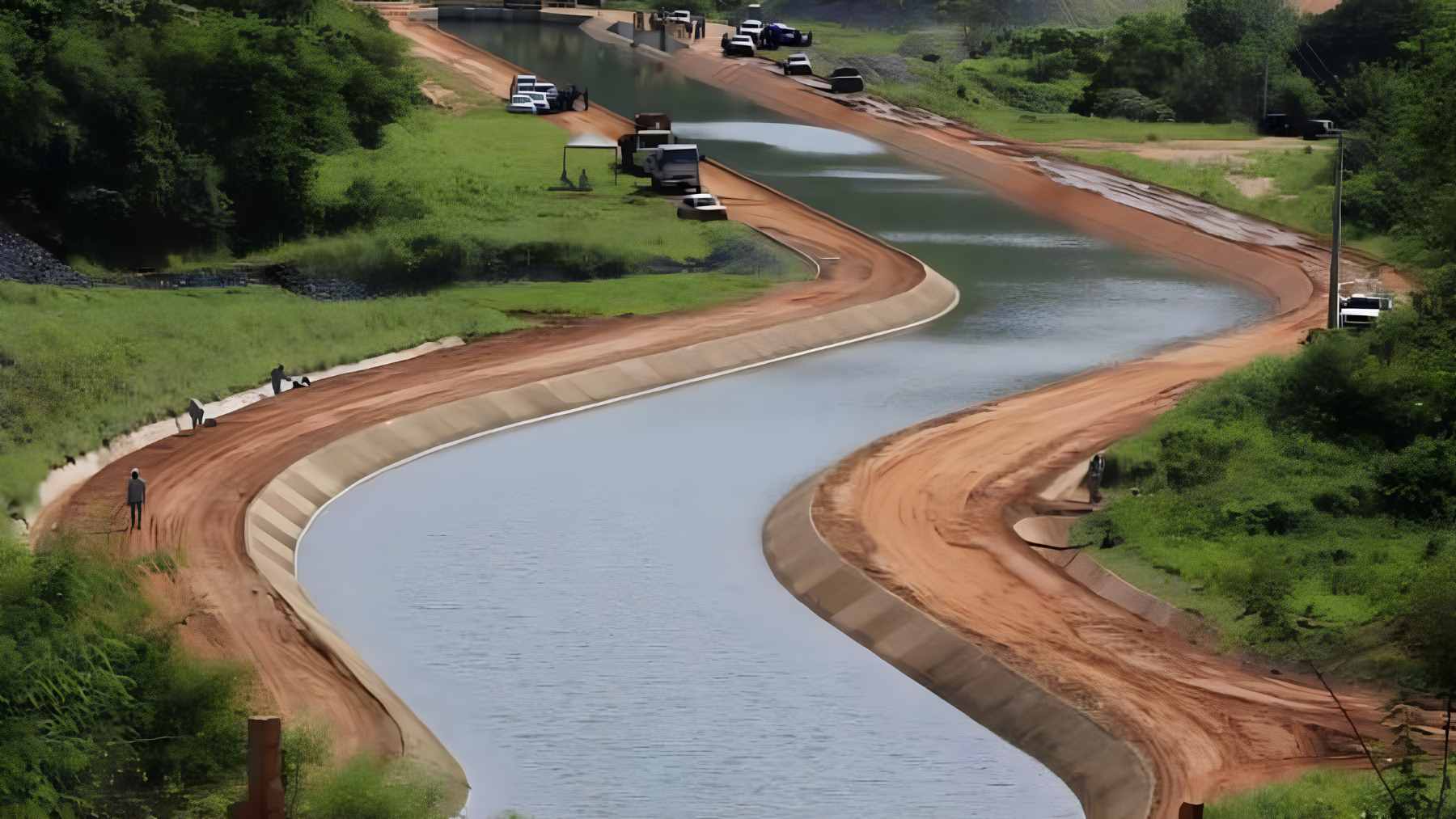
Brazil is moving closer to finishing one of the most ambitious water projects in its modern history: a man-made river corridor designed to carry freshwater across one of the driest parts of the country.
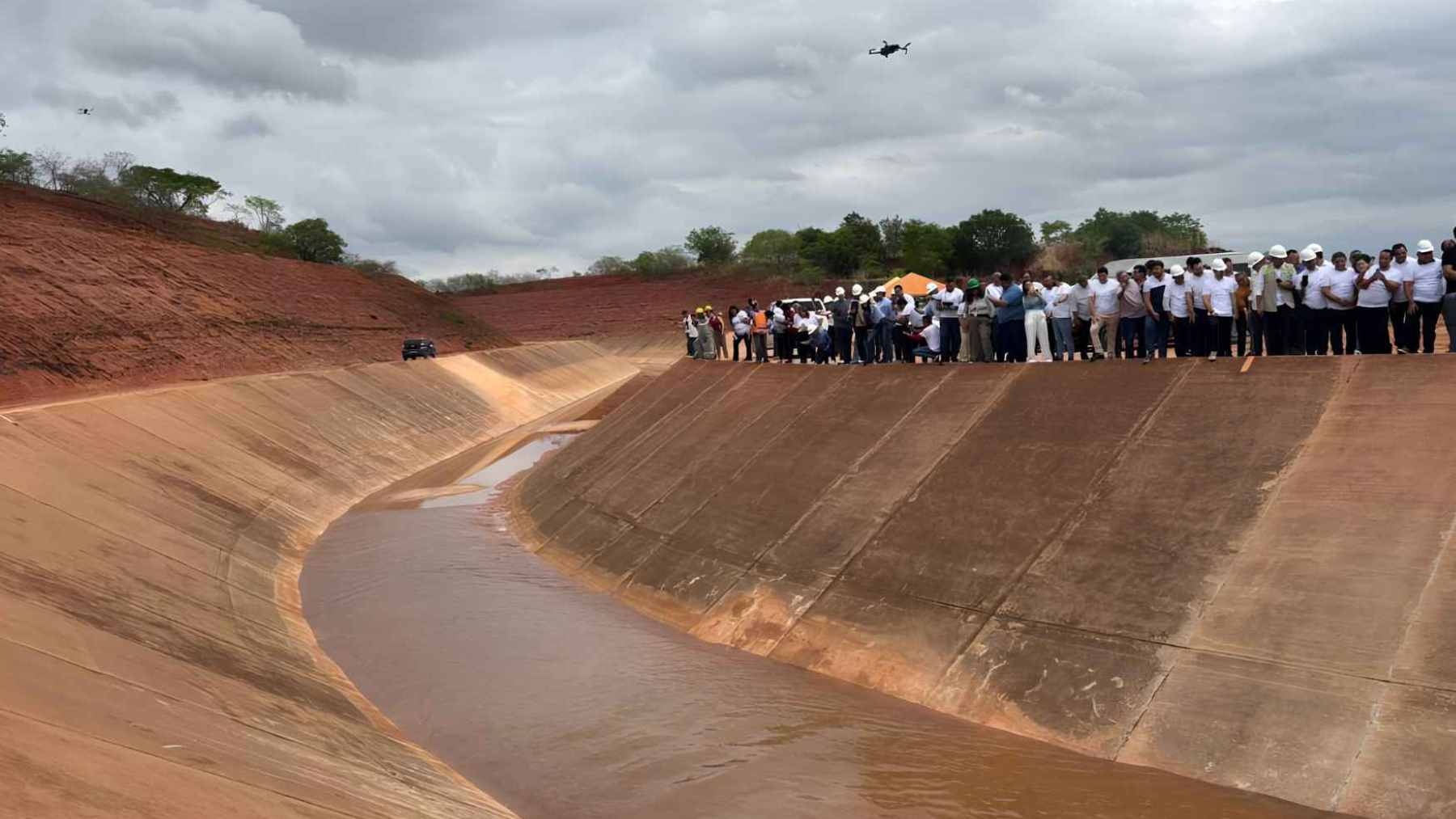
The Cinturão das Águas do Ceará, or Water Belt of Ceará, had passed 91% completion in late 2025 and, in a later official update, reached 92% after another 9.3 miles were released for water from the São Francisco integration project.
This is not a small canal tucked behind a reservoir. It is a 90.3-mile hydraulic line built with open-air channels, tunnels, and siphons, meant to move water from the Jati dam area toward the Cariús River headwaters in Nova Olinda.
For Ceará, where drought can shape harvests, jobs, and the water coming out of a kitchen tap, the stakes are easy to understand.
A 90-mile water belt
What many are calling an “artificial river” is, for the most part, a state-scale water transfer system. According to Ceará’s water resources department, Trecho 1 begins at the Jati dam intake, where water from the North Axis of the São Francisco Integration Project enters Ceará, and runs to the Cariús crossing.
The system is designed to move water through a mix of gravity-fed structures, including open channels, siphons, and tunnels. Its listed maximum flow is about 1,060 ft.³ per second, which shows why the project is being treated as a strategic piece of water infrastructure rather than a local public works job.
Still, one point remains: the project does not create water. It redistributes water through a network that must be managed carefully, especially when dry seasons press reservoirs and politics at the same time.
Why Ceará needs it
In Brazil’s semi-arid Northeast, water security is not an abstract policy phrase. It can decide whether a town has enough supply during a long dry spell, whether farms can keep producing, and whether industries can plan beyond the next rainy season.
State officials say the project directly covers 24 municipalities and about 561,000 people in its area of influence. It may also help strengthen supply for the Fortaleza metropolitan region through links with the Eixão das Águas, reaching more than 5 million inhabitants.
That is why the Water Belt has a bigger meaning than its concrete walls. For a family, it can mean fewer anxious days watching reservoirs fall. For businesses, it can mean more predictable water for agriculture, industry, and tourism.
Big hopes and big questions
Large water transfers tend to arrive with big promises, and sometimes with big arguments. A study in Water Alternatives described the São Francisco interbasin transfer as a massive, controversial project shaped by complex social, political, and economic forces, not just engineering calculations.
Those nuances matter here. Moving water across regions can help vulnerable communities, but it can also raise difficult questions about who benefits first, how costs are shared, and whether poorer areas receive the relief they were promised.
The Ceará government says human supply is the priority, followed by uses such as industry, tourism, livestock watering, and irrigated agriculture. That order must be clear, because in a drought-prone region, a canal is only as fair as the rules that decide where the water goes.
The business side
The project is also a major economic bet. Ceará’s government described it as the largest state water-transfer work in Brazil, with total investment of roughly $155 million, at recent exchange rates.
Construction has supported more than 1,500 direct jobs and used about 500 machines, according to the state’s 2025 update. That gives the project a business footprint before the first full benefits are counted in farms, factories, and urban water systems.
The bill does not end when construction crews leave, however. After full completion, the Ceará Water Resources Management Company, known as Cogerh, is expected to handle operation, maintenance, monitoring, and monthly tracking of raw water delivered by the federal operator.
Not a magic fix
The most important lesson may be the simplest one. A 90-mile artificial river can move water, but it cannot replace conservation, sanitation, loss control, watershed protection, and honest monitoring.
That is where the environmental story gets more complicated. If the system is operated well, it could reduce vulnerability during severe drought and give Ceará more flexibility as climate patterns become harder to plan around. If management falls behind, the same concrete channel could become a costly reminder that infrastructure is only one piece of water security.
At the end of the day, what the project is trying to do is close the gap between where water is available and where people badly need it. That is a powerful idea. It is also a responsibility.
What happens next
The latest official step was practical but important. SRH said it had released another 9.3 miles of the Water Belt, allowing water from the São Francisco project to keep advancing through one of Ceará’s most strategic hydraulic works.
Essentially, the project is moving from map lines and construction updates toward the harder test of real operation: can the system deliver reliably when the next severe dry season hits?
Ceará is betting that it can. If the final stages stay on track in 2026, the artificial river could become one of Brazil’s most watched climate-adaptation and water-security projects, especially for regions where drought is not an occasional crisis but a recurring fact of life.
The official statement was published on SRH Ceará.