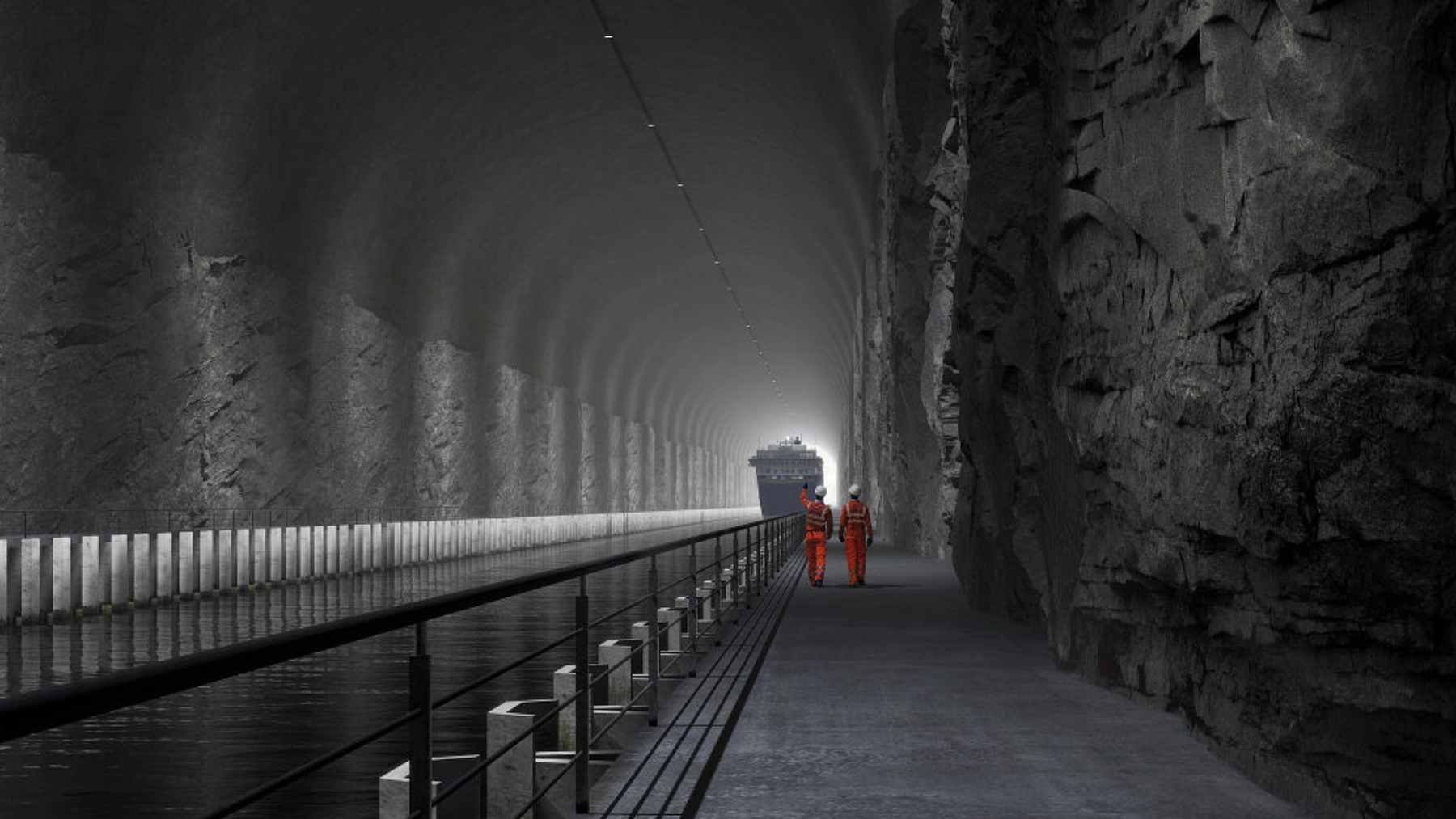
Norway is moving ahead with a piece of infrastructure that sounds almost unreal: a tunnel built not for cars, trains, or people, but for ships. The Norwegian Coastal Administration said AF Gruppen has been awarded the design-build contract for the Stad Ship Tunnel, after Parliament approved a new cost framework on June 19 that allows the project to move toward construction.
The idea is bold, but the reason is practical. The 1.06-mile tunnel will cut through the Stad Peninsula so coastal vessels can avoid Stadhavet, one of the most exposed and dangerous stretches of sea along Norway’s west coast.
For shipping companies, fishermen, seafood exporters, and coastal communities, this is less a stunt than a bet on safer routes, cleaner voyages, and fewer weather delays.
A tunnel big enough for coastal ships
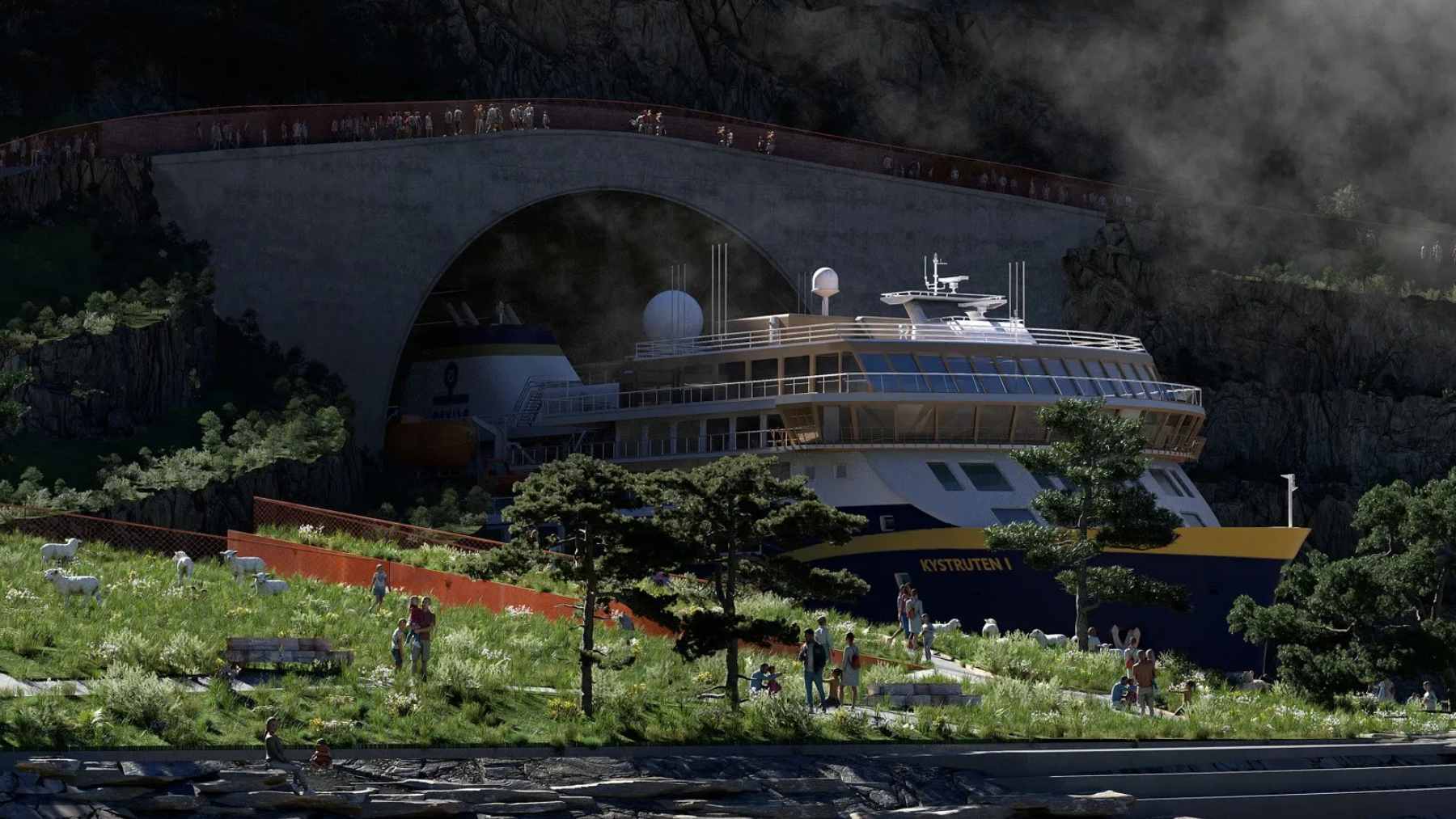
The Stad Ship Tunnel will connect Kjødepollen in Vanylvsfjorden with Moldefjorden near Selje. It will be about 165 ft. high and 120 ft. wide, with roughly 110 ft. of clearance from the sea surface to the ceiling, making it large enough for vessels up to the size of Norway’s Hurtigruten and Kystruten coastal ships.
The money now attached to the project is just as eye-catching. Parliament approved a P85 cost framework of 8.588 billion Norwegian kroner, or about $866 million at recent exchange rates, while the design-build contract with AF Gruppen is valued at about $565 million, excluding value-added tax.
That does not mean crews will start carving rock tomorrow. Contract signing is planned for August, and the major construction work is expected to begin in 2027. Einar Vik Arset, director general of the Norwegian Coastal Administration, said the agency looks forward to delivering this “historic project” with an experienced Norwegian contractor.
Why Stad is the hard part
Stadhavet has a reputation that every coastal sailor in Norway understands. Project material describes the area as one of the most treacherous parts of the Norwegian coast, where Kråkenes Lighthouse has recorded more than 100 full-day storms in some years and waves can reach about 100 ft.
What makes it so difficult? Wind, currents, seabed shape, and waves arriving from different directions can combine into chaotic seas. Even when the storm has passed, heavy swells may linger for days, turning a short sea crossing into a waiting game.
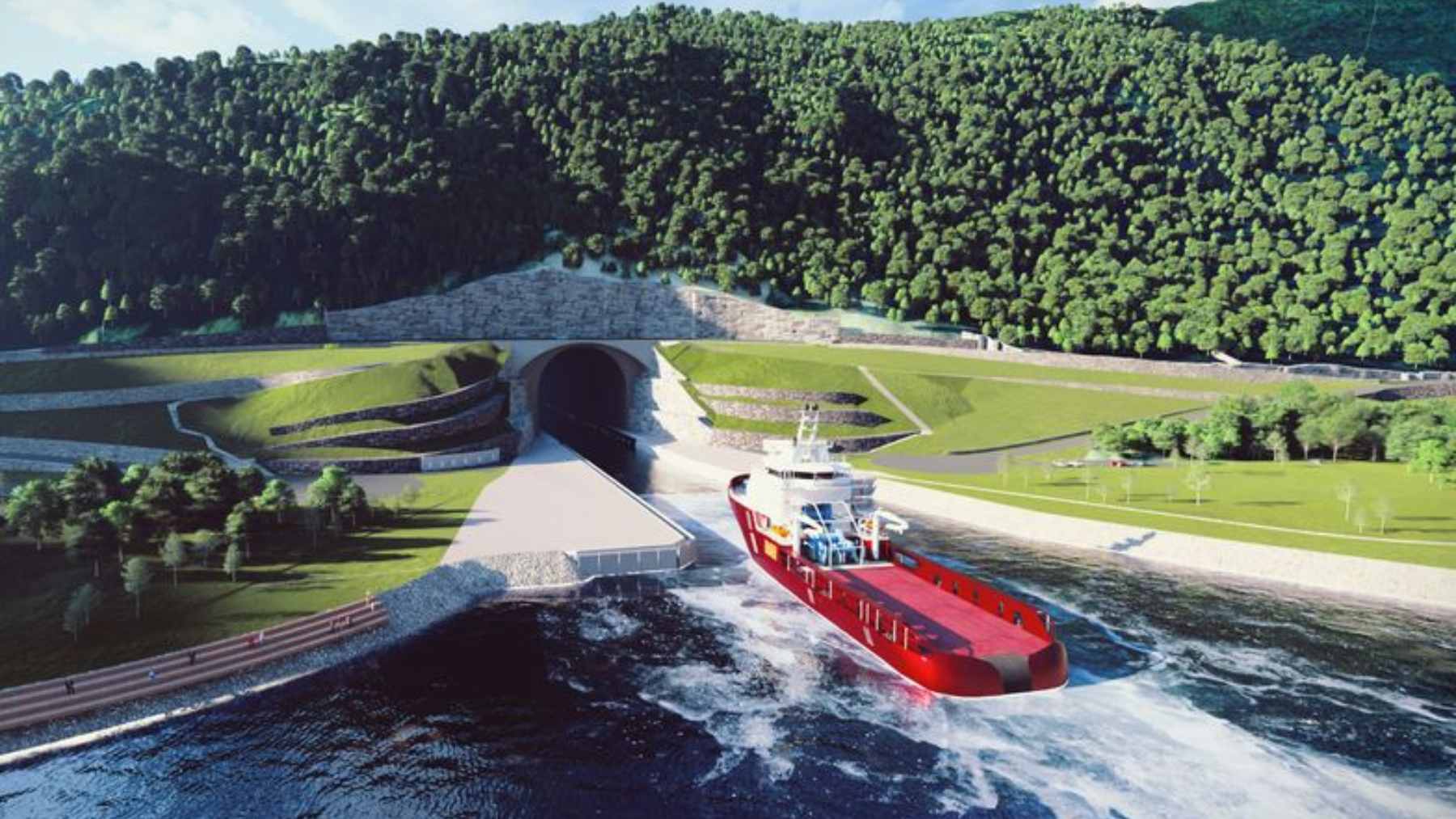
For businesses, that waiting game has a price. Fishing boats, cargo ships, and vessels serving salmon farms can lose time when they wait for safer weather, and perishable goods do not pause just because the sea is angry. That is why the tunnel matters beyond the coast.
The climate promise
Here is where an engineering story becomes an environmental story. A report developed by Rolls Royce Marine, now part of Kongsberg Maritime, estimated that a smaller vessel around 130 ft. long could save 50 minutes on a Stad passage and cut carbon dioxide emissions by 60% when compared with the current route in typical autumn seas of 10 to 13 ft.
The same analysis found a larger vessel did not save voyage time in the tested scenario, but still saw a 30% emissions cut. That detail matters, because it shows the tunnel is not a magic switch for every ship in every weather pattern. It is a tool that can make some routes shorter, calmer, and less fuel-hungry.
In practical terms, less fuel burned means lower operating costs and fewer emissions. The biggest gains may come when ships avoid long detours, rough-water routing, or sitting idle for a safe window. This is a game-changer.
Blasting through a mountain
Building the Stad Ship Tunnel will be a huge rock job. The Norwegian Coastal Administration says conventional blasting is planned, with drilling rigs and bench rigs, and the project expects to remove about 3.9 million cubic yards of solid rock, equal to roughly 7.1 million cubic yards of blasted rock.
Picture the scale for a moment. The agency compares the blasted rock to about 750,000 truckloads, although officials are also studying ways to use the material locally, including for new commercial areas. A ship tunnel may look simple on a map, but inside the mountain it becomes a mining operation, a traffic project, and a coastal safety project all at once.
Boat tunnels are not entirely new. Inland waterways have used them for centuries, but those were built for canals and sheltered routes. Stad is different because it is designed as a full-scale tunnel for modern coastal ships trying to avoid open-sea danger.
Business far beyond the tunnel
For Norway’s seafood industry, predictability can be worth almost as much as speed. Project material says smaller fishing vessels can avoid crossing Stad in bad weather because delays can harm catch quality, while fish-farming operators rely on steady movement of live fish, feed, cleaner fish, and equipment along the coast.
That is the everyday version of this project. A storm at sea can become a late delivery, a broken schedule, or a truck forced onto crowded roads. The tunnel is supposed to make sea transport a more reliable choice, which could ease pressure on road and rail routes while supporting fresh seafood exports.
Tourism is another part of the pitch. The Norwegian Coastal Administration says the tunnel will be the first full-scale ship tunnel of its size, and regional project material argues that the landmark could attract international attention while improving access between communities. People travel to see unusual engineering. This one will be hard to miss.
What happens next
Before excavation begins, AF Gruppen and the Norwegian Coastal Administration will enter a collaboration phase. Officials say the work will include detailed design, planning site offices and worker accommodation, upgrading existing roads, building temporary access roads, and preparing separate contracts for water pipelines and demolition near the tunnel site.
The major work is still expected in 2027, with an estimated construction period of about five years. That would point toward completion in the early 2030s if the current schedule holds. The caveat is clear, because costs already slowed the project once, and large infrastructure rarely moves through storms of politics and prices without bumps.
Still, the project has crossed a major threshold. What was debated for decades, paused over costs, and revived through budget negotiations is now tied to a named contractor and an approved framework.
The official statement was published on Kystverket.