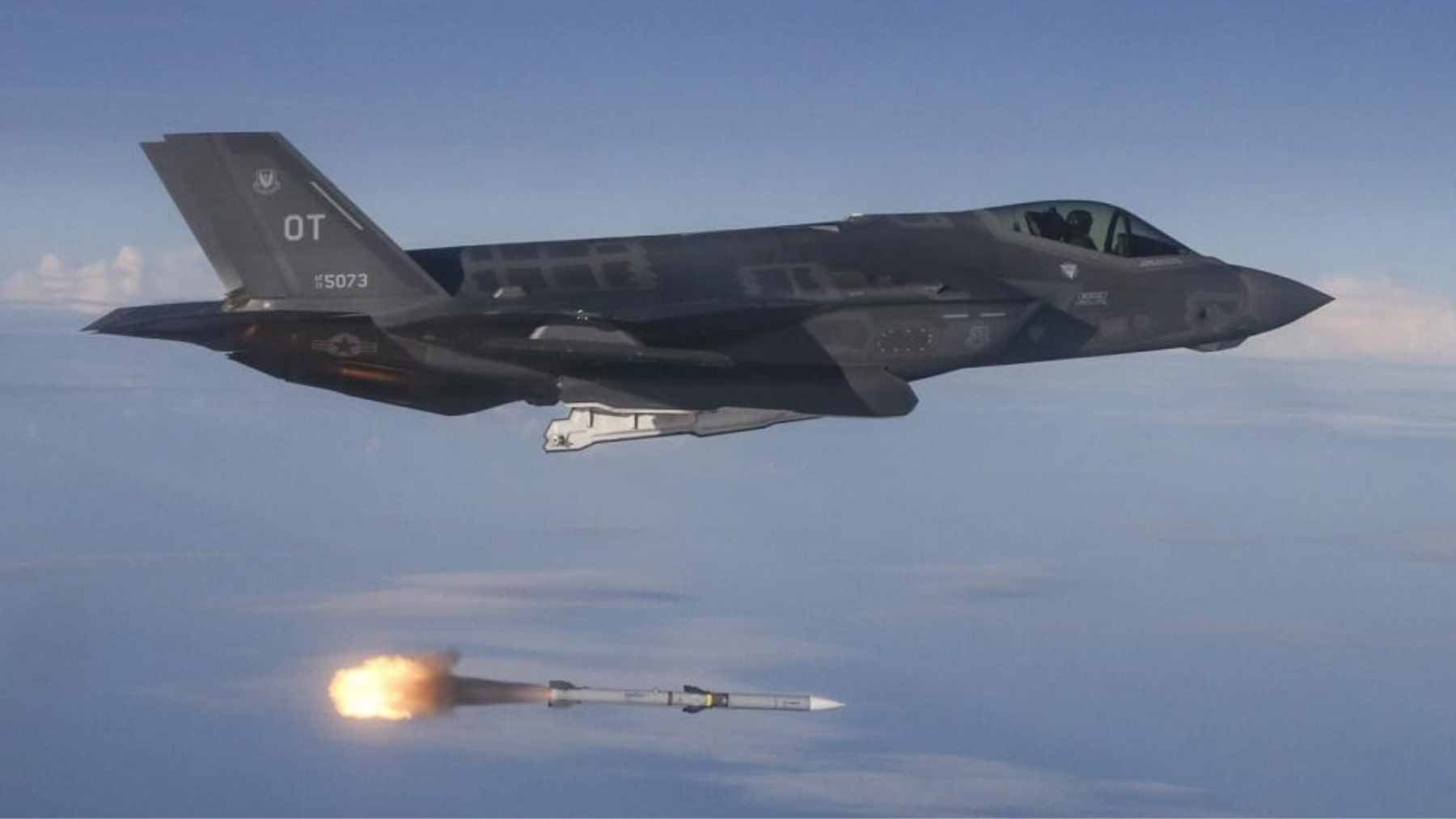
What happens when an air-to-air missile can reach farther than many short domestic flights? The U.S. Air Force is now asking industry to help shape the Air Force Long Range Weapon, known as AFLRW, a proposed system with a minimum reach of 1,000 nautical miles.
This is not just a bigger missile. It is a sign that future air wars may be decided by who can protect, or destroy, the flying radar planes, tankers, bombers, and command aircraft that keep modern forces connected.
And tucked inside that military story is a quieter environmental one, because the aircraft at the center of this fight are also tied to some of the Air Force’s largest fuel demands.
A missile built for distance
The Air Force Life Cycle Management Center notice calls for a weapon family with both air-to-air and air-to-surface versions. The classified industry event is scheduled for August 25 and 26 at Eglin Air Force Base in Florida, where companies are expected to hear more about performance needs and possible fielding plans.
For now, this is not a finished weapon sitting on a runway. It is an industry push, and the Air Force is still looking for ideas from traditional and nontraditional vendors. Still, the range requirement alone makes the program stand out.
Why China matters here
The timing is key. China has spent years building longer-range air-to-air missiles and a larger airborne sensor network, giving its forces more ways to threaten the support aircraft that U.S. airpower depends on.
Open-source estimates put China’s PL-17 missile somewhere around 186 to 311 miles, depending on launch conditions and the source. AFLRW’s 1,150-mile threshold would be several times longer, at least on paper, which is why analysts are treating it as a potential leap rather than a normal upgrade.
The bigger issue is not only the missile. China’s KJ-500 airborne early warning aircraft, the developing KJ-3000, and its expanding space and communications systems help create the kind of “kill chain” that can find targets, pass data, and guide weapons across huge distances.
The network is the real target
Think of airborne warning planes as traffic controllers in the sky. They do not just watch the battlefield, they help organize it, telling fighters where to go and helping commanders understand what is happening before everyone else does.
That is why tankers and radar planes are so valuable. Without tankers, fighters cannot stay on station for long in the vast Pacific. Without airborne warning aircraft, even the most advanced jets can lose part of the shared picture they need to fight safely.
Here is the challenge: what good is a 1,150-mile missile if it cannot find the target? At that distance, the launch aircraft’s own radar is not enough, so AFLRW would likely need help from satellites, stealth aircraft, drones, and datalinks working together in near real time.
A big industrial bet
The notice points to open-architecture requirements and a possible “master integrator” role, meaning one company could be asked to pull together parts from multiple suppliers into a complete missile. In other words, the Pentagon is not just shopping for a bigger rocket, it is looking for a whole weapons ecosystem.
That approach could open the door to several contractors, including smaller firms that specialize in propulsion, seekers, software, or digital testing. It also reflects a broader shift in defense tech, where modular systems are prized because they can be upgraded faster.
The cost is still unclear, but Air & Space Forces Magazine noted that the notice does not emphasize affordability in the way some recent lower-cost missile efforts have. That matters, because exquisite long-range weapons can be powerful, but they are rarely cheap.
The environmental side is easy to miss
AFLRW is not a climate program, it is a military program. However, the environmental angle comes into view when you look at what the missile is meant to influence, which is the future of long-range air operations over enormous distances.
A Senate report tied to Air Force operational energy noted that cargo, tanker, and non-stealth bomber aircraft accounted for roughly 60% of the service’s total jet fuel use, about 1.2 billion gallons per year. That is why fuel efficiency is not just an accounting issue, but a readiness and emissions issue, too.
The Defense Department has also said its 2024 to 2027 Climate Adaptation Plan is meant to inject climate resilience into operations, planning, business processes, and resource decisions.
So, even when the headline is about missiles, the background includes energy use, supply chains, extreme weather, and the cost of keeping large aircraft flying.
What happens next
The Air Force has not said which aircraft would carry AFLRW. That is a big unanswered question, because a missile with this much range could be too large for many fighter weapon bays.
Bombers such as the B-21 are often discussed by analysts as possible long-range weapons carriers, but that remains speculation unless the Air Force confirms it. For now, the safest takeaway is simple: Washington wants a way to hold enemy support aircraft at risk from far beyond today’s normal air-to-air ranges.
That could change how pilots think about distance, how commanders protect tankers, and how defense companies design the next generation of air-launched weapons.
The official notice was published on SAM.gov.