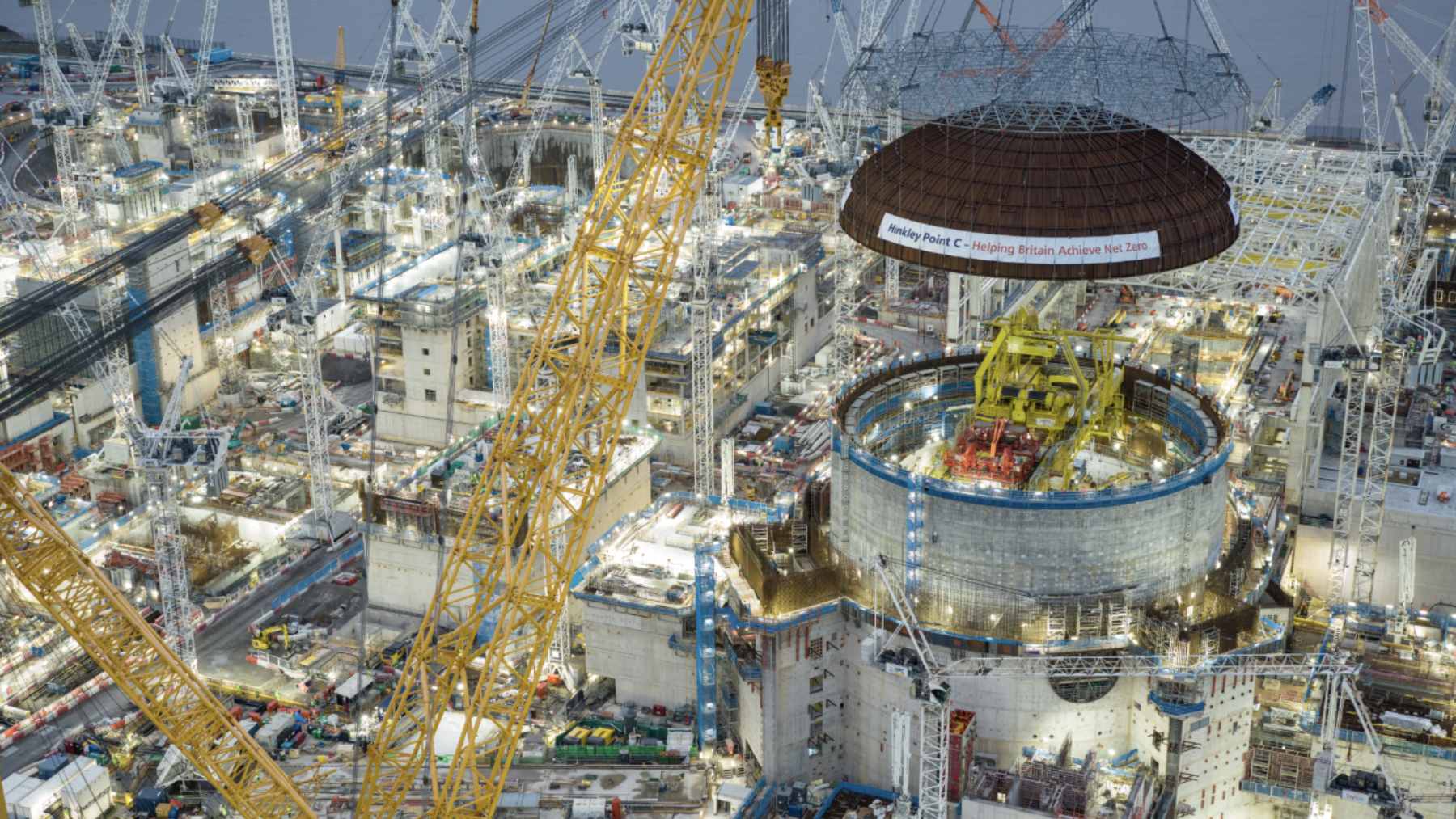
A 551-ton nuclear reactor pressure vessel has been lifted into place at Hinkley Point C in Somerset, England, marking one of the biggest construction milestones yet for the massive low-carbon power project. The lift was carried out by “Big Carl,” the giant crane being used to assemble some of the heaviest pieces of the plant.
The move matters because Hinkley Point C is not just another energy project. EDF says its two reactors are expected to power 6 million homes with reliable, low-carbon electricity, while cutting the country’s dependence on imported fossil fuels.
A huge lift
The reactor pressure vessel is the steel heart of Unit 2. In practical terms, it is where nuclear fission will create the heat needed to make steam for the Arabelle turbines, which EDF describes as the largest turbines of their kind.
Once Big Carl moved the vessel into the reactor building, an internal “polar” crane took over. The 43-ft.-long cylinder was rotated upright and lowered onto its support ring with only about 1.6 inches of clearance on either side–not much room for error.
It sounds almost unreal. A part heavier than several fully loaded passenger jets had to be placed with the kind of precision associated with fitting a key into a lock.
Why Big Carl matters
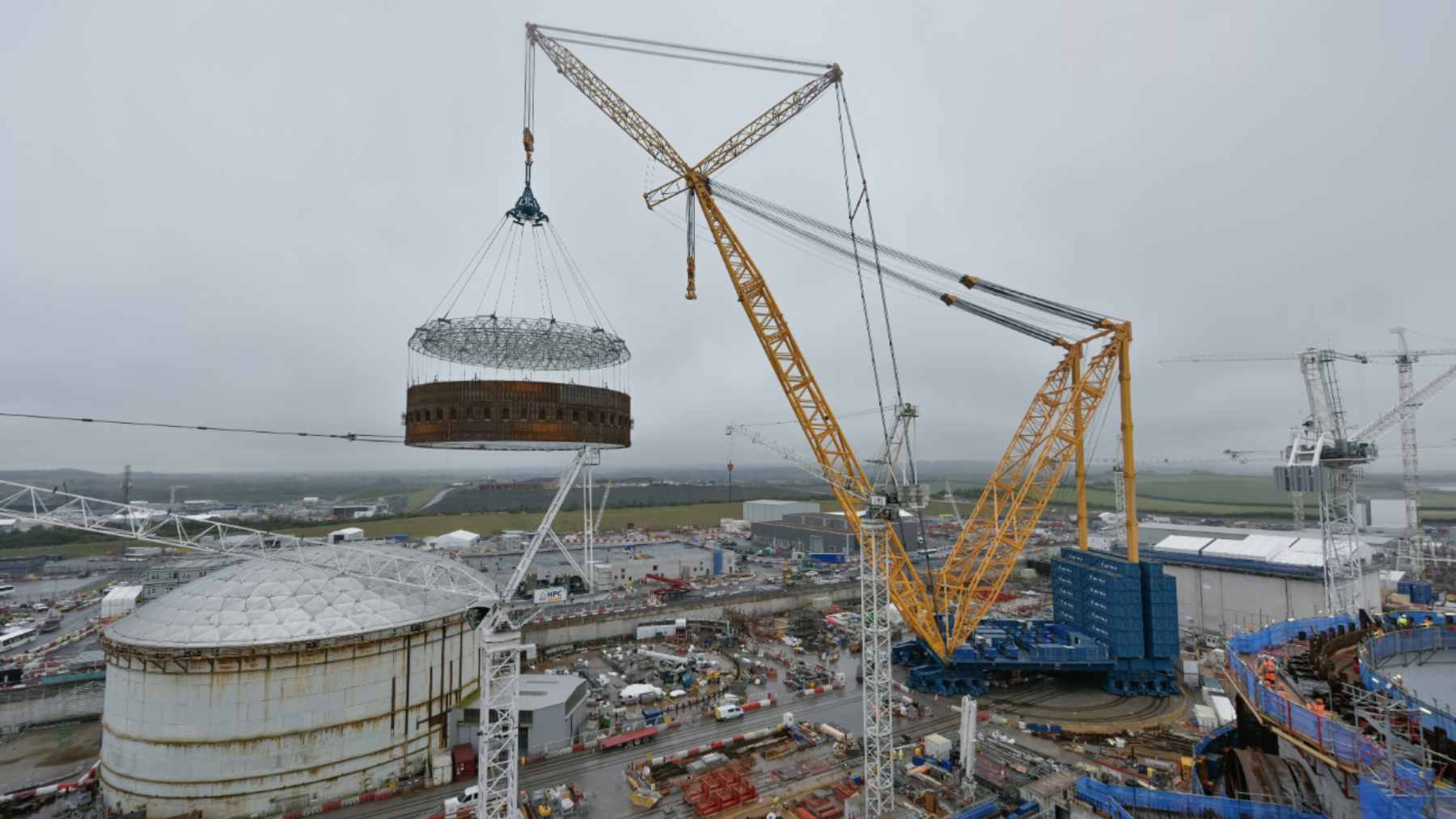
EDF says the first reactor was lifted with a large temporary overhead lifting system. For Unit 2, the project used Big Carl instead, a change the company says saved space, time, and money.
Big Carl is not just a nickname for a big machine. The Sarens SGC-250 can stand up to about 820 ft. tall in its tallest setup and is capable of lifting about 5,500 tons, according to EDF’s earlier description of the crane.
That kind of heavy-lift capacity changes how a site can be built. Instead of assembling every element piece by piece in its final location, teams can use prefabrication and move larger sections into place. On a crowded nuclear construction site, that can make a real difference.
Unit 2 is moving faster
Perhaps the most interesting part of this milestone is not the lift itself, it is what the lift says about repetition.
EDF says Unit 2 is being built 20% to 30% more quickly than Unit 1 because the same teams are working with an identical design and lessons learned from the first unit. The company also says the second reactor building is further ahead than Unit 1 was at the same stage, with more equipment installed and more structural steel work already completed.
Simon Parsons, project director at Hinkley Point C, called the installation “an extraordinary achievement” by the team after months of planning and coordination among the main contractors. He also said the project was not simply copying the first installation, but using experience to “save time, money and hassle” on site.
A low-carbon promise
Nuclear power remains one of the most debated tools in the energy transition. Supporters point to its ability to produce steady electricity without the direct carbon emissions of coal or gas plants. Critics often point to cost, delays, waste, and the long time required to build new reactors.
Still, the environmental argument behind Hinkley Point C is clear. The International Energy Agency describes nuclear power as an important low-emissions source that provides about 10% of global electricity and can complement renewables because it can run when the wind is not blowing and the sun is not shining.
At the end of the day, that is the role Hinkley Point C is trying to play–not a replacement for wind and solar, but a steady low-carbon backbone for homes, factories, hospitals, and all the everyday things that need electricity at 3 a.m. as much as at noon.
The business test
For the most part, big nuclear projects are judged twice. First, by whether they can deliver clean, reliable energy. Second, by whether they can be built in a way that keeps schedules and budgets under control.
That’s why the faster pace of Unit 2 matters for more than just Hinkley Point C. EDF says the lessons from the second unit should benefit Sizewell C, the next major nuclear project planned in the United Kingdom.
In a sector where every month of delay can become expensive, a 20% to 30% improvement is not a small footnote. It is the kind of construction learning governments and energy companies will be watching closely.
What comes next
The installation of the second reactor pressure vessel does not mean the plant is ready to generate electricity. There is still a lot of complex work ahead, including fitting pipes, cables, equipment, safety systems, and the many layers of testing required before a nuclear unit can operate.
The big pieces are coming together, though. Less than 12 months before this installation, EDF says the steel dome was lifted into place to close the second reactor building, another sign that Unit 2 is moving through major construction stages.
For now, Big Carl’s latest lift is a reminder that the energy transition is not only about software, solar panels, batteries, or electric cars. Sometimes, it is about moving a 551-ton steel cylinder through a building with 1.6 inches to spare.
The official statement was published on EDF Energy.