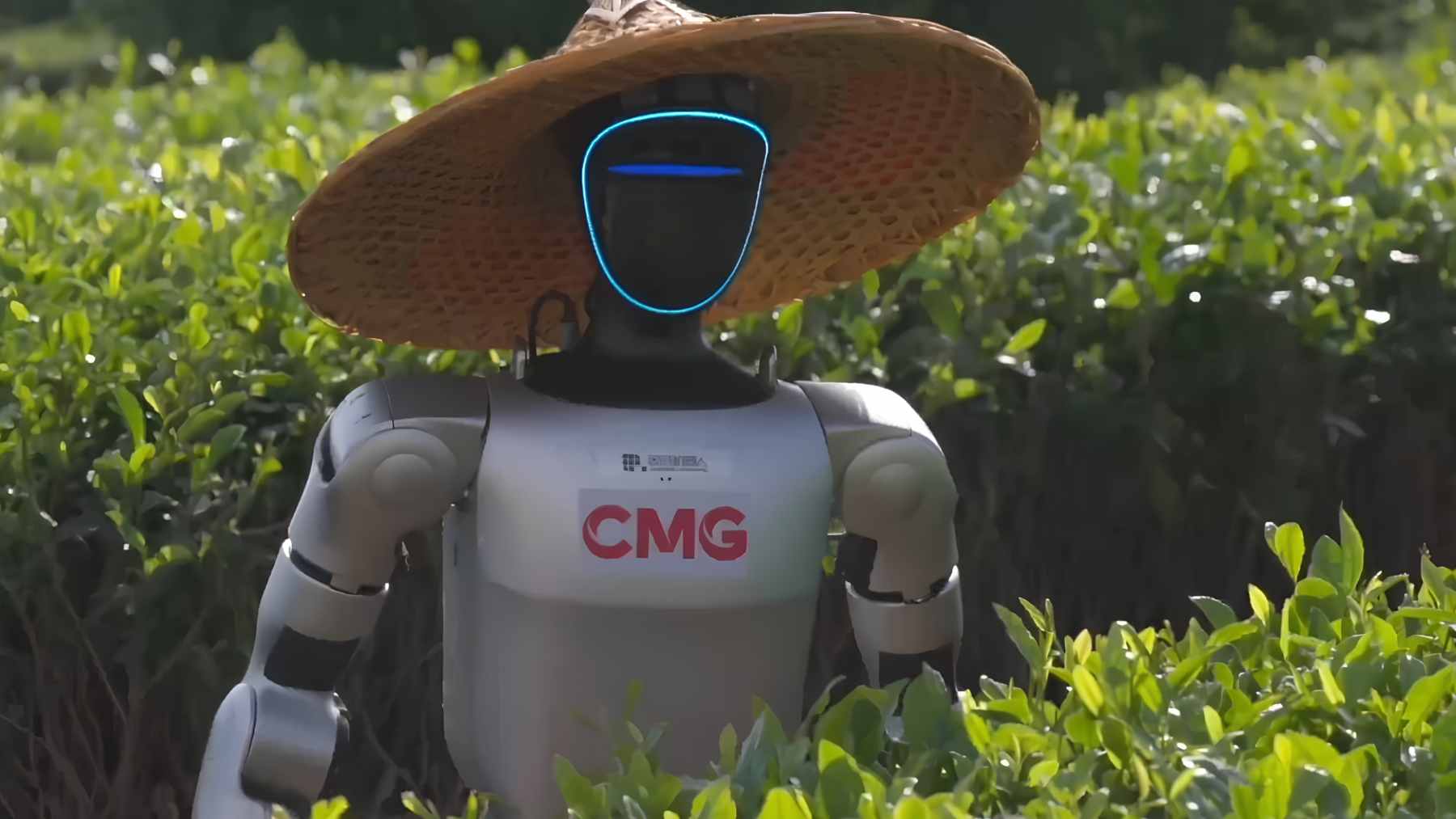
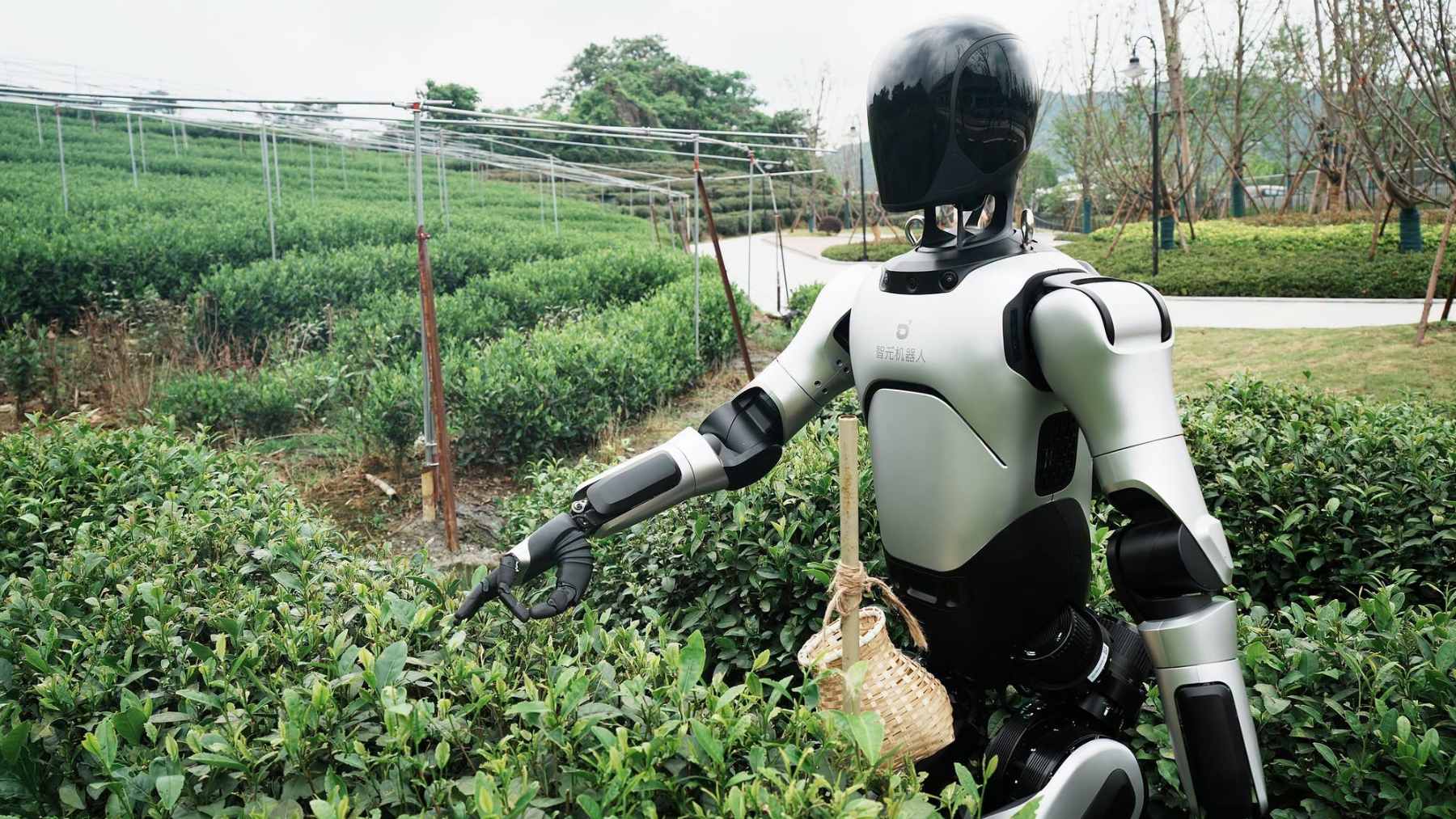
China has taken humanoid robots out of exhibition halls and sent them into one of agriculture’s most delicate settings. In Fuding, a tea-producing city in Fujian Province, machines that had taken part in Beijing’s humanoid robot half-marathon were tested in real tea production after a week of training, working on leaf picking, transportation, withering, roasting, and cake pressing.
It sounds like a polished glimpse of future farming. It was not. According to CCTV Plus, the robots suffered repeated failures before ultimately completing their assigned tasks, and that may be the most useful part of the story. Tea leaves are thin, damp, and easy to damage, while mountain roads are a long way from the smooth factory floor.
Robots enter the tea garden
The trial was part of a promotional campaign for the 2026 World Humanoid Robot Games, which Beijing lists for August 22 to 26, 2026. CGTN reported that the event will include more than 30 competitions designed to show progress in embodied intelligence and fine manipulation.
This was more than just a sports-style showcase. In practical terms, tea production forces a robot to deal with living material, uneven terrain, changing moisture, and the kind of small hand movements that humans barely think about.
Pick the wrong way, and the leaf can be bruised. Step badly on a hillside, and the whole basket can go with it.
Roasting became the strongest test
The best moment for the robots came during roasting. CCTV Plus said their real-time thermal imaging system helped achieve precise temperature control during the delicate process.
That matters because tea roasting is not just heating leaves in a pan. A small shift in timing or heat can affect aroma, flavor, and the final quality of the batch. A master craftsperson works by touch, smell, and experience. A robot, on the other hand, can track heat second by second without getting tired.
Still, that does not mean the machine understands tea the way a veteran artisan does–it simply measures. The human judges. For now, that difference remains huge.
The fingers gave them trouble
The most revealing weakness was in the hand. Fang Hainan, a representative of the robot engineering team, said there was “still much room for improvement” and pointed to problems with the fingers used for pinching.
That sounds small until you picture a fresh tea leaf. It is light, thin, and fragile, more like handling a wet petal than gripping a tool. The robot has to apply enough pressure to pick it up, but not so much that it damages the crop.
The engineering team used motion capture technology to gather data and improve the flexible control of the five-finger dexterous hand. That is where the real value of the test may be hiding. Every dropped leaf is also a data point.
Mountain roads made it harder
Transporting tea through mountain roads gave the robots another lesson. CCTV Plus said that part of the trial improved their motion control capabilities on rough terrain.
Anyone who has walked a rocky rural path knows the challenge. The ground changes under your feet, slopes appear suddenly, and loose stones can ruin your balance. Add a load of leaves, and the task becomes much less like a lab demo.
This is why the Fujian test is important. Humanoid robots will not become truly useful by moving perfectly across polished floors. They need to stumble, recover, adjust, and keep going. The trouble is, the real world does not clear a path for them.
A tea master meets a robot
Wang Chuanyi, a traditional Fuding white tea craftsman, called the experience “very novel” and said the robots still need improvement. His reaction was cautious, but not dismissive.
That balance feels right. The future of agricultural robotics is unlikely to be a clean story of machines replacing people overnight. More realistically, robots could take on heavier or more repetitive work while experienced tea makers keep control of the parts that require taste, judgment, and cultural knowledge.
There is also a business reason to watch this closely. CCTV Plus noted that the traditional tea-making industry saw possibilities for using humanoid robots to ease labor shortages. For rural producers, that could become a serious question, especially in mountain regions where manual work is demanding and younger workers may look elsewhere.
The games behind the test
The second World Humanoid Robot Games will not only focus on athletic events. CGTN reported that the program includes scenario-based contests in settings such as factories, hotels, homes, emergency response sites, hospitals, and retail spaces.
That context matters. China is turning robot competitions into something closer to a public testing ground for practical automation. A robot that can run a race is impressive. A robot that can pick tea, carry it over a mountain path, and help roast it without ruining the batch is a different kind of milestone.
At the end of the day, the Fujian trial showed both ambition and limits. Humanoid robots can already assist in parts of a traditional production process, especially where sensors and temperature control matter. But when the work depends on touch, balance, and judgment, humans are still far ahead.
The news release was published on CCTV Plus.