A public hospital in Spain’s Canary Islands has opened an art therapy program for people receiving outpatient cancer treatment. Through drawing, painting, ceramics, writing, and music, patients can explore feelings that may be hard to explain during a medical appointment.
Announced on June 30, 2026, the project is focused on a specific group, but its purpose is clear. It gives people a creative space inside a setting usually shaped by tests, medication, waiting rooms, and uncertainty, while supporting rather than replacing standard cancer care.
A different kind of hospital room
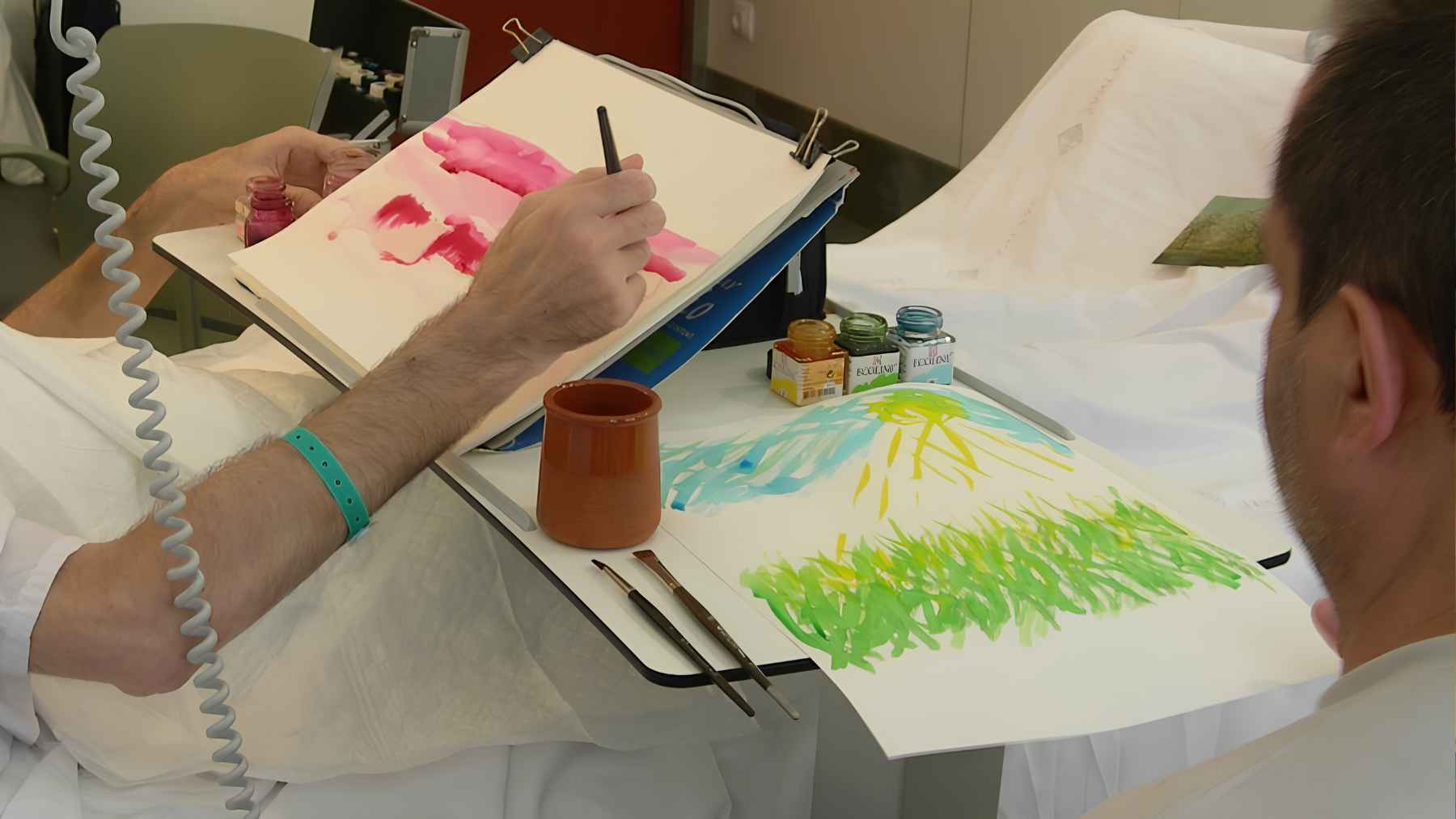
The Hospital Universitario Insular de Gran Canaria launched the program for patients in its oncology day hospital, where people receive scheduled care without staying overnight. A specialist guides the workshops and helps participants use creative work as a channel for emotions “where words do not reach.”
Patients can work with paint, colored pencils, crayons, markers, clay, written language, or sound. There is no demand to produce something polished enough for a gallery. In this therapeutic plan, the blank page matters more than the finished picture.
What art therapy actually does
Art therapy is a form of emotional support that uses creative activity and a trained professional to help people process difficult experiences. The American Cancer Society describes it as a mind-body approach, meaning it connects mental and emotional well-being with the way a person experiences illness and treatment.
Why might that help during cancer care? A diagnosis can bring fear, anger, sadness, or a sense that life has suddenly narrowed to appointments and results. Making an image, shaping clay, or writing a few lines can give those feelings a visible form and make them easier to discuss.
It is not the same as an art lesson. Patients are not being graded on perspective, color, rhythm, or spelling, and no special talent is required. The focus is expression, reflection, and coping.
What the latest evidence shows
A network meta-analysis, which compares several approaches across many studies, was published on July 6, 2026. Led by Qianlu Wang at Huashan Hospital affiliated with Fudan University, it examined 28 studies involving 2,542 people living with or beyond cancer.
The review found that mandala painting, which uses structured circular patterns, showed promise for easing depression and improving quality of life, while music therapy appeared useful for fatigue.
The authors also warned that the studies varied widely and that some results could have been affected by publication bias, meaning positive findings may be more likely to appear in journals.
That caution matters. Cancer Research UK says art therapy may help people express emotions and manage some symptoms, but the broader scientific evidence remains limited. ‘Promising’ is not the same as ‘proven’ for every patient.
More than making pictures
At the Gran Canaria workshops, the creative process is also intended to support self-esteem and help clinical teams better understand what patients are carrying emotionally. A picture or piece of writing is not a diagnostic test, but it may open a conversation that would otherwise never begin.
Think about the ordinary rhythm of a treatment day. There can be long stretches of waiting, checking the clock, and trying not to think too far ahead. Art cannot erase that experience, but it can give the patient something active and personal to do within it.

Creative activities such as painting can help cancer patients express emotions, reduce stress, and complement medical treatment through art therapy.
A safer place for difficult feelings
The hospital says the sessions are designed as a safe, creative setting where emotions can be expressed and gathered with professional support. That word “safe” is important because creative work can sometimes bring painful memories or worries to the surface.
This is why art therapy is different from simply handing someone a coloring book. The materials may look familiar, but the therapeutic value comes largely from the guided process, the patient’s freedom to choose what to express, and the chance to reflect on what emerges.
Cancer care centered on the person
The program was organized with the Artagere Association and follows the Canary Health Service’s strategy for person-centered and more humane care. The initiative also received funding from Spain’s Ministry of Culture.
The announcement does not state how many patients are taking part, how often the sessions occur, or how outcomes will be measured. For now, the program should be understood as supportive care, not as proof of a new medical treatment.
At the end of the day, the idea is not to turn patients into artists. It is to make room for the person who exists beyond the diagnosis, including their fear, identity, memories, and hopes. That can matter greatly when hospital life starts to feel like a list of procedures.
The official press release was published by the Government of the Canary Islands.