Have you ever been in a hurry, spotted a dog on the sidewalk, and suddenly slowed down as if someone had pulled an invisible leash? For many people, the urge to ask the owner for permission and offer a quick scratch feels almost automatic.
Psychology suggests that this small street-level ritual is not just sweetness. It can reflect stress relief, empathy, and a deep human pull toward animals, especially dogs, whose faces and behavior often make them seem emotionally available in a noisy world.
A small touch with a big effect
Anthrozoology, the study of human-animal interactions and relationships, looks at exactly this kind of moment. A dog on a walk is not a therapist, of course, but for a stressed passerby, that brief contact can work like a pause button.
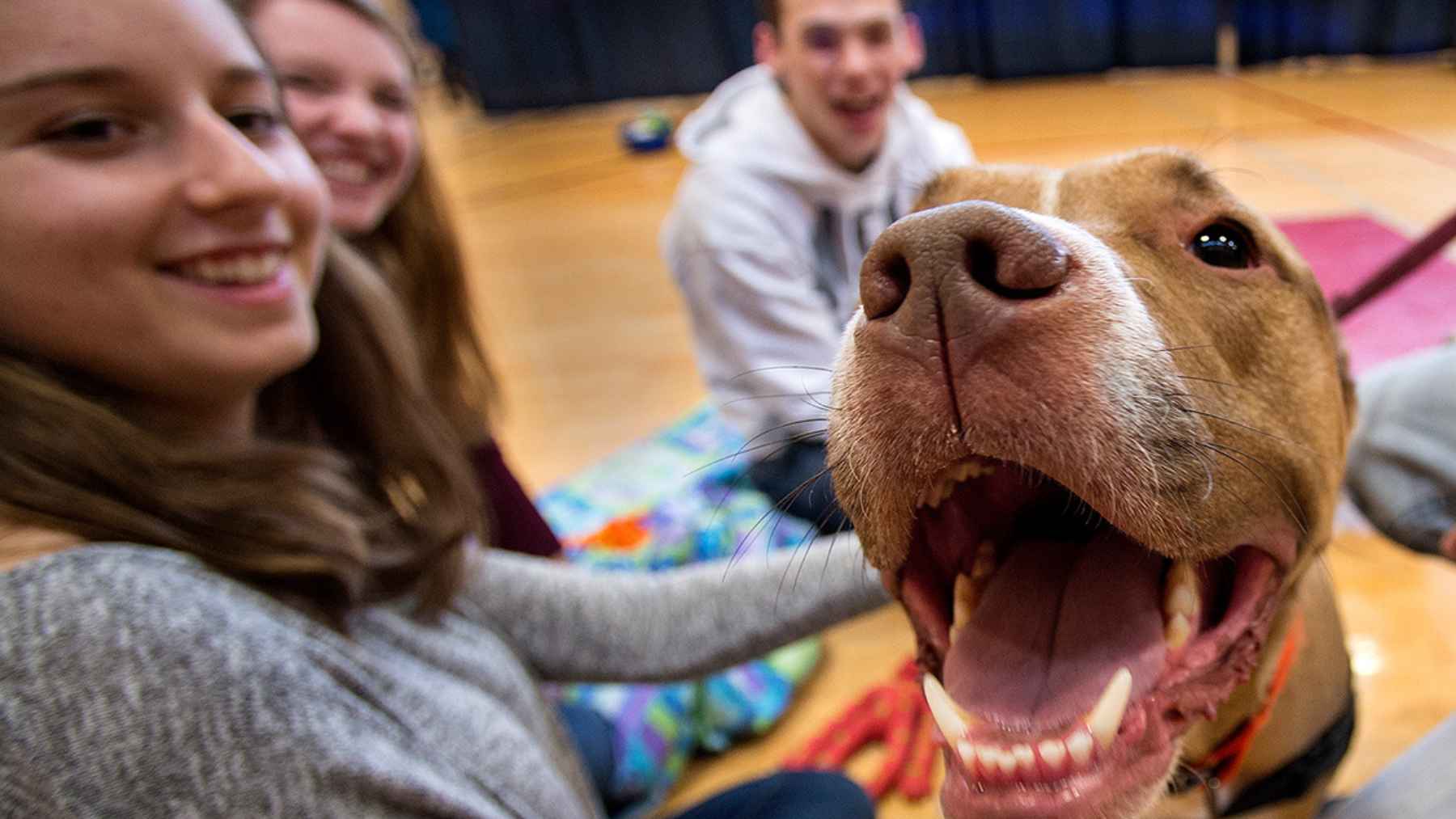
The body seems to notice. In a randomized trial by Patricia Pendry and Jaymie L. Vandagriff at Washington State University, students who had 10 minutes of hands-on contact with cats and dogs showed lower salivary cortisol than students assigned to view images, observe from a distance, or wait. Cortisol is a hormone closely tied to stress.
Why the brain reaches first
Part of the answer involves oxytocin, a chemical messenger linked to bonding. In a 2015 Science study, Miho Nagasawa of Azabu University and colleagues found that gazing behavior from dogs increased oxytocin in owners, while the same pattern was not seen with wolves.
That does not mean every stranger’s dog triggers the same strong effect. But it helps explain why eyes, softness, and calm behavior can feel so persuasive. Before you have made a conscious decision, your brain may already be reading the dog as safe, warm, and worth approaching.
The cute factor is not silly
Konrad Lorenz described “baby schema” as a set of infant-like features, such as large eyes and round faces, that can encourage caregiving. Later research in PLOS ONE found evidence that cuteness perception can transfer across species, including from puppy faces to human infant faces.
This matters because many dogs carry signals humans are primed to notice. A tilted head, relaxed ears, or round eyes can turn an ordinary walk into a tiny emotional interruption. Who has not needed that on a hard day?
What it says about personality
People who habitually greet dogs may fit, at least partly, with agreeableness, one of the Big Five personality traits. In simple terms, agreeableness is the tendency to be compassionate, cooperative, warm, and caring toward others.
Research on personality and compassion for animals has linked animal concern with empathy and traits related to agreeableness. That does not mean people who pass by dogs are cold. It means the person who stops may be especially quick to read nonverbal signals and seek a gentle, low-pressure connection.
A dog can become an emotional anchor
In practical terms, petting a friendly dog can help pull attention away from traffic, work worries, or the endless scroll on a phone. The street is still the street, with noise, exhaust fumes, and rushed strangers, but a calm dog can create a small island of focus.
That anchor effect is easy to understand. Touch gives the brain clear sensory information, and the moment also asks the person to slow down. For the most part, it is less about needing the dog and more about needing a short reset.
Consent matters on both ends of the leash
There is one catch, and it is an important one. A person’s wish for comfort does not override the dog’s need for space. The ASPCA advises people to ask the guardian before petting an unfamiliar dog, let the dog sniff a closed hand, and avoid reaching over the top of the head.
Dogs also answer in their own way. Yawning, lip licking, looking away, or a tense body can be signs of stress, while a dog that leans in or stays relaxed may be open to contact. The best dog lover is not the one who pets every dog. It is the one who knows when not to.
A tender habit with a scientific side
So, what does psychology say about the people who always want to pet dogs in the street? It says they may be chasing a moment of calm, responding to social cues, and using a simple human-animal connection to regulate emotion.
The gesture still needs manners. Ask first. Read the dog. Keep the touch gentle. In the end, that quick sidewalk hello can be more than affection, but only when the animal gets a say too.
The main study behind the 10-minute stress effect was published in AERA Open.