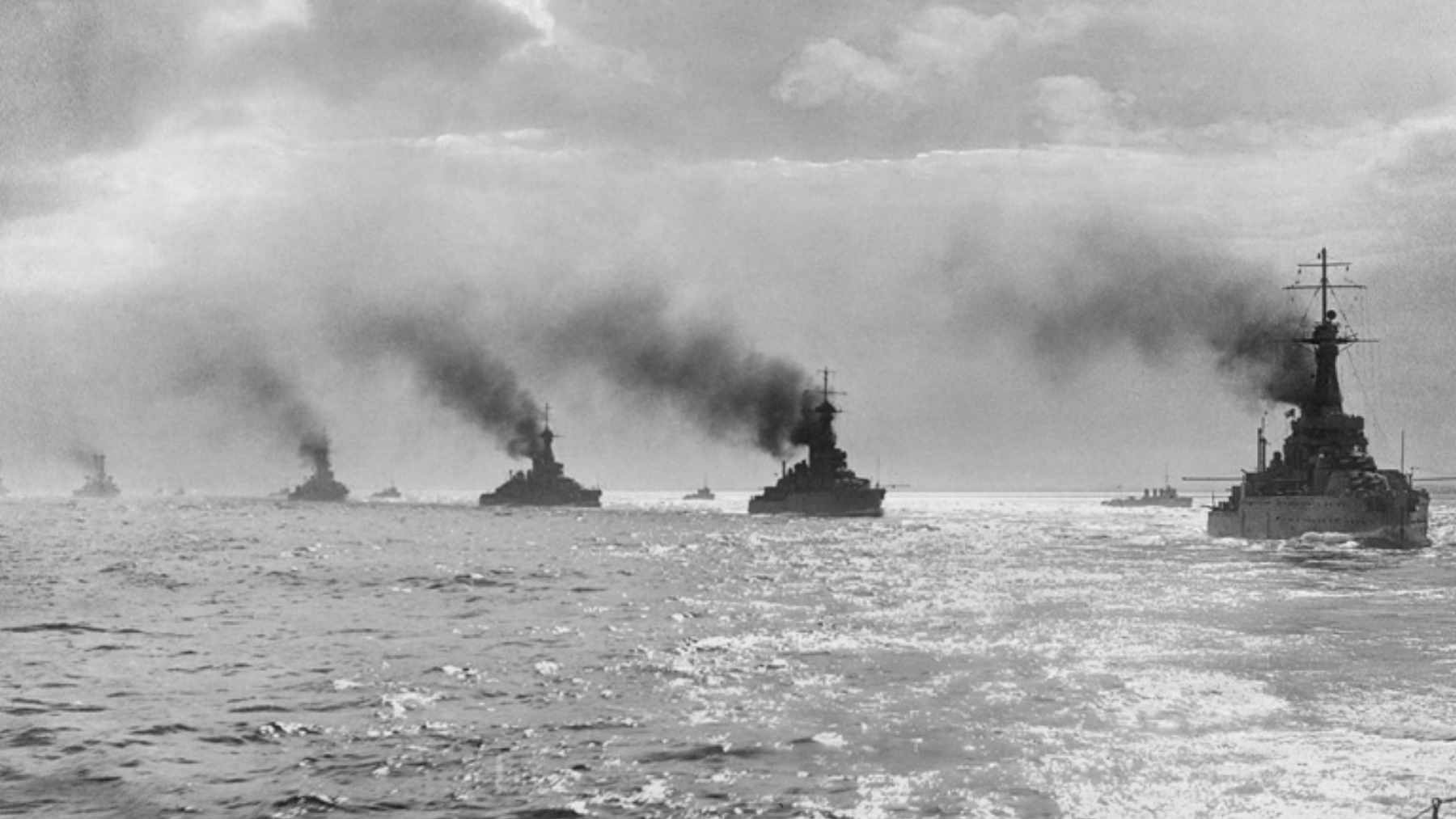
Most people remember the Battle of Jutland as a storm of steel, smoke, and fire. But more than a century after British and German fleets fought off Denmark, the clash now points to a quieter problem beneath the waves, wartime wrecks that may still carry fuel, metals, and munitions into marine ecosystems.
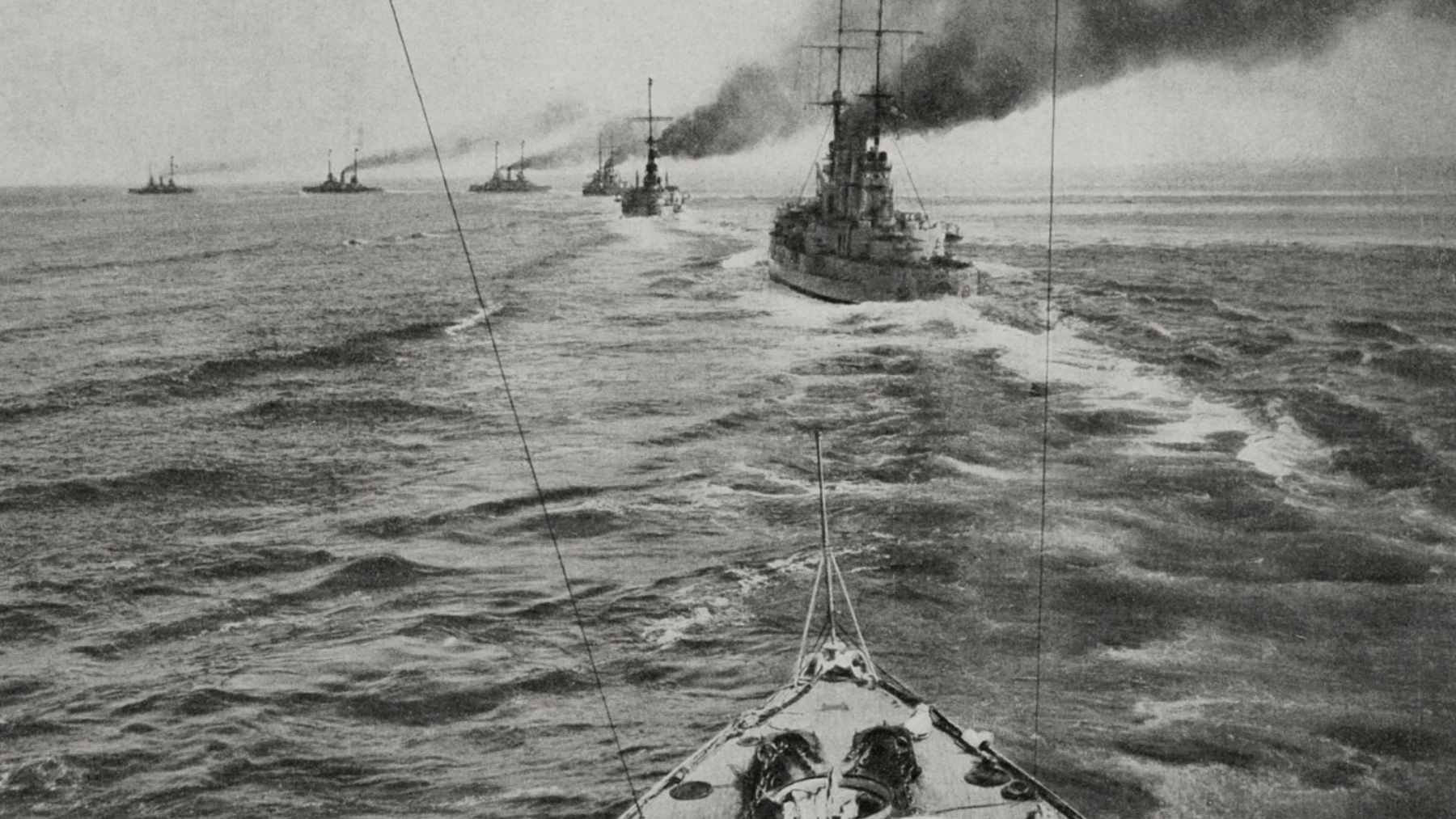
The battle, fought on May 31 and June 1, 1916, involved about 250 ships and roughly 100,000 sailors. By the end, 14 British ships and 11 German vessels were on the seabed, with more than 8,500 men dead, according to the Royal Navy. Those wrecks are history, graves, and to a large extent, environmental warning signs.
A fleet built for power
Germany had spent years building a battle fleet meant to challenge British dominance at sea. The idea was simple enough: a world power needed world-class naval muscle, and Kaiser Wilhelm II believed battleships could give Germany its “place in the sun.”
The trouble was, Britain did not play the game Germany wanted. Instead of risking everything in one decisive showdown, the Royal Navy leaned on its command of the sea and kept up a blockade that squeezed German access to supplies.
That’s where Jutland came in. Germany’s High Seas Fleet tried to lure part of the British fleet into a trap, but the Royal Navy already had a valuable edge through intelligence and codebreaking.
The trap at sea
Admiral Reinhard Scheer sent German battlecruisers north under Franz Hipper, hoping to draw out British ships and destroy them before the full Grand Fleet could arrive. But British commanders were already alerted that the German fleet was moving, thanks in part to Room 40, the Admiralty’s secret codebreaking unit.
The first clashes were brutal. British battlecruisers HMS Indefatigable, HMS Queen Mary, and later HMS Invincible exploded and sank, shocking sailors who watched enormous ships vanish in minutes. Admiral David Beatty’s famous reaction still carries the disbelief of the moment, “There seems to be something wrong with our bloody ships today.”
In practical terms, the British ships had speed, with some battlecruisers capable of about 32 mph, but that speed came with weaker protection. Against heavy German fire, that tradeoff became deadly.
Victory was not so simple
On paper, Germany could claim a tactical success. Britain lost more ships and more sailors, while the German fleet escaped destruction and returned home.
Strategy tells a different story, however. The Royal Navy retained control of the North Sea, and Germany’s surface fleet never broke the blockade that mattered most. The National Museum of the Royal New Zealand Navy notes that, although Britain lost more ships, the Royal Navy kept command of the sea after Jutland.
That mattered far beyond one battle. After Jutland, Germany increasingly leaned toward unrestricted submarine warfare, a gamble that helped push the United States toward entering World War I in 1917.
The U.S. State Department’s Office of the Historian links Germany’s February 1917 submarine campaign and the Zimmermann Telegram to the shift in American opinion and policy.
The wrecks did not disappear
Here is the part we often miss: those ships did not simply leave the story when the guns went silent.
They remained on the seabed, part of a much larger underwater legacy from two world wars. The North Sea alone holds more than 1,000 war wrecks, according to the Interreg North Sea Wrecks project, and many still contain unknown amounts of munitions, fuel, and other hazardous material.
For decades, that was mostly treated as a heritage issue or a navigation issue. Now, scientists are looking at it as an environmental question, too. What happens when old shells corrode, fuel residues leak, and wrecks become part of a living marine habitat?
Mussels are giving clues
Recent research is starting to answer that question in a very down-to-earth way. Scientists have used blue mussels and fish to study whether explosive chemicals from sunken warships are entering marine life.
A 2025 study in Frontiers in Marine Science examined two World War II wreck sites near the Belgian coast. Researchers detected leakage of explosive compounds and uptake by mussels and fish, while mussels showed signs linked to cellular stress and membrane damage. The authors also warned that corrosion may worsen the problem over time, which is why they recommend further monitoring.
To be clear, that study was not a direct test of every Jutland wreck, but it gives scientists a useful warning about what old warships can become when munitions and metal sit in seawater for generations.
A modern defense lesson
This is not just a story about old battleships. It is also about how military decisions leave long environmental shadows.
Today’s defense world is focused on drones, submarines, missiles, satellites, and cyber systems. The seabed reminds us, however, that military technology does not vanish when it becomes outdated. Sometimes, it rusts quietly for 100 years.
There is also a business angle. Offshore wind farms, undersea cables, fishing, shipping, and marine construction are all expanding in the North Sea. Interreg researchers warn that war wrecks can affect blue economy operations, including offshore wind, shipping, tourism, fishing, and mariculture.
The sea keeps the bill
Jutland helped expose the limits of the battleship era. The U.S. Naval War College has noted that the battle shaped later thinking about radio communications, intelligence, naval aviation, and submarine operations, all technologies that would transform sea power in the decades ahead.
The deeper lesson may be simpler, though. War does not end neatly when fleets return to port or governments sign documents. Sometimes, the bill is left on the ocean floor.
For most people, the North Sea is just a place on the map. For scientists, it is becoming something else: an archive of war that is still interacting with the living world around it.
The study was published on Frontiers in Marine Science.