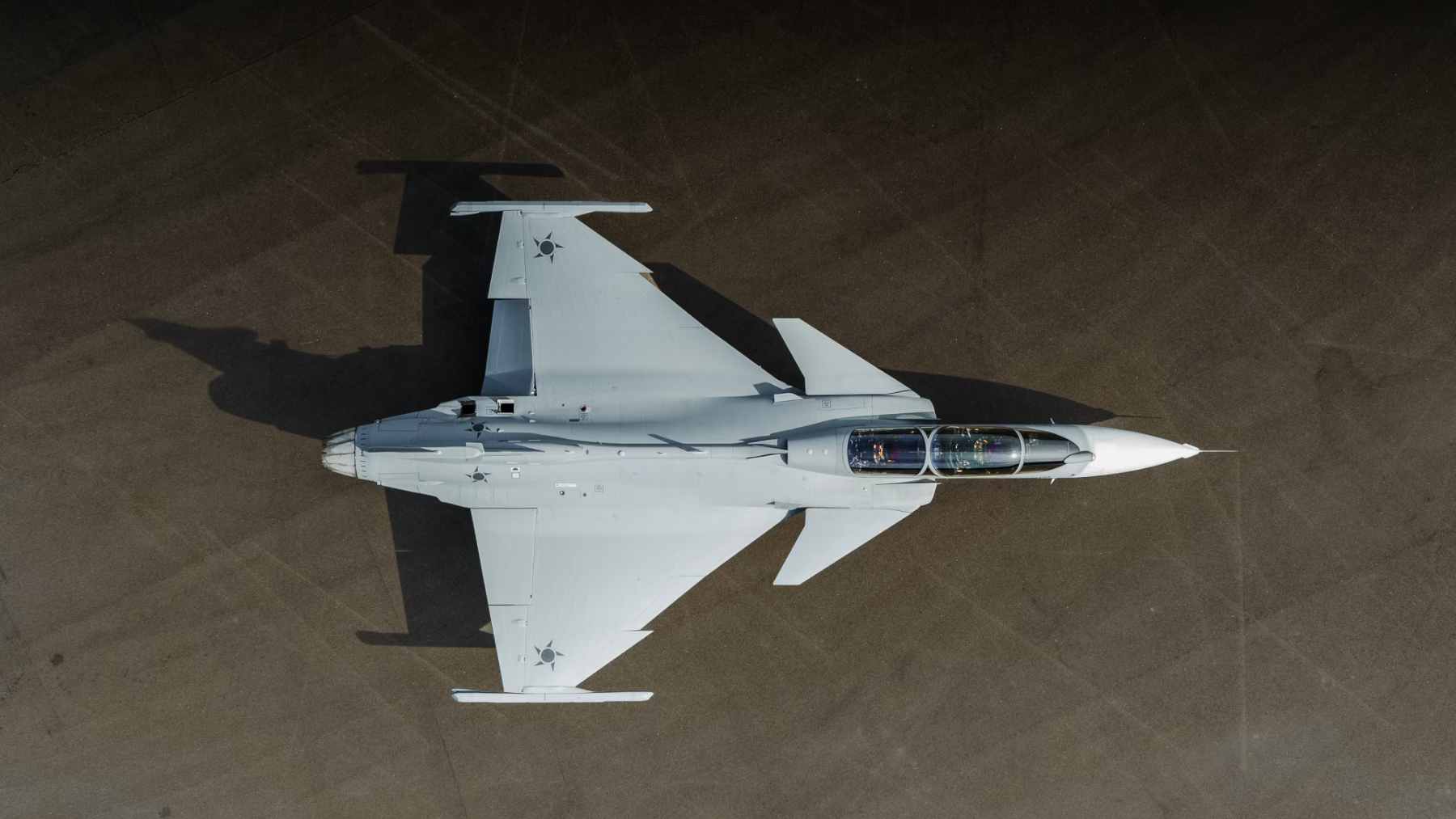
Saab has rolled out the first Gripen F, a new two-seat version of the Gripen E fighter, and Brazil is first in line to receive it. The aircraft was presented on June 2, 2026, at Saab’s facilities in Linköping, Sweden, after years of Swedish-Brazilian cooperation.
At first glance, this is a classic military modernization story, but there is another question hovering above the runway. As NATO and defense companies talk more openly about emissions, can a fighter program become faster, leaner, and less wasteful without pretending combat aviation is clean?
A fighter that trains and fights
The Gripen F is not being presented as a simple classroom in the sky. Saab says the jet combines conversion training and combat capability on the same platform, with a fully independent second cockpit that lets an instructor guide missions inside a real operational fighter.
That second seat matters. In practical terms, it gives the rear pilot a real workstation, not just a place to observe. Think of it like having a navigator during a difficult drive, except the road is a fast-moving battlespace filled with sensors, weapons data, and split-second decisions.
Brazil gets it first
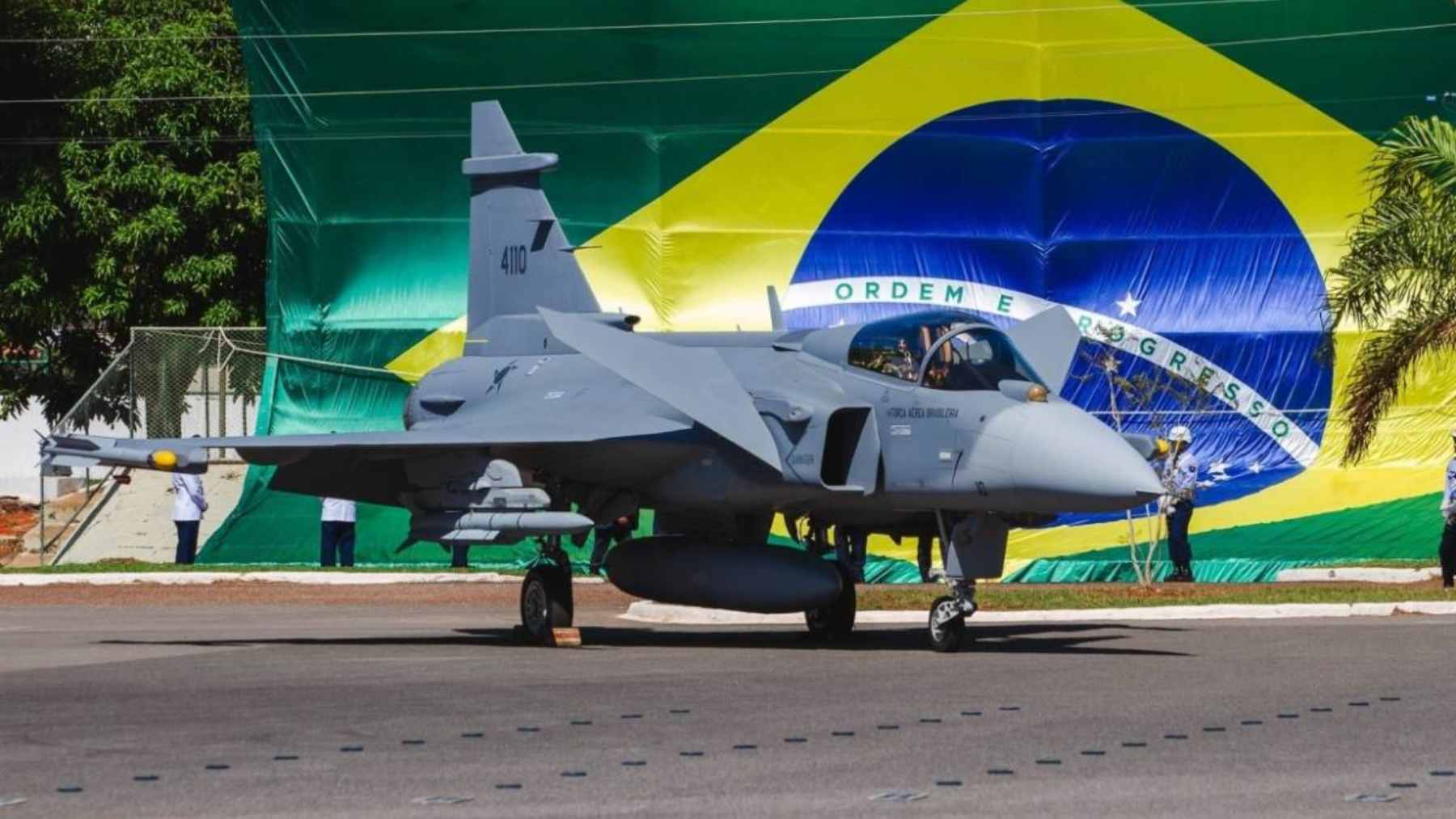
Brazil is not just buying the aircraft. It has been the launch customer and an active co-development partner in the two-seat version, which is why the first Gripen F is headed to the Brazilian Air Force.
The 2014 contract between Saab and Brazil covers 36 fighters, including 28 single-seat Gripen E jets and eight two-seat Gripen F jets. Deliveries began in 2020, and Saab says 11 aircraft had been handed over by the time of the Gripen F rollout.
More than an aircraft deal
One of the most important parts of the program is technology transfer. Saab says Brazil has trained hundreds of engineers and technicians through the partnership, strengthening its national aerospace base in the process.
“The rollout of Gripen F represents a shared achievement between Saab, Brazilian industry and the Brazilian Air Force,” said Lars Tossman, head of Saab’s business area Aeronautics. For Brazil, that means the jet is also an industrial project, not only a military purchase.
Hungary watches closely
Hungary did not get the first Gripen F, but it remains an important Gripen country in Europe. Saab announced on April 30, 2026, that Hungary had received two new Gripen C fighters, the first two aircraft from a four-jet order tied to a February 2024 contract.
Once that expansion is complete, Hungary will operate 18 Gripen C and D aircraft with the latest upgrades. That may sound like a small fleet compared with the largest air forces, but in Central Europe every extra aircraft can matter.
NATO’s shared sky
The Hungarian Gripen fleet is not only about Hungary’s own airspace. NATO describes air policing as a permanent peacetime mission, and the alliance notes that Hungary and Italy have covered Slovenia’s airspace since Slovenia joined NATO.
That’s where this story becomes regional. A fighter based in one country can become part of a wider shield for neighbors that have fewer aircraft or are moving through fleet transitions. It is a reminder that modern defense planning rarely stops at the border.
The climate question
A fighter jet is fuel-intensive by design–nobody should confuse it with green transportation. But the defense sector is now being pulled into the same climate conversation that already surrounds airlines, shipping, factories, and everyday energy use.
NATO’s 2021 Climate Change and Security Action Plan said the alliance would develop a method to map greenhouse gas emissions from military activities and installations. The point, to a large extent, is simple enough: you cannot reduce what you do not measure.
Saab’s green targets
Saab says climate action is one of its key environmental areas, and its science-based targets include a 42% reduction in Scope 1 and Scope 2 emissions by 2030, using 2020 as the base year. The company also lists a 25% reduction target for applicable Scope 3 emissions by 2030 and a net-zero target by 2050.
That does not make a combat aircraft “green.” It does, however, put pressure on the whole chain around the aircraft, including production, testing, logistics, maintenance, business travel, suppliers, and eventually the fuel used by customers.
Fuel is the hard part
Saab has previously said JAS 39 Gripen fighters are certified to run on up to 50% sustainable aviation fuel. The company also said test flights using 100% synthetic fuel showed no drop in performance.
Still, the hard part is not only whether an aircraft can use cleaner fuel. It is whether enough of that fuel exists, whether militaries can afford it, and whether supply chains can deliver it reliably during a crisis. That’s the catch.
Why the second seat matters
The environmental argument around Gripen F is not that one new cockpit layout suddenly cuts emissions. Saab has not published a fuel-saving figure for the two-seat model, so it would be wrong to claim one.
The practical case is more careful. If one aircraft can handle both advanced training and real combat tasks, air forces may be able to reduce duplicated training steps and make pilot conversion more efficient.
At the end of the day, less wasted time can also mean less wasted fuel, but the real numbers will depend on how each air force uses the jet.
A wider export push
The Gripen F is also becoming part of Saab’s broader export push. Thailand ordered four Gripen E and F aircraft in 2025, including three Gripen E jets and one Gripen F, with deliveries planned from 2025 to 2030.
Colombia also signed for 17 Gripen E and F aircraft in 2025, including 15 single-seat Gripen E jets and two Gripen F aircraft. Saab said that agreement included offset projects in areas such as cybersecurity, health, sustainable energy, and water purification technology.
What happens next
Before final delivery to Brazil, the first Gripen F will move to Saab’s Flight Test Centre in Sweden for a dedicated flight test campaign. That is the next step before the aircraft enters the Brazilian fleet.
So the story is bigger than a new jet on a runway. It is about Brazil’s aerospace ambitions, Hungary’s regional role, Saab’s export strategy, and the growing pressure to make defense programs more efficient in a warming world.
The official press release was published on Saab.