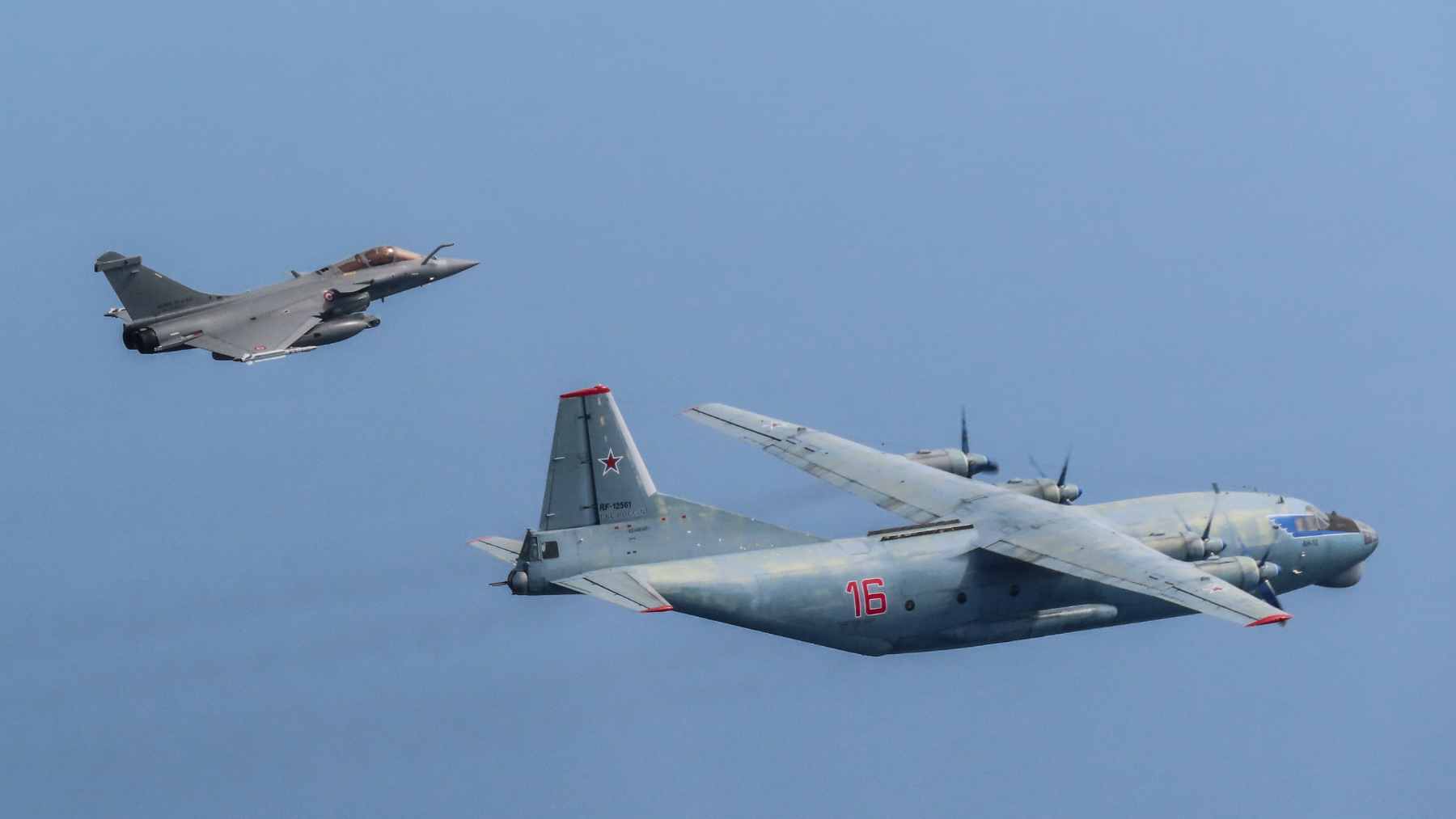
Six Russian military aircraft operating over the Baltic on June 2, 2026, triggered a NATO response that brought French Rafale fighters and Swedish Gripen jets into the air. The mission ended without reported escalation after the aircraft were visually identified and escorted until they left the Baltic area of responsibility, according to the source material and subsequent reporting.
At first glance, this is a straight military story, but the Baltic is not just a tense air corridor near NATO’s eastern flank. It is also a sensitive brackish sea with limited water exchange, where pollution and pressure from human activity can linger for a long time, according to HELCOM, the Baltic Marine Environment Protection Commission.
What NATO intercepted
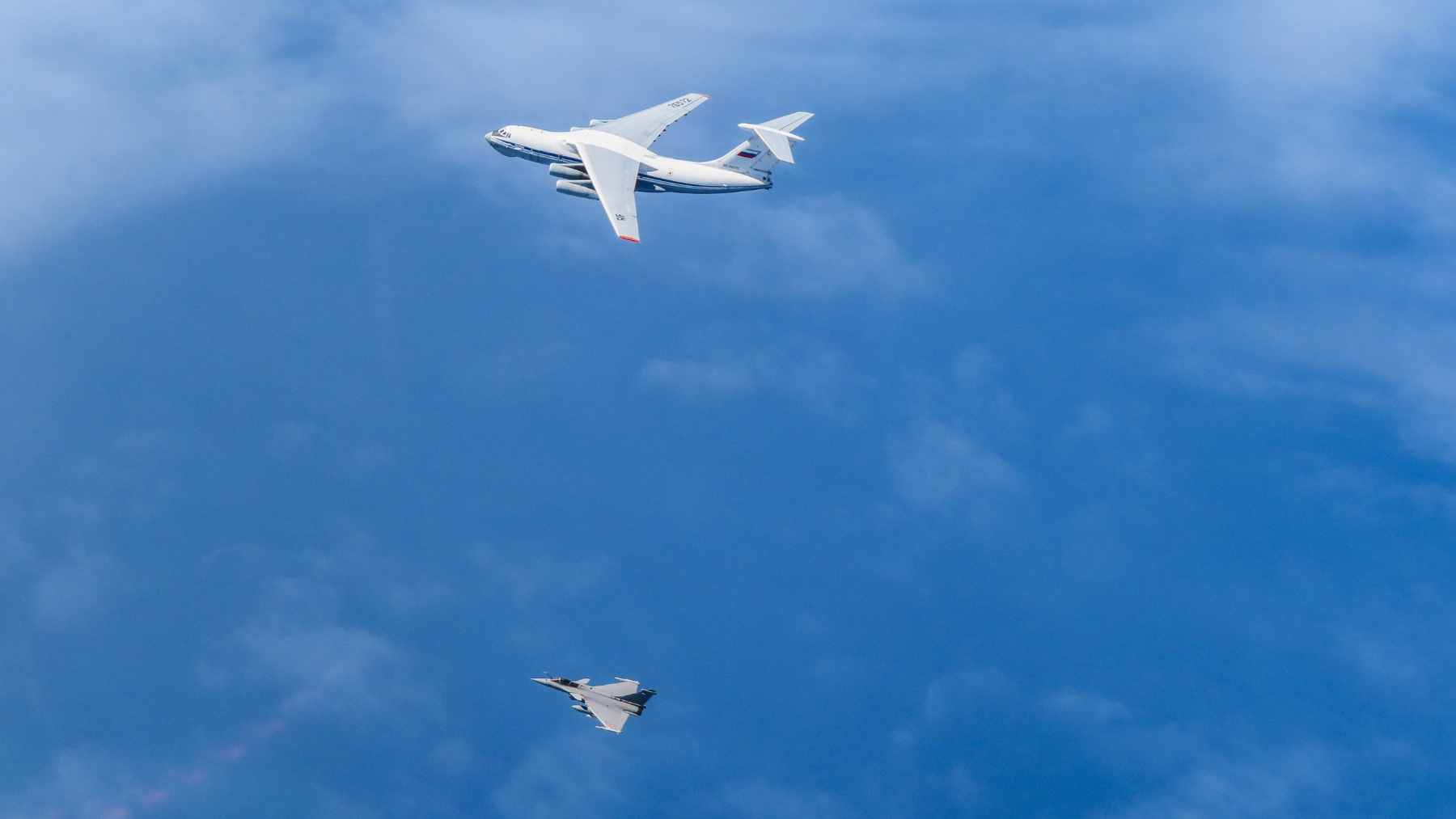
The Russian formation included a Su-35 fighter, a Su-24 strike aircraft, a Su-34 fighter bomber, an Il-76 military transport aircraft, an An-12 transport aircraft, and an An-30 reconnaissance aircraft. Two French Rafales and two Swedish Gripens were involved in the intercepts, making it a multinational response rather than a single-country scramble.
The French fighters were operating from Šiauliai Air Base in Lithuania as part of NATO’s Baltic Air Policing mission. Around 100 French aviators have been deployed there since April 1 for the 71st rotation of the mission, with four Rafales assigned for roughly four months.
The key point is what did not happen. NATO and French reporting described identification, monitoring, and escorting, not combat. In practical terms, the alliance wanted to make clear that the sky was being watched while avoiding a spiral that nobody in the region wants.
Why the Baltic matters
NATO has protected Baltic skies since 2004, when Estonia, Latvia, and Lithuania joined the alliance. Because the three Baltic states do not operate their own fighter fleets for this kind of mission, other NATO countries rotate aircraft and crews through the region.
Air policing is a peacetime mission, not a wartime strike package. NATO describes it as a permanent task that keeps fighter aircraft and crews ready 24 hours a day, 365 days a year, to respond to possible airspace violations and unusual activity.
That sounds routine until six aircraft appear in the same operating area. Then the routine becomes the message. Every takeoff tells Moscow, and everyone else watching, that NATO’s eastern flank is not an empty sky.
Rafale and Gripen response
The Rafale and Gripen are very different aircraft, but in this case their job was the same. They had to approach, identify, monitor, and escort aircraft that were operating near a highly sensitive airspace.
That kind of work depends on discipline as much as speed. A pilot may be close enough to see the markings on another aircraft, but the goal is still restraint. One wrong move could turn a controlled intercept into a diplomatic crisis.
France’s armed forces spokesperson Guillaume Vernet said the French detachment had carried out multiple interceptions of Russian military aircraft flying without flight plans or radio contact. He also described the recent activity as a higher than usual number of “provocations,” according to Reuters.
The environmental backdrop
There is one part that often gets left out. The Baltic Sea below these flights is already under strain from pollution, nutrient runoff, oxygen depletion, shipping, and other pressures. HELCOM has described the Baltic as a unique and sensitive water body where pollutants can remain for long periods because water exchange is limited.
Does one fighter scramble change the ecology of the Baltic Sea? Not in any simple, direct way. But repeated military tension adds another layer of pressure to a region already managing busy shipping lanes, energy infrastructure, fishing, and fragile coastal ecosystems.
That is why air policing is also about prevention. A safe intercept does not only protect borders, it lowers the risk of accidents, debris, fuel spills, emergency landings, or wider confrontation over one of Europe’s most environmentally vulnerable seas.
A test of technology and nerves
Modern air policing is not just a dramatic image of two jets flying side by side. It is a chain of radar tracking, command decisions, radio checks, identification procedures, and split-second judgment by pilots who may be operating under political pressure.
NATO says air policing is part of its wider Integrated Air and Missile Defense framework, which also includes surveillance radars, air defense systems, and command centers. When an interception is needed, a Combined Air Operations Centre decides which aircraft should be scrambled based on the location and nature of the incident.
That’s where the technology story becomes easy to understand. The aircraft are the visible part, but the real system is bigger–it is a network built to notice the unusual before it becomes dangerous.
What comes next
The June 2 intercept fits a broader pattern of heightened air activity in the Baltic region. The Associated Press reported earlier this year that NATO routinely scrambles fighters to identify Russian warplanes near alliance airspace, and that NATO says many intercepted Russian aircraft often do not communicate with air traffic control, file flight plans, or use transponders.
For Baltic residents, this is not some faraway defense drill. It is happening over waters tied to fishing, trade, tourism, undersea cables, offshore energy, and everyday security. The sky and the sea are part of the same neighborhood.
At the end of the day, NATO’s message is simple enough: keep watch, respond fast, and prevent a mistake from becoming something worse.
The official statement was published on NATO Air Command’s official X account.