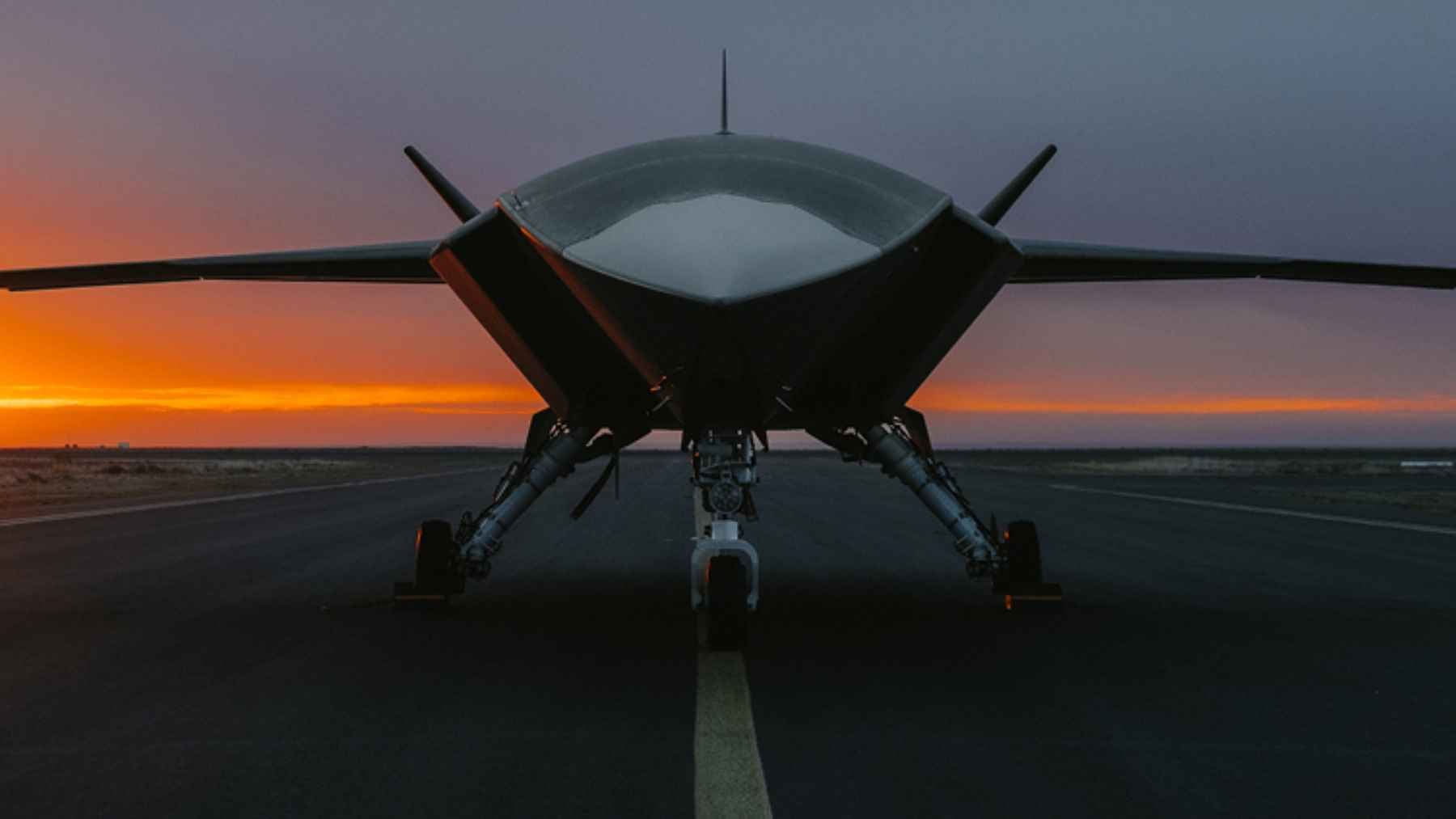
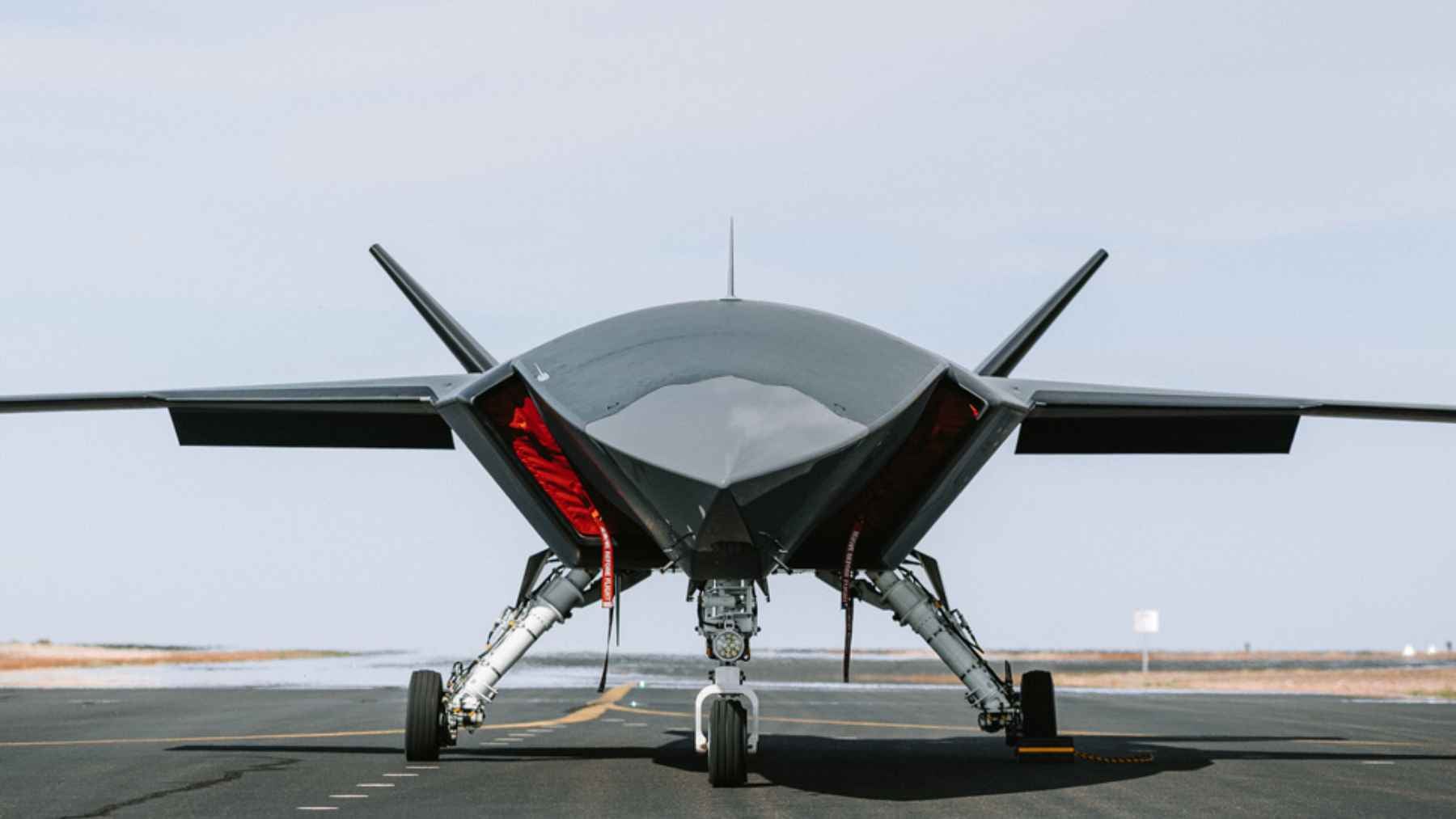
Under the warm summer sun at the Farnborough International Airshow, Boeing’s gray MQ-28 Ghost Bat could easily have been mistaken for a small fighter jet. Look closer, though, and one detail changes the whole picture. There is no cockpit because no pilot is meant to sit inside it.
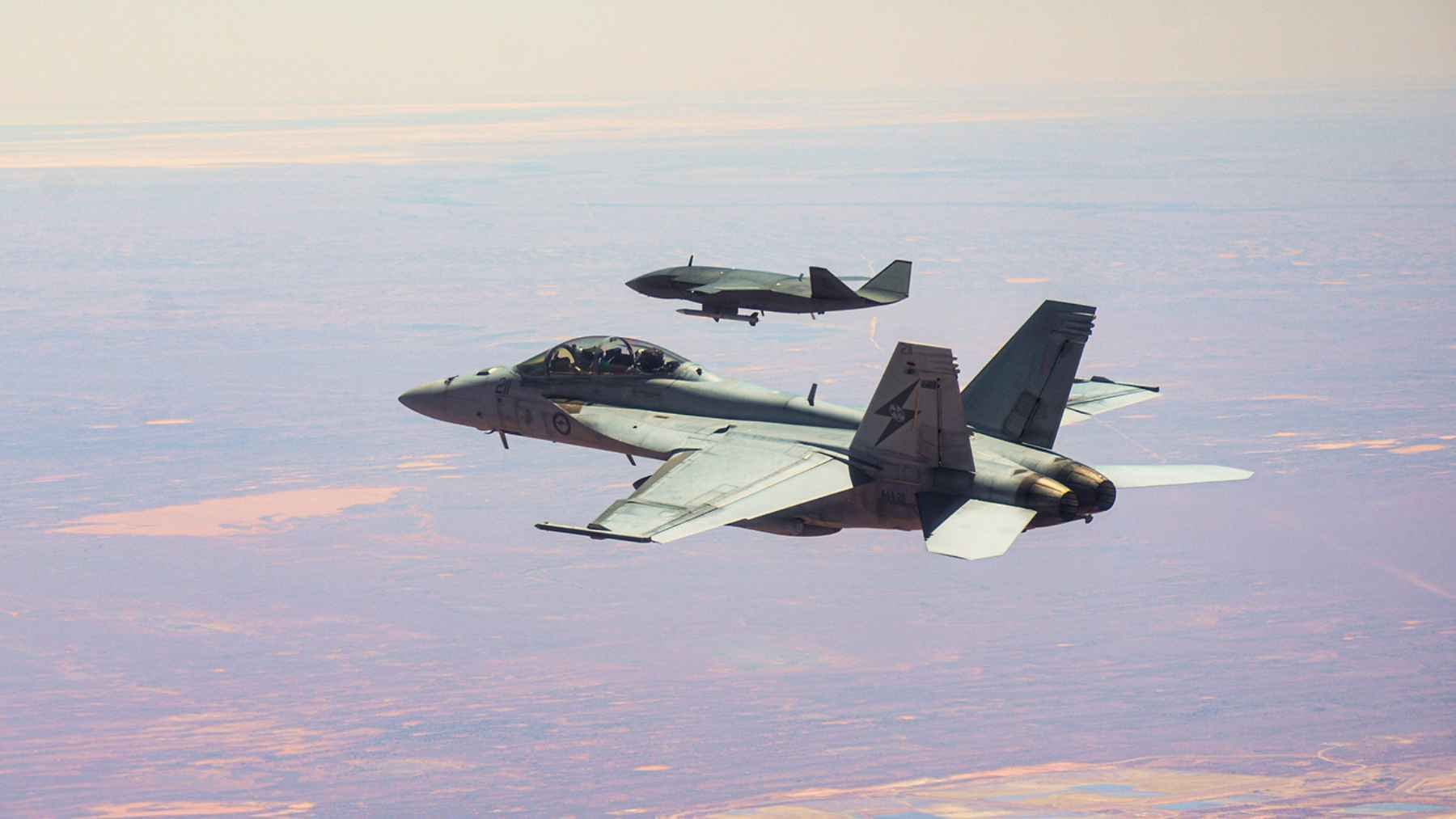
The Australian-developed aircraft arrived in Britain after a much more important appearance over the Pacific. Boeing says the Ghost Bat became the first collaborative combat aircraft to participate in a multinational joint operational exercise when it joined Valiant Shield 2026 alongside U.S. and allied aircraft.
That takes the program beyond polished displays and into the difficult world of real tactics, refueling, maintenance and human-machine coordination.
What the Ghost Bat actually does
The MQ-28 is not simply a remotely controlled replacement for a fighter. It is designed to work with crewed aircraft, carry mission-specific senso rs or other payloads and execute parts of a mission with a limited increase in workload for the people managing it.
That could mean surveillance, early warning, electronic warfare or armed support while human operators supervise the mission.
Its published performance helps explain the attention. Boeing lists a range of more than 2,300 miles, a speed of up to Mach 0.9, a ceiling above 40,000 feet and a maximum takeoff weight of 12,000 pounds. The company describes it as having the length of a trainer and the full wingspan of a modern stealth fighter.
The modular nose is another important part of the design. Different sensors can be fitted without rebuilding the entire aircraft, giving buyers a way to adapt the same airframe for different missions. The key word is collaborative.
Valiant Shield changed the conversation
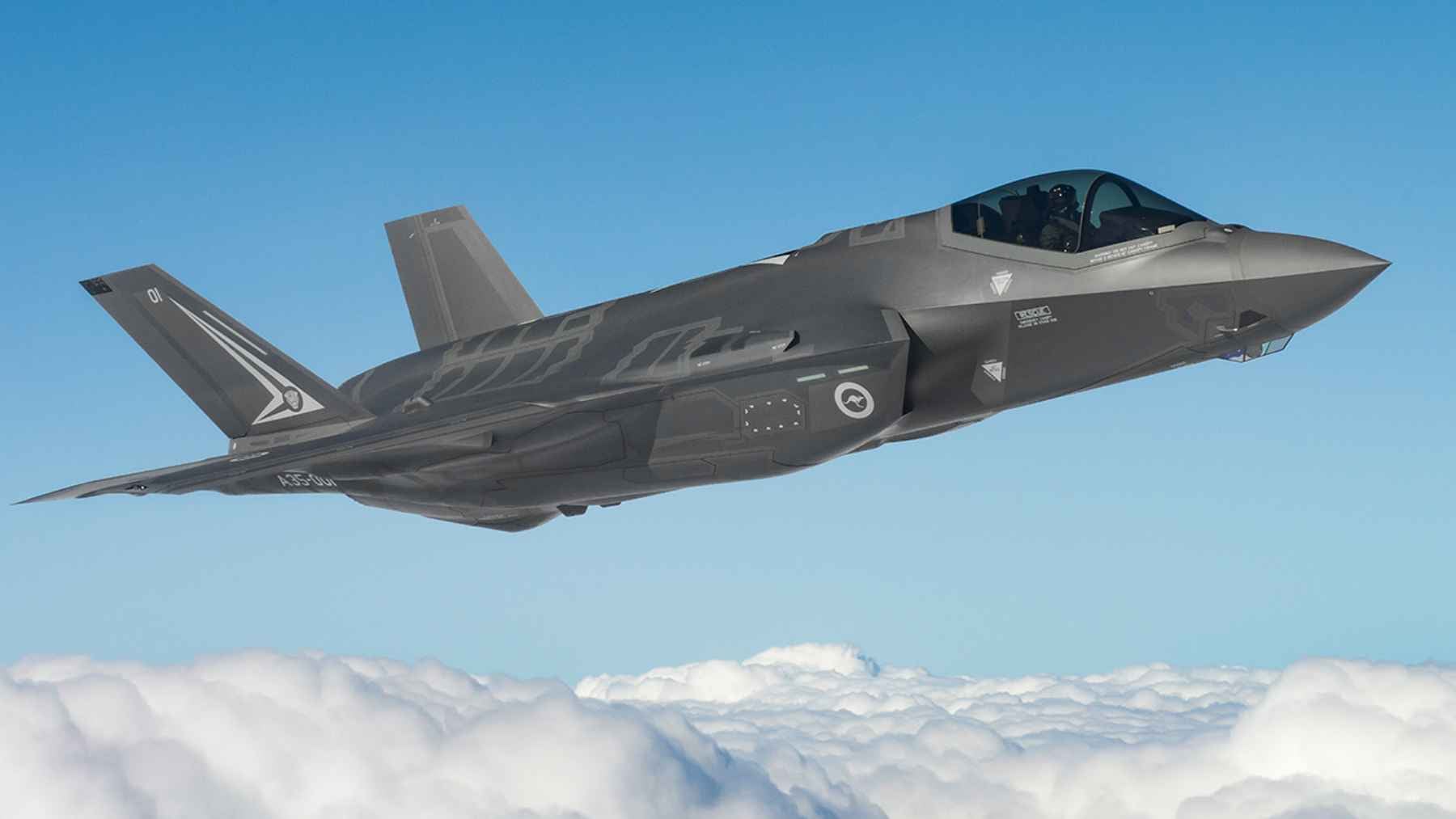
Valiant Shield brought together forces from the United States, Australia, Canada, Japan and New Zealand for 10 days of high-end training across the western Pacific. Boeing says the MQ-28 participated alongside aircraft including the F-35A, F-35B, F-15EX, EA-18G and several command, surveillance and support platforms around the Marianas Island Range Complex.
The Australian Defence Department disclosed another detail that matters just as much as the formation flying. At Rota International Airport in the Northern Mariana Islands, an HC-130J transferred fuel directly into the Ghost Bat during forward arming and refueling drills.
That tested whether the aircraft could operate from dispersed locations closer to a contested area rather than relying only on a large permanent base.
Boeing Defense chief Steve Parker said, “We’ve proven that it’s combat capable.” The broader lesson, however, is less dramatic and probably more useful. Exercises like this reveal whether software, ground crews, fuel procedures and human decision-making can keep up when several nations and many aircraft are working together.
The missile test was the harder proof
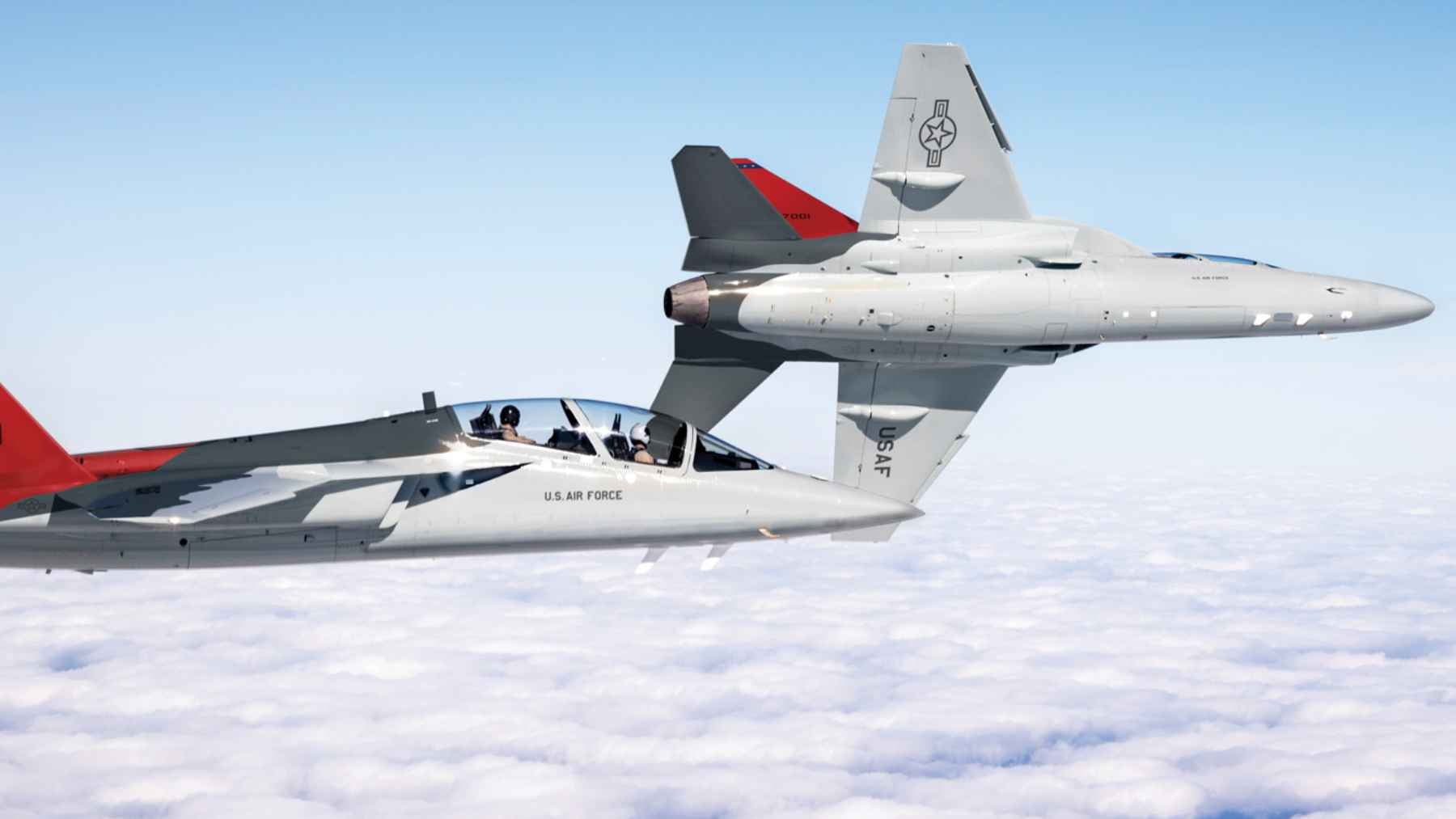
The Ghost Bat had already completed a major live-fire demonstration in December 2025 at Australia’s Woomera Test Range. An MQ-28, a Royal Australian Air Force E-7A Wedgetail and an F/A-18F Super Hornet launched from separate locations before linking their sensors and data during the mission.
The Super Hornet detected and tracked a fighter-class target drone, then shared the targeting information across the team. The MQ-28 adjusted its position, received authorization through the E-7A and fired an AIM-120 AMRAAM that destroyed the target.
That sequence is crucial. The aircraft performed autonomous mission tasks, but the disclosed test still included human safety and engagement oversight before the weapon was released. The real breakthrough was not a machine acting alone, but a network of crewed and uncrewed aircraft completing the full chain from detection to engagement.
The CCA market is accelerating
The Ghost Bat is entering a market that is moving quickly. In June 2026, the U.S. Air Force awarded development and production contracts for the FQ-42 from General Atomics and the FQ-44 from Anduril, with a stated plan to procure more than 150 combat-capable collaborative aircraft by the end of the decade. Its longer-term objective is approximately 1,000 aircraft.
Pilots will also need new ways to manage the flood of information. At Farnborough, BAE Systems presented its Project Intuity helmet demonstrator, which is intended to filter data inside the pilot’s field of view and support the management of drone fleets. The future fighter pilot may increasingly act like an airborne mission commander.
Boeing used the show to highlight partnerships with Hensoldt, Eaton and Leonardo for sensors, payload systems and an infrared search-and-track capability. That tells its own story. The contest is not only about who builds the airframe, but also who controls the software, sensors, supply chain and future upgrades.
The environmental question remains open
There is also an issue that defense marketing rarely puts at the center of the display. Lower purchase cost and reduced risk to pilots do not automatically mean lower fuel use or a smaller environmental footprint. Boeing’s public specification page provides range, speed, weight and ceiling figures, but it does not disclose fuel burn, noise data or lifecycle emissions.
Valiant Shield also showed that autonomous combat aircraft still depend on fuel deliveries, transport aircraft, maintenance teams and dispersed operating sites. It would therefore be premature to describe the Ghost Bat as a greener alternative to a crewed fighter without mission-by-mission and lifecycle comparisons.
For communities near military airfields, those missing numbers matter.
What happens next
Farnborough gave Boeing a chance to put the Ghost Bat in front of potential partners and customers, but the Pacific exercise supplied the stronger sales argument. The aircraft has now flown with allied forces, practiced forward refueling and demonstrated an air-to-air weapon engagement under human oversight.
The harder tests are still ahead. Militaries will want evidence that the autonomy remains reliable in disrupted communications, that pilots are not overwhelmed by supervising several aircraft and that open systems can accept new software without creating security problems. Cost claims will also have to survive real maintenance and deployment.
The Ghost Bat has crossed an important line. It is no longer just a futuristic shape beside a trade-show sign, but it is not yet a fully proven wartime system either.
The official update was published on Boeing.