CAD Railway Industries is exploring an expansion of its Lachine plant in Montreal after securing the biggest contract in its history, a five-year overhaul of VIA Rail sleeper cars worth about US$107 million at the Bank of Canada’s July 17, 2026 exchange rate.
The project is still at an early stage, but the company is already hiring and has opened discussions with Quebec officials about possible financing.
The bigger story is not simply that one factory may add floor space. CAD’s plan highlights a growing market for giving expensive rail equipment a second life, keeping skilled work close to home while VIA Rail prepares a replacement fleet for its long-distance network.
In practical terms, old trains may be becoming valuable industrial assets rather than scrap waiting at the end of the line.
An expansion still being tested
The proposed expansion remains exploratory. A Quebec lobbying registration says CAD wants to present the project to the province’s economy ministry and Investissement Québec, with potential financing of roughly US$10.7 million to US$21.4 million. No grant, loan, or final construction decision has been announced.
CAD’s Montreal workshop employs about 235 people and handles passenger cars, locomotives, freight cars, and other rolling stock, while Chief Executive David Van der Wee said in a May interview that the company was bringing in new people every month.
He said typical refurbishment contracts were worth about US$21.4 million to US$35.7 million. Why expand now, when the order book offers such a clear answer?
A sleeper car is a small hotel
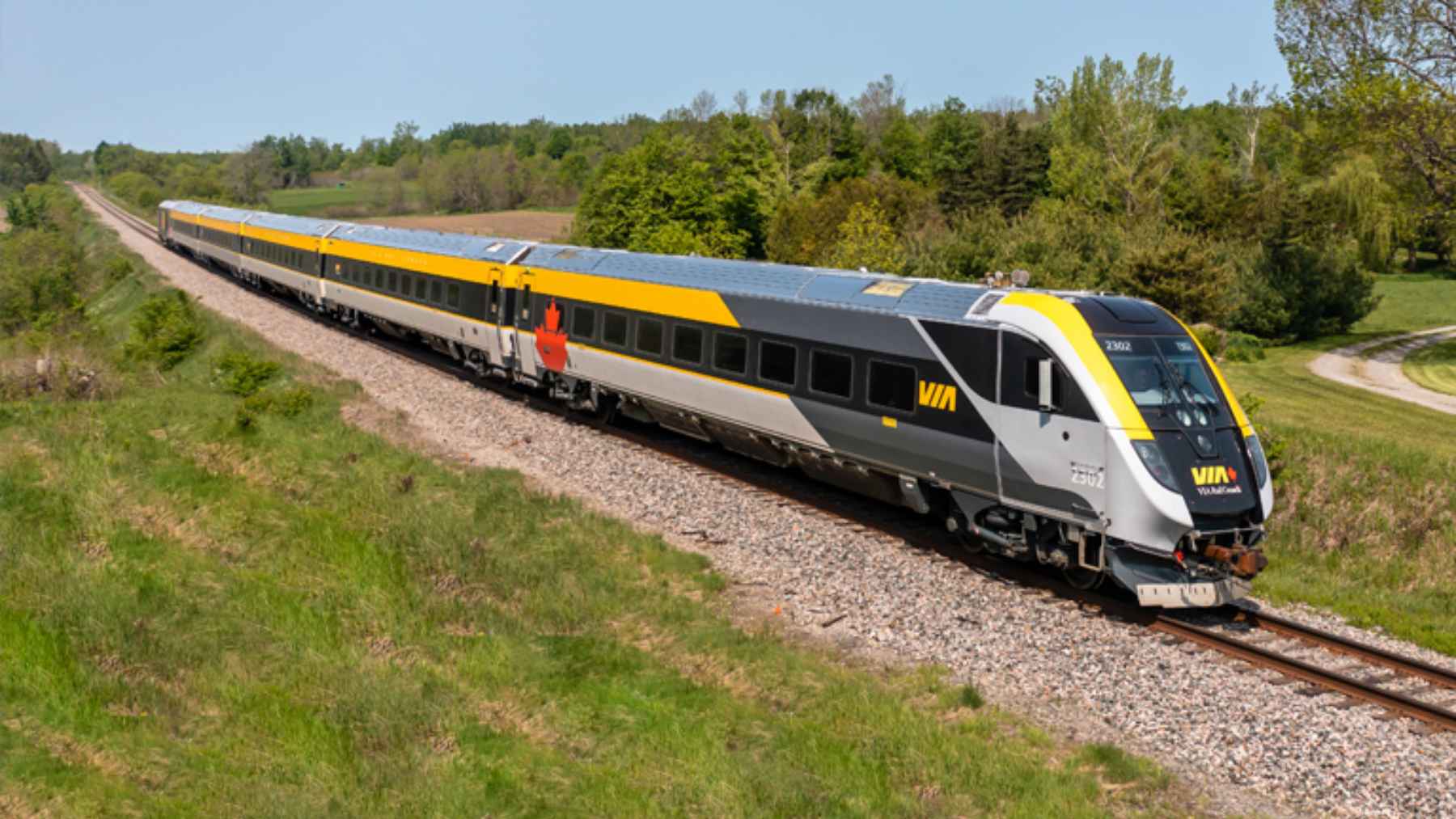
VIA Rail’s April announcement covers all 56 of its Château and Manor sleeper cars over five years. CAD will upgrade key systems and interiors for cars used on The Canadian and The Ocean, the long-distance trains serving the Toronto to Vancouver and Montreal to Halifax routes.
VIA Rail says the program will also create more than 100 skilled jobs in engineering, project management, and specialized trades.
These are not ordinary coaches with rows of seats. Built in 1954 and 1955, the stainless-steel cars contain berths, bedrooms, washrooms, and shared showers, which makes the overhaul closer to rebuilding a compact moving hotel than refreshing a commuter carriage.
Behind the familiar polished exterior sits a web of equipment that must work through long winter nights and multi-day journeys.
“This project highlights the strength of Canada’s rail expertise and the importance of investing in domestic industrial capacity,” Van der Wee said when the contract was announced. For CAD, the work provides four or five years of predictable activity. That kind of certainty matters when a company is deciding whether to enlarge a plant and train more workers.
The environmental case
Refurbishment follows a basic circular-economy idea, keeping a durable product in use, replacing worn systems, and delaying the material and energy demands tied to manufacturing a complete replacement.
The U.S. Environmental Protection Agency places source reduction and reuse above recycling in its waste-management hierarchy. VIA Rail has previously described its heritage-car work as a “reuse-recycle-upgrade” approach that can extend useful life by decades.
That does not make the project impact-free, since expanding a factory consumes materials, the work itself uses energy, and the sleeper cars will continue operating in locomotive-hauled services. VIA Rail’s April release did not provide a project-specific estimate of avoided carbon emissions, so any precise climate claim would be premature.
The environmental value will depend largely on how much new manufacturing is avoided and how reliably the renovated cars perform.
Still, the logic is easy to see. Throwing away a stainless-steel railcar because its plumbing, wiring, or interior has aged would be a little like demolishing a house because the kitchen needs replacing. Sometimes a full replacement is necessary, but repair can be the smarter bridge.
A bridge to the next fleet
Why spend heavily on cars that are more than 70 years old when new trains are coming? Rail fleets take years to design, procure, test, and introduce, while passengers still need service in the meantime.
VIA Rail has already begun procuring new locomotives and passenger cars for its long-distance, regional, and remote network, with full replacement expected over the coming decade.
The Château and Manor program is meant to keep overnight service comfortable and dependable during that transition. For a traveler, the practical test will not be the age stamped on the car’s frame. It will be whether the bedroom is clean, the shower works, and the train completes a long trip without equipment trouble.
That makes CAD’s contract more than a temporary patch. It is a bridge between a historic fleet and whatever replaces it in the mid-2030s, giving Canada time to renew long-distance rail without allowing the current service to wither first. The trouble is that bridges need maintenance too.
What Quebec must decide
Public financing would not be a routine reward for landing one large customer. Quebec officials will have to judge whether demand is broad enough to support a larger facility after the VIA work ends, whether the jobs are durable, and whether the environmental benefits can be measured rather than simply advertised.
The company says the expansion is driven by rising demand across several parts of its business, not by a single contract.
CAD has operated since 1968 and says its mission now centers on repairing, modernizing, and extending the life of rail equipment. At the end of the day, that is what this expansion proposal is really about, building more capacity for the unglamorous work that keeps trains useful long after their first paint job has faded.
For now, the plant expansion remains a proposal, but the VIA contract gives CAD a substantial base from which to grow.
The press release was published on VIA Rail Canada.