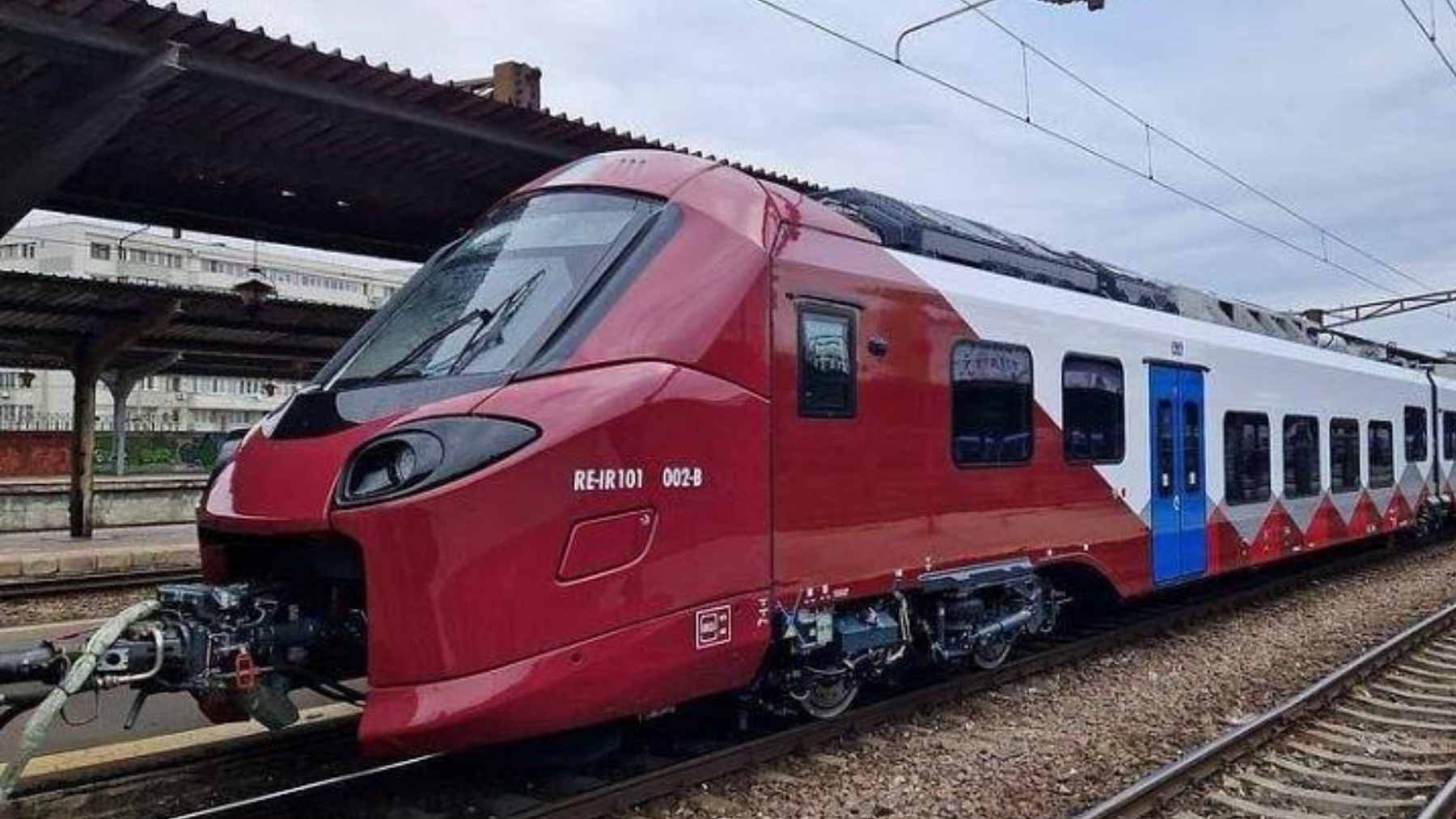
A shiny new passenger train should not be the one crawling. Yet a recent clip from Romania shows a modern trainset creeping along at bicycle speed on a corridor rebuilt for fast service, while an older locomotive moves through with far fewer restrictions. So why is the newest train the slowest?
Asociația Pro Infrastructură, a Romanian infrastructure watchdog, says the culprit is not broken track or underpowered engines. It points to a homegrown rule dating back to 1975 that collides with modern train safety systems, turning billion-euro rail upgrades into unexpected slow zones.
A modern corridor that suddenly feels slow
Pro Infrastructură says the problem is easy to spot near the Radna station, where its example shows a new Alstom Coradia running around 20 to 30 km/h (12 to 18 mph) in an area that could normally support 140 to 160.
It says similar “out of nowhere” slowdowns have been identified at Radna and Mediaș, with more locations expected across the network. That is where the 1975 rule kicks in.
This matters for the business case behind modernization. The group warns the issue can affect most new or upgraded fleets Romania is counting on, including 55 locomotives modernized through the PNRR program, 37 Alstom Coradia trainsets, more than 80 PESA trainsets, and 16 Alstom Traxx locomotives.
It also says the slowdowns mean time lost and higher energy consumption, on top of a confusing experience for riders.
How a 1975 workaround trips up 1990s-era safety tech
The technical story starts with trackside inductors, described as yellow devices placed near certain speed restriction points, that force drivers to press a special “Depășire Ordonată” button, abbreviated BDO. Pro Infrastructură says Romania introduced this setup in 1975, and it was meant for exceptional situations rather than routine speed changes.
After railway accidents in the 1990s, the group says Germany’s PZB train protection standard tied a strict cap to that “ordered passing” mode, limiting trains using it to a maximum of 25 mph for safety.
Modern rolling stock typically carries PZB-90, so if the driver does not slow, the system can trigger emergency braking, while older locomotives using INDUSI-60 do not get boxed in the same way at these points. Safety is the goal, but the interaction is forced.
ETCS is designed to enforce real limits without blanket slowdowns
Europe’s long-term fix is a different kind of signaling. The European Commission describes the European Train Control System, part of ERTMS, as an in-cab standard that supervises train movement based on the maximum permitted speed for each section of line, using data from trackside equipment such as Eurobalises or via radio.
Think of it as speed supervision built into the cab, not a one-size-fits-all slow mode.
Pro Infrastructură argues ETCS can replace the blunt “BDO equals 40” behavior because it can apply the correct limit and intervene only when a driver fails to respect it. The group notes ETCS has been deployed on European corridors, yet says Romania’s rollout is moving extremely slowly and could take another five to ten years at the current pace.
The climate and security stakes hiding behind a speedometer
Rail is central to Europe’s climate plans for a reason. The European Union Agency for Railways estimates transport produces about 25% of total EU greenhouse gas emissions, while rail’s direct emissions fell by about 70% from 1990 to 2021 and represented about 0.4% of transport emissions in 2021.
However, the wider trend is stubborn. The European Environment Agency reports that transport emissions have only declined slightly since 2005 and its preliminary estimate for 2024 shows a 0.7% increase compared with 2023. If trains become slower and less predictable, more people may fall back on cars, traffic jams, and the exhaust fumes we inhale on a hot afternoon.
There is also a defense angle. The European Commission’s Military Mobility work treats transport links as dual-use infrastructure, and the EU has funded upgrades aimed at helping civilian networks serve defense needs as well, including a 2024 package of €807 million ($935 million) for 38 projects under the Connecting Europe Facility.
In a crisis, minutes matter, and in daily life, so does reliability.