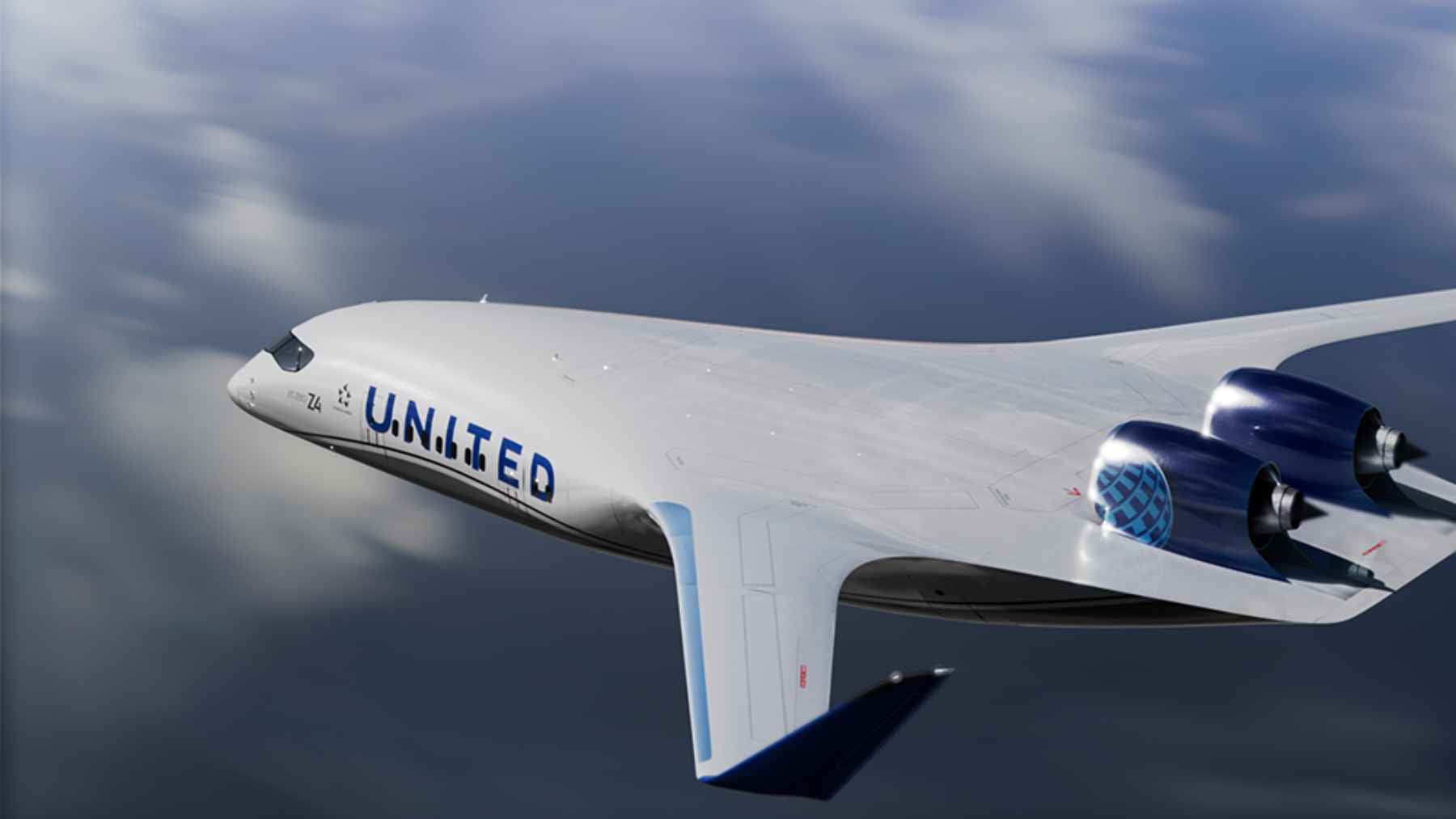
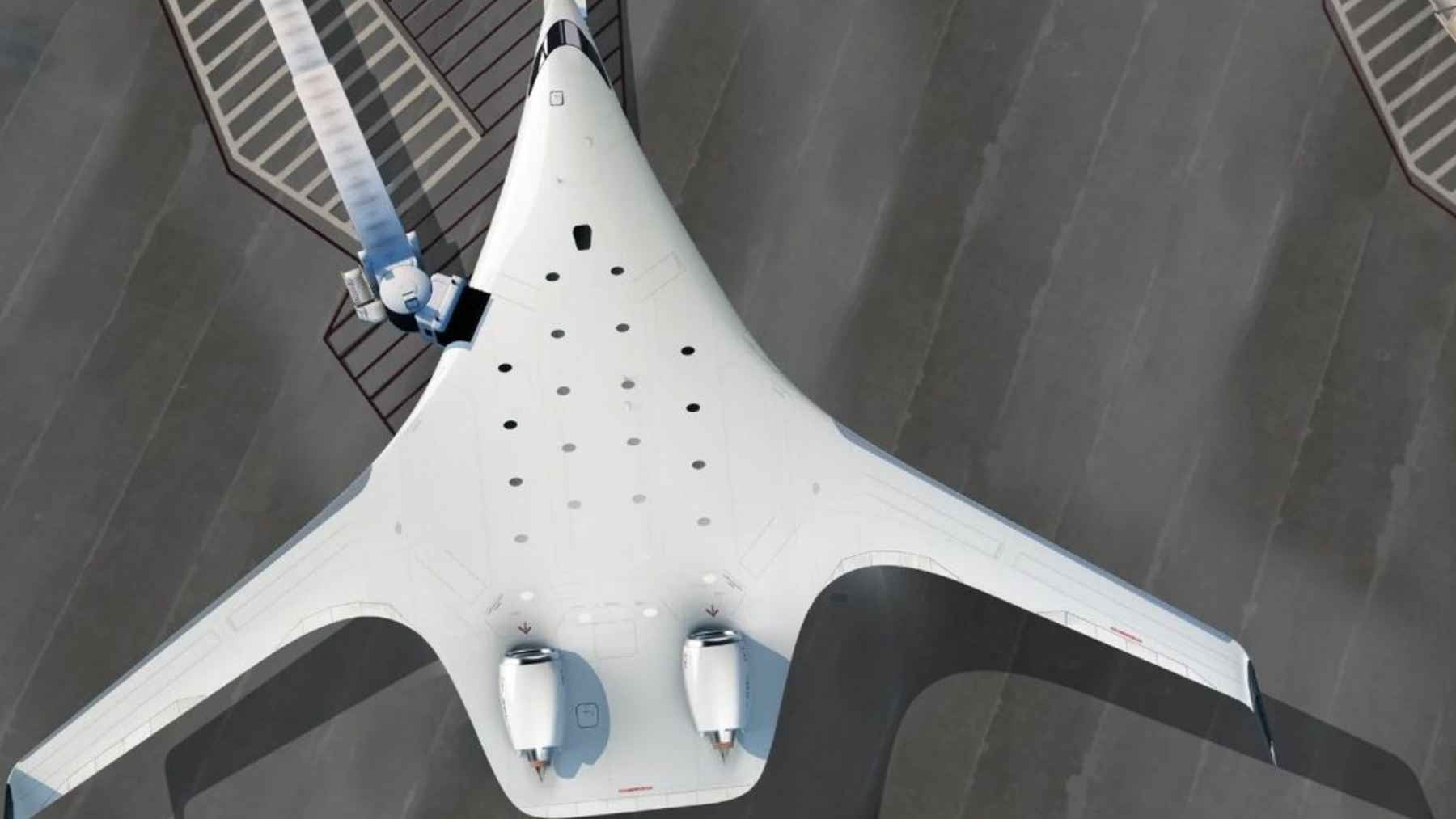
Japan Airlines has put its operational weight behind JetZero’s Z4, a radical 250-seat aircraft that blends the fuselage and wings into one broad lifting surface.
The companies say the jet is being designed for routes of up to 5,000 nautical miles, or about 5,750 miles, while targeting 30% to 50% better fuel efficiency than comparable aircraft flying today.
This is not yet a firm aircraft order, and it is not proof that those savings will be achieved in everyday service. It is an early design partnership aimed at turning a decades-old aerodynamic idea into a certifiable airliner, with a full-scale demonstrator now expected to fly by the end of 2027 and commercial service planned for the early 2030s.
Why the airplane looks so different
Most passenger jets still follow the familiar tube-and-wing formula. The wings create most of the lift, while the cylindrical body carries people and cargo but also adds weight and aerodynamic drag.
The Z4 uses a blended wing body, which spreads lift across nearly the whole aircraft and reduces the clear divide between wing and fuselage. The U.S. Air Force says this type of configuration can cut drag by at least 30%, while JetZero is aiming for a 30% to 50% improvement in fuel efficiency.
That is the central promise. Less drag means the engines do not have to work as hard to move the same number of passengers over the same distance.
JAL is helping design the operation
Japan Airlines will contribute expertise in flight operations, cabin service, maintenance, and ground handling as JetZero defines the Z4’s baseline specifications. The two companies also plan to study gate management and a future maintenance, repair, and overhaul framework.
Those details may sound less exciting than the aircraft’s sweeping shape, but they can decide whether a new jet works in the real world. A plane must fit airport gates, move passengers efficiently, support maintenance crews, and operate reliably day after day.
Takao Suzuki, JAL’s executive officer for corporate strategy, said the airline wants to use its experience to help create “a new era of efficient air travel.” For JAL, the partnership offers an early seat at the design table without yet committing to a public order.
Lower fuel burn is not zero emissions
The Z4 is not an electric aircraft, and its shape alone will not make flying carbon-free. JetZero says the aircraft will use conventional jet fuel and will also be able to operate with approved sustainable aviation fuel blends.
Still, efficiency matters. When two aircraft burn the same type of fuel under comparable conditions, the one using less fuel generally produces less direct carbon dioxide per passenger mile and costs less to operate.
JAL has committed to net-zero carbon dioxide emissions by 2050 and is targeting sustainable aviation fuel for 10% of its onboard fuel by 2030. A more efficient airframe and lower-carbon fuel are complementary tools, not competing solutions.
A military program is clearing the runway
The Z4’s commercial ambitions are being supported by a major defense effort. The U.S. Department of the Air Force selected JetZero for a blended wing body prototype program backed by $235 million over four years, to prove the technology at full scale.
The military case is straightforward. Tankers and transport aircraft account for roughly 60% of the Air Force’s annual jet fuel use, so lower drag could translate into longer range, more time in the air, or greater payload efficiency.
Commercial airlines are chasing many of the same benefits, just measured in lower cost per seat and lower emissions per passenger. That dual-use interest gives JetZero access to funding and testing support that would be difficult for a young aircraft company to assemble alone.
From concept art to a factory
JetZero is also moving beyond renderings. In June 2026, the company broke ground on an 8 million-square-foot manufacturing and final assembly campus covering more than 600 acres in Greensboro, North Carolina.
The company says the project represents a $4.7 billion investment and could create 14,500 jobs over the next decade. It has also signed a letter of interest with the Export-Import Bank of the United States to explore as much as $3 billion in potential financing, although that document is not a loan commitment.
JAL’s involvement adds another layer of commercial credibility, but the distinction matters. The official joint announcement describes support, interest, and technical collaboration rather than a disclosed equity investment or a firm purchase agreement.
The hardest part comes next
Now comes the unglamorous work. JetZero must complete the demonstrator, conduct full-scale flight testing, prove that its unusual cabin and ground operation meet airline needs, and then move through certification and manufacturing preparations.
The 30% to 50% efficiency figure remains a target until testing and airline operations confirm it. The same caution applies to the early 2030s service date, which depends on the successful completion of development, certification, and production milestones.
Even so, the opportunity is hard to ignore. If the Z4 delivers close to its promise, it could give airlines a 250-seat aircraft able to serve many long routes while burning substantially less fuel, which is exactly the kind of step aviation needs as traffic grows and climate pressure intensifies.
The official joint release was published on Japan Airlines’ press site.