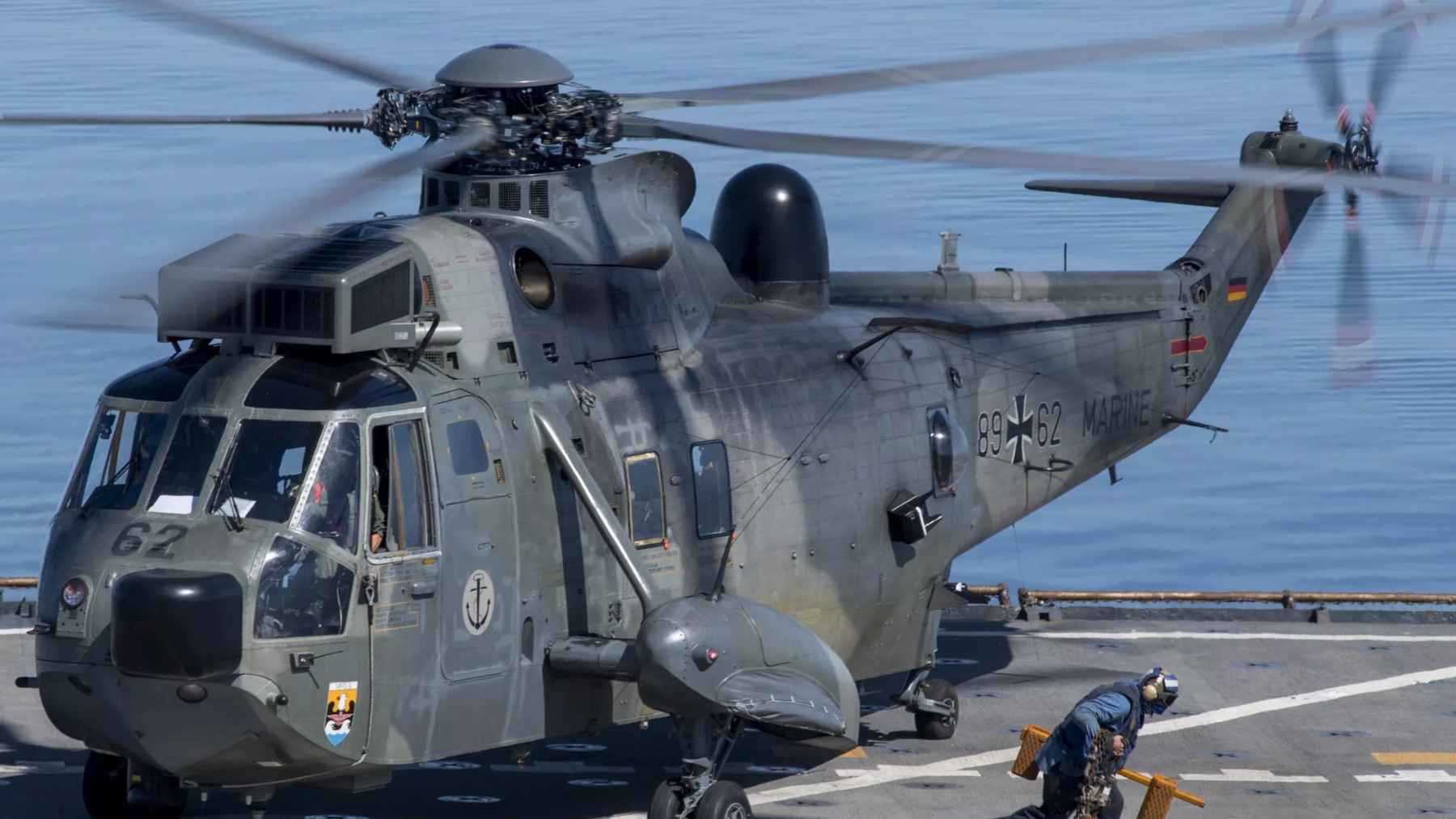
A British-operated Sea King helicopter at the Farnborough International Airshow 2026 carried something few visitors expected to see under a Cold War-era aircraft: rows of small interceptor drones. The HeliOperations display points toward a new kind of mobile air defense, but it does not prove that the same setup is already flying in Ukraine.
Why does it matter? HeliOperations has a direct connection to Ukraine’s Sea King fleet, while Germany has pledged six additional helicopters and the United Kingdom previously donated three. That link makes the exhibit more than an airshow curiosity, yet every claim about current Ukrainian operational use remains unconfirmed.
What Farnborough actually showed
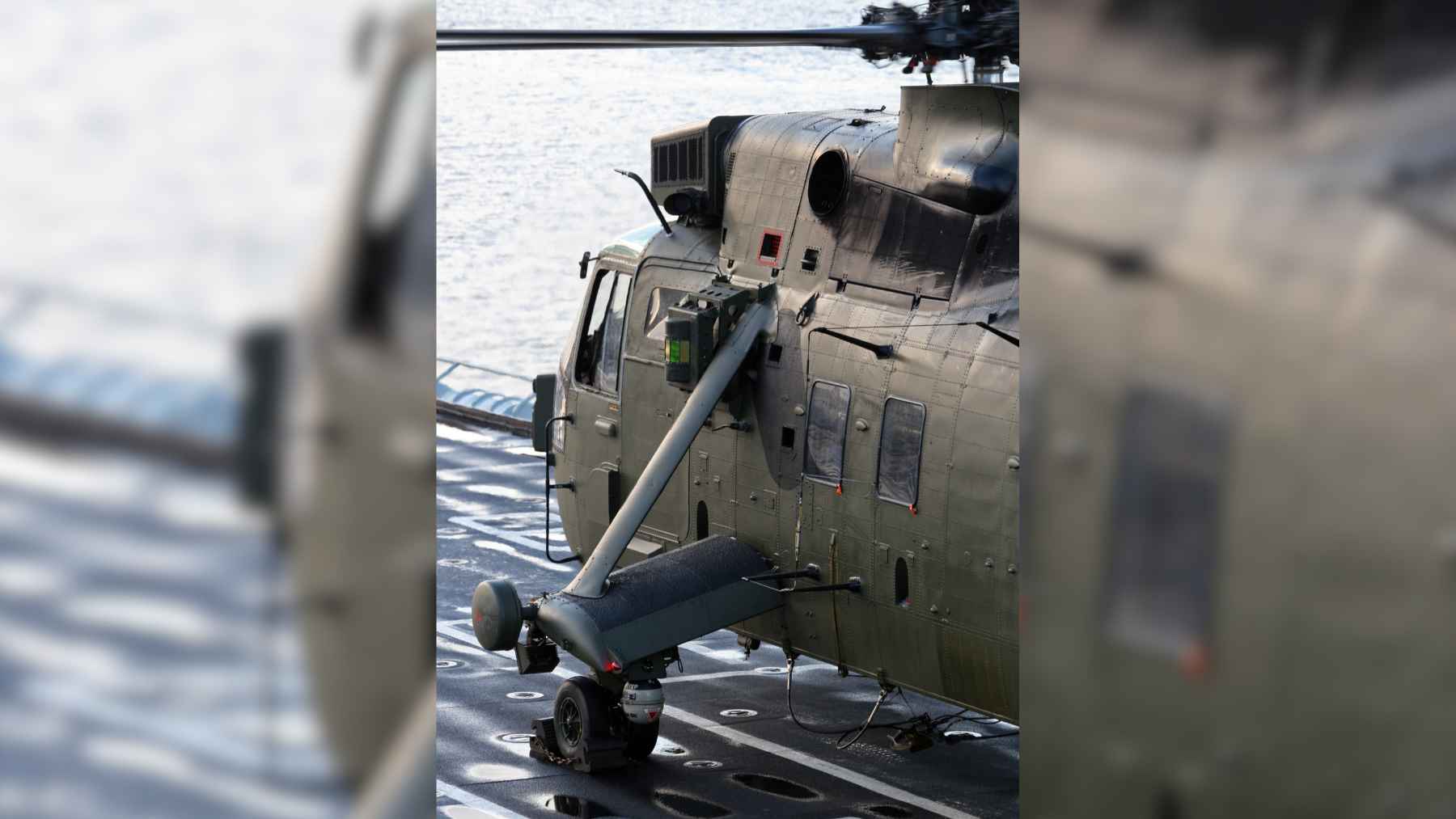
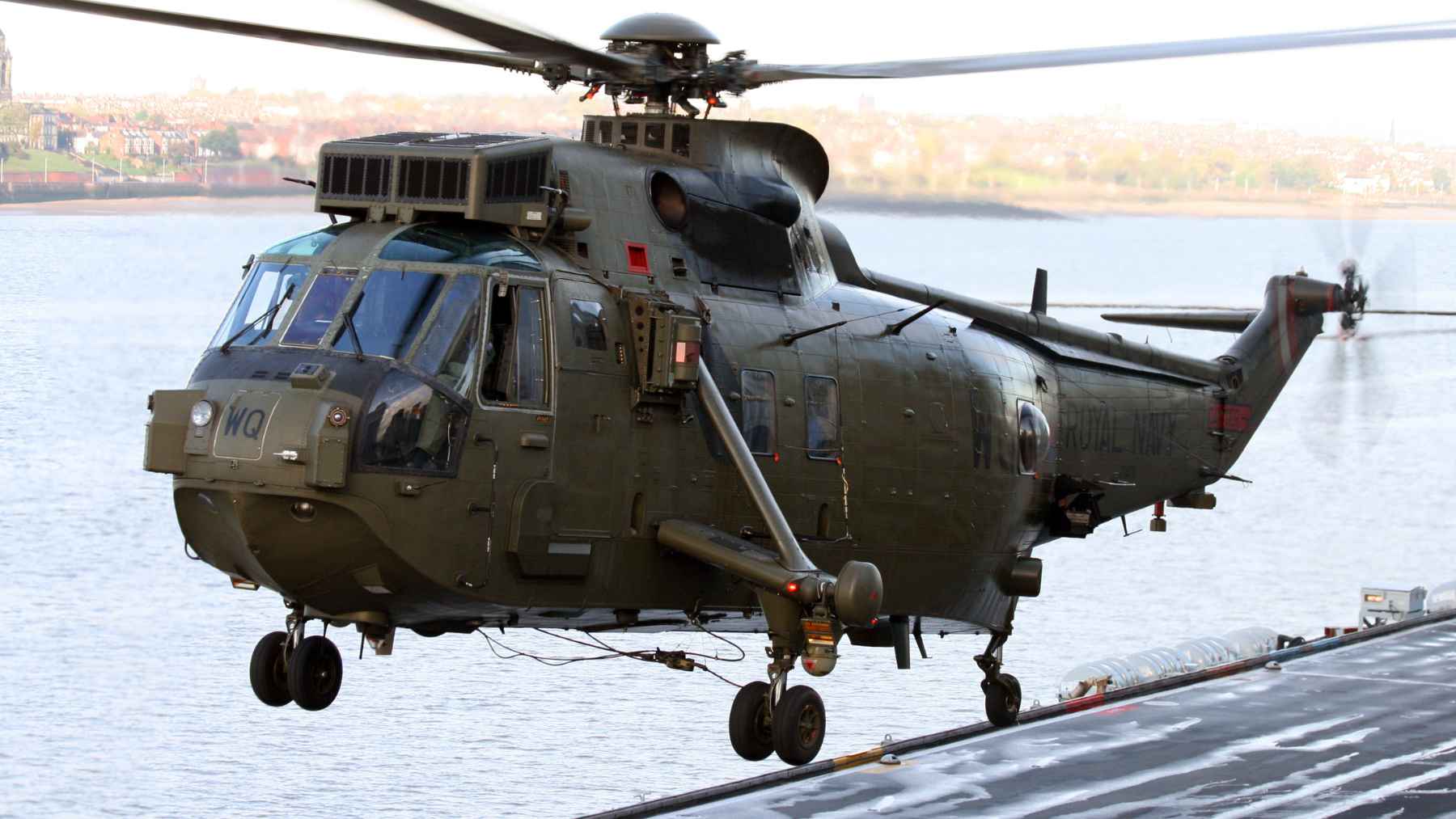
The Sea King had new launch rails positioned between its fuselage and side sponsons. Naval News reported that each rail could accommodate three interceptor drones, creating a compact airborne battery on an aircraft originally built for very different missions.
There is a big limitation, though. The exact interceptor model has not been revealed, and the devices attached to the helicopter were understood to be representative models rather than confirmed operational weapons. No public performance figures were provided for range, speed, guidance, warhead, or target detection.
The aircraft also carried no Ukrainian markings, and neither HeliOperations nor the Ukrainian military publicly announced that this configuration is in service. The honest conclusion is narrow but important. Farnborough showed a credible concept, not verified combat deployment.
Why an air launch could matter
An interceptor released from a helicopter starts above trees, buildings, and much of the clutter that affects a ground launch. It may also begin closer to the incoming target’s altitude, reducing the energy and time needed to climb before the chase even starts.
The Aviationist noted that the Sea King’s launch altitude could improve an interceptor’s effective speed and range. A helicopter could move toward a threatened corridor, launch from a better position, and then shift again as an attack changes direction. That is the theory, at least, because no flight-test data for this particular setup has been released.
Maritime defense adds another layer of difficulty. Strong winds can drain the power of small drones, while an incoming weapon near the coast may require a head-on interception rather than the simpler tail chase often seen over land. A crewed helicopter would also need safe separation, dependable tracking data, and carefully tested release procedures.
The Ukraine connection is real
The United Kingdom has confirmed that it donated three Sea King search-and-rescue helicopters to Ukraine. A parliamentary answer also stated that the aircraft had been bought back from HeliOperations after the company acquired them from the British Ministry of Defense, placing the contractor directly inside the transfer story.
HeliOperations also provides military aircrew training and operates a Sea King simulator, so the Farnborough aircraft could be a development or training demonstrator rather than a combat configuration.
Germany then announced six Sea King Mk41 helicopters, along with spare parts and pilot training. German Defense Minister Boris Pistorius called the type “proven and robust” and said it could support missions ranging from surveillance over the Black Sea to transporting soldiers.
There is another significant detail. A joint British-German communiqué issued in October 2024 said the two countries would support fitting the German-donated Sea Kings with modern missile systems. That statement does not confirm interceptor drones, but it does show that weapon integration for the Ukrainian aircraft was already part of official planning.
The counter-drone race is widening
The Sea King exhibit is not an isolated experiment. In June 2026, Airbus Helicopters and Quantum Systems signed an agreement to explore the integration of counter-drone interceptors on military helicopters, beginning with the crewed H145M and also appearing on the uncrewed U145 concept.
Quantum Systems executive Martin Karkour said, “Current developments show that aerial systems need answers to drone threats.” That line captures the pressure facing armed forces as small one-way attack drones force them to find defenses that are mobile, numerous, and affordable enough to use night after night.
Fixed-wing aircraft are moving in the same direction. Defense reporting has documented an Antonov An-28 configured with interceptor-drone rails in Ukraine and a Russian Yak-52 trainer shown with a similar idea. Publicly documented operational helicopters carrying these interceptors are still missing, which is why the Sea King display has attracted so much attention.
Old aircraft and new economics
The central business case is the cost exchange. Using an expensive surface-to-air missile against every lower-cost attack drone can empty magazines quickly, while a smaller interceptor may offer a less costly response and allow one aircraft to carry several shots.
HeliOperations has not released a price, production plan, or probability-of-kill figure, so the economics remain a promise rather than a proven calculation.
There may also be a resource-efficiency angle, although it should not be exaggerated. Modernizing an existing airframe can avoid some of the materials and factory work required for a completely new helicopter, but an older aircraft is not automatically an environmentally friendly solution.
No lifecycle assessment, fuel-use comparison, noise study, or emissions estimate was presented for the counter-drone concept.
For existing Sea King operators, the display may still be commercially interesting. A modular launcher, sensors, and command system could extend the usefulness of an aging fleet or be adapted to newer helicopters, but no customer, certification schedule, or export package has been announced. For now, the airshow aircraft is a technology signal.
What remains unproven
To move from a static display to a confirmed military capability, the project would need much more public evidence. That could include a flight test, an airborne release, the name of the interceptor, details of its sensor and command network, and an official statement from an operator.
So, are Ukrainian Sea Kings already hunting Russian drones? There is no public proof. At the end of the day, Farnborough showed a plausible direction for modern air defense, not a secret capability that can be treated as fact.
Even so, the image is hard to ignore. A helicopter designed for another era may become a mobile launch platform for lower-cost drone hunters protecting coastlines, bases, and cities.
The latest detailed report on the Sea King display was published on The Aviationist.