Canada has just shown that the least glamorous side of nuclear power may be the one doing the heaviest work. At Bruce Power’s Unit 3 in Ontario, crews lifted eight massive steam generators through the roof of the Bruce A station and brought the renewed CANDU reactor back to service more than seven months ahead of schedule.
This was not a shiny new reactor or a futuristic fusion breakthrough. It was an old machine from the late 1970s getting the kind of deep rebuild that could keep it producing low-emissions electricity into the 2060s, while returning about C$150 million, roughly $106 million U.S., to Ontario ratepayers through the province’s grid operator. Not exactly flashy, but impactful.
Eight machines through the roof
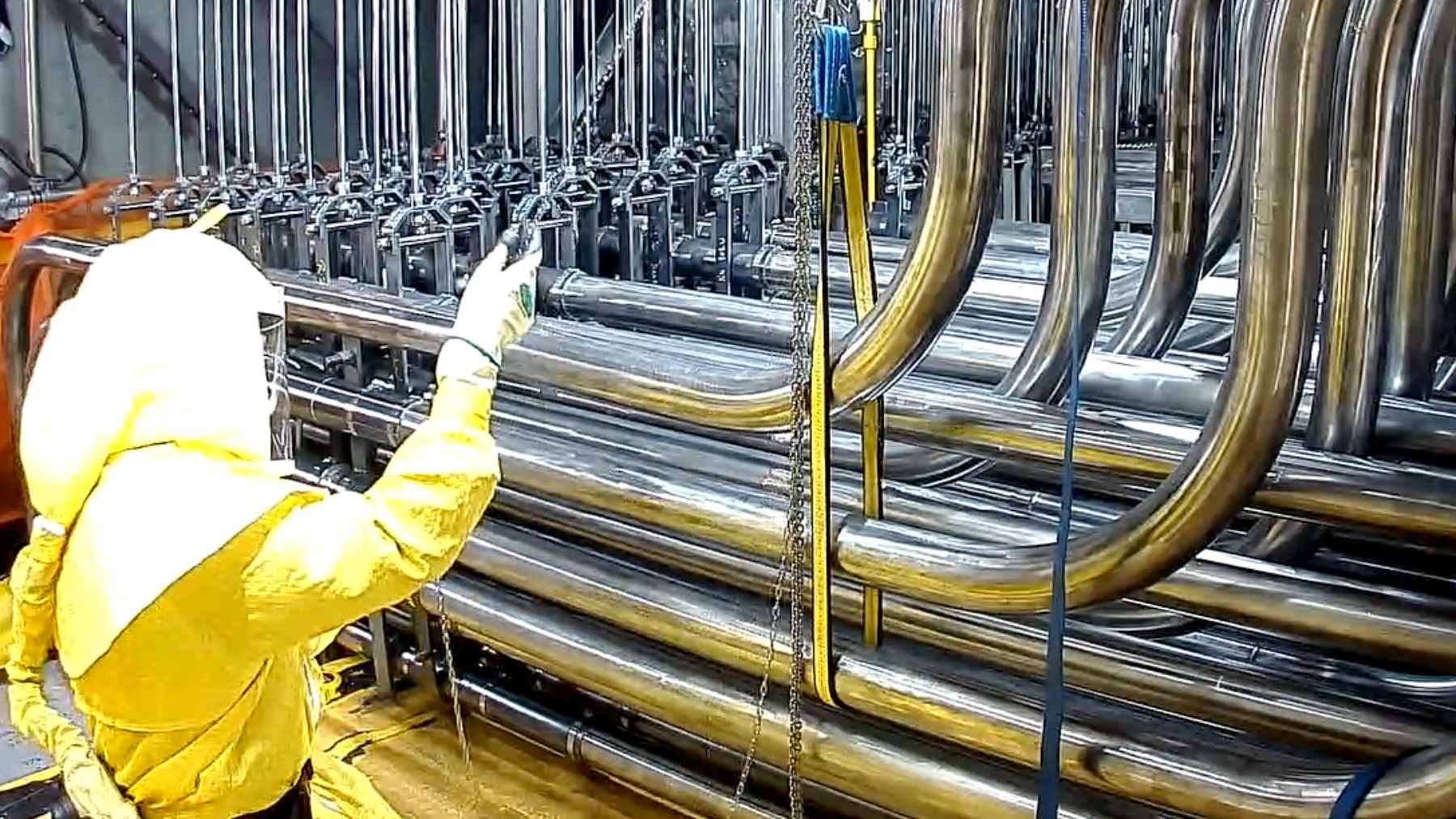
A CANDU steam generator is not something you roll through a side door. Each one weighed about 110 tons, and crews had to remove all eight of the old units from Bruce A before lowering the replacements back into place.
The lift was a slow, careful ballet. First, steam drums weighing about 330 tons had to be moved aside on a track system for inspection and maintenance. Then Mammoet’s PTC-35 crane, standing about 330 ft. tall, handled the roof lifts over about six months.
Can a 1978 reactor really be part of the clean-energy future? Ontario is betting that it can, as long as the hard parts inside the plant are rebuilt before age catches up with them.
The rebuild below the lift
The steam generators made the best photo, but they were only one piece of the job. Bruce Power’s Major Component Replacement program also focuses on fuel channels, feeder tubes and other large nuclear components that are essential to keeping a CANDU reactor running safely for decades.
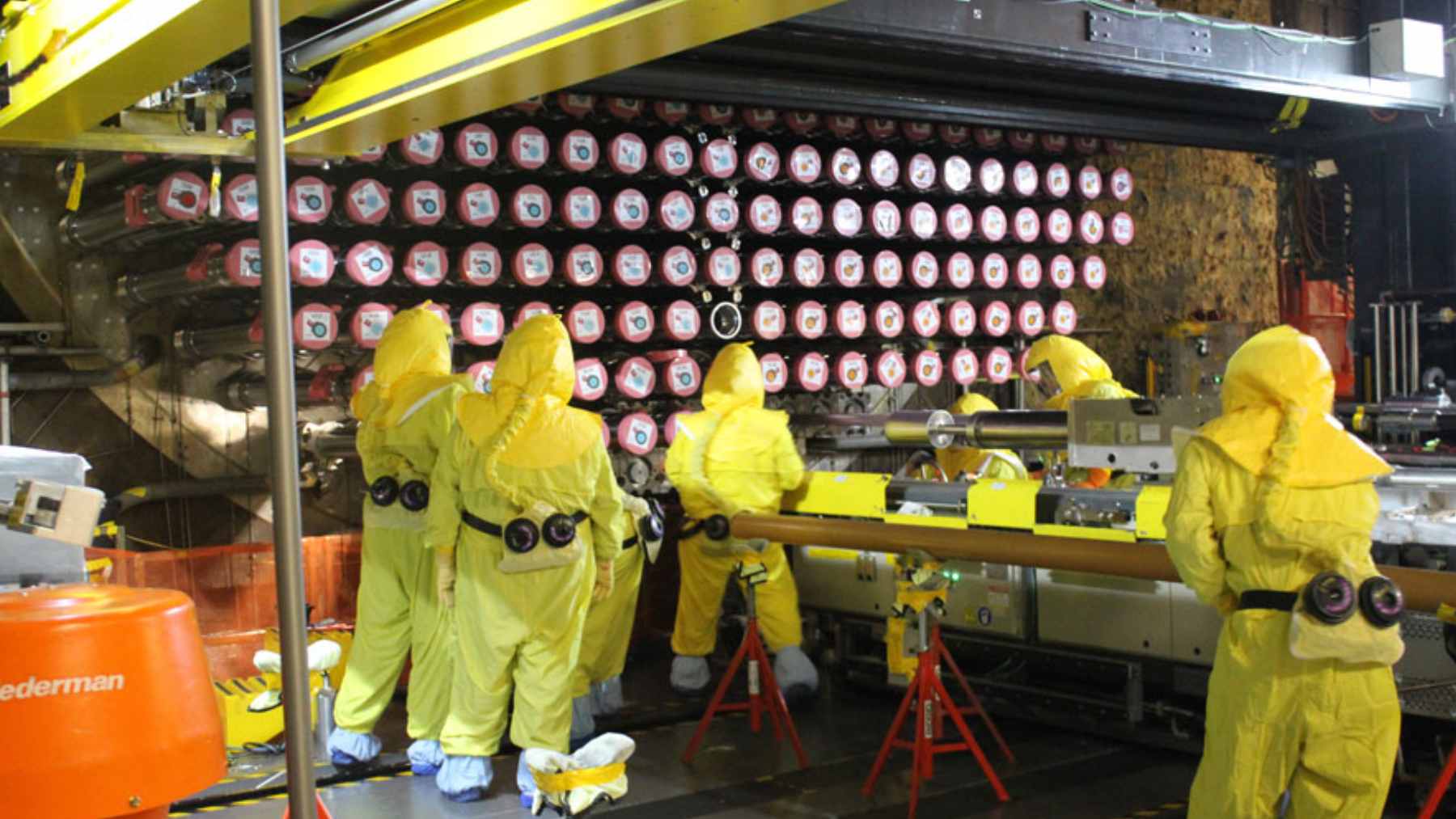
Unit 3 also became a test case for new tools. Bruce Power said the project marked the first time robotic tools were used on a reactor face to rebuild a CANDU reactor, and the team set a CANDU refurbishment record by finishing calandria tube removal 11 days ahead of schedule.
That matters because the future of nuclear power is not only about building the next plant. For the most part, it is also about proving that existing plants can be renewed without drifting endlessly over budget and behind schedule.
Seven months early
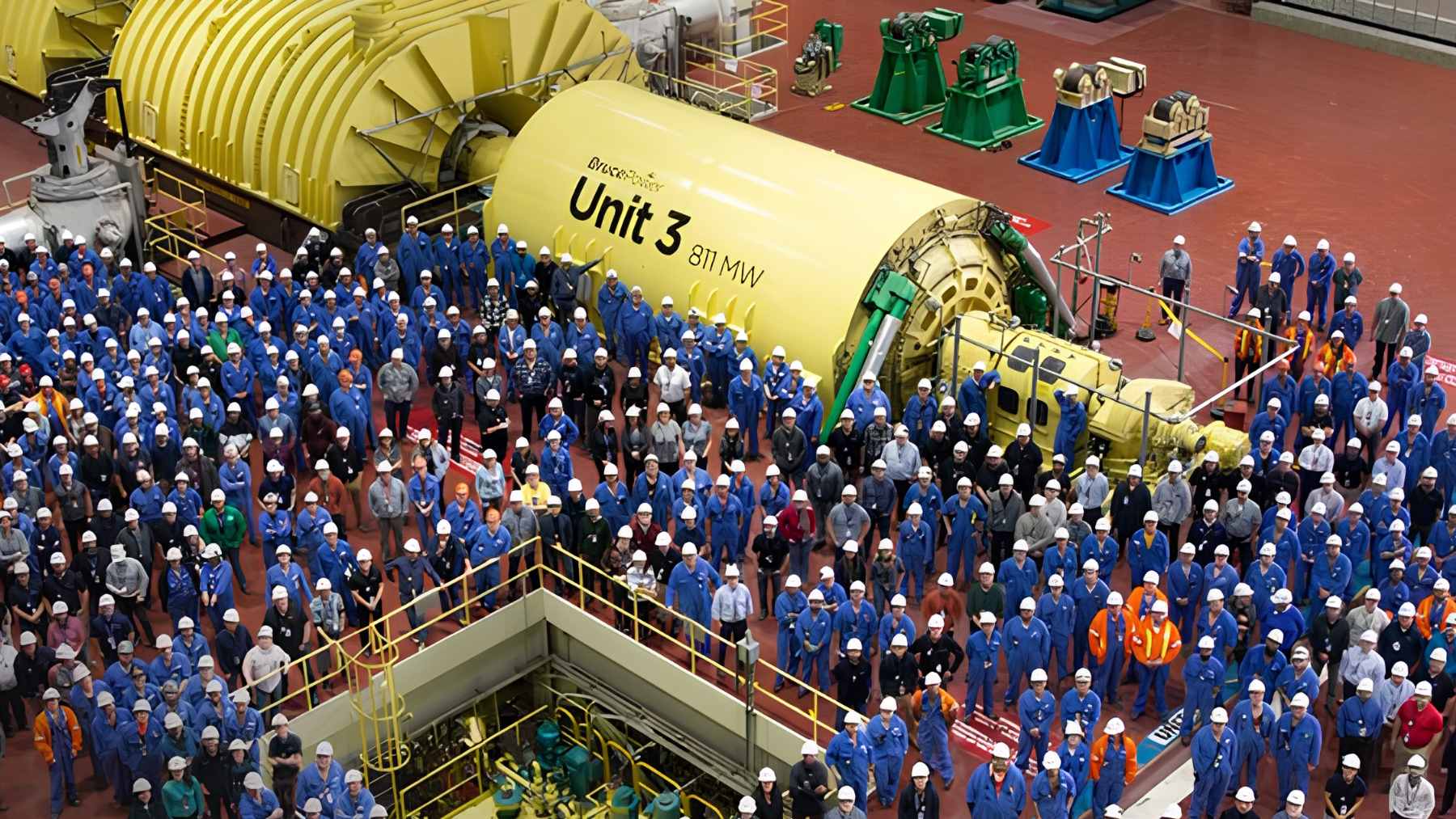
Bruce Power said Unit 3 returned to service on June 8, 2026, more than seven months ahead of schedule. The Canadian Nuclear Safety Commission had already removed all regulatory hold points for Bruce A Unit 3 as of June 2, allowing the unit to return to full-power operation under normal oversight.
The renewed unit is expected to help power Ontario for decades, with Bruce Power saying it can provide enough electricity for a city the size of Brampton. Eric Chassard, Bruce Power’s president and CEO, described the result as proof that large nuclear projects in Ontario can deliver “real long-term financial benefits for ratepayers.”
This is more than just a successful construction story. It means power coming back to the grid earlier, savings flowing back to consumers and one more piece of Ontario’s low-carbon electricity system staying in place.
Ontario’s nuclear bet
Unit 3 is not a one-off. It is part of Bruce Power’s Life-Extension Program, which is refurbishing Units 3 through 8 between 2020 and 2033 so the site can operate into the 2060s. Unit 4 is already in its own outage, and Unit 5 is expected to begin in fall 2026.
Ontario has a good reason to care about timing. The Independent Electricity System Operator’s (IESO) 2026 Annual Planning Outlook says electricity demand in the province is forecast to grow 65% by 2050 in its reference case, with a high-demand scenario reaching as much as 92%. Electric vehicles, data centers, population growth and industrial activity are all pushing the curve upward.
Nuclear power already does much of the heavy lifting. IESO data shows nuclear accounted for about 48.2% of Ontario’s actual electricity generation in 2025, which is why keeping existing reactors online is not just an engineering question, it is an economic and environmental one, too.
The boring half of clean power
There is still plenty of attention on new nuclear projects. Bruce Power is also studying Bruce C, a possible expansion of up to 4,800 MW at the existing site, but the company says no final decision has been made and no reactor technology has been selected yet.
That makes the Unit 3 story more immediate. The small modular reactor on a conference slide might be the future, but the 1970s reactor with new parts is the present, and it is the one sending electricity to homes, hospitals, factories and, increasingly, the data centers behind everyday digital life.
At the end of the day, this is what the energy transition often looks like up close–not always sleek, not always new. Sometimes it is a giant crane, a roof opening and eight machines weighing 110 tons each.
The official statement was published on Bruce Power.