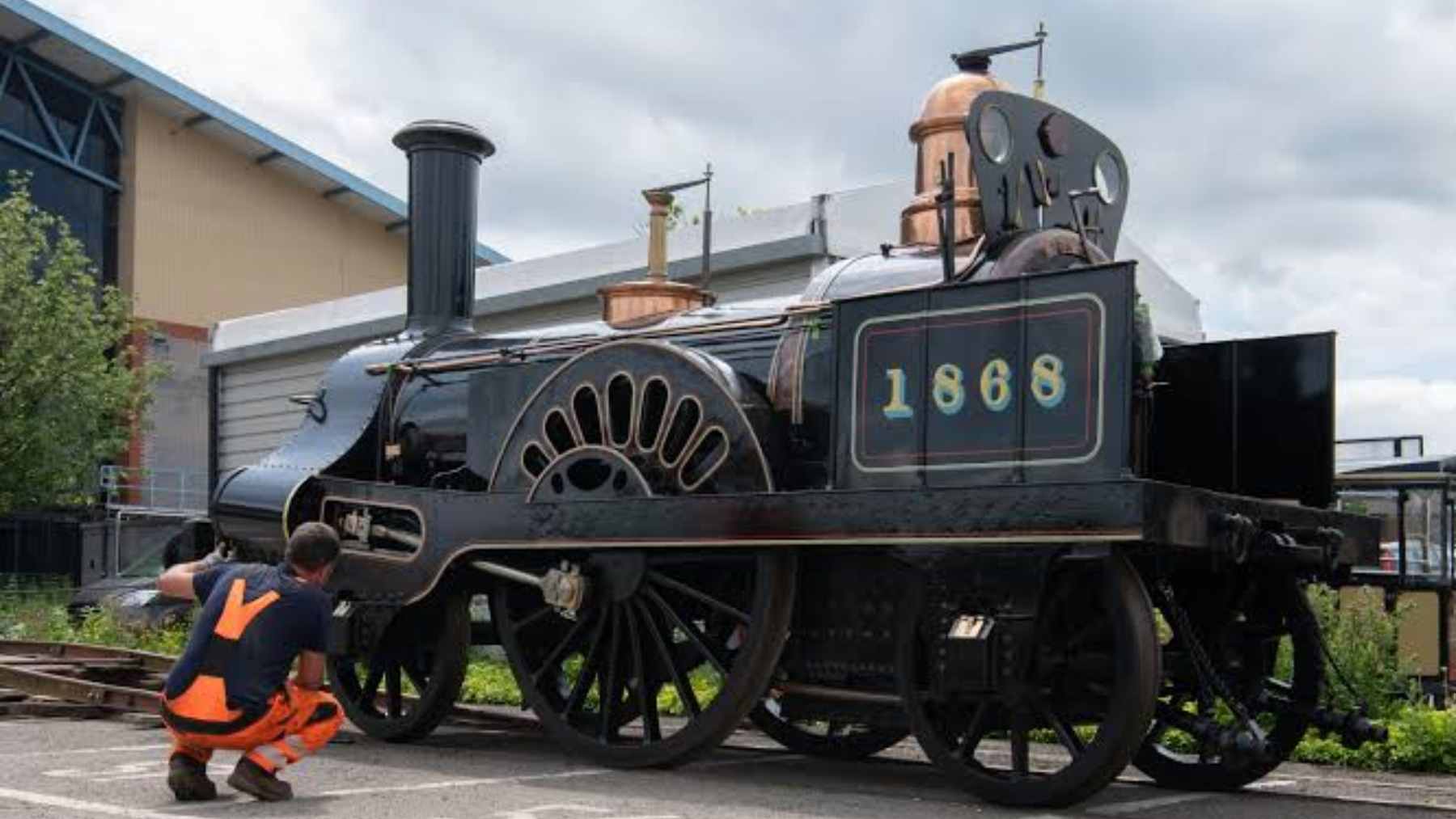
A 181-year-old steam locomotive has completed the strangest kind of rail journey, one with no rails at all. Columbine, a nearly 40,000-lb. engine built in 1845, traveled 213 miles by road from the Science Museum in London to the National Railway Museum in York, where it is now back on display.
For visitors, it may look like a handsome piece of industrial history. For conservators, though, it was a carefully planned operation involving lifting gear, bridge limits, nighttime access, and a very old machine that cannot simply be treated like cargo.
It also arrives at a moment when rail history has a modern echo, because transport is once again central to climate, technology, and infrastructure debates.
A rail icon on a truck
Columbine’s move was not a simple museum delivery. The National Railway Museum said the operation took place in the early hours of June 17 and involved a specialist team of 26 people, along with equipment such as an electric forklift and a large lowboy trailer.
That sounds almost funny at first, a steam locomotive heading home by road. But for an object this old, slow and careful beats dramatic every time. One bad jolt, one wrong turning angle, or one bridge too low could have turned a celebrated return into a conservation headache.
The locomotive was moved from the Science Museum in South Kensington, where it had been shown for more than a quarter of a century. Now, after its long stay in London, it has returned to York and to the public stage.
Back together after 26 years
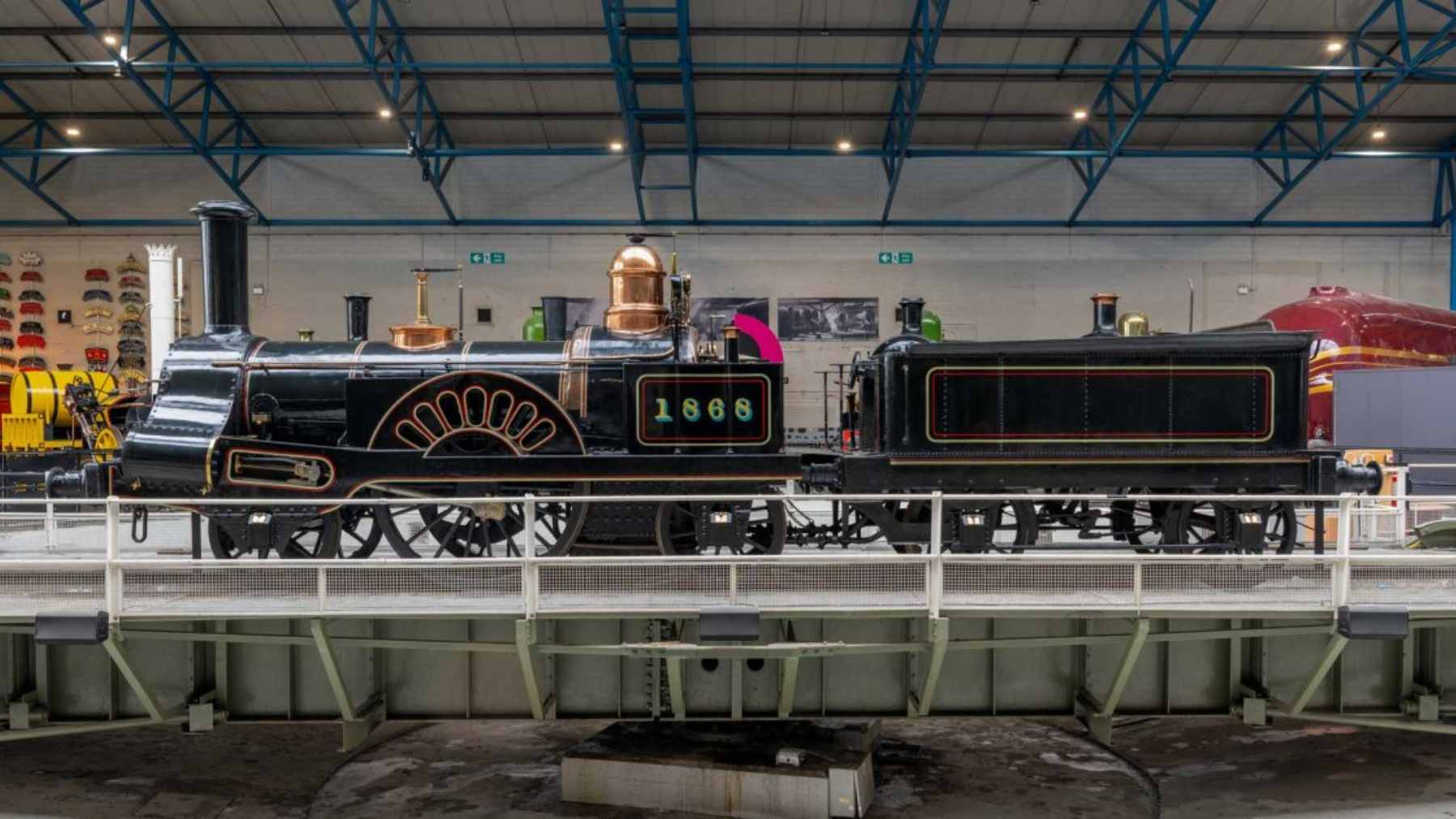
The bigger story is not just that Columbine moved. It is that the locomotive and its tender, the separate vehicle that carried fuel and water, are together again for the first time since 2000.
That separation happened when Columbine left York for the Science Museum’s “Making the Modern World” gallery. The plan had been to move both pieces, but space limits in London meant only the locomotive could be shown there, while the tender went to the Science Museum Group’s Science and Innovation Park in Swindon.
Now both pieces have made separate journeys back to York. Together, they completed more than 400 miles of travel before being reunited and placed on the Great Hall turntable, where visitors can see the complete vehicle for free.
Why Columbine matters
Columbine is not just old, it is important. Built at Crewe Works in 1845, the locomotive was the first example of the standard Crewe-type engine with six-ft. driving wheels.
At a time when many locomotives used inside cylinders and crank axles that could be weak points, engineers W. B. Buddicom and Francis Trevithick developed an outside-cylinder design that helped shape British locomotive thinking for more than 40 years.
That may sound like something only train lovers would notice. Essentially, it means Columbine is part of the engineering story behind reliable rail transport, the kind of step-by-step innovation that eventually made longer, heavier, and more dependable rail travel possible.
The environmental link
No one should mistake Columbine for a clean-energy machine. It belongs to the coal-powered age, and its preservation is about heritage, not putting steam back at the center of modern transport.
Still, the timing is hard to ignore. The International Energy Agency says rail handles about 7% of global passenger travel and 6% of freight movement, while accounting for only about 1% of transport emissions. That is why old railway engineering still speaks to a very current question.
What should transportation look like when countries want cleaner mobility, less road congestion, and more efficient freight? Columbine cannot answer that on its own, of course, but it does remind us that rail has been solving scale, distance, and energy problems for a very long time.
A conservation job with a business side
Behind the romance of a steam locomotive sits a very practical business problem. Museums have to protect fragile objects, move them safely, attract visitors, and justify the cost of specialist care.
The National Railway Museum described the return and reunification as a “significant milestone” for both Columbine and the National Collection. Becky Peacock, Conservation and Collections Care Manager at the museum, said the project brought together conservation, collections care, transport logistics, and installation expertise.
That is the quieter side of preservation. A famous object does not stay public by accident. It needs budgets, planning, skilled workers, and enough public interest to make the effort worthwhile.
What visitors will see
Columbine is being displayed without its cab, which reflects how it would have looked in the early 1870s. That choice also gives visitors a clearer look at the engineering that made the locomotive notable in the first place.
After a deep clean and a complicated installation, the engine now sits with its tender on the Great Hall turntable, not behind a technical paper, not hidden away in storage. Right there, where a child, a commuter, or a lifelong rail fan can stand in front of it and understand that transport history is not abstract.
A 213-mile road trip ended with something simple. People can now see an 1845 machine that helped push railway design forward, and maybe think a little differently about the systems that still move our world today.
The official statement was published on National Railway Museum.