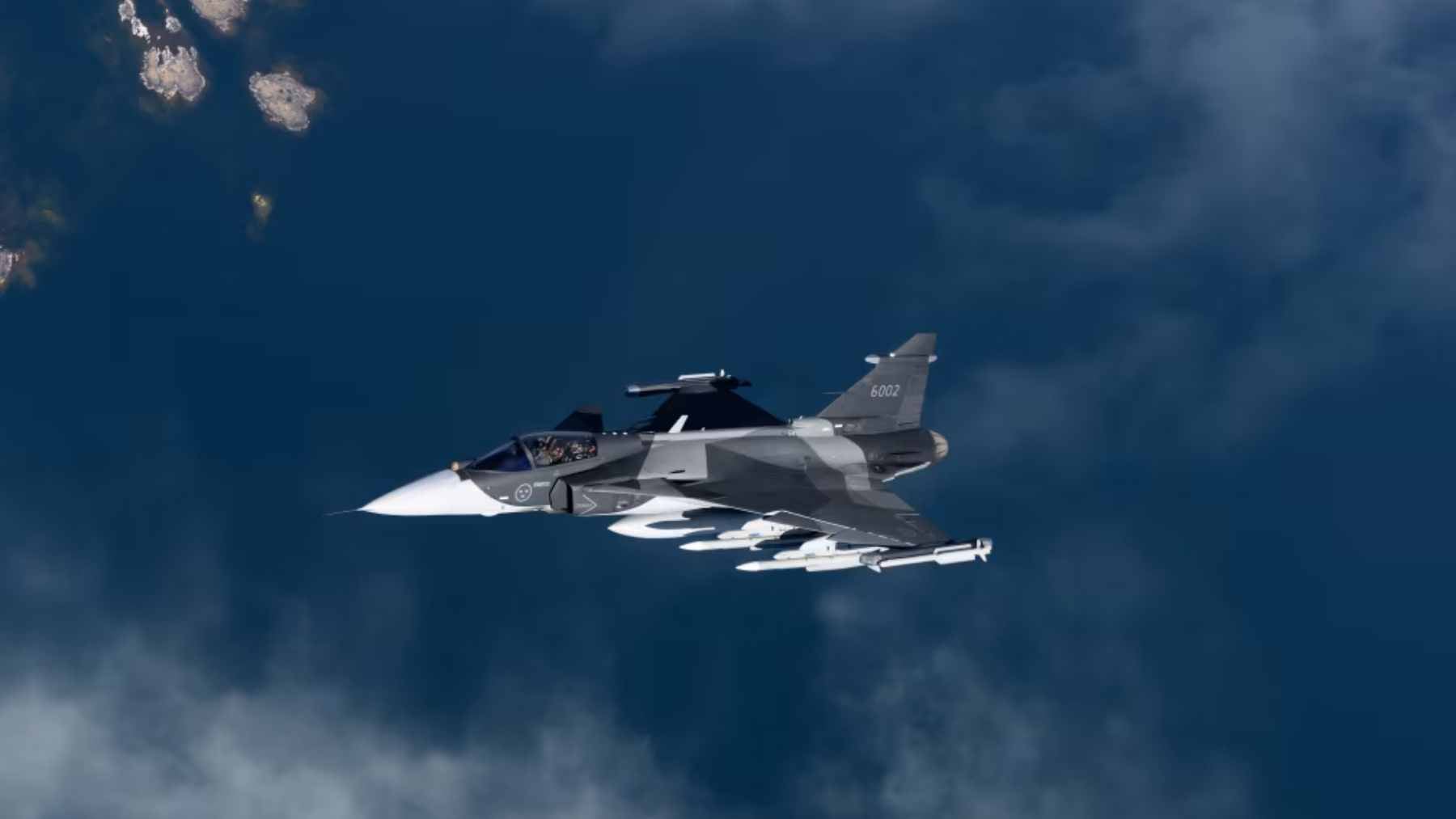
Sweden and Ukraine have moved forward with one of the most closely watched fighter jet deals of the war, a plan that could bring up to 16 donated Gripen C/D jets and an initial purchase of up to 20 newer Gripen E/F aircraft for Kyiv.
The announcement matters far beyond military aviation, because Ukraine is trying to defend not only its skies, but also power plants, cities, farms, forests, and water systems repeatedly damaged by Russian strikes.
That is the part easy to miss. Fighter jets sound like a battlefield story, and they are. But in Ukraine, air defense has also become an environmental story, since every missile or guided bomb that hits an energy site, industrial facility, dam, or neighborhood can leave behind smoke, debris, toxic residue, and years of cleanup.
A major air defense bet
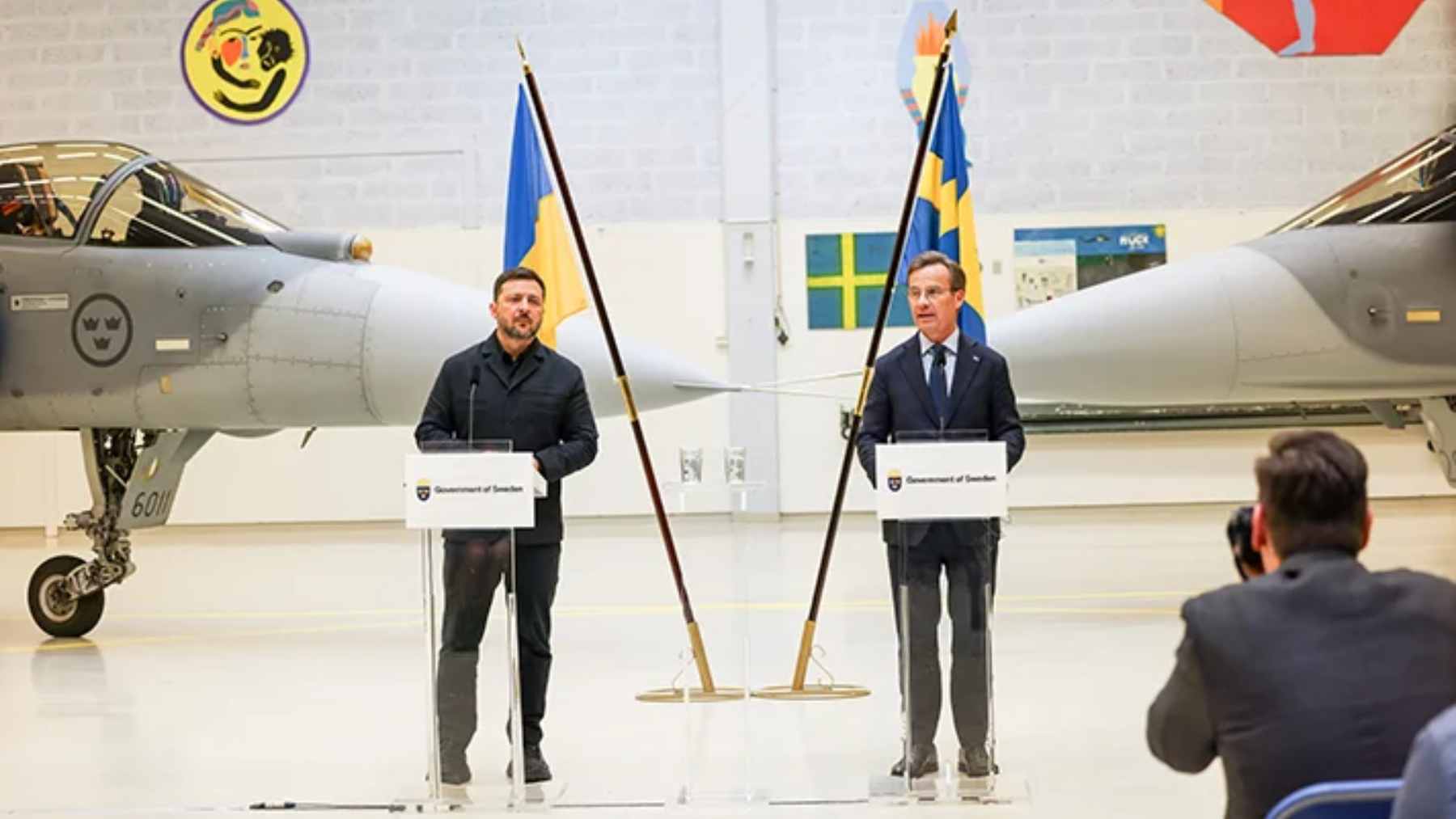
The agreement was presented in Uppsala, Sweden, during a meeting between Swedish Prime Minister Ulf Kristersson and Ukrainian President Volodymyr Zelenskyy. Sweden says Ukraine intends to buy up to 20 Gripen E/F aircraft as a first step, using about $2.9 billion from the European Union’s Ukraine Support Loan.
Sweden also aims to donate up to 16 JAS 39 Gripen C/D aircraft from its current fleet if Ukraine proceeds with the purchase. The package includes advanced ammunition, training, maintenance support, electronic warfare capabilities, and innovation funding.
For Ukraine, the message is simple enough. The country needs more ways to keep Russian aircraft and missiles away before they reach homes, substations, ports, and industrial zones.
Why Gripen fits Ukraine
The Gripen was not designed as a luxury jet for perfect runways. Saab says it can operate from short distances, temporary runways, and even roads, which makes it especially relevant for a country whose air bases are under constant threat.
Essentially, Ukraine could disperse aircraft more easily rather than relying only on large, predictable bases. That matters in a war where drones and missiles can turn a parked aircraft into scrap metal in minutes.
The Ukrainian president’s office also highlighted the Gripen’s efficient design, saying the C/D model is durable, easier to maintain, and quick to rearm and refuel. For pilots and ground crews, that can be the difference between an aircraft that looks good on paper and one that actually flies when the alarm sounds.
The missile question
Sweden’s official statement says the donated package may include IRIS-T missiles, AMRAAMs, and long-range Meteor air-to-air missiles. That last name is important because Meteor is built for beyond-visual-range combat, where pilots try to win the fight before the enemy ever gets close.
Saab lists Meteor’s operational range as more than 60 miles and says the missile uses ramjet propulsion, advanced radar guidance, and a large “no-escape zone.” MBDA, the missile maker, says Meteor is designed for dense electronic warfare environments and can be used from platforms including Gripen, Rafale, Eurofighter Typhoon, and F-35.
Could that push Russian aircraft farther from Ukrainian territory? That is Kyiv’s hope. Zelenskyy said the weapons package should help protect Ukraine from Russian guided aerial bombs, a threat that has pounded frontline towns and made ordinary life feel like a countdown.
The environmental stakes
War is not only measured in destroyed vehicles, damaged buildings, and lost lives. The European Commission’s Joint Research Centre has warned that Russia’s invasion has worsened Ukraine’s environmental and climate challenges, including toxic pollution risks, soil damage, forest fires, and pollution affecting air quality and waterways.
That is where air defense connects to ecology. If Ukraine can intercept more aircraft, drones, and missiles, it may reduce the number of strikes on energy systems, chemical sites, warehouses, ports, and farms.
Nobody should dress that up as “green warfare,” because war is destructive by nature. But fewer hits can mean fewer fires, fewer contaminated sites, and fewer clouds of smoke drifting over neighborhoods.
UNEP has described Ukraine as facing a “compounded” environmental crisis from the conflict, with risks that could last long after the fighting ends. For families trying to keep the lights on, that sounds abstract. For farmers dealing with damaged soil or communities near polluted rivers, it hits home directly.
Business behind the deal
There is also a major industrial angle. Saab said Sweden and Ukraine still need to complete negotiations for the Gripen E/F acquisition, expected in batches, and added that it has not yet signed a contract or received an order related to the announcement.
That detail matters. Defense deals are not like buying trucks off a lot. They involve aircraft production slots, training pipelines, spare parts, weapons integration, software updates, maintenance crews, and long-term political commitments.
Sweden says it will also procure new Gripen E/F aircraft to replace the donated Gripen C/D jets. So the deal could reshape not only Ukraine’s air force, but also Sweden’s defense planning and Saab’s production outlook over the next several years.
What happens next
The first donated Gripen C/D aircraft could be defending Ukrainian airspace as early as next year, according to Sweden’s government. Zelenskyy, meanwhile, said Ukraine hopes to receive the first capabilities within ten months. That leaves a narrow runway for training, logistics, and political approvals.
The newer Gripen E/F aircraft are a longer-term play. Sweden says delivery of the new systems is estimated to begin before 2030, which means this is both an urgent wartime measure and a bet on Ukraine’s future air force.
At the end of the day, the Gripen deal is about buying distance–distance between Russian aircraft and Ukrainian cities; distance between guided bombs and power stations; distance, perhaps, between today’s war damage and tomorrow’s environmental cleanup.
The official statement was published on Government.se.