The next big solar surface may not be the roof. It may be the office window you stare through every day, the glass wall of a mall, or the skylight above a train station.
Panasonic Holdings and YKK AP have started testing glass-based perovskite photovoltaic inner windows at the Tanimachi YF Building in Osaka, Japan, a move that brings transparent solar glass closer to real buildings instead of just lab benches. The idea is simple but powerful: keep the view, keep the daylight, and let the glass generate power where ordinary windows generate nothing.
Why windows matter
For decades, solar power has mostly meant panels on rooftops or open land. That still matters, but cities do not have endless roof space, and tall buildings often have far more façade than roof.
That is where photovoltaic glass enters the picture. Current commercial transparent solar glass is generally expected to sit around 5% to 12% efficiency depending on transparency, which is lower than many silicon panels, but the tradeoff is that it can use surfaces that were never producing electricity in the first place.
The Japan test
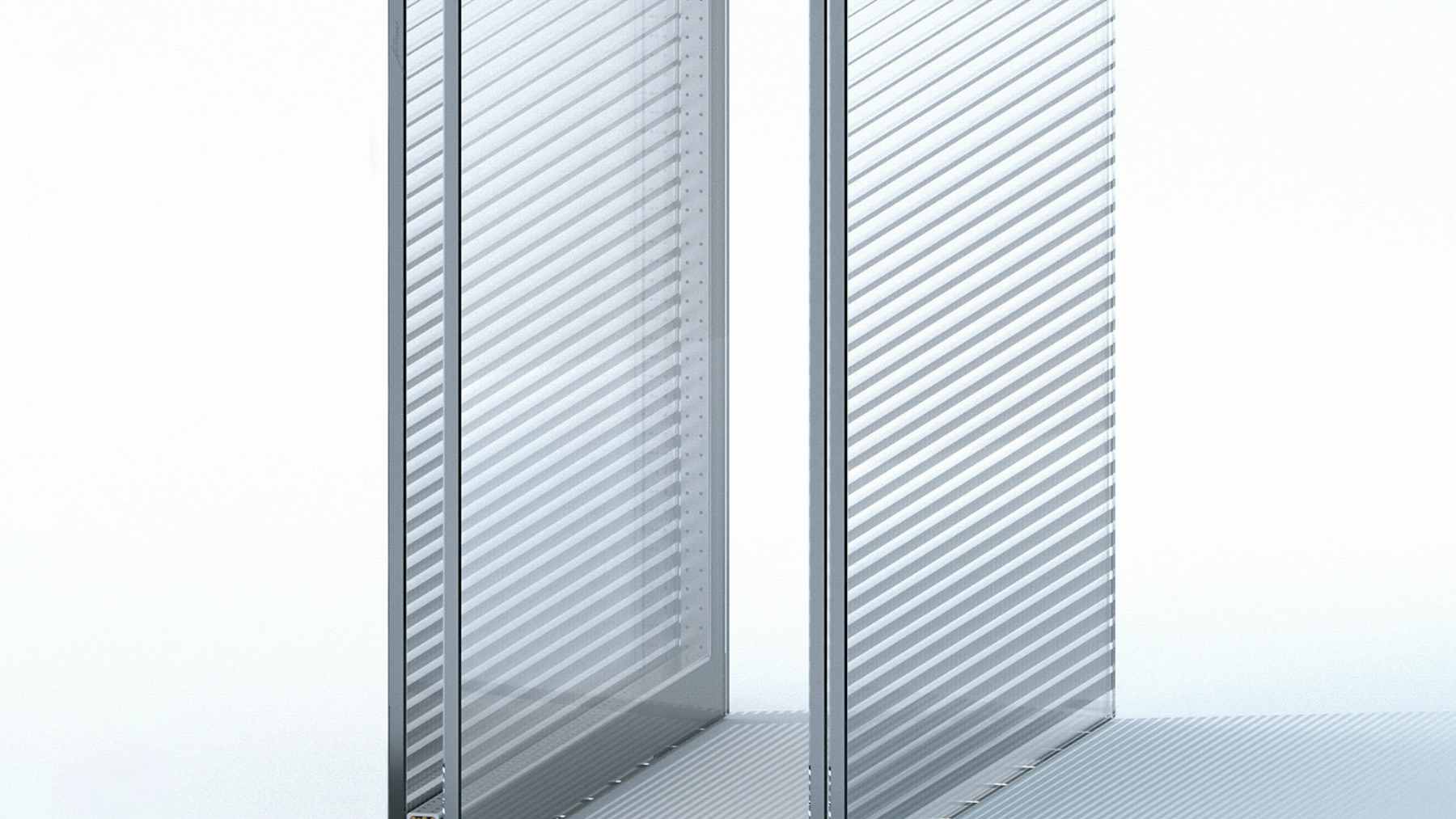
The Panasonic and YKK AP verification uses four inner windows made by YKK AP and four prototype glass-based perovskite solar cells made by Panasonic HD. Each prototype measures 28.5” wide by 42.5” high, with designs ranging from decorative and gradient styles to two transparency patterns.
This specific test is not measuring power generation, and that detail matters. The companies say the prototypes are not connected to a circuit, because the focus is installation, workability, appearance, visibility, and how the windows fit into a real office environment.
Perovskite changes the glass
Perovskite is attracting attention because it can be formed in very thin photovoltaic layers and adapted to building materials in ways that rigid silicon cannot easily match. Panasonic says its glass-based perovskite technology can be incorporated into laminated glass and customized by size, transparency, and graphic pattern.
The numbers are getting serious, too. Panasonic says a practical-size 125-square-inch perovskite photovoltaic module has achieved 18.1% conversion efficiency, although a transparent office window will always have to balance electricity production with daylight and comfort.
The real tradeoff
What should a solar window be first, a window or a solar panel? That is the whole challenge.
A clearer pane lets more light into the room but usually generates less electricity. A darker or more patterned pane can harvest more energy, but it may change the look of an office, the mood of a lobby, or the amount of glare on a desk at 3 p.m.
Buildings as power systems
Panasonic says the glass can turn windows, walls, balconies, and other building surfaces into places that generate electricity while still fitting into architectural design. That is especially important in dense urban areas, where flat land for solar installations is limited and every square foot of building surface starts to count.
Japan’s own energy policy adds pressure to the story. Panasonic’s release notes that Japan’s Seventh Strategic Energy Plan, approved in February 2025, aims to raise solar power’s share of the electricity mix to 23% to 26% by 2040 and includes perovskite solar cell deployment goals.
Businesses may move first
The first big users are likely to be commercial buildings, airports, hotels, malls, corporate towers, and other sites where glass is already part of the identity of the building. For owners, the attraction is not just clean energy. It is also the chance to cut part of the electric bill without covering a polished facade with bulky panels.
There may be another everyday benefit. Panasonic says converting part of incoming solar energy into electricity can reduce thermal energy entering a room, which suggests a possible heat-shielding effect. Anyone who has sat near a sunlit office window on a hot summer afternoon knows why that matters.
Still early, but moving
This is not a rooftop-panel killer. Silicon modules remain the stronger option where opacity is not a problem, such as roofs, solar farms, and open industrial land.
Transparent photovoltaic glass is playing a different game. It is trying to make unused urban surfaces useful, one pane at a time, while engineers still work through durability, wiring, cost, grid connection, and maintenance.
A separate YKK AP verification in the same Osaka building has already moved into grid-connected BIPV inner windows using 27 windows and one power conditioner, showing that the field is moving beyond display pieces toward building systems.
The official press release was published on Panasonic Newsroom Japan.