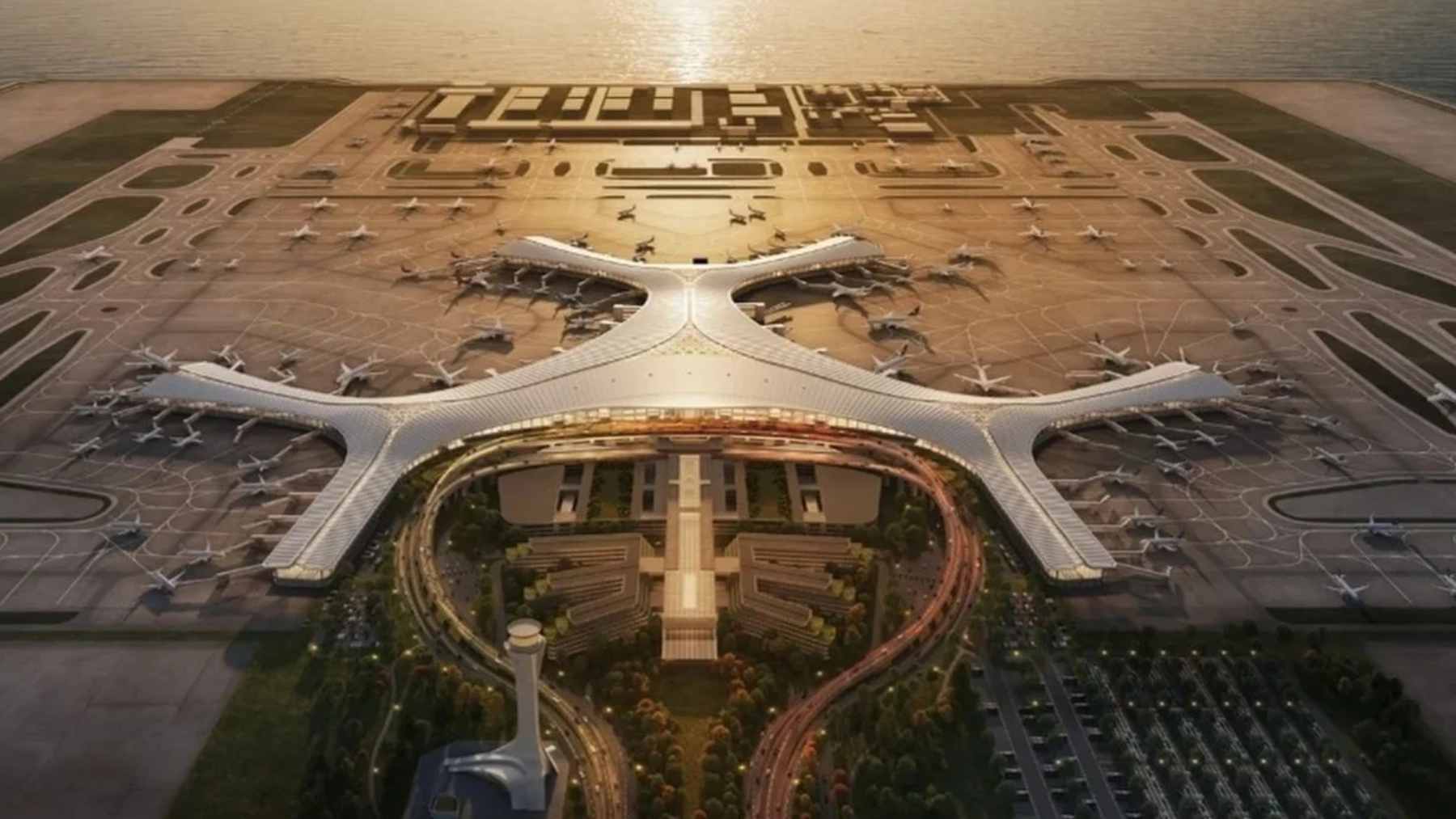
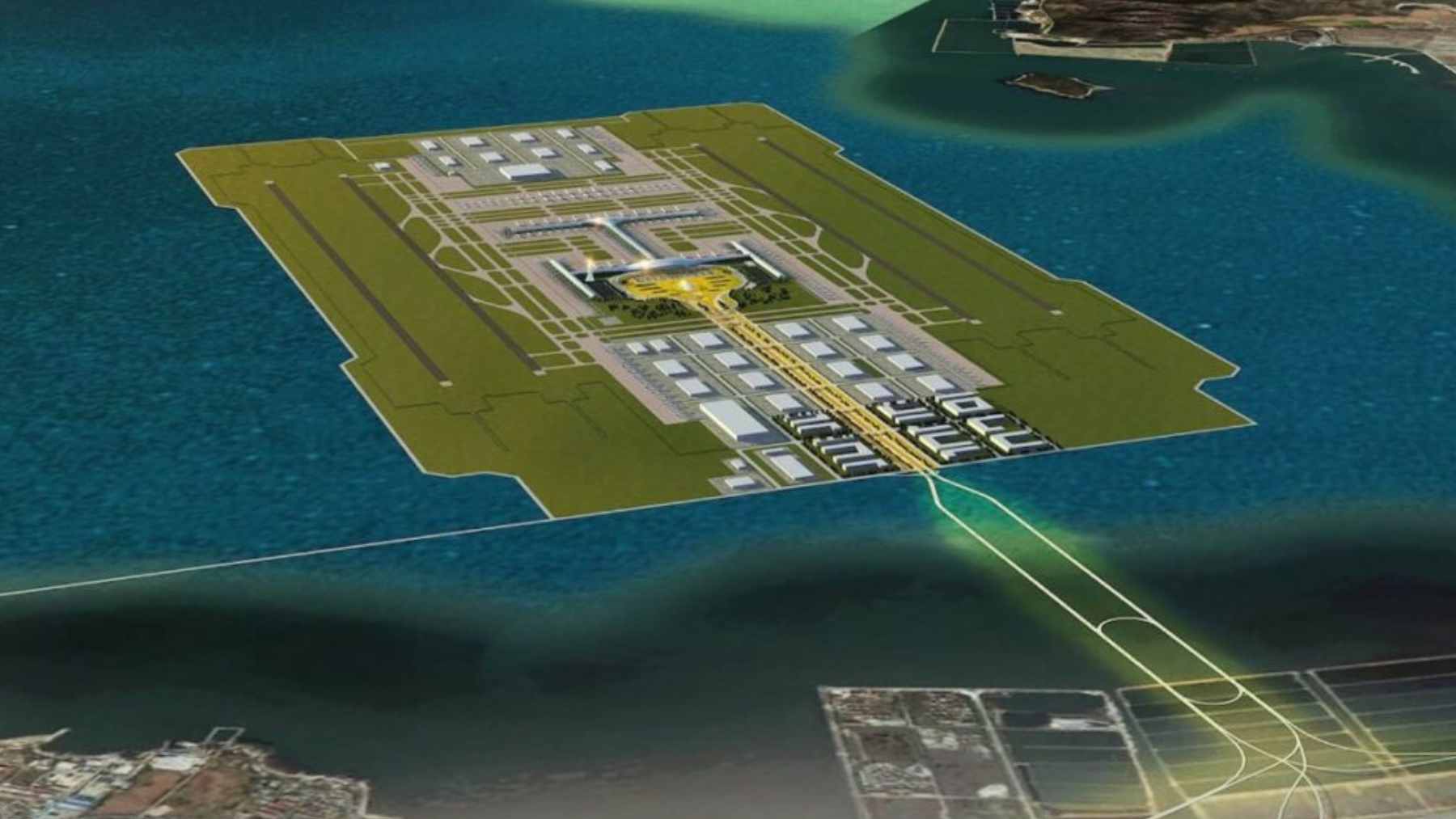
China’s next aviation mega-project is not rising beside a city, or on the edge of an empty plain. It is taking shape in the water, on a man-made island off Dalian, where engineers are turning part of Jinzhou Bay into one of the most ambitious airport sites in the world.
The Dalian Jinzhouwan International Airport is meant to ease pressure on the city’s existing airport and turn Dalian into a stronger hub for Northeast Asia. But the bigger question is hard to ignore. Can a 12-mile² airport built from reclaimed sea land really become a model for modern, greener aviation?
A sea airport with huge ambitions
The project is being described by Chinese construction sources as the world’s largest reclamation airport. It is planned for the eastern waters of Jinzhou Bay, with a future layout that includes four runways and a terminal area eventually reaching 900,000 m².
Those numbers are not just for show. In its long-term plan, the airport is expected to handle up to 80 million passengers a year, 1.65 million tons of cargo and around 540,000 aircraft movements. That would put it in the same conversation as some of the busiest transport hubs on the planet.
Why Dalian wants it
Dalian already has an airport, but its location has become a problem. As the city expanded, Dalian Zhoushuizi International Airport was boxed in by urban growth, leaving little room to stretch runways, terminals or cargo space.
The new airport is designed to move passenger and cargo flights from Zhoushuizi to Jinzhouwan once it opens. That will mean fewer limits on future air traffic, better logistics and stronger links with Japan, South Korea and the wider Northeast Asian market.
For travelers, the promise is simpler. Less crowding, better connections and a terminal built for modern traffic instead of one trying to keep up with decades of growth.
The island is now real
This is no longer just a drawing on an engineer’s desk. By late 2025, officials said the main land reclamation work had been completed, creating about 20 km² of land and using more than 280 million cubic meters of backfill.
That is a staggering amount of material. Picture the sea floor being reshaped, compacted and prepared until it can carry runways, terminals, bridges and trains. It sounds almost unreal, but that is exactly the point of the project.
The work is not easy, either. Project officials have pointed to soft seabed conditions, complicated geology, changing marine weather and strict ecological requirements as major construction challenges.
The green question
Building an airport in the sea will always raise environmental concerns. Reclaiming land changes marine space, and even careful construction can disturb water, sediment and coastal ecosystems.
Chinese project managers say they have used planned material sourcing, ecological seawalls and marine environment monitoring to reduce the impact on nearby waters. That does not erase the environmental cost, but it shows officials know the project will be judged on more than size.
There is also a cleaner-energy angle. A wind, solar, diesel, storage and charging microgrid was put into use during construction, with expected annual generation of 464,000 kilowatt-hours and estimated carbon dioxide reductions of about 410 tons a year.
Tech is doing some heavy lifting
This airport is not only a concrete and steel story. Digital construction tools are playing a big role, especially because building on reclaimed marine land leaves little room for sloppy measurements.
Construction teams have used digital monitoring, smart-site systems, precision positioning and drone measurement to control the placement of fill material. According to local reports, engineers have been working at centimeter-level accuracy in parts of the sea-building process.
That matters because small mistakes can become expensive ones. On a normal construction site, bad ground is a headache. In the middle of a bay, it can become a safety risk.
A new hub for Northeast Asia
The first phase will include two distant parallel runways and a 500,000-m² T1 terminal, enough for 43 million passengers a year, 605,000 tons of cargo and 330,000 aircraft movements. Later, the plan is to expand to four runways and the larger 900,000-m² terminal.
The airport is also planned as part of a broader transport network. Three cross-sea routes and connections to Metro lines 1 and 5 are expected to link the island with Dalian North Railway Station and Dalian Bay passenger port.
For anyone who has sat through airport traffic, that part stands out. A massive terminal is impressive, but a smooth ride to the city is what people actually remember.
The real test comes later
Dalian Jinzhouwan International Airport is already a statement about China’s infrastructure power. It is big, costly, difficult and designed to push the limits of airport engineering.
But the project’s legacy may depend on something less flashy than its size. If the airport can operate efficiently while reducing energy waste and limiting ecological harm, it could become a case study for coastal aviation projects. If not, it may be remembered as another megaproject that asked nature to make room.
For now, the island is rising. The harder part is proving it can live well with the sea around it.
The official statement was published on Liaoning Provincial People’s Government.