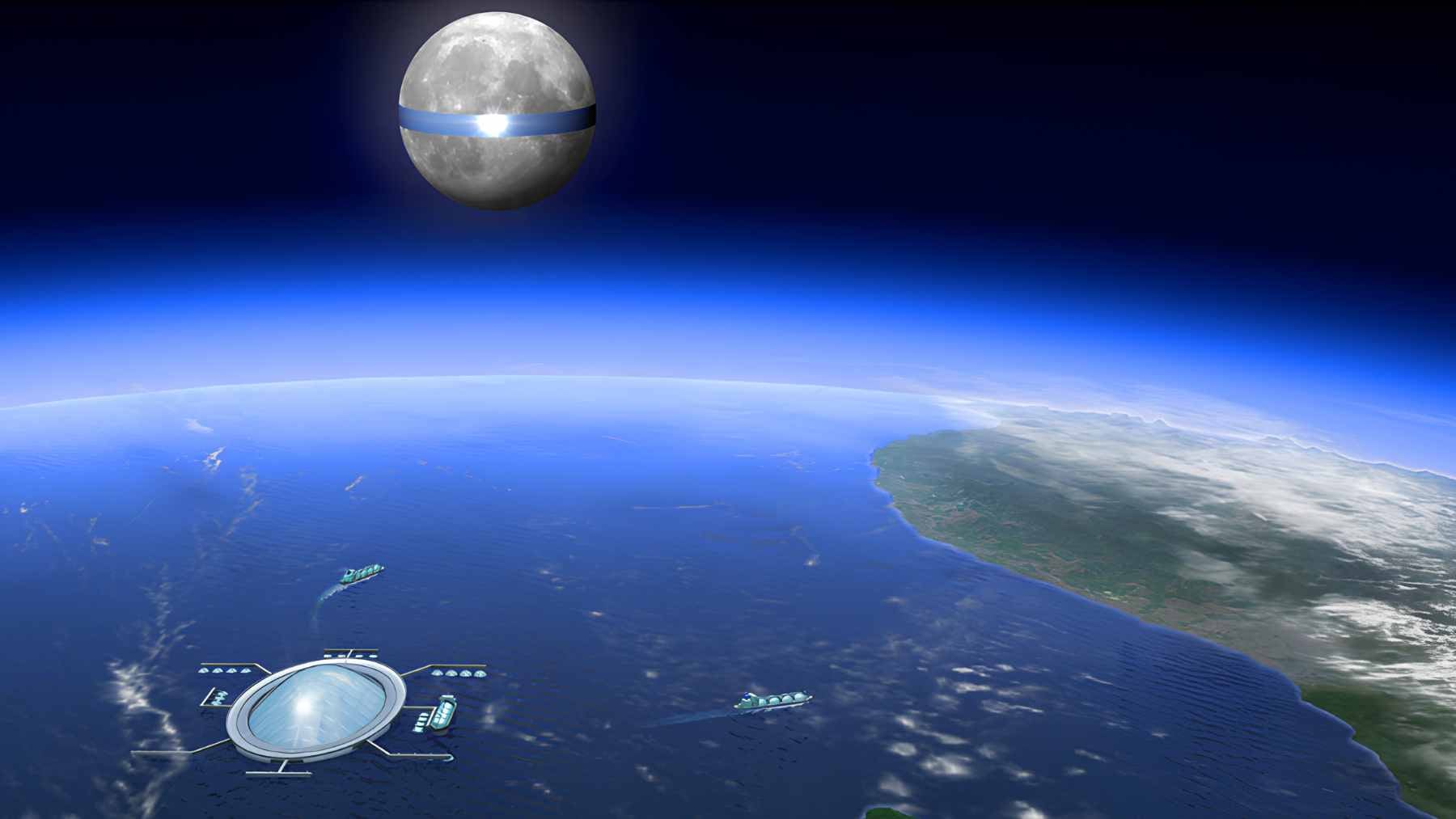
Imagine looking up at the Moon on a clear night and seeing more than a familiar gray disk. In Shimizu Corporation’s boldest clean-energy concept, the lunar equator would be wrapped with a 6,835-mile belt of solar cells, turning Earth’s nearest neighbor into a giant power station.
The idea is called Luna Ring, but no, it is not under construction. In any case, as countries look for cleaner power, stronger energy security, and ways to keep electricity flowing when clouds, heat waves, or fuel shocks hit the grid, space-based solar power is moving from science fiction into serious engineering tests.
A moonshot from an old builder
Shimizu Corporation is not a space startup chasing hype. The Japanese construction and engineering company traces its history back to 1804, when Kisuke Shimizu I founded the business in Edo, now Tokyo.
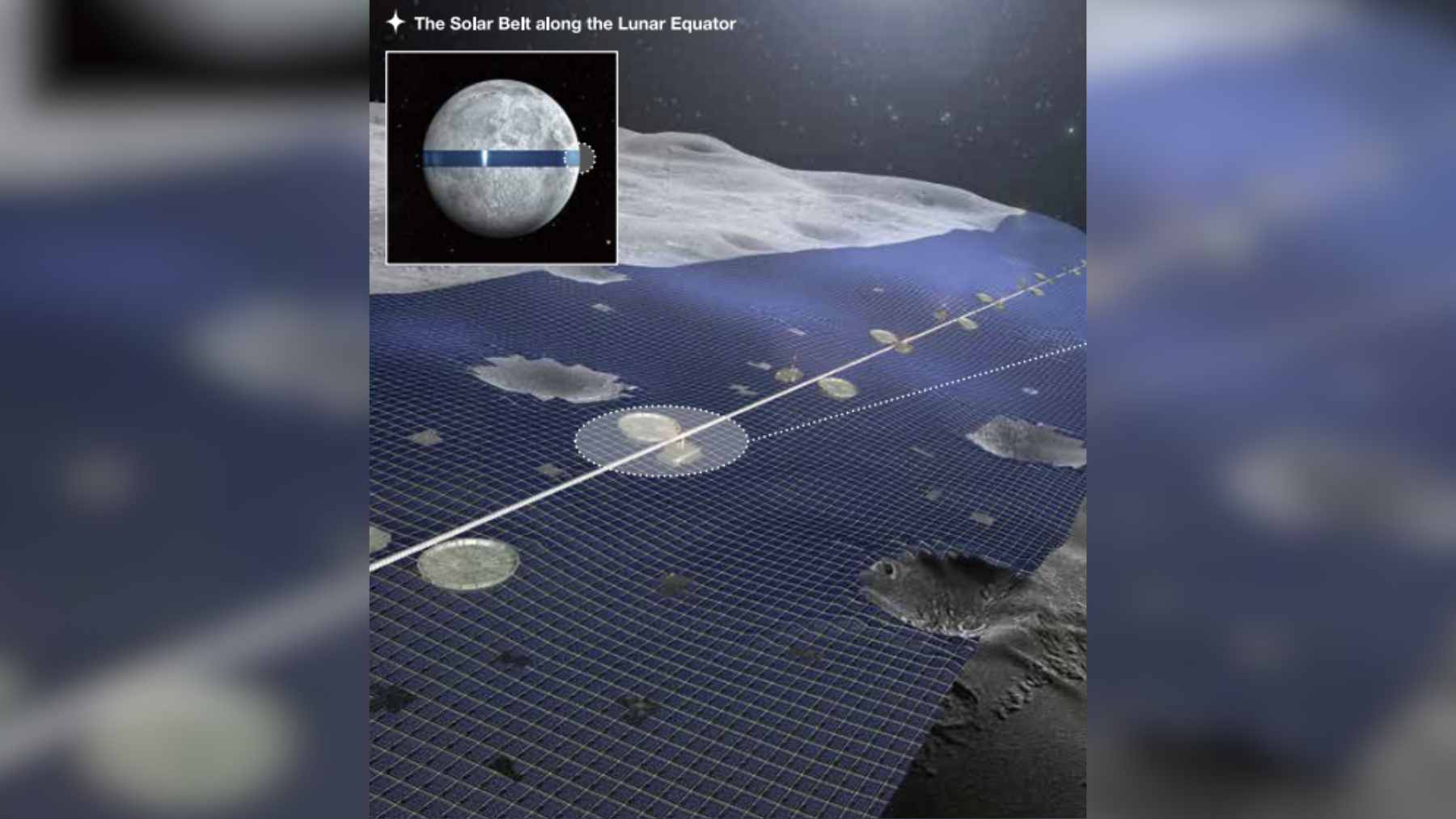
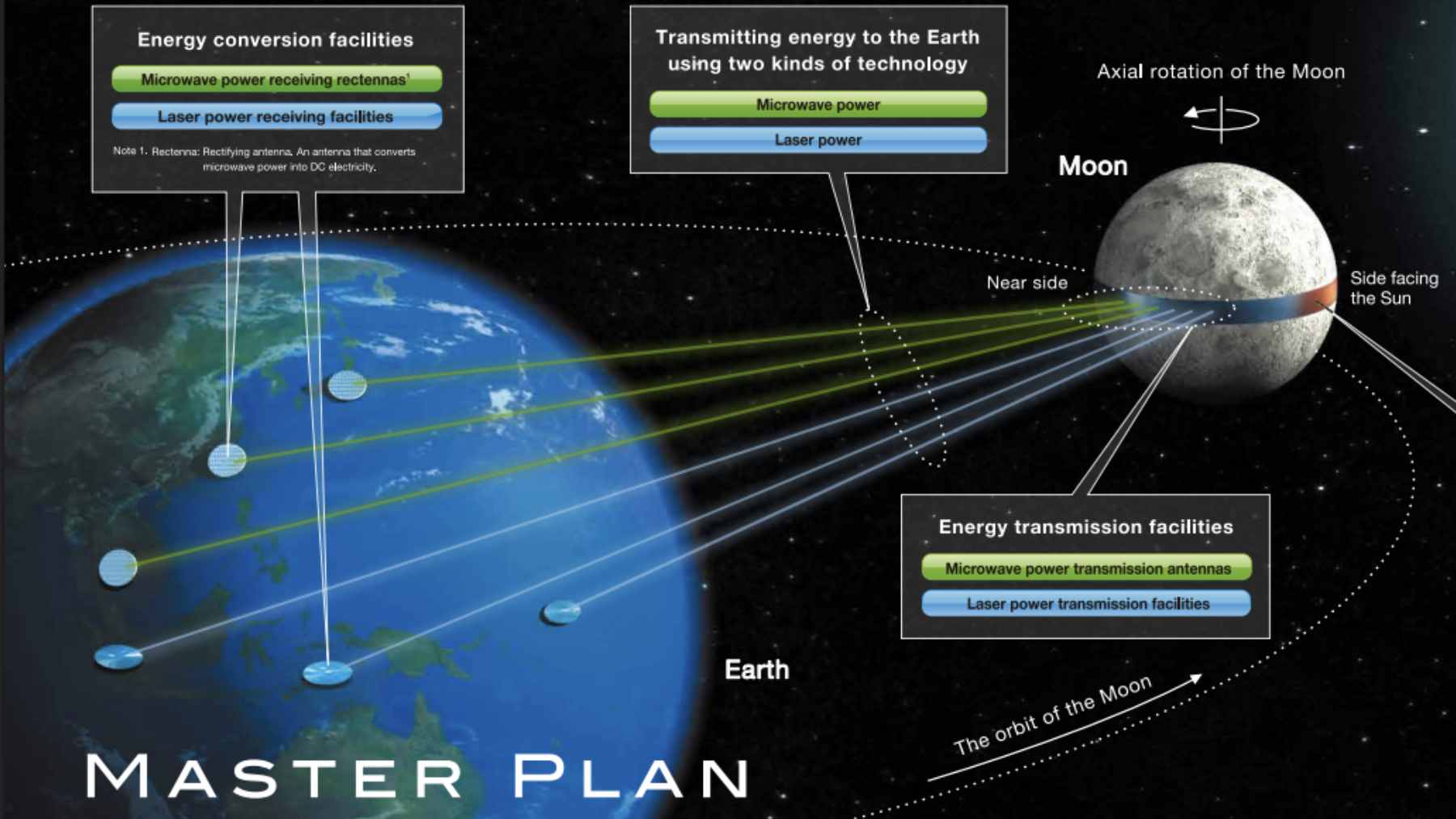
That makes the Luna Ring proposal feel a little different from a casual sketch. Shimizu’s official concept calls for solar cells around the Moon’s equator, with the electricity converted into microwave and laser beams and transmitted back to Earth.
Essentially, the company is asking a wild but useful question: what if solar power did not have to stop at night, lose strength under clouds, or fight for land near crowded cities?
Why the Moon changes the math
Solar power on Earth has one obvious weakness. It depends on the weather, the time of day, and the amount of land available for panels, transmission lines, and maintenance roads.
The Moon is different. It has no thick atmosphere, no clouds, and no rainy season. A solar belt around the lunar equator would always have some part facing the Sun, which is the basic trick behind the whole concept.
The hard part should be fairly obvious. The Moon sits about 239,000 miles from Earth on average, according to NASA, so this is not like plugging a cable into a rooftop solar array.
How power would get home
The Luna Ring plan imagines solar cells turning sunlight into electricity on the lunar surface. Cables would then move that power toward the side of the Moon that faces Earth.
From there, transmission stations would convert the electricity into microwaves and high-energy laser beams. On Earth, receiving stations known as rectennas would convert microwave energy back into usable direct-current electricity.
It sounds simple when written in a few sentences–it is anything but. Keeping a beam locked onto a safe receiving site across nearly a quarter-million miles of space would require extraordinary precision, constant monitoring, and public trust.
The numbers are enormous
Shimizu’s concept includes solar panel widths ranging from a few miles to roughly 250 miles. The company has also floated a maximum output figure of 13,000 terawatts, a number so large that it is better understood as a sign of scale than as a near-term forecast.
For perspective, the International Energy Agency says global electricity generation grew by more than 1,200 terawatt-hours in 2024 alone, while fossil fuels still supplied nearly 60% of the world’s electricity.
That is why ideas like Luna Ring keep coming back. The world is adding renewables fast, but demand is also rising, from air conditioning and data centers to electric vehicles and industrial electrification.
Robots would do the heavy lifting
No one is proposing to send thousands of construction workers to the Moon with hard hats and lunch boxes. Shimizu’s concept relies heavily on robots operated from Earth, with lunar materials used wherever possible to reduce what must be launched from the planet.
The idea includes making concrete, glass fiber, and structural blocks from lunar soil. The background brief also notes that power from the system could be used to produce hydrogen for storage and transport, turning the Moon into both a power source and a fuel hub.
That is the dream version, but the real-world version is tougher. Lunar dust is abrasive, temperatures swing violently, radiation is harsh, and every pound launched from Earth adds cost.
Space solar is already being tested
The strongest argument for taking Luna Ring seriously is not that it will be built soon, it is that parts of the wider technology are already being tested.
Caltech’s Space Solar Power Demonstrator, known as SSPD-1, launched in 2023 and later showed that its MAPLE experiment could transmit power wirelessly in space and direct a detectable beam to Earth. Caltech called the mission a milestone, while also noting that commercial-scale power from space remains a future prospect.
Japan has also studied space solar power through Japan Space Systems, including roadmaps that move from small demonstrations toward larger power systems. Its published SSPS work describes wireless power transmission tests, beam control, and rectenna development as key steps.
Energy security is part of the story
This is not only an environmental story, it is also about business, infrastructure, and national security.
A country that can draw clean power from space would be less exposed, at least in theory, to fuel imports, pipeline disruptions, and some weather-driven grid problems. That is a huge promise for civilian life, but also for defense planners who think about resilient power for bases, satellites, and emergency response.
Still, there is a big difference between a useful demonstration and a lunar megaproject. Caltech tested a prototype. Shimizu is describing one of the largest construction concepts ever imagined.
Still far from reality
At the end of the day, Luna Ring is best understood as a compass, not a construction schedule. It points toward a possible future where clean energy is gathered beyond Earth and sent home, but it does not solve the cost, safety, legal, and engineering challenges in front of it.
That does not make it meaningless. Big infrastructure often begins as a sketch that seems too large to be practical, and then smaller technologies start catching up one piece at a time.
For now, the Moon is not about to power your refrigerator. But the idea that it could one day help power Earth no longer belongs only to science fiction.
The official concept page was published on Shimizu Corporation.