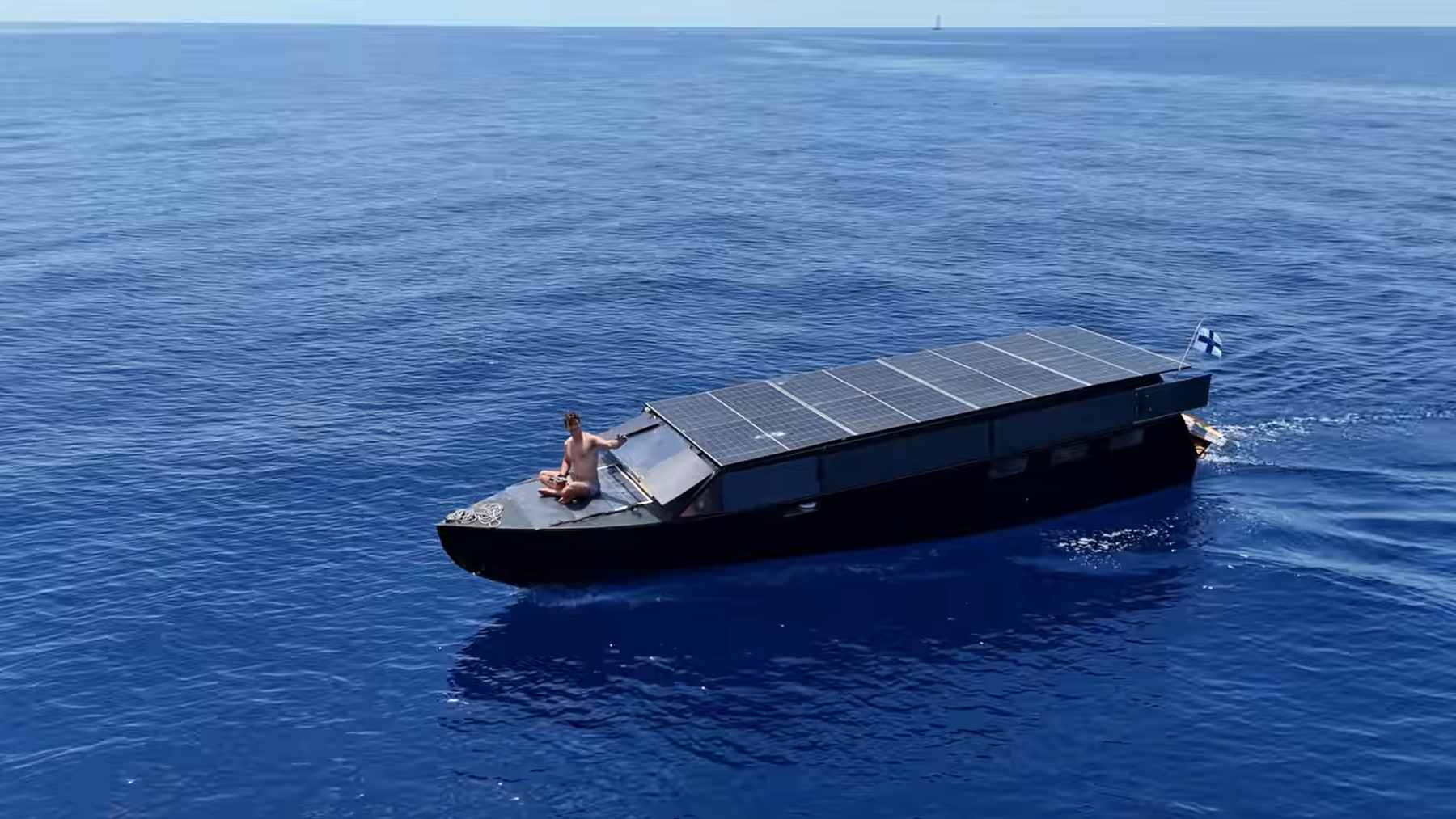
A Finnish inventor has turned a forest shed project into a real-world test of clean boating. Lukas Sjöman built a 36-foot solar yacht called Helios 11, then used it to travel from Finland toward Ibiza without stopping for fuel.
The journey is not a simple fairy tale about a boat that “runs forever.” Weather mattered, sunlight mattered, and the route through Europe brought plenty of headaches. Still, the result is striking. A small, hand-built vessel crossed thousands of miles using solar panels, batteries, an electric motor, and when needed, a helper sail. That’s where the bigger story begins.
A solar trip to Ibiza
Sjöman’s voyage covered somewhere between 3,100 to 3,500 miles after leaving Finland and moving south through European waterways and coastal passages. His own video describes the milestone as reaching Ibiza after about 3,100 miles on zero fuel, while several European reports place the route closer to 3,500 miles.
That difference does not change the key point. Helios 11 completed the trip without conventional refueling, which is a rare and attention-grabbing claim in recreational boating. For anyone used to fuel docks, engine noise, and the smell of diesel on a marina morning, that is a very different picture.
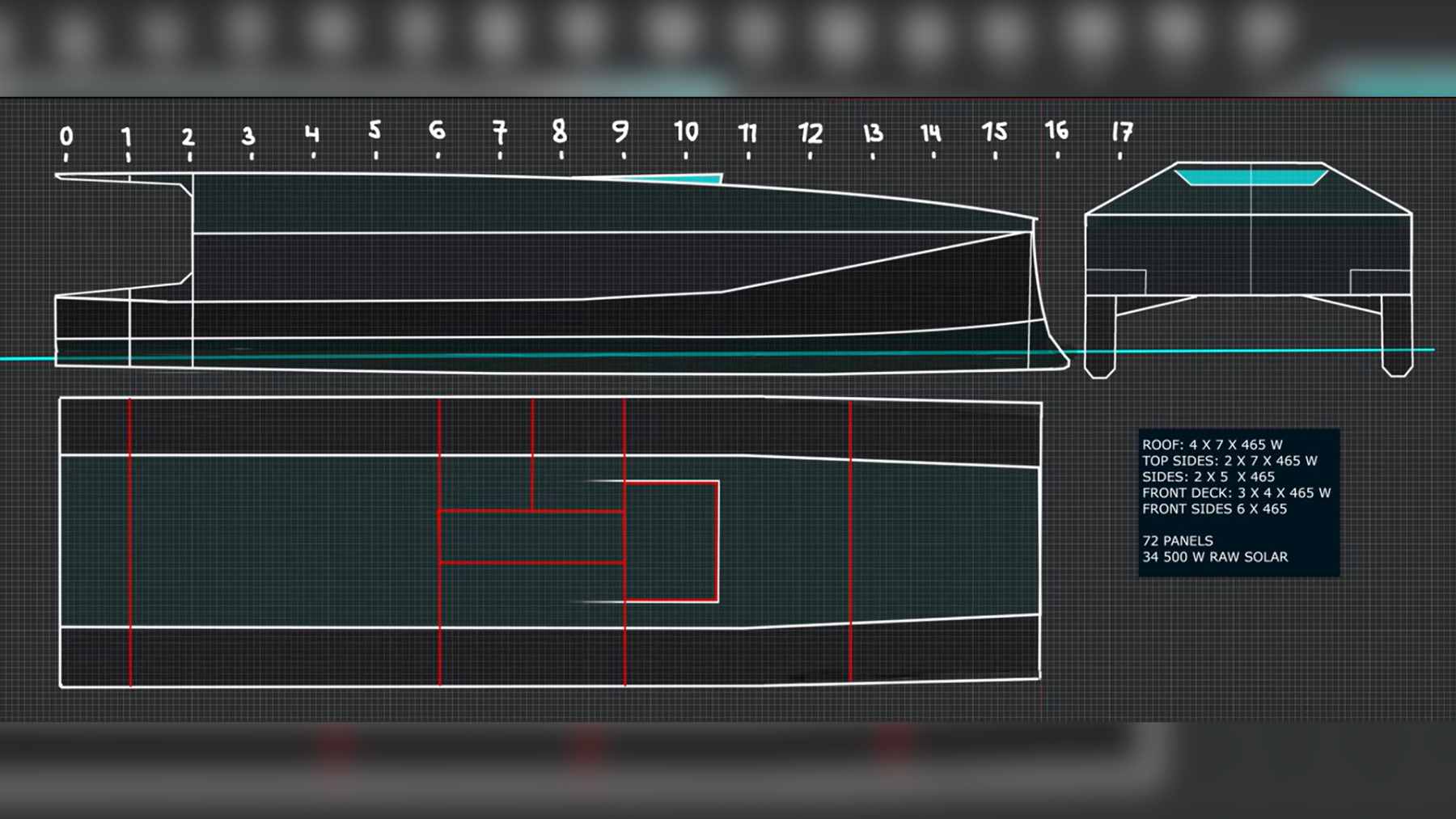
Sjöman built the yacht himself over about 200 days, using materials such as plywood and fiberglass. Reports describe the boat as an 11-meter vessel, or about 36 ft. long, with a roof covered in solar panels and a lightweight layout designed to reduce energy demand.
How Helios 11 works
At the center of the boat is a rooftop solar array rated at around 6 kilowatts. That electricity feeds a battery system and an electric motor, allowing the vessel to keep moving without gasoline or diesel when sunlight and stored energy are enough.
In practical terms, the boat’s “fuel tank” is the sky. On a strong summer day, reports say Helios 11 can travel up to about 170 miles. In cloudy weather or rougher conditions, that range can fall closer to 45 miles a day.
The design also includes a small auxiliary sail. That is not a weakness, it is a reminder that the smartest clean machines often mix old and new ideas, from sails to batteries to careful hull design.
The hard part was not only the technology
The route began in winter, which is a tough season for a boat that depends on sunlight. Northern Europe does not hand out free solar power all day long in the cold months, so Sjöman reportedly had to slow down at times and use the sail to save energy.
The journey took him through Sweden, Denmark, Germany, France, and eventually into Mediterranean waters. That meant rivers, canals, coastlines, changing weather, and plenty of logistical choices that a normal road trip never has to consider.
Then came the everyday problem nobody wants on an experimental voyage. While anchored in La Rápita, Spain, Sjöman’s team had a dinghy stolen, according to reporting based on his updates. They responded by building a makeshift replacement from foam and wood.
What this proves and what it does not
It would be easy to treat Helios 11 as proof that all boats can simply switch to solar tomorrow. That would be too tidy. Large cargo ships, military vessels, ferries, and offshore workboats have very different energy needs.
The experiment still matters, though. By the International Maritime Organization’s own strategy, shipping is under pressure to move toward net-zero greenhouse gas emissions by around 2050, with zero or near-zero greenhouse gas technologies and fuels targeted for at least 5% of international shipping energy use by 2030.
Recreational boats are a smaller slice of the emissions pie, but they are not irrelevant. The National Marine Manufacturers Association has said recreational boats account for less than 0.1% of global greenhouse gas emissions, which suggests the sector is small but visible enough to test cleaner technologies in public.
Why the yacht industry is watching
Solar boats are not new, but Sjöman’s project stands out because it looks homemade, practical, and imperfect. That makes it easier to understand. This is not a futuristic concept locked behind a trade-show wall.
A 2023 review in the Journal of Marine Science and Engineering found that solar energy-powered boats are being explored in areas such as maritime drones, sporting boats, and short-range tourist vessels. That lines up with what Helios 11 shows best, which is efficient travel at modest speeds rather than high-speed ocean transport.
For the yacht business, that could be useful. Many boaters do not need to cross oceans at racing speeds. They want quiet cruising, lower running costs, and fewer stops–less drama is the whole point.
A bigger boat may come next
Sjöman has reportedly discussed a larger follow-up vessel, including a solar powercat concept with more space for panels and greater battery capacity. The idea is straightforward: a wider boat can carry more solar surface, and more solar surface can support longer, faster trips.
Still, the next step will be harder. Open-ocean sailing brings bigger waves, stronger winds, more safety demands, and less room for improvising when something breaks. A shed-built success is inspiring, but the sea has a way of testing every shortcut.
At the end of the day, Helios 11 is best seen as a working prototype with a very public travel diary. It does not solve maritime emissions by itself, but it shows that small electric boats can go far when efficiency comes first.
Solar boating gets real
Sjöman’s trip is a reminder that clean technology does not always arrive in polished corporate packaging. Sometimes it starts with plywood, fiberglass, solar panels, and one person asking whether a boat really needs to burn fuel to move.
For families, marina owners, small tour operators, and weekend sailors, that question is becoming more practical. A quiet solar vessel will not fit every route or every budget, but it can already do more than many people assumed.
That is the real headline here. Helios 11 did not just reach Ibiza. It made solar boating feel less like a showroom promise and more like something that could pull up to the dock next to you.
The video was published on True North,” Sjöman’s YouTube channel.