NASA engineers have pushed next-generation Mars helicopter rotor blades past Mach 1 in simulated Martian air, and the blades did not tear themselves apart. In tests at the Jet Propulsion Laboratory in Southern California, the rotor tips reached Mach 1.08, a result that could give future aircraft about 30% more lift for heavier instruments and longer flights.
This is more than a speed record. On Mars, where the atmosphere is only about 1% as dense as Earth’s, stronger helicopters could scout dangerous terrain, study dust and winds, and carry sensors that look for buried water ice.
For future explorers, that means reading an alien environment from the air, not just crawling across it one rocky mile at a time.
A tiny aircraft changed Mars
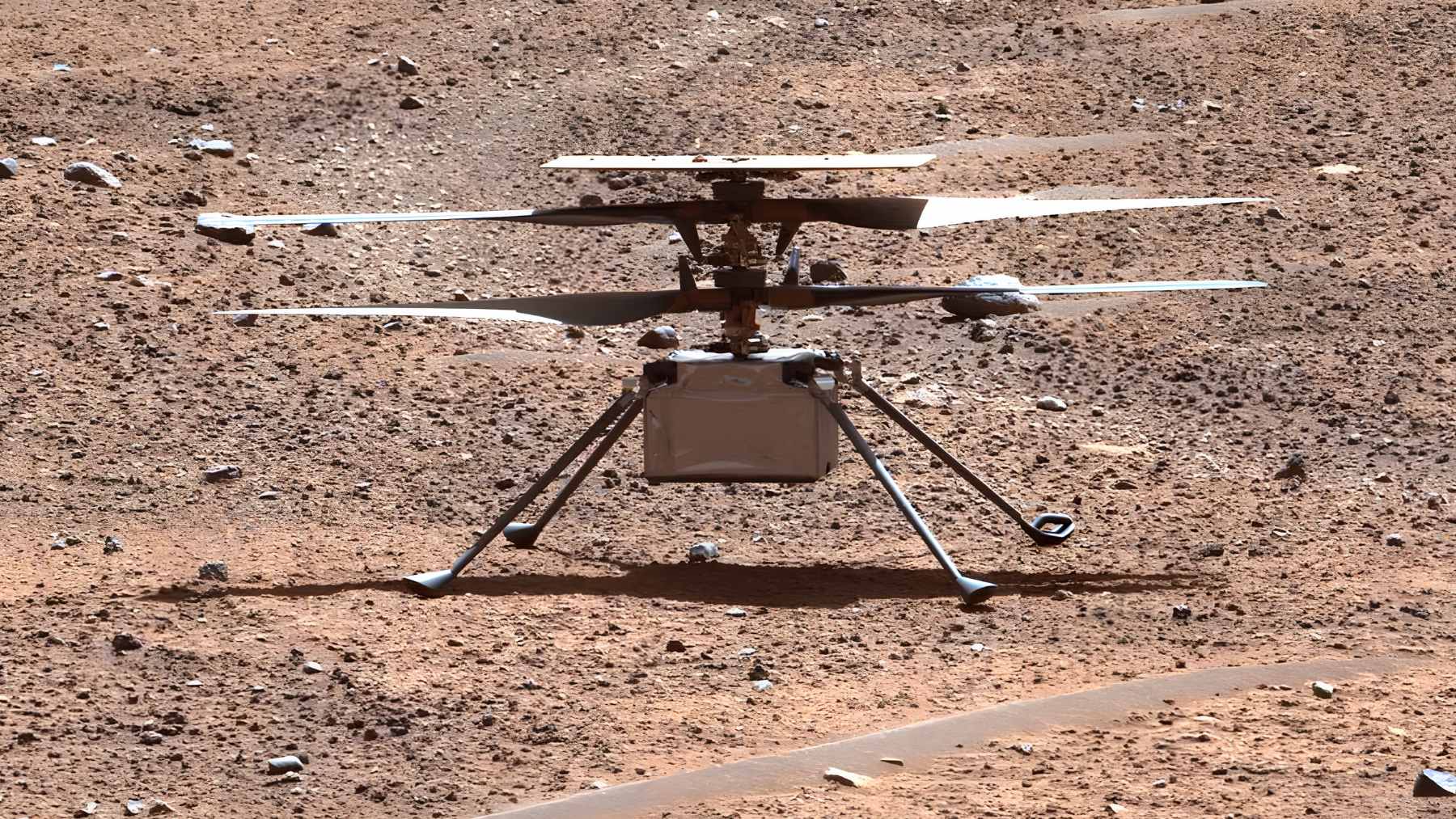
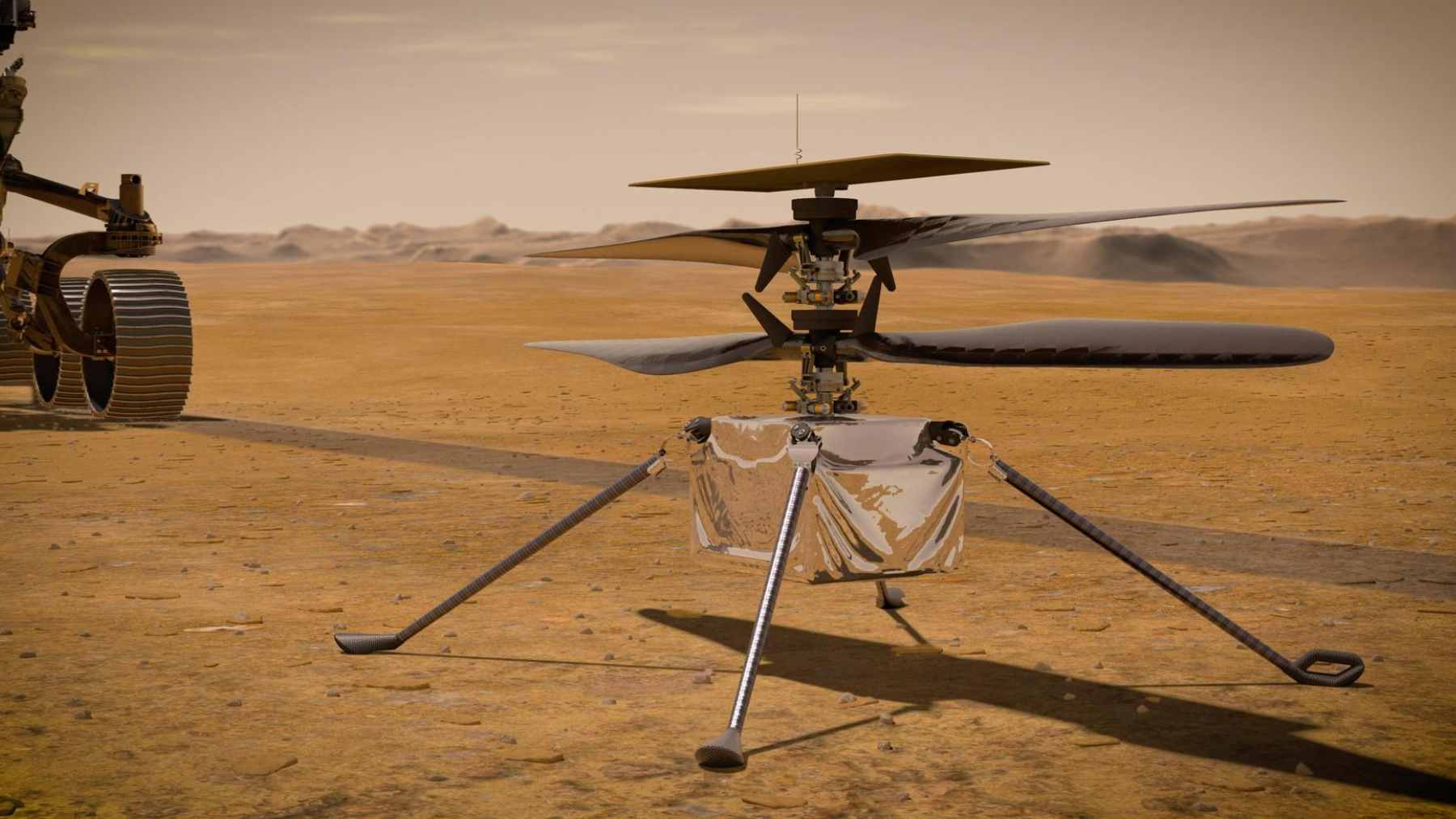
Ingenuity began as a small technology demonstration, almost like a flying proof-of-concept tucked under NASA’s Perseverance rover. It was designed for up to five flights, but it ended its mission after 72 flights and nearly three years of aerial exploration.
That little helicopter carried cameras, not scientific instruments, but it changed the conversation. Suddenly, Mars exploration was not only about wheels, drills, and slow tracks in the dust. It could also be about aircraft hopping over ridges, dunes, and places rovers may never safely reach.
The thin air problem
Flying on Mars is not like flying a drone over a backyard. The air is so thin that rotors have far fewer molecules to push against, while Mars still has enough gravity to make lift a serious challenge. NASA’s Al Chen summed it up plainly, saying that “flying there is just about the hardest thing you can do.”
Ingenuity’s team kept its rotor tips below Mach 1 to avoid unpredictable forces near the sound barrier. JPL’s Jaakko Karras put it in more everyday terms, saying things can get “squirrely around Mach 1.” On Mars, that sound barrier comes at roughly 540 mph because of the planet’s cold, carbon dioxide-rich atmosphere.
Breaking Mach 1 safely
To test the new blades, engineers from JPL and AeroVironment mounted rotors inside JPL’s 25-Foot Space Simulator. They removed Earth air, replaced it with enough carbon dioxide to mimic Mars, and then blasted the spinning blades with headwinds.
The team even lined part of the chamber with sheet metal in case the blades shattered, which they did not. A three-bladed rotor reached 3,750 rpm before headwinds helped push the blade tips beyond the Martian speed of sound, while a longer two-bladed SkyFall rotor reached a similar near-supersonic range at 3,570 rpm.
Why more lift matters
The practical headline is the 30% lift boost. More lift means a future Mars helicopter could carry heavier sensors, larger batteries, and more capable scientific tools instead of acting mostly as a camera platform.
Think of it like packing a heavier backpack before a long hike. Every extra pound changes what the vehicle can do, how far it can go, and how much power it needs. On Mars, that could be the difference between a short scout flight and a mission that helps map ice hidden under the soil.
SkyFall raises the stakes
NASA says its SkyFall project is designed to carry three next-generation Mars helicopters to the Red Planet in December 2028. Unlike Ingenuity, these aircraft are being planned with scientific payloads in mind, including sensors that could support future robotic and human missions.
There is another big difference. SkyFall would not have a nearby rover serving as a base station, so future helicopters may need to communicate through orbiting relay satellites or directly with Earth. That makes bigger batteries, better autonomy, and tougher hardware much more important.
A nuclear-powered ride
NASA has also linked SkyFall to Space Reactor-1 Freedom, a planned nuclear electric propulsion demonstration that the agency says will head to Mars before the end of 2028. When SR-1 Freedom reaches Mars, NASA says it will deploy the Skyfall payload of Ingenuity-class helicopters.
That does not mean helicopters will be buzzing around Mars like delivery drones, but it does mean NASA is trying to connect advanced propulsion, robotic flight, and environmental scouting into one larger exploration strategy.
In practical terms, the aircraft could help identify safer routes, useful resources, and places where the Martian environment tells a deeper story.
Still a hard road
The breakthrough does not make Mars flight easy. Supersonic rotor tips bring new aerodynamic questions, and future aircraft will still face cold, dust, wind, delayed communications, and the need to fly largely on their own.
NASA says data from 137 test runs will help engineers design better aircraft, and researchers are still digging into the results. Shannah Withrow-Maser, an aerodynamicist at NASA Ames, said there may be “more thrust on the table.” That is the kind of cautious optimism engineers live with.
For now, the message is simple. Ingenuity proved powered flight on Mars could happen, and these new rotor tests suggest it could become heavier, tougher, and far more useful for studying an alien environment.
The press release was published on NASA Jet Propulsion Laboratory.