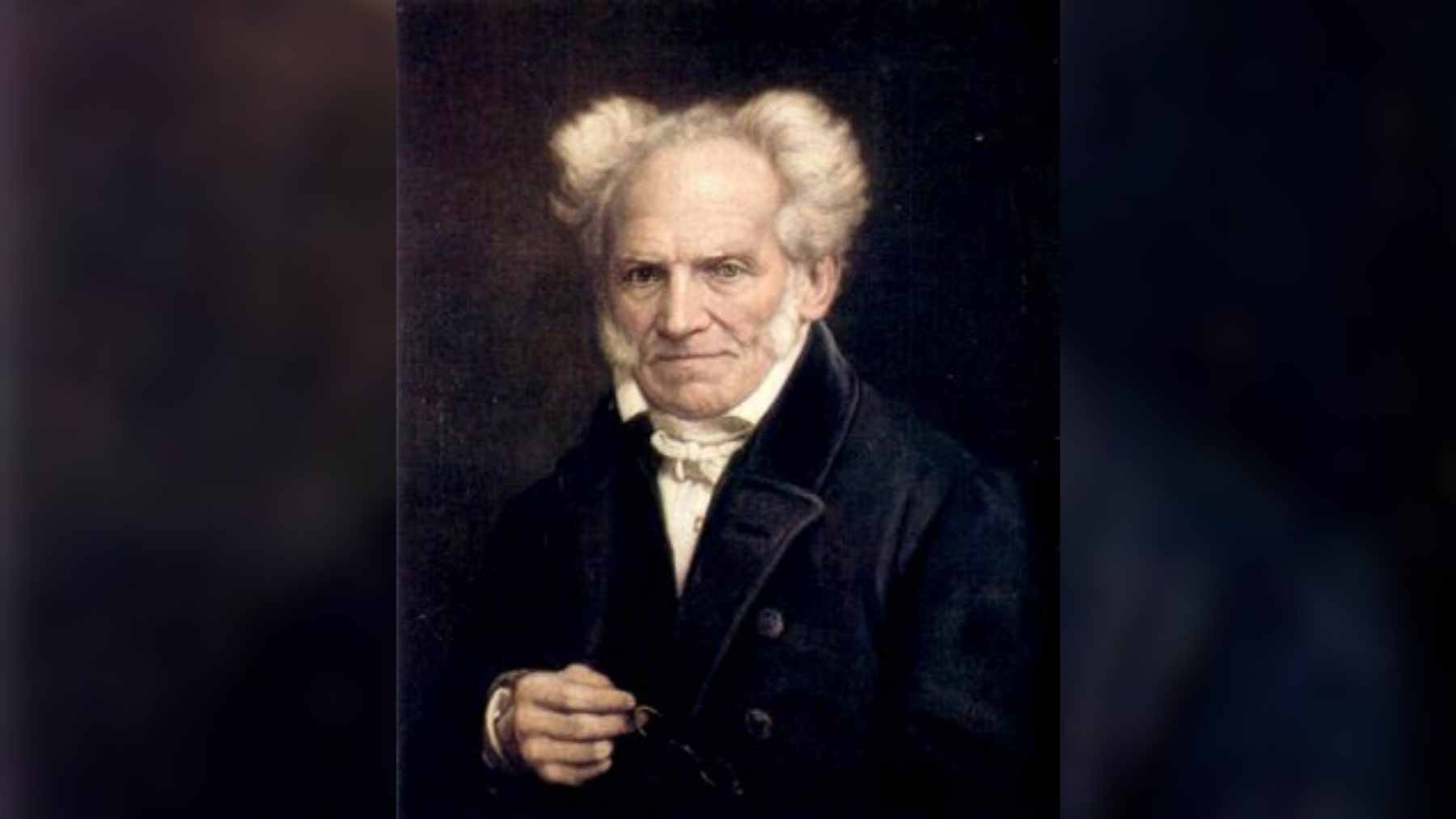
Arthur Schopenhauer once put aging in a sentence sharp enough to sting. “The first half of life seeks happiness without finding it; the second half no longer seeks happiness, but seeks to avoid misfortune.” The line is less a gloomy slogan than a theory of how time changes what we notice.
At 40, life does not suddenly become clear. But, for many people, the past begins to look less like a blur of choices and more like a book that can finally be read. The young person lives the scene; the older person starts asking what the scene meant.
A life written, then reread
In 1851, the German philosopher published Parerga and Paralipomena, a wide set of reflections that helped bring him the recognition he had long wanted. Inside that work, Aphorisms on the Wisdom of Life turned his darker philosophy into something more practical and easier to carry into everyday life.
One of his best-known images says the first 40 years provide the “text,” while the next 30 provide the “commentary.” In plain English, youth fills the pages with decisions, desires, friendships, embarrassments, and mistakes. Later, with a little distance, we begin to understand the plot.
Why old memories stand out
That idea sounds philosophical, but psychology gives it a familiar shape. In 1963, psychiatrist Robert N. Butler described the “life review,” a natural return to past experiences that can help older adults organize memory and meaning.
Why do certain years keep coming back with such force? Researchers call it the “reminiscence bump,” the tendency to remember adolescence and early adulthood more clearly than many other stages of life.
A study of personal memories found that older adults often report more memories from about ages 15 to 30 than from other periods. That makes sense. First loves, early jobs, leaving home, heartbreaks, and big risks often happen then, when identity is still wet cement.
The story we tell ourselves
Dan P. McAdams, a Northwestern University psychologist, has helped explain this through narrative identity, the idea that people build an evolving life story from memory, imagination, and meaning. We are not just what happened to us. We are also the version of events we keep revising.
That is where the old philosopher’s “commentary” feels surprisingly modern. The same breakup that felt like disaster at 22 may look, at 45, like the turn that sent someone toward a better life. A job loss, a move, or a friendship that faded can change meaning once the next chapters are known.
Happiness gives way to caution
The harder part of the argument is his claim that the first half of life chases happiness, while the second half tries to avoid pain. It is not that older people stop wanting joy. Rather, experience often teaches that peace depends as much on avoiding avoidable trouble as on grabbing new pleasure.
In his essay, he wrote that the earlier half of life is marked by a “longing after happiness,” while the later half is shaped by a “dread of misfortune.” He also compared life to embroidery. From one side, it looks bright; from the other, you can see how the threads were actually tied together.
Anyone who has crossed midlife may recognize the shift. The dream vacation still matters, but so does sleep, health, savings, fewer pointless arguments, and a quieter home after a long day. Is that pessimism, or just better math?
What changes after 40
This does not mean everyone has the same midlife awakening. For the most part, the change is gradual. A 40th birthday is not a magic door, but it can become a convenient marker for asking what kind of life has been built so far.
The point is not to stare backward forever. It is to reread the past with enough honesty to use it. The mistakes become material, the lucky breaks become clearer, and even old disappointments can start to explain what mattered most.
A 2018 systematic review found that memories from ages 15 to 30 are often linked to major transitional events and stronger positive emotion. In practical terms, that means the years we replay most are often the years when the self was being built.
Schopenhauer’s warning still lands
There is a bluntness here that can feel uncomfortable. Nobody likes being told that happiness may be less reliable than they hoped. Still, the idea has a useful edge, because it reminds us that a good life may depend on interpretation as much as achievement.
Maybe that is why the quote still travels. It gives words to something many people feel quietly, often while cleaning out a closet, rereading an old message, or wondering why a memory from decades ago still glows. The past is not dead material. It keeps asking to be understood.
The main work discussed here was published in Parerga and Paralipomena.