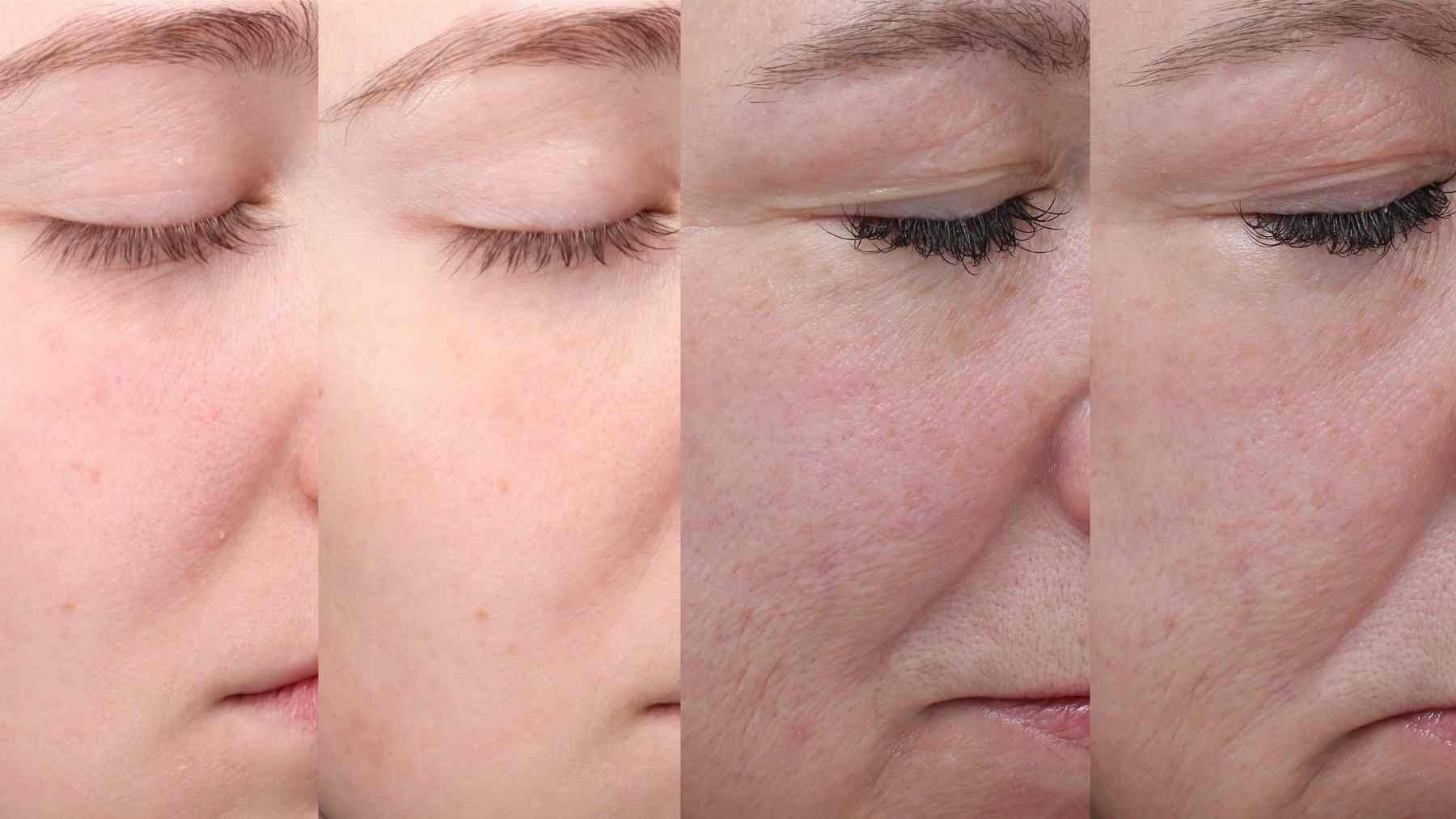
Can a topical serum really change how your skin looks in just three months, or is it mostly wishful thinking in a fancy bottle? A new 12-week study in the Journal of Cosmetic Dermatology reports that Pep Up Collagen Boost Face & Neck Serum from Colorescience, a multifunctional face and neck serum made with 10 peptides, was linked to visible gains in skin quality for most adults who used it twice a day.
The results look encouraging, especially for people who feel stuck in a skincare plateau. Still, the study was “open-label” and had no placebo group, so the findings are best read as a promising signal, not a final verdict.
A trial designed around real routines
Researchers enrolled 48 healthy adults ages 18 to 75 who wanted facial and neck rejuvenation, then assessed them at baseline and at weeks 4, 8, and 12.
Three investigators graded a long list of markers like tone, pigmentation, fine lines, texture, hydration, and firmness, and participants also filled out questionnaires about what they noticed.
The group split is what makes the setup feel relatable. One group was not using prescription or physician-dispensed skin care, while the other group had been using professional-grade products for at least 90 days and kept those products steady during the trial, including retinoids like tretinoin or retinol for some participants.
Nearly 90% were rated improved by week 12
By week 12, investigators reported clinical improvement in 89.6% of participants, and 52.1% reached “moderate-to-marked” overall improvement on the study’s global scale.
The pattern was similar in both groups, with a median global score of 3.0 for each and close mean scores (2.6 in the less advanced routine group and 2.8 in the professional routine group).
Participants largely agreed with the mirror test. By the end, 96% said their skin looked and felt healthier, 94% said they looked more youthful, and 83% said they felt more confident about their skin, while investigators described tolerability as favorable overall.
Most also said they would keep using the product (81.2%) and recommend it to others (91.7%).
The face results favored radiance and even tone
If you are chasing that “well-rested” look, the strongest facial improvements were in glow or luminosity (91.5%), dullness (89.6%), and skin tone (89.6%) by week 12.
Hydration improved for 83.3% of participants, which can show up as makeup sitting better or skin looking less flat in bright bathroom lighting.
Severity scores also moved in practical ways. Oiliness dropped from 1.33 at baseline to 0.33 at weeks 8 and 12, and the authors reported about a 62% improvement in acne scarring and about a 35% drop in crepiness severity as well.
Two areas did not reach statistical significance (laxity and pore size), and dryness improved early but rose again by week 12, which hints that results may not be perfectly linear for everyone.
The neck showed meaningful changes too
The neck often gets neglected, then suddenly shows up in photos. In this study, investigators reported significant improvements across all eight neck markers, with the biggest gains in roughness (about a 41% reduction in severity) and hyperpigmentation (about a 35% improvement).
Fine lines improved by about 32%, and wrinkles improved more modestly (about 16%), which matches what many people see in real life.
On the week 12 improvement checklist, smoothness improved for 94.4% and firmness improved for 88.6% of participants, while fine lines improved for 87.2%.
Redness was the slowest mover early on and even fluctuated during the trial, a reminder that skin can react to sun, friction from collars, shaving, or even a change in weather.
Why “10 peptides” keeps showing up in skin care headlines
Peptides are short chains of amino acids, and in cosmetics they are often framed as messengers that support firmness, elasticity, and texture.
The serum in this study paired 10 peptides with antioxidants, botanicals, and hydrating ingredients like sodium hyaluronate, aiming to tackle multiple “skin quality” markers at once rather than just one issue.
The psychological angle matters too, and the paper leans into it. Many participants said they were at least somewhat self-conscious about their skin at baseline, and by week 12 a large share reported feeling more confident.
That is not a medical outcome, but it can shape daily choices, like whether you feel comfortable going makeup-free or hopping on a video call.
What the study cannot prove and what readers can do now
Because this was an open-label trial without a placebo group, we cannot separate the serum’s effect from expectation, better routine adherence, or other background care.
Sunscreen was a major part of the protocol, especially for participants not already using advanced products, with SPF 50 and reapplication multiple times a day built into the routine. Consistent sun protection can contribute to better skin health and appearance over time.
If you want to use this information in a healthy way, start with the basics and add changes slowly. Daily broad-spectrum sunscreen, a simple moisturizer, and a gentle cleanser do a lot of the heavy lifting, then a peptide serum may be a reasonable add-on for people who tolerate it and can commit for at least 12 weeks.
The study was published on Wiley Online Library.