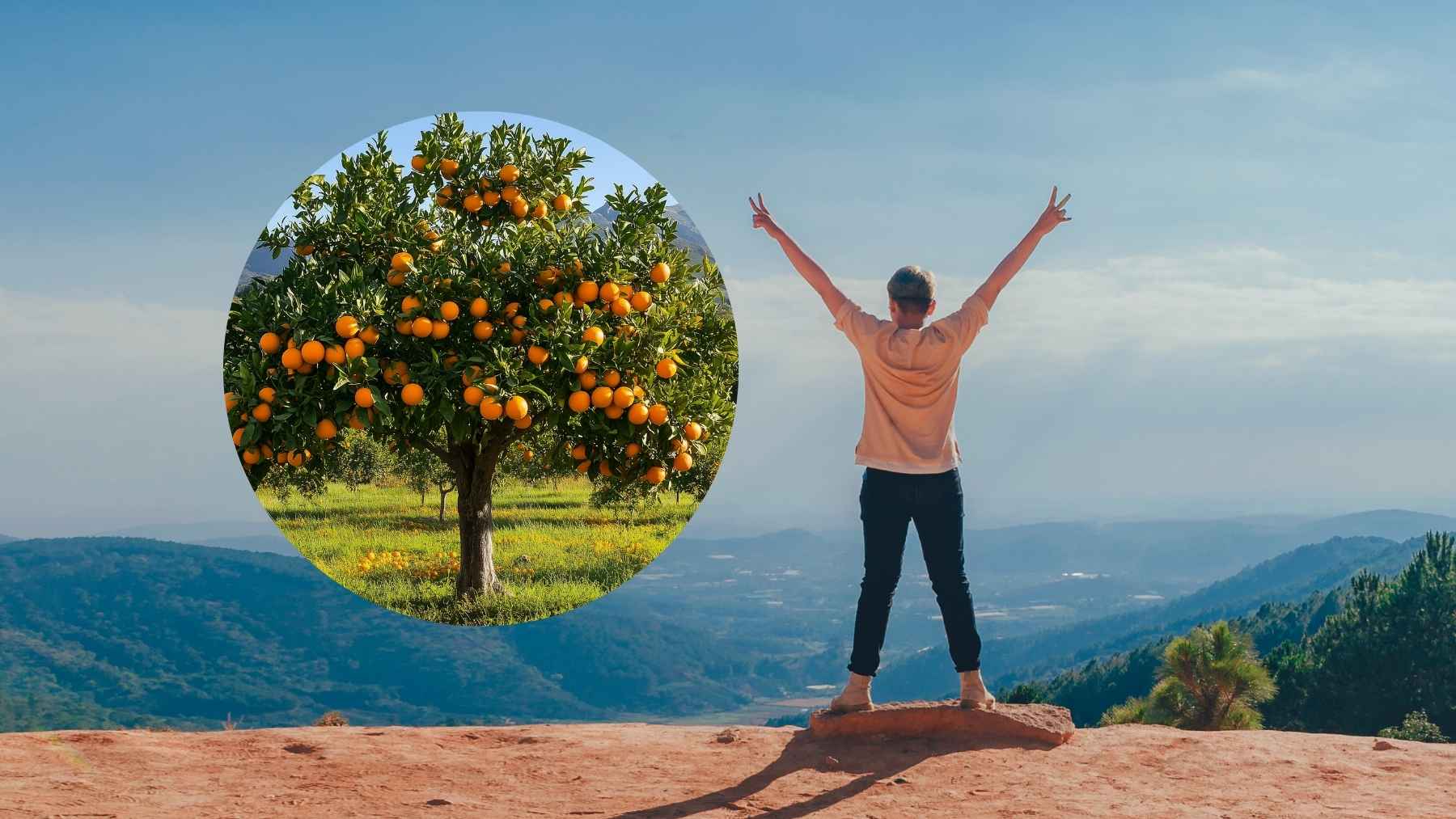
A tree grows fruit it will never taste. A lake holds water it will never drink. Those images distill a centuries-old Indian lesson about generosity and the purpose of what people possess.
The proverb lands hard in a culture that scores personal success above almost everything else. It does not reject ambition; it redirects it toward who benefits from what gets built.
What does the proverb mean
“The tree does not eat its own fruit, nor does the lake drink its own water. The wise live for the benefit of others.” The comparison suggests that something gains a fuller purpose when its value reaches beyond the one who holds it.
For people, the “fruit” may be knowledge, experience, money, affection, influence, or time. The wise are not the ones who accumulate the most, but the one who turns what they have into something useful for others.
That does not mean ignoring personal needs or living to satisfy everyone else. A balanced reading leaves room for rest, safety, and healthy boundaries. Generosity works best when it can last.
The writer behind the saying
The line often circulates online as an anonymous Indian proverb, but it has a more specific literary trail. The Hindi archive Hindwi attributes the original couplet to Mughal-era poet Abdul Rahim Khan-i-Khanan and cites a 1985 printed collection as its source.
India’s Ministry of External Affairs has also used an English translation of the verse in an official speech.
The original is a doha, a compact two-line poem built to carry a complete thought in memorable language. Its meaning is slightly more precise than the popular English version.
It says that wise people gather wealth for the benefit of others, just as trees do not consume their fruit and reservoirs do not drink their water.
The modern wording broadens “wealth” into a larger idea of living for others. That shift does not erase the original lesson. It turns a teaching about the social purpose of resources into a wider reflection on how people use their abilities, attention, and opportunities.
Why nature makes it memorable
Nature gives the saying its staying power: a shaded tree, a bowl of fruit, cool water on a punishing day, images anyone has felt. The metaphor makes an abstract moral idea feel almost physical.
Still, the comparison has limits. Trees and lakes do not make ethical choices, while people do. The natural images work as a mirror, not as proof that self-sacrifice is a rule everyone must obey.
The deeper point is interdependence. No person grows entirely alone, just as no community thrives when knowledge, care, and opportunity stop moving between people. A closed hand may protect what it holds, but it cannot plant much.
What research says about helping
Modern psychology does not prove a proverb right or wrong, but several studies support part of its intuition.
Psychologist Lara Aknin and colleagues at the University of British Columbia analyzed survey data from 136 countries and found that spending on others was consistently associated with greater well-being.
Experiments in Canada and Uganda also found emotional benefits when participants recalled spending money on someone else rather than themselves.
A 2025 review led by Majlinda Zhuniq at the University of Mannheim combined 54 statistical results from 37 studies involving 16,013 adults. The researchers found a moderate positive link between compassion for others and well-being across psychological, social, cognitive, and emotional measures.
They also warned that the available intervention evidence was not strong enough to prove cause and effect.
That caution matters. Helping is not a guaranteed shortcut to happiness, and circumstances can change the outcome. Still, the evidence suggests that generosity may support connection, meaning, and positive emotion, especially when it is freely chosen and realistically sized.
Generosity without self-erasure
The proverb can be misread as a demand to give until nothing is left. That would miss its practical wisdom. A lake that is completely drained cannot keep easing anyone’s thirst.
In daily life, service can be modest. It may mean explaining a difficult task to a coworker, checking on a neighbor, sharing a useful contact, or listening without reaching for your phone. None of those acts requires wealth or public recognition.
It also matters why the help is given. Support offered from fear, pressure, or a need for praise feels nothing like support chosen with care. The proverb points toward contribution, not performance.
A lesson for ordinary days
What does this idea look like on a normal Tuesday? It can be as simple as passing along what you know, making room for someone quieter, or using a small advantage to open a door for another person.
Small gestures rarely make headlines, but they often hold families, workplaces, and neighborhoods together.
Personal goals, healthy ambition, and self-care still matter. The saying argues that achievement becomes richer when it creates shade, nourishment, or opportunity for someone else. Do not measure a life only by what it gathers, but ask what that life helps grow.
The latest research cited here appeared in Scientific Reports.