A note that jumps from lowercase letters to random capitals gets read online as creativity, rebellion, or a bid for attention. The claim traces back to social media commentary from a single graphologist, not to any controlled study of people who write that way.
The science says otherwise: no controlled study has tied mixed-case handwriting to individuality, anxiety, emotional conflict, or intelligence.
A federal expert report classifies graphology that infers character as pseudoscience, while handwriting itself can reflect learning, habit, context, motor control, and deliberate style.
What graphology claims
Graphology reads character into slant, pressure, spacing, and letter size. Applied here, a stray capital letter becomes proof of originality, rebellion, or a wish to attract attention.
That interpretation feels convincing because it turns an everyday habit into a personal story. But Spanish-language reports trace the claim to social media commentary by graphologist Federico Carelli, not to a controlled study of people who mix letter case. That difference matters.
What the research found
Carla Dazzi and Luigi Pedrabissi at the University of Padua tested graphology against the Big Five, a standard framework covering five broad areas of personality. In one study, 101 students completed a questionnaire and supplied handwriting samples for two graphologists to rate.
Their judgments did not match the questionnaire results, and the raters barely agreed with each other.
A second study involved 102 people, two different graphologists, and two untrained readers. It again found no evidence that graphology measured personality. The experiments challenge the idea that handwriting features reliably uncover creativity, emotional control, or a desire to stand out.
An earlier meta-analysis by Efrat Neter and Gershon Ben-Shakhar combined 17 studies involving 1,223 samples, 63 graphologists, and 51 non-graphologists.
When neutral text removed clues from the written content, graphologists performed near chance, while psychologists without graphology training did better overall.
Why handwriting still matters
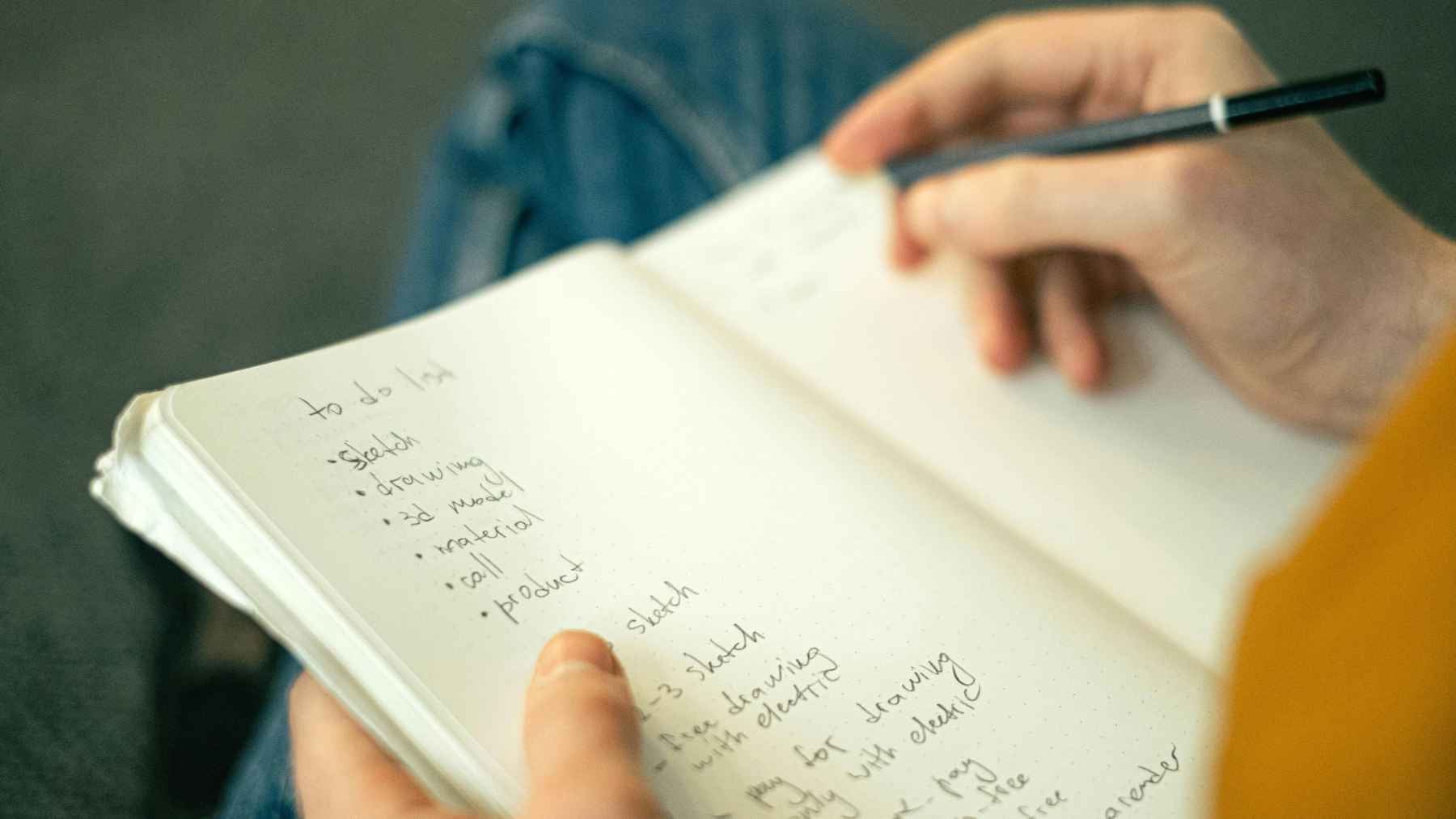
None of this means handwriting is meaningless. Writing by hand combines language, vision, working memory, planning, and fine motor control, which is why a rushed grocery list may look different from a careful job application.
Researchers describe it as a layered cognitive and motor task, not a simple trail left by personality.
Scientists can sometimes detect group-level differences by measuring how writing is produced. In 2025, Chong Li and colleagues at Southern Medical University recorded pen pressure, speed, movement, and angle from 130 patients with depression and 117 healthy participants.
Their model found patterns worth studying, but the authors said the results needed testing in other ages and languages.
That approach is far removed from glancing at one capital letter and labeling someone rebellious. It uses standardized tasks, digital measurements, diagnosed groups, and statistical testing. The motion of writing may sometimes provide clinical data, while a symbolic personality reading usually does not.
What mixed-case writing may mean
For most people, mixed uppercase and lowercase letters may reflect a chosen visual style, an old habit, uneven knowledge of capitalization rules, or the pressure of writing quickly.
It can also change with the pen, writing surface, audience, or level of attention. One sample cannot show which explanation applies.
Forensic handwriting examination asks a narrower question. Examiners compare documents to assess possible authorship or authenticity, such as whether a note or signature is genuine or fake. That differs sharply from guessing someone’s character from the shape of a letter.
Rarely, a new inability to keep letter case consistent can occur as part of a neurological writing disorder. One clinical case described a patient who selected the correct letters but struggled to choose the correct uppercase or lowercase forms.
That finding does not turn ordinary mixed-case writing into a personality sign.
Should the habit be corrected
Not because of an assumed psychological meaning. In a sketchbook, journal, logo, or casual note, mixed-case handwriting may just reflect the writer’s style. In school or at work, correction makes sense when the result is hard to read or breaks a required format.
It should not be used to judge intelligence, maturity, emotional stability, or suitability for a job. A coworker’s messy memo can be frustrating, but it is not a personality test. Clear communication is the fair standard.
A sudden change in writing deserves more attention when it appears with trouble speaking, reading, understanding language, or controlling movement. Those combinations can have medical causes and should be evaluated promptly, while a long-standing style by itself is not a diagnosis.
The bottom line
Mixed-case handwriting can look distinctive, but distinctiveness is not proof of a need for differentiation. The claim offers a tidy answer to complicated human behavior, which may be why it spreads so easily.
The available evidence does not support reading creativity, rebellion, anxiety, or intelligence from this one feature.
A person may like the appearance, write quickly, follow a learned habit, or have difficulty forming letters consistently. Ask what the writing needs to communicate, not what the writer’s personality must be.
The study behind this piece appeared in Psychological Reports.