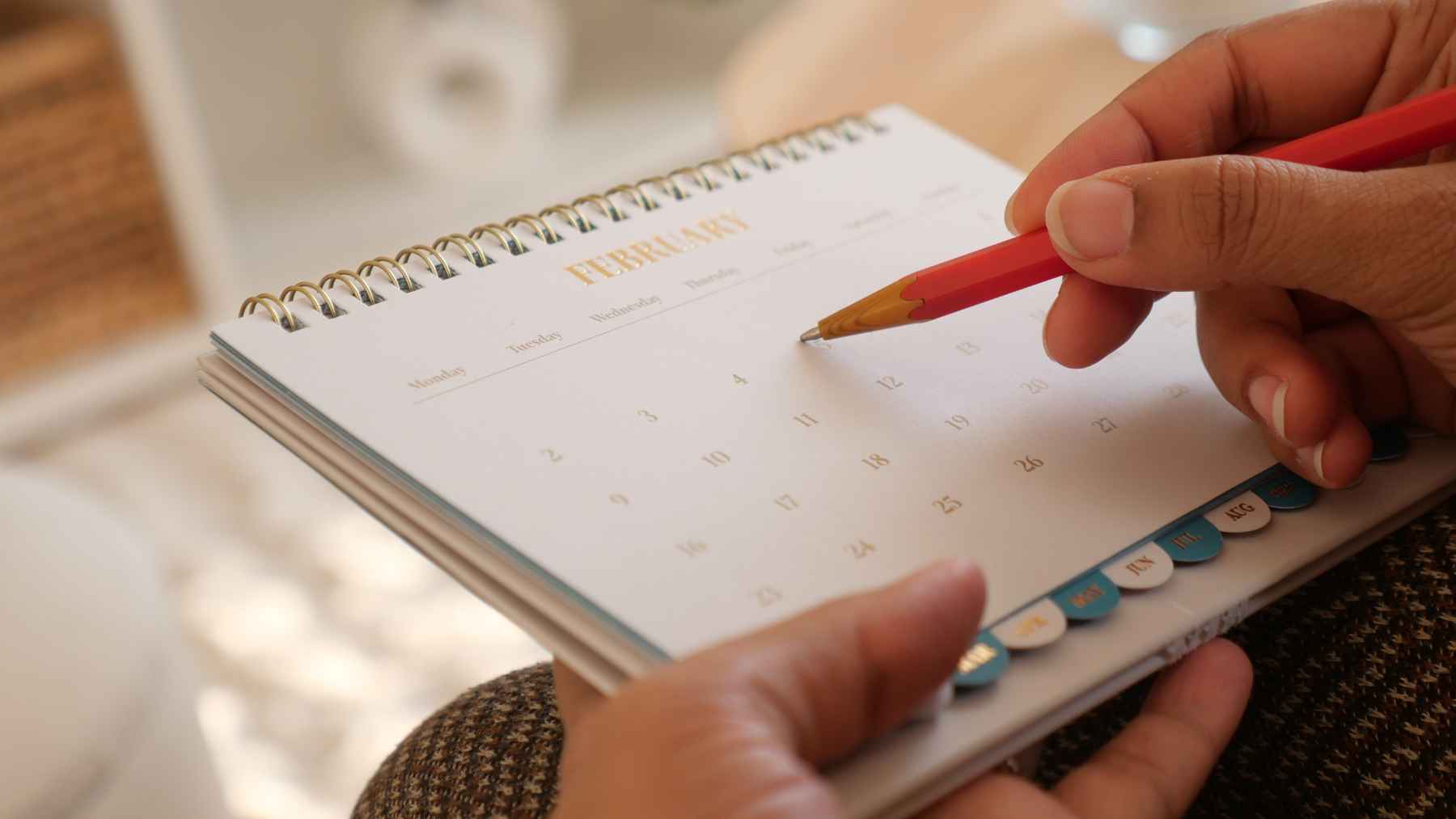
Have you ever seen someone write a dentist appointment, a birthday, or a work deadline on a paper calendar and wondered why they do not just use their phone? Psychology suggests the answer may be less about being old-fashioned and more about how that person wants to feel in control of time.
The habit often points to a preference for simple, visible, hands-on planning.
A paper calendar does not buzz, hide behind a lock screen, or compete with messages. That may be the point. Research on paper and mobile calendars suggests that writing plans by hand can help some people see the whole picture of their schedule, not just the next alert.
A simple tool in a noisy day
Before smartphones, calendars were one of the easiest ways to know where you were in the week. A sheet of paper on a wall or desk could hold birthdays, school events, paydays, appointments, and small reminders that kept everyday life from slipping through the cracks.
Phones now come with powerful calendars already installed. They can repeat events, send reminders, and sync across devices. Still, many people keep turning back to paper because it gives them something phones often do not, a calmer view of the month.
Why paper feels different
The first clue is touch. Writing by hand turns a plan into a physical action, with the hand forming the words and the eye seeing exactly where they land on the page.
That small motion may matter. A 2024 report in Frontiers described research in which handwriting was linked with more elaborate brain connectivity than typing, a pattern the researchers said may support memory and learning.
Audrey van der Meer of the Norwegian University of Science and Technology said, “We show that when writing by hand, brain connectivity patterns are far more elaborate than when typewriting on a keyboard.” In simple terms, the brain may be doing more work when the hand moves across the page.
The joy of looking forward to it
There is also the quiet pleasure of anticipation. Marking a vacation, a graduation, or a weekend dinner on a calendar can make the event feel real before it happens.
Why does that feel good? Psychologist Robert Zajonc argued in his work on the “mere exposure” effect that repeated exposure to something can make people feel more positively toward it.
Looking again and again at a marked date may not create excitement by itself, but it can keep the event familiar and emotionally close.
Writing can make goals stick
Paper calendars also connect with a larger idea in psychology, written goals can be easier to act on than goals that stay vague. Gail Matthews, a psychology professor at Dominican University, tested goal writing, commitment, accountability, and progress reports in a study of adults with personal and professional aims.
The results did not show that paper alone solves everything. They did show that people who wrote down their goals accomplished significantly more than those who only thought about them.
In the study summary, the written-goal group’s average achievement score was about 42 percent higher than the unwritten-goal group’s score.
That matters for calendars because many events are really small goals in disguise. “Go to the gym,” “study for the test,” or “call Mom” may look simple, but putting them in a visible box gives the brain a place to return to.
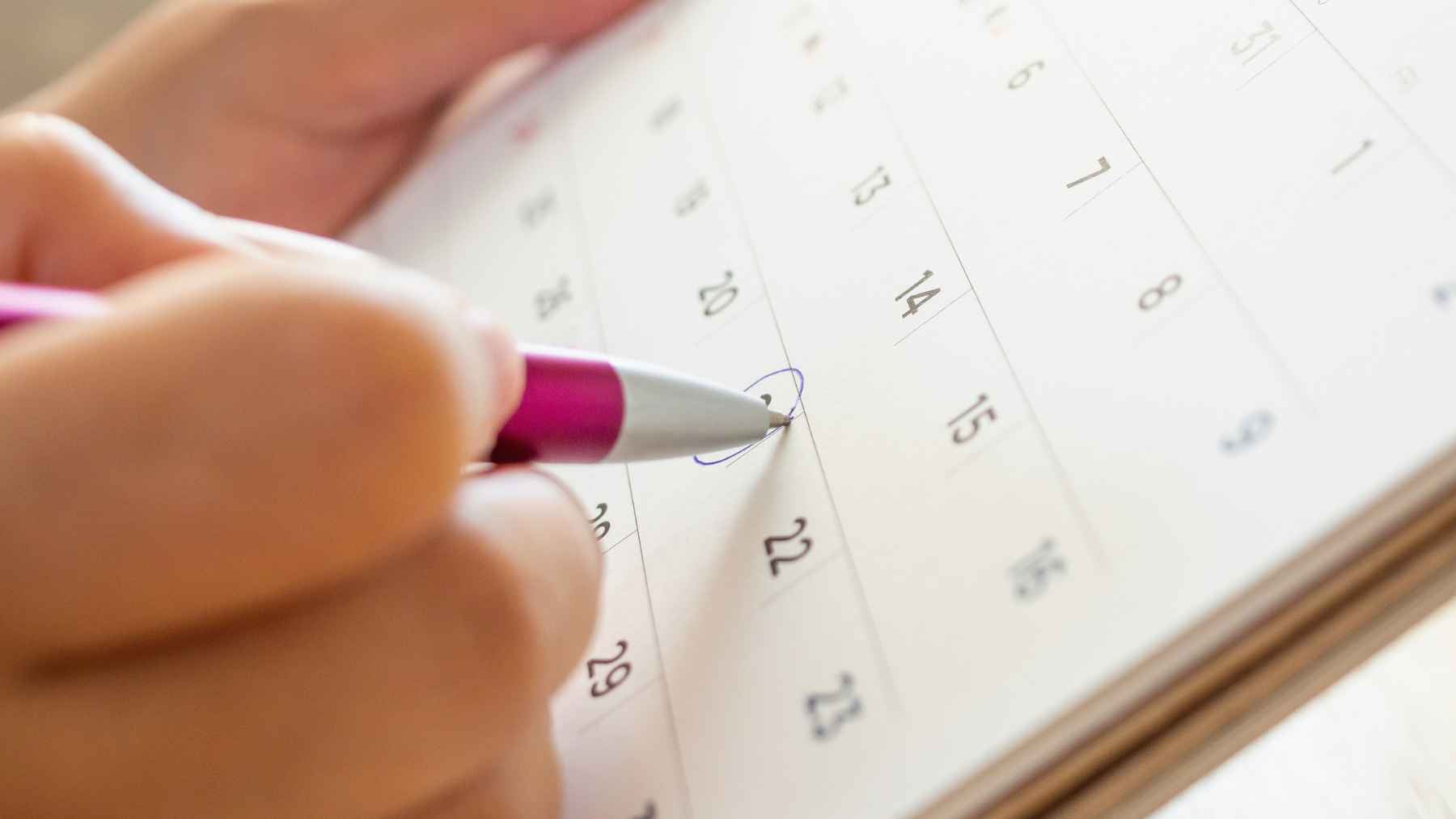
A person writes an upcoming appointment in a paper calendar. Psychology research suggests handwritten planning can improve focus, provide a clearer overview of schedules, and reduce the distractions often associated with digital devices.
The big-picture effect
A separate study looked directly at paper and mobile calendars. Yanliu Huang of Drexel University, Zhen Yang of California State University, Fullerton, and Vicki G. Morwitz of Columbia Business School found that paper calendar users developed higher-quality plans and were more successful in plan fulfillment than mobile calendar users.
The researchers pointed to the “big picture” view. A paper calendar can show several days or weeks at once, so people may notice conflicts, busy stretches, and open space more easily. In practical terms, that means a person can see that Thursday is packed before adding one more errand.
Mobile calendars can still be useful. For a single appointment, a phone reminder can be a lifesaver, especially when traffic, noise, and a full inbox are pulling attention in every direction. For multi-step plans, paper may help some people slow down.
Simplicity is the point
The most important trait may be simplicity. People who use paper calendars are not necessarily rejecting technology. For the most part, they are choosing a tool that does one job clearly.
That choice can feel refreshing in a digital world where checking the calendar can quickly become checking texts, email, weather, and social media. A paper calendar offers fewer features, but that is also its strength.
What the habit really says
So, are paper-calendar users more organized than everyone else? Not automatically. A calendar is only as useful as the person’s habit of checking it, updating it, and trusting it.
Still, the habit can reveal something meaningful. People who write on paper may value touch, anticipation, visible goals, and a bit of breathing room away from the phone. Sometimes, the simplest tool is not a step backward. It is the system that actually works.
The main study on paper and mobile calendar planning has been published in the Journal of Consumer Psychology.